

False Chinch Bugs in Winter Wheat
Last week a cooperator in southwest Oklahoma shared some photos of false chinch bugs in winter wheat heads (Fig. 1A & B). What caught the cooperator’s eye initially were white wheat heads, leading him to further investigate the crop. While white wheat heads are not indicative of insect damage, instead these are typically caused by various diseases. When I was in that part of the state a few days later after the area had received several inches of rain, I also spotted one false chinch bug in wheat at the OSU Wheat Variety Tour in Tipton, OK. It is likely that the rains we have had over the last several days have helped to wash off the false chinch bugs and drown them.
We often see false chinch bugs in summer crops like sorghum and corn, as well as soybean, cotton, and canola. Infestations in wheat seem to be rare but have been occasionally documented in the Great Plains. Below is information on false chinch bug biology, identification, and guidance on how you can manage false chinch bugs in winter wheat if warranted. To receive in the field, live updates on insect pests follow me at osu_crop_insects on Instagram.
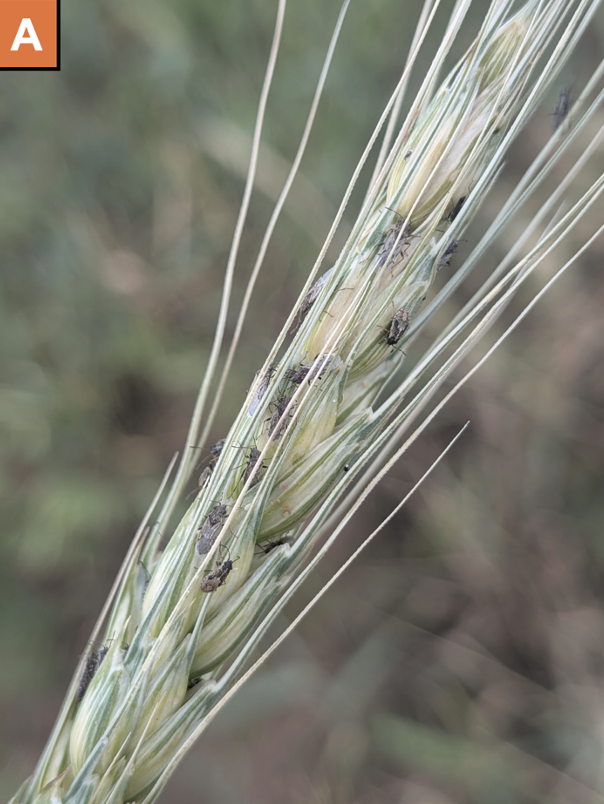
Figure 1 A. False chinch bug nymphs and adults in winter wheat heads. Credit: Jimmy Kinder.
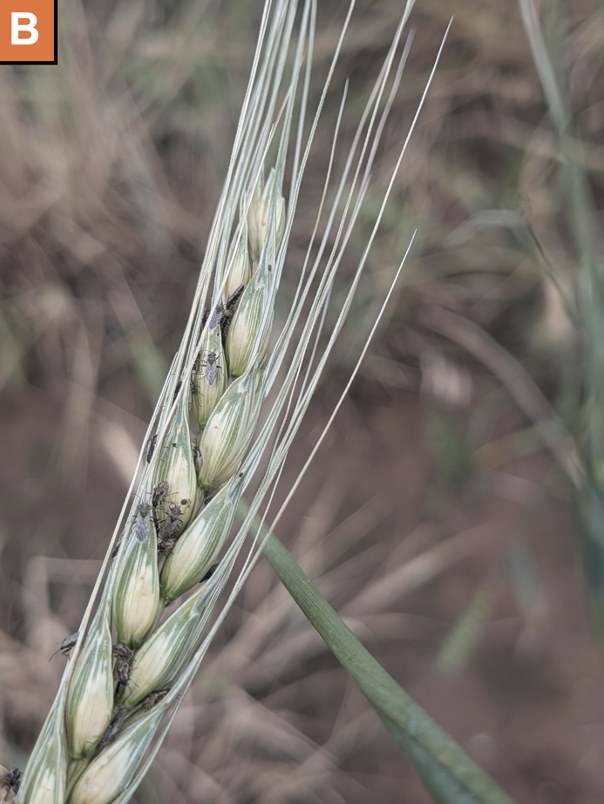
Figure 1 B. False chinch bug nymphs and adults in winter wheat heads. Credit: Jimmy Kinder.
False Chinch Bug Identification, Biology, and Damage in Small Grains
Identification. False chinch bugs, Nysius raphanus (Howard), are small, yellowish gray to brown insects that are about an 1/8” long. Adults have wings that extend beyond their abdomen (Fig. 2A) while the immatures (nymphs) are wingless but otherwise look like the adults (Fig. 2B).
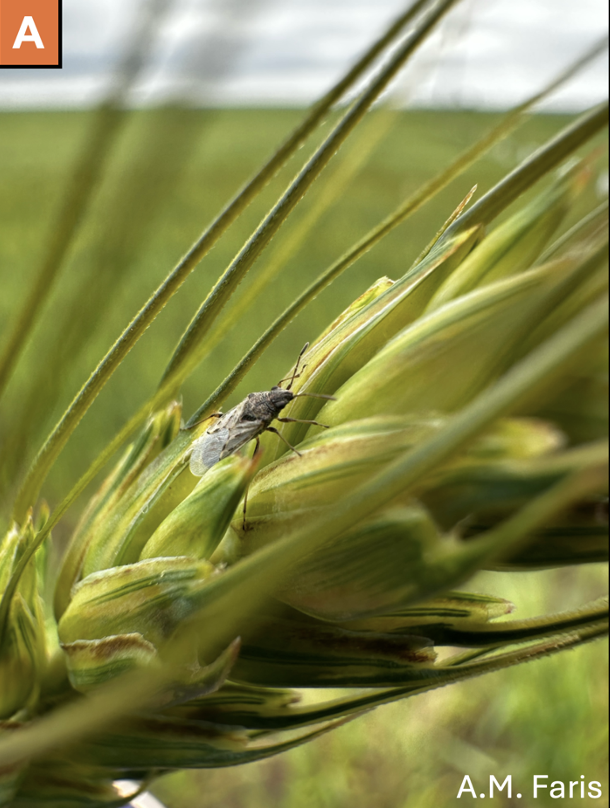
Figure 2 A. False chinch bug adult in winter wheat head.
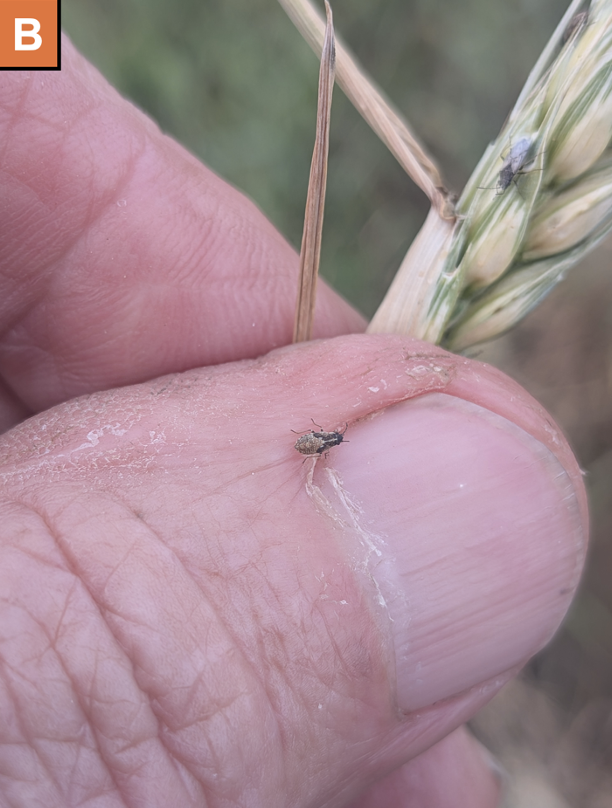
Figure 2 B. False chinch bug adult in winter wheat head. Credit: A. Ashleigh Faris, Oklahoma State University and B. Jimmy Kinder.
Biology. False chinch bugs move from host weeds and residue where they overwinter at any life stage (eggs, nymphs, and adults). In Oklahoma these insects can have about 3 generations per year. False chinch bugs are especially attracted to weeds in the Mustard family, gathering at the base of host plants where they feed. As temperatures begin to warm up, false chinch bugs migrate from these weedy areas into field crop borders. Large numbers are typically observed moving into field margins following herbicide applications or weeds drying up.
Damage. False chinch bugs can feed on the heads of small grain heads which can cause shriveled grain, resulting in poorly filled heads. The extent of damage small grains is not well documented. However, large numbers of false chinch bugs on a single plant can kill leaves or the entire plant.
False Chinch Bug Management in Small Grains
Scout for false chinch bugs by starting at field margins. Due to the insect’s small size, they can be difficult to detect. This is also true due to their aggregative behavior when feeding at the base of weeds and other host plants. Management of weeds will keep false chinch bug populations down. There is no set economic threshold for false chinch bugs in small grains. Fortunately, false chinch bugs will rarely be uniformly distributed across a field therefore a field-wide insecticide application is typically not needed. Instead, spot treatments can be applied to field margins where the false chinch bugs are moving into the crop from weedy borders and populations are often localized.
In cases of mass migration, consider the number of false chinch bugs, the growth stage of the crop, and if the insects are causing damage (they may not be, in which an insecticide treatment is not needed). If crop stand and/or growth stage is progressed enough the crop can withstand false chinch bug feeding for a short time. In cases where insecticide application is warranted, treating the weeds and treating the edge of the field from which the false chinch bugs are entering would be advised. If rain is in the forecast, these insects may be taken care of naturally by rains washing them off the small grains and drowning them.
Chemical Control Options. There are multiple pyrethroid insecticide options available for false chinch bugs in wheat. These options include products with active ingredients like lambda-cyhalothrin, gamma-cyhalothrin, alpha-cypermethrin, zeta-cypermethrin, cyfluthrin, and beta-cyfluthrin. Prior to selecting an insecticide, read the label to determine the post-harvest interval (PHI), restricted entry interval (REI), and any restrictions for grazing (if applicable to your operation).
Suggested pesticides must be registered and labeled for use by the Environmental Protection Agency and the Oklahoma Department of Agriculture & Forestry. The status of pesticide label clearances is subject to change and may have changed since this alert was produced.
The users are always responsible for the effects of pesticide residues on their livestock and crops, as well as for problems that could arise from drift or movement of the pesticide from their property to that of others. Always read and carefully follow the instructions on the container label.