

Corn Disease Update - July 14, 2025
Southern rust was confirmed for the first time this season in Oklahoma on July 14, in a corn field in Caddo County. Although the disease was initially detected earlier on May 21 in Victoria County, Texas, it did not spread within Texas. This season, southern rust has been steadily moving from east to west, with confirmed reports in Florida, Georgia, Alabama, Mississippi, and Arkansas. Now that it has reached Oklahoma, growers should monitor their fields closely and be prepared to take action if needed.
How to Identify Southern Rust in Corn
Southern rust can look similar to common rust, but there are key differences to help you tell them apart:
- Pustules are smaller and usually appear only on the upper side of the leaf.
- They are round to oval in shape, very numerous, and densely scattered across the leaf surface (see Figure 1A).
- If you rub the leaf, the spores come off easily, leaving orange to tan streaks on your fingers or clothing.
- When the disease is active, the spores are bright orange as they break through the leaf surface (Figure 1B).
- As the disease progresses, the pustules turn dark brown to black, sometimes forming a dark ring around the original spot.
Conditions that Favor Disease
The fungus that causes southern rust can infect a plant after approximately six hours of leaf wetness. Dew usually provides enough moisture to cause infection, but frequent rainfall can promote severe disease development. In addition to high relative humidity, southern rust is favored by temperatures around 80°F. The rate at which southern rust reaches damaging levels depends on:
- The crop’s development stage at the onset of infection
- The hybrid’s susceptibility
- How long favorable conditions last
Young leaves are more susceptible to infection than mature leaves, and late-planted or double-crop corn may be at greater risk for yield loss if environmental conditions favor disease development.
Factors to Consider for Disease Management
When weather conditions are favorable, southern rust can spread quickly. The disease goes through multiple infection cycles—spores from initial infections are easily carried by wind to nearby plants and fields, allowing it to build up rapidly.
However, the actual impact on your corn crop will depend on several key factors that should be evaluated before making any management decisions, including:
- Disease pressure: The level of disease severity observed in your field or nearby fields within the region
- Growth stage of the crop: knowledge of the corn growth state when this disease arrives in the field is crucial for making decisions regarding disease management. Relevant information about the possible benefits that a fungicide application can have to protect the corn crop against Southern rust depending on the growth stage is available in a publication on the Crop Protection Network website (https://cropprotectionnetwork.org/publications/an-overview-of-southern-rust). This research shows that the corn fields between the tasseling (VT) to milk growth stage (R3) when Southern rust is first detected may still benefit from a fungicide application if the weather conditions favor disease development. However, corn fields in the late milk, dough stages (R4) and beyond may not economically benefit from the fungicide spray. Although rust can appear in corn fields in late growth stages, yield losses caused by this disease may not be enough to warrant the cost of the fungicide spray.
- Hybrid susceptibility: knowledge of the corn hybrid regarding rust resistance is critical to determine the risk of the crop to yield and profitability losses. Consult your seed dealer to determine if your current hybrids have resistance against Southern rust.
- Weather conditions: the fungal pathogen that causes this disease, Puccinia polysora (Figure 1B), can infect corn plants after approximately six hours of leaf wetness. Despite the lack of rainfall, high relative humidity and long dew hours may provide enough moisture for the pathogen to cause infection. However, this disease is more severe and is more likely to cause yield losses in years with frequent rainfall events. Besides that, Southern rust is favored by temperatures around 80°F (27°C) that are easily reached through the corn growth season in the state.
My first recommendation for Oklahoma growers is to scout fields and look for symptoms of this disease in the corn leaves. The pathogen that causes this disease produces raised structures on the corn leaf surface called pustules that are orange to light brown in color, circular to oval in shape, and frequently surrounded by a light green halo (Figure 1A). I also recommend that the growers take notes regarding the position of the symptoms in the corn plant to identify where they are located, in the lower canopy (below ear leave) or upper canopy (upper part of the plant). After that, leave samples presenting symptoms of the disease should be sent to the Plant Disease and Insect Diagnostic Laboratory at Oklahoma State University since Southern rust can be mistaken with Common rust, a disease that is frequently observed in corn fields but is unlikely to cause yield losses.
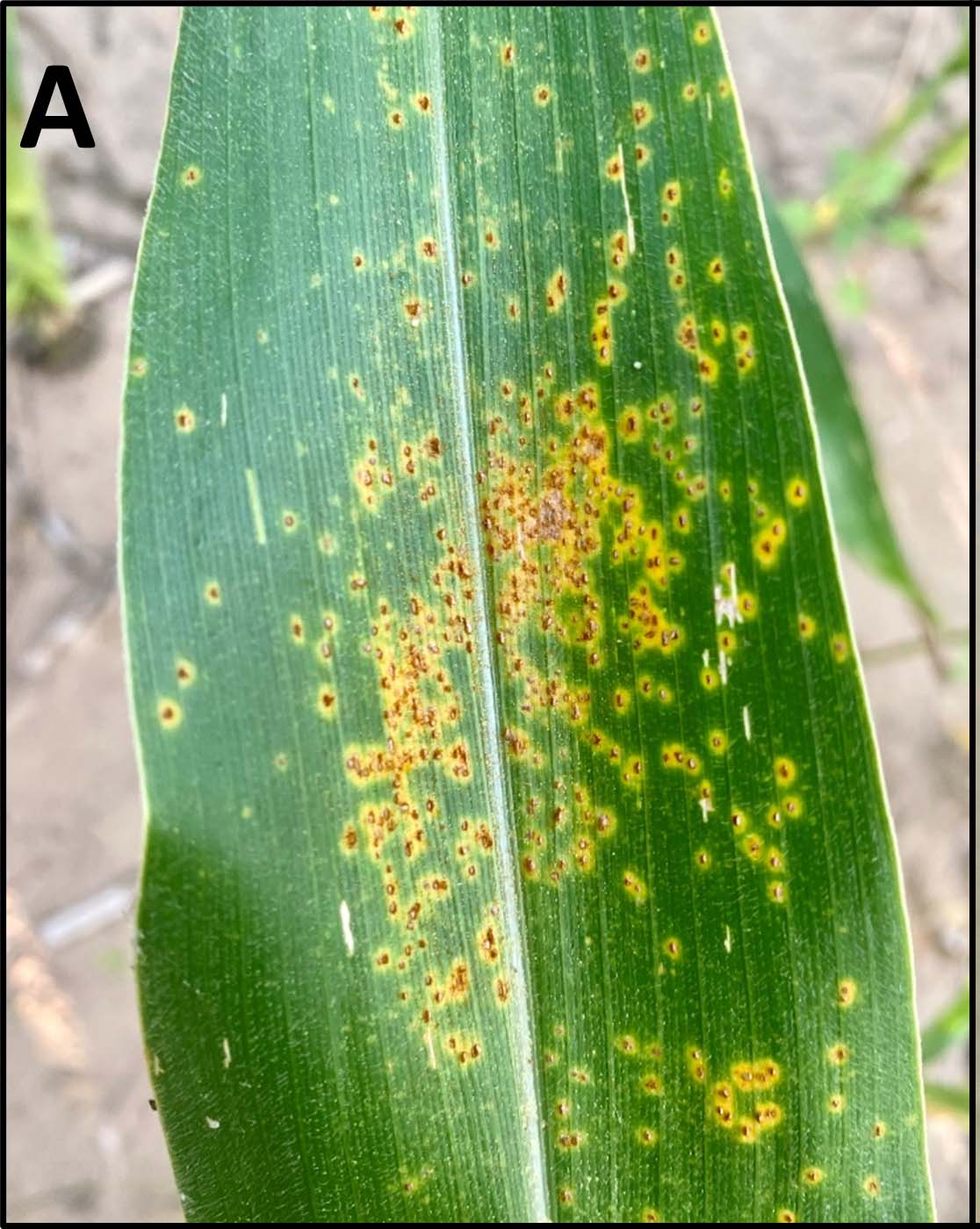 Figure 1-A: Southern rust pustules on the upper surface of the corn leaf.
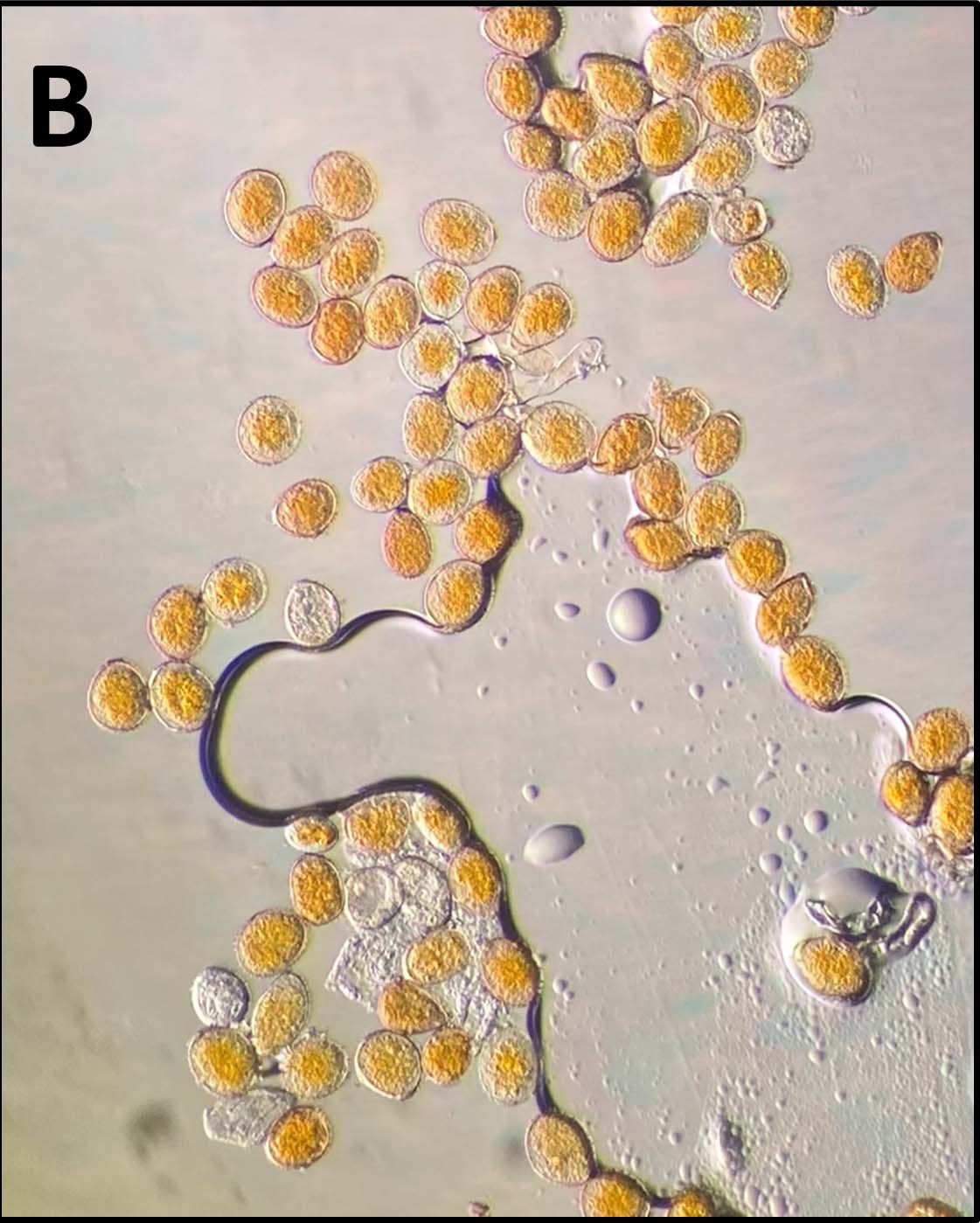
Figure 1-B: Southern rust spores called urediniospores observed under the microscope. Images: Maira Duffeck
Another valuable resource that the corn growers have available is the Fungicide Efficacy for Control of Corn Diseases available in a publication on the Crop Protection Network website and presented here in Table 1. This publication is updated annually, reporting the efficacy of the available fungicides to manage foliar diseases in corn, determined by field testing over multiple years and locations.
If you are curious to know if Southern rust is developing and moving across the U.S. corn production regions, we have an excellent website to track the disease's spread in real-time. The counties in each state marked in red are where Southern rust was already reported this year.
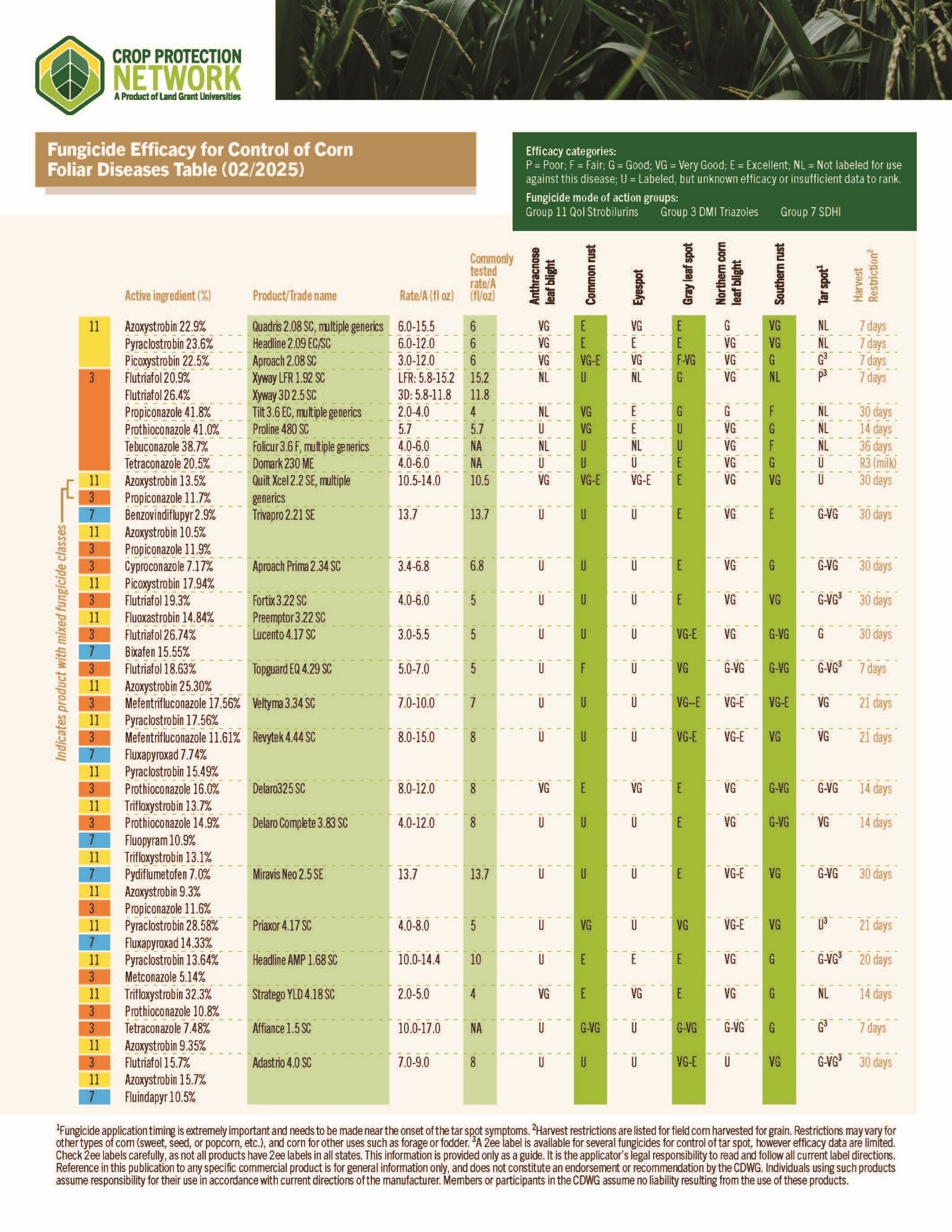 Table 1: Fungicide efficacy control of corn diseases. Source: Crop Protection Network.