

Banner 4-H, Lea Willrath, (405) 209-8591
or Amanda Azevedo, (530) 354-5048
» 6:30 pm, First Monday of each month, Mustang Fire Department
Bomber 4-H, Jordan Boicourt, (405) 262-0598
» 4:00 pm, Second Monday of each month, Banner Elementary Cafeteria
Bronco 4-H, Kristy Stevens, (405) 812-1334 or Natalie Day, (405) 974-1654
» 6:00 pm, First Thursday of the month, Mustang AG Classroom
Calumet 4-H, Coral Gibbins, (405) 818-1572
or Kelly Stewart (405) 406-4851
» 5:30 pm, Second Monday of each month, Calumet School Conference Center
Canadian Co. 4-H Archery Club,
Matthew & Heather Panepinto, (405) 441-1252
» 6:30 pm, Most Thursdays, Behind Chisholm Trail Presbyterian, Yukon, OK
Canadian Co. Livestock Judging Club, Kale Campbell, (580) 554-4504
» 6:00 pm, Second Tuesday of each month, CV Tech, El Reno
Canadian Co. Tuff Riders, Kate Kearby, (405) 620-4824 or Chad and Jana Detrick, (405) 317-4640
» 6:30 pm, Second Thursday of each month, CV Tech El Reno
Canadian Co. Rabbit Club, Charles or Amy Holley,
(405) 868-0373 or (405) 206-9967
» 6:30 pm, Third Monday of each month, Southwest Covenant Elementary, 2300 S. Yukon Parkway
Canadian Co. 4-H Shotgun Sports, Jim Brummett, (405) 694-3117 or Gregory Turner, (916) 588-5876
» 6:00 pm, Every Tuesday, OTSA Shooting Park
Canadian Co. Teen Leaders, Micah Chapman, (479) 970-4986
or Alexis Graham, (405) 606-9794
» 6:30 pm, Last Monday of each month, Canadian Valley Tech Center, El Reno Campus
Jackalope 4-H Riding Club, Gwen Harmon, (717) 917-3237
or Brianna Cheatwood, (405) 837-6351
» 6:00 pm, First Tuesday of each month, Mustang Library
Maple 4-H and Cloverbuds, Desiree Trujillo, (405) 538-6961
» 6:00 pm, Second Monday of each month, Maple School Cafeteria
Miller 4-H, Lynda Landrith, (405) 921-1863
or Shana Pettigrew (405) 596-0255
» 6:00 pm, Third Tuesday of each month, Yukon Vo-Ag Classroom
Mustang 4-H & Cloverbuds, Haley Husmann, (405) 922-3131
» 6:30 pm, Second Tuesday of each month, Mustang Community Center
Piedmont 4-H and Cloverbuds, Lisa Nunes, (209) 840-4006
or Samantha Bradshaw, (405) 834-2492
» 6:00 pm, Third Thursday of each month, Piedmont Veterans Center
Riverside 4-H, Michael Booher, (405) 517-0668
» 3:30 pm, Last Wednesday of each month, Riverside Cafeteria
Union City 4-H, Erin Barton, (405) 410-6212
or Alicia McBane, (405) 339-1669
» 6:30 pm, First Monday of each month, Union City Ag Building
Union City Cloverbuds, Liz Goad, (405) 668-2907
or Lindsey Garrett, (405) 650-3918
» 6:30 pm, First Monday of each month, Union City AG Building
Yukon 4-H, Jessica Haynes, (405) 226-3008
or Georganne Chapman, (405) 317-8760
» 6:30 pm, Second Monday of each month, Town and Country Christian Church (2200 S. Cornwell)
Yukon Cloverbuds, Carrie Garner, (580) 231-0263
» 6:30 pm, Second Monday of each month, Town and Country Christian Church (2200 S Cornwell).
Canadian County 4-H
Your Best Just Got Better
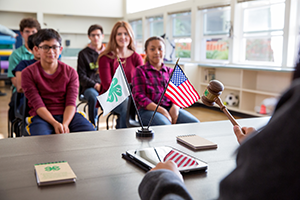
4-H builds leaders, creates pathways to expand community involvement, and develops responsible citizens and future community leaders.
We are excited you are interested in joining the world's largest inclusive club, where your interests come first, regardless of what they may be! Whether you enjoy cooking, computing, sewing, or crafting, we have something for you. You can live in the middle of town or out in the country, it doesn’t matter! There is definitely something pretty special about being a 4-H’er. Don't forget, we also reward you for a job well done, including scholarships for higher education!
Our focus is YOUth, and the 4-H emblem (the four-leaf clover) symbolizes this positive impact on a youth's growth by intentionally focusing on:
- The Head - To think, to plan, to reason clearly;
- The Heart - To be kind, to be true, to be sympathetic;
- The Hands - To be useful, to be helpful, to be skillful;
- Overall Health - To resist disease, to enjoy life, to make for efficiency.
We're Virtually Awesome!
Many of our events can be viewed live from anywhere in the world. Our contests can be adapted virtually, and we're constantly building our YouTube Channel to offer you the best live and prerecorded events and workshops. What's next? Robotics? Computer Programming? Video Editing and Production? The choice is yours. We're your home to personally developing life skills, making lifelong friends, and helping you make your best even better!
Hot Topics
Learn More!
-
What is 4-H?
Positive Youth Development:
World's Largest Youth Organization
Built on a platform of positive youth development, 4-H is the world's largest youth membership organization, featuring mentorship programs that connect youth with adults. This unique mentoring partnership fosters an atmosphere of belonging, focuses on "learning by doing" and independent learning, and provides pathways to mastering new skills. This mentorship strategy also involves leadership and civic engagement opportunities through community-based clubs, school enrichment programs, and both group and individual goal-oriented projects.In Oklahoma, the traditional 4-H program membership is open to all youth ages 5 to 19 as of January 1 of the current year who meet membership guidelines. The "4-H Year" is the program year, which begins on August 1 and ends on July 31.
Typical Competition Age Groups
Some competitions split divisions by Junior and Senior. Some events level the playing field by offering competitions in three different divisions.
Cloverbuds: A noncompetitive group for kids in Kindergarten to 2nd grade.
Junior Division: For youth in 3rd to 7th grade-or-
Beginner Division: For youth in 3rd to 5th grade
*Intermediate Division: For youth in 6th to 8th grade
Advanced Division: For youth in 9th to 12th gradeDid You Know?
4-H doesn't end at age 19. Your 4-H youth involvement could open endless possibilities to earn higher education scholarships, land awesome internships, and be considered for university fellowships as a young adult! -
Join the Club!
Joining 4-H is easy. If you have any questions, we invite you to schedule an appointment with Todd Branson or Kailyn Twyman. Our 4-H staff is eager to show you all the opportunities 4-H has to offer.
Join today through the Oklahoma 4-H Online Portal below. If you get stuck at any time, please call us at (405) 262-0155. We are excited to welcome you to the Canadian County 4-H Family!
Join Canadian County 4-H Today!
If you still have questions, find a club closest to your home below and attend the next meeting! Anyone is invited, and participating in a 4-H meeting before joining can often answer most questions!
-
Find My Club!
Select a club that best fits your family's schedule and/or location. Please feel welcome to contact the leader listed to learn more about their club activities!
Please call first; meeting times and locations are subject to change! -
What is a 4-H Project?
"Learning is most exciting when it is learning by doing, and 4-H projects offer this kind of excitement."
Canadian County 4-H'ers may choose from more than 50 projects. Members start by selecting a project, and once enrolled, the 4-H member, parent, and the volunteer will visit to find their interests, set some attainable goals to get the most out of their experience, and get connected with local, district, and state experts to help with their project.
Project work can be entered in the county fair. If it wins at the county fair, it advances to the state fair. Various projects have additional competitive opportunities available.
Unfortunately, it is not always possible to have a project leader for each project area. In those instances, members and their families are encouraged to do self-study with the help of the 4-H literature from the office. If help is needed, county staff, other parents, or leaders may help.
The Next Step:
County and State Record Books
It is important that 4-H members complete each project by attending project meetings, reaching goals, and keeping records. These records convert into the 4-H Record Book or Project Report Form for awards. As a junior member, they can compete for medals, participation awards, and the Junior Hall of Fame. As a senior member, they are eligible for numerous county awards (including Senior Hall of Fame, Leadership, Citizenship, and Achievement Awards), as well as trips and scholarships. The award program is outlined in the Canadian County 4-H handbook, which is available from your local leader, the county office, or in ZSuites.Suppose your child is interested in achieving the highest awards in 4-H. They must become an "expert" in their project area, teach others what they know (leadership), and give back to their communities (citizenship). Typically, this process takes several years to complete. A junior member will have the opportunity to "grow into" their project expertise, while an older 4-H'er can accomplish these skills in a shorter period. If your child is interested in the record book program, contact the office for individualized help.
-
What is Your Role as a 4-H Parent?
Parents play a vital role in the 4-H experience. With all of the options available to 4-H'ers and the individualization of the program, parents need to take an active role in their child's 4-H experience. Organizational leaders cannot meet the needs of all the 4-H'ers in their club by themselves. It requires parental involvement.
Parents should help their 4-H'ers obtain the necessary supplies and equipment for their projects, assist with assignments, and support their efforts in record-keeping. Parents may also be asked to provide transportation, bring refreshments, or attend a meeting.
Parents need to guide, motivate, and encourage the 4-H member. Parents should praise their 4-H'ers when they meet their 4-H goals. Reaching personally set goals can be more meaningful than winning ribbons or trophies. Try to avoid comparing the progress of any child with that of other 4-H'ers who may have different goals and resources.
Parents have just as important a role as educators, volunteers, and 4-H'ers themselves. As a parent, you should feel comfortable asking what you can do, take on leadership roles, and get involved!
-
I think I also want to volunteer. Is that possible?
Absolutely! We are always open to parents and adults with a passion for building future leaders through positive youth development programming. There are several types of volunteer opportunities, so select one and schedule an appointment with Todd BransonorKailyn Twyman to review the steps needed to become a volunteer!
Learn More:
Types of Volunteers
- Organizational Leaders: coordinate the overall club program and the activities of members and other leaders. They serve as the club's communication link with the county Extension staff and the 4-H and Youth Council.
- Project Leaders: work with groups of members enrolled in the same project. They help members set their individual goals, teach new skills during project meetings, prepare for related activities or contests such as demonstrations or judging, complete project records, and prepare projects for exhibit.
- Activity Leaders: work with groups of members participating in 4-H activities. Activities such as health, conservation, Share the Fun, public speaking, recreation, and community involvement usually involve groups of members or the entire club membership.
- General Helper: works with the club to meet the needs of the 4-H members. They may attend meetings, provide transportation to activities, and fill in wherever needed.
- Organizational Leaders: coordinate the overall club program and the activities of members and other leaders. They serve as the club's communication link with the county Extension staff and the 4-H and Youth Council.
-
Compete locally, at county events, district-wide, and at state events!
Local Level
A 4-H club is a group of young people and adults who meet regularly for fun and learning. Clubs are typically composed of families from a community and often formed around schools, churches, or community centers.
Most clubs hold monthly meetings attended by members and their parents. Club members elect officers and lead the group at the meetings. An adult club leader advises the officers, and the meetings usually last less than two hours. The time is divided among club business, recreation, and educational programs. Each club is encouraged to do a community service project.
Local clubs choose the areas that they want to study during the year. Each club can select two or three topics to study. Popular topics include computer technology, conservation, safety, the performing arts, arts and crafts, food and nutrition, as well as beef, swine, goats, and sheep.
Parents are encouraged to offer project meetings at the local level. For a more detailed description of what happens at a project meeting, see "What is a 4-H Project?" to learn more!County Level
Several activities are available for 4-H'ers and their families at the county level. Activities include conferences, retreats, contests, training for youth and adults, leadership activities, community service projects, fairs, and more. Details about the different activities are outlined in the 4-H Handbook and the 4-H Newsletter.
An awards program is available for youth to participate in. A variety of awards are available, including trips, scholarships, and project awards. To receive 4-H awards, members complete applications, record books, or participate in contests.
A Teen Leader program is available for youth ages 13-19. The group is involved in citizenship and leadership activities. County officers are elected, and county programs are identified for youth to participate in.
District & State Levels
Several activities are available for youth to participate in at the district and state levels. Following is a partial listing of events. Detailed information is available from the office.
District: Leadership conferences, 4-H Has Talent (Share the Fun), District Officer program, Meat Judging, etc.
State: State Officer program, judging contests (including livestock, dairy, pasture and land, meat quiz bowls, forestry, wildlife habitat evaluation, etc.), livestock shows, horse shows, fairs, Ambassador program, State 4-H Roundup,
National Opportunities
Youth looking to continue building skills in leadership and citizenship can apply for nationwide trips, including Western Leadership in Denver, Citizenship Washington Focus in Washington, D.C., Kansas City Conference, 4-H Youth Congress, and more!
-
The fine print.
The 4-H Youth Development Program provides Oklahoma youth, families, and communities with hands-on educational programs that create environments for diverse audiences of youth and adults to reach their fullest potential. Anyone can join 4-H, and everyone is welcome.
- Any boy or girl residing in or attending school in Canadian County may enroll in Canadian County 4-H after he or she has reached age nine or has begun the fall semester of the 4th grade, whichever comes first. Boys and girls may remain in 4-H as members provided they have not graduated from high school. Or, if they have graduated, they may remain members if they have not reached their 19th birthday by January 1 of the current 4-H year. Youth who are older than 19 but have not graduated from high school, or special education youth of any age, may enroll with the approval of the OSU Extension staff.
- Membership in 4-H is a privilege and may be denied to individuals who have been banned from school or school-related programs, or who have exhibited a behavior that may place other members or leaders at undue risk.
- The project volunteer involves members in a fun activity centered on a specific project (such as breads). Members share what they have accomplished and the problems they have faced in their project, as well as demonstrate something they have learned since their last meeting (example, each member may bring a loaf of bread that they baked, share the recipe, discuss what they learned, and let others taste it). The project volunteer then teaches a new skill or technique, which can take the form of a demonstration, a film, a tour, or a discussion. Members try out the new skill during an activity period, and the meeting concludes with a discussion of plans for the next meeting.
- No set number of meetings is required; however, projects usually include at least six hours of learning time. Project meetings can begin as soon as the 4-H club has completed its enrollment. Some project groups have seasonal activities and may not start meeting until later in the year.
- Literature is available for most projects to support the volunteer. Training is available from county staff on setting up project meetings, teaching methods, curriculum development, using resources, and working with youth.