

Ag Insights - November 2026
Tuesday, November 10, 2026
Once Again, A New Pesticide Applicator Testing Host
Josh Bushong, Area Extension Agronomist
The Oklahoma Department of Agriculture, Food, and Forestry (ODAFF) has once again changed the way pesticide applicators test to become and stay certified applicators. All testing will still be a proctored computer-based exam, but the exams will no longer be contracted through PSI Services LLC. As of October 1, 2026, all pesticide applicator exams for ODAFF will now be handled with Pearson Professional Assessments.
All new certified pesticide applicators (private, service technicians, non-commercial, or commercial) must pass the computer exams at a Pearson test center to become a certified applicator. Only certified applicators are allowed to purchase and use Restricted Use Pesticides (RUPs) such as herbicides, insecticides, fungicides, etc. If you don’t use RUPs on your farm, then you don’t need to become a certified applicator.
Historically private applicators were able to purchase take home test packets and mail in the exam to become certified, but this hasn’t been an option since January 2020. These applicators had to take and pass the exam for every 5-year cycle to stay certified. Like all other certified applicators, they now can recertify via two options by either retesting with Pearsons or by acquiring enough Continuing Education Units (CEUs) during the 5-year cycle. At the time private applicators could not recertify via CEUs since their previously passed exam was open-book and not proctored.
So why did ODAFF stop offering in-person testing for certified applicators and private applicator take-home exams? The main reason was to become compliant with a federal mandate by the US Environmental Protection Agency (EPA). In 2017 the EPA made a revision to the Code of Federal Regulations Part 171. This update established strict national standards to ensure the competency of individuals applying RUPs.
So how can someone make an appointment to take an exam? All exams will require an appointment to be made via the Pearsons website or the reservation phone number (877) 520-6083. Exam reservations need to be made at least 48 hours in advance. Walk-in examinations are not allowed at any of the testing locations.
Which exam should you schedule? You must make an appointment for each exam you wish to take. A separate appointment must be made for the core exam (OKAG-00) and each specific category exam (about 23 categories). The core exam must be passed prior to taking any of the specific category exams. Both private applicators (OKAG-PA) and service technicians (OKAG-ST) do not need to take the core. When making appointments you will be given the option to book more exams on the same day, but keep in mind if you don’t pass the core, you will not be allowed to take the other exam and will forfeit the exam fee.
Did the price change? Yes, the exams have become a few dollars cheaper. Each exam will now cost $92 (except Private applicators which is now $62) and is paid when making the appointment. A valid credit card (VISA, MasterCard, American Express, or Discover) is required. Cash or check will not be accepted.
Do I need to make another account? Yes, you will need to make a new account with Pearson. After agreeing to the Pearson VUE private policies, you will add your personal information, email, contact, driver’s license number, and create a login username and password. After an account is made you can edit your profile and view exam history and manage upcoming test appointments.
Where are the closest testing centers? Pearson currently offers 42 centers across Oklahoma. This is an improvement to the 11 locations with the previous contractor. Many, if not all, of the previous locations are the same. In addition to more in-state offerings, Pearson also has locations in the neighboring states. Of note are Liberal Kansas, Dumas Texas, Joplin Missouri, Fort Smith Arkansas, and Paris Texas. Applicators can use the locator map on the Pearson webpage to find the nearest centers.
Applicators must still arrive at the test center at least 30 minutes before the exam reservation. These 30 minutes will allow time for sign-in, identification check, and familiarizing the applicator with the testing process. If the applicator shows up later than 30 minutes prior to the reservation, or doesn’t show up at all, the exam fee will be forfeited.
Applicators must provide some form of government issued identification, which includes a state issued driver’s license, state issued identification card, US passport, US military ID, or US alien registration card. The ID must be valid (non-expired), signature bearing, and have a photo. The exam fee will be forfeited if the applicator does not provide proper identification.
As a reminder, applicators who wish to recertify via CEUs need to stay mindful of when their category cycle ends and how many CEUs they have and need. While everyone in each category will have their license expire on the same year, most categories expire on different year. For example, every Private and 1a/Ag Plant applicator will have their license expire in 2028, but Seed Treatment applicators won’t expire until 2030.
Also, the Private and 1a/Ag Plant applicators that don’t want to retest need to acquire at least one CEU by the end of this year. The 5-year cycle is from 2024-2028, and 20 total CEUs are needed for these categories. To comply with ODAFF regulations, the applicator can get a maximum of half the total CEU needed in any one year. For these two categories this allows them to get a maximum of 10 CEUs in only one of the 5 years and since they can’t get 10 CEUs again, they mathematically will need to get CEUs in at least three out of the 5 years.
Study materials will still be available from Oklahoma State University Central Mailing Service, and you are able to purchase through them or from select OSU Extension offices. Once passing the exam, applicators still need to apply for a license through ODAFF to finish the process. Visit with your local OSU Extension Office, the OSU Pesticide Safety Education Program website, and the ODAFF website to find out more information.
Wheat and Canola Updates
Josh Bushong, Area Extension Agronomist
The second wave of wheat sowing season has been very favorable, moisture wise. From mid-October to now most in the region has received between two and eight inches of rain. Along with the rain came some cool weather too. Soil temperatures quickly dropped around October 17th, with bare soil Mesonet readings briefly dipping into the upper 40’s but the temperatures topped back off at the beginning of this month.
The cold and hard rains limited some stand establishment on some fields, but for the most part the early sown fields seem to be growing very well. Along with the crops, many weeds have been thriving too. Ideally, we can manage around a last flush of weeds with either tillage or chemical just prior to sowing but unfortunately for some this last flush seemed to emerge with the crop.
Fields that were sown early October seem to fall in two main groups. Some grain drills were adjusted to plant deeper to chase more soil moisture or to plant shallower to wait for the next rainfall. I’ve seen both options result in adequate stands, but also some examples were that both needed replanted to some degree. The drop in soil temperature delayed germination and soil surface started to crust over before the coleoptile could emerge.
Dusting in a wheat crop certainly comes with a risk. If the seed imbibes enough water to germinate, hopefully there is enough moisture to continue growth. A common practice to dusting in wheat is to keep the seed shallow. This practice is thought to be favorable because once a significant rain event occurs the seedlings can emerge faster. On the other hand, sowing a little deeper than an inch provides slightly warmer soil temperatures which could also hasten emergence as well as improve winter hardiness.
Overall, I think the wheat has fared better than the canola on stand establishment so far this fall. But stand establishment has been widely variable for both crops. It’s difficult to determine if replanting is warranted, especially as we get deeper into November. Due to limited seed wheat availability of certain varieties and passing the final insured planting date for canola, some farmers were more favorable to giving the crops a few more weeks to re-evaluate stands.
While driving around the region this week I have noticed that, overall, there are already wheat fields with stockers turned out. Many other fields have great prospects for decent fall wheat pasture still. Ideally grazing shouldn’t be initiated until six inches of leaf growth to allow the wheat to reach optimal fall tonnage before dormancy. If grazing is started too early, then the wheat plants won’t produce as much fall forage and the potential for uprooting of plants can become more of an issue.
Late sown wheat still has excellent grain yield potential as we finish the sowing season this month. Circling back to the main issue I mentioned earlier, weeds. Some wheat fields look great from the road, but after I get out into them it’s disappointing that most of the biomass isn’t actually wheat.
Weed control field research from OSU has consistently shown that fall herbicide applications protect the most grain yield. In addition to providing more of a return on investment, fall applied herbicides usually provide more better weed control as long as applications are made during good growing conditions.
While most problematic weeds in wheat are annual grasses, broadleaves can be just as detrimental to grain yields. There are many Group 2 (ALS inhibiting) herbicides that control many of these broadleaves, such as Finesse, PowerFlex, Glean, Ally, Amber, Olympus, Affinity BroadSpec, etc. Other common options include Group 27 (HPPD) like Huskie and Group 4 (Auxins) like MCPA, 2,4-D and dicamba herbicides, all of which are also great especially if there are any ALS resistant weeds.
Wheat fields aren’t the only fields with weed problems; many canola fields need to be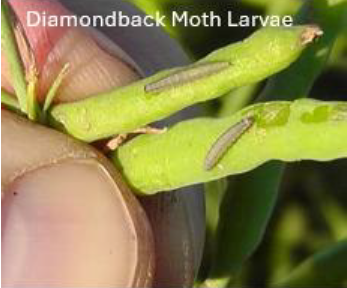 sprayed promptly too. Some field research we did at OSU showed that delaying herbicide applications from late October to mid-March resulted in about a 66% yield loss. The data averaged about 1.3 bushes were lost per week of herbicide application delay. In addition to weeds, scout for diamondback moth larvae which can cause stand loss once they move to feeding inside the canola crown.
Luckily, insects and diseases have overwhelmingly been a non-issue this fall in wheat. There may have been some isolated incidents early in the planting season, but I haven’t heard of any recent reports. Mite transmitted viruses are still a concern, especially out west, and aphids could potentially be found as well. Due to the current conditions, late weeds flushes have been delayed, but bromes, mustards, bindweed, and marestail should still be scouted for since fall applications can provide better herbicide efficacy.
| Figure | Caption |
|---|---|
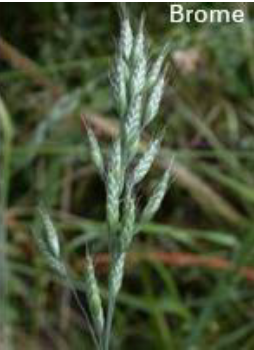
| Brome is one of several weeds to monitor during the fall. |
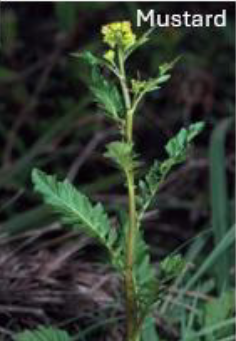
| Producers should watch for mustard as part of fall weed scouting. |
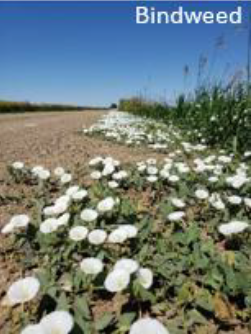
| Producers should watch for bindweed as growing conditions change. |
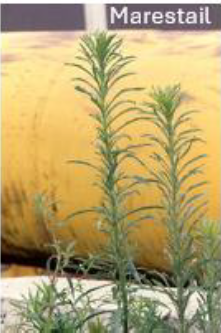
| Marestail is another weed producers should watch for in wheat fields. |
Small Steps Make BIG Impact on Cattle Health
Dana Zook, NW OK Area Livestock Specialist
It’s a proven fact that weaning is a challenging time for both producer AND calf! Given the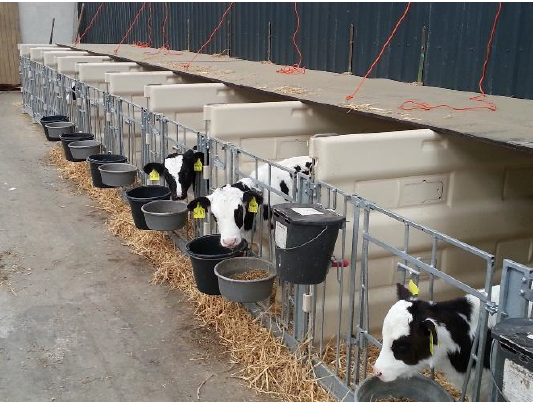 variable weather this fall, I felt a round-up of weaning related topics would be helpful. Read on for some small steps to take this fall that can pay big dividends at weaning time in cattle health and well-being.
Equipping the Pen
Weaning is undoubtedly one of the most stressful times in a calf’s life. Stress compromises th e immune system which can have a negative effect on heath, feed intake, and weight gain. It’s a producer’s job to minimize that stress. Consider the research proven method of weaning calves across the fence from their mothers (fenceline weaning). If facilities aren’t equipped for this, ensure your weaning pen is equipped. Weaning calves in a pen with shade, fresh water, and good quality hay and/or supplement will promote the best weaning response. If possible, minimize mud during times of rain or have contingency plan for a drier area. If using bunks or hay rings, ensure there is enough space for everyone to get their share. The recommendation for younger cattle during preconditioning is 18-22 linear inches per head. Younger cattle have the tendency to all come to the bunk together and space needs to be increased to accommodate additional head.
Clean Water Source
Clean, fresh water has an impact on cattle health. Surface water in streams and ponds is an essential way of life for many cattle operations but there are times when a cleaner water source is preferred. If a water tank is used, be sure it is regularly cleaned and inspected for excess algae, manure, and other impurities that may impact quality. Despite source of water, high levels of total dissolved solids (TDS), sulfates, chlorides, and other salts may impact water intake. Since weaning is a stressful time, ensure water is within the acceptable range by conducting a water test. This can be done through all OSU Extension Offices.
Vaccinate to Manage Risk
Despite the push and pull of vaccine types (killed vs. modified live), vaccination with either is better than none! Also, one round of a Blackleg vaccine is not enough. With low herd numbers, it seems like calves of any vaccination status are valuable. On the flip side, a sick or dead calf is an equal or more costly expense! That being said, OSU Extension recommends the following vaccinations: two rounds of a 5-way respiratory vaccine, two rounds of a blackleg vaccine and at least one shot that includes Mannheimia haemolytica (for shipping fever pneumonia). Work with your veterinarian to find out what products they would recommend. Support your local vet NOW in planning and preparing for health events before you have an emergency on your hands.
Uncomplicated, Targeted Nutrition
I know there are producers who have been feeding some sort of supplement, hay or both much earlier this year than in the past. Some have also reported that cows are in a lower body condition compared to years past. Use this as a reminder to make sure you are feeding calves what they need. Nutrition during weaning, preconditioning or while waiting for fall wheat pasture is important. Complicated blended feeds or high-priced minerals are not essential. Rather, a good quality hay or forage paired with a locally sourced commercial supplement can do wonders on calf health at minimal cost. OSU Extension can help you with hay testing and nutrition evaluation. With a hay test, I can give you the supplement comparison in 15 minutes or less! We are here for you!
Consider these areas for success during weaning this fall. If you have questions, contact us at any OSU County Extension Office!
Historical Insight for USDA Safety Net Program Selection
Alberto Amador, West Area Ag Economics Specialist
2026 has been an atypical year for agriculture, marked by temperatures above average, drought in multiple regions, high input costs, and market uncertainty. Besides all of this, another unusual situation is the enrollment dates for USDA safety net programs. Typically, the registration period runs from November of the prior year through March of the program year. For example, for the 2024 registration ran from November 2023 to March 2024. However, enrollment for 2026 opened on September 16 and will close on December 11.
Late enrollment has some advantages because there is updated data to analyze and make a better decision. Basically, we have more insight into the current crop year. Useful and available information varies for different crops across different marketing years. For example, wheat (June 1 to May 31), while corn, soybeans, and sorghum run from September 1 to August 31. Therefore, it’s a clearer perspective for the 2026/27 crop year, with 4 months of data for wheat and 1 month for the rest of spring crops.
Among the available information, a key indicator is the stocks-to-use ratio (STU). The STU ratio measures the commodity inventory on hand compared to total use. In other words, it can be seen as the supply cushion beyond total use. According to economic fundamentals, a higher STU tends to pressure prices lower and vice versa, although prices are multifactorial. Since STU is only one component of price formation, it doesn’t fully explain price behavior, but it provides a solid reference point.
Regarding wheat, the latest balance sheet published in the October WASDE report shows projections for 2026/27. In general, and compared with the projections of the previous month, total supply increased while total use declined, resulting in a projected STU of 39.8%. Additionally, the projected marketing year average price received by farmers (MYA) sits at $6.30 per bushel (10 cents lower than the last forecast).
| STU Relative Shift | Projected STU | Estimated MYA-Price Change | Implied MYA-Price |
|---|---|---|---|
| -5% | 37.81% | $0.16 | $6.46 |
| -4% | 38.21% | $0.13 | $6.43 |
| -3% | 38.61% | $0.09 | $6.39 |
| -2% | 39.00% | $0.06 | $6.36 |
| -1% | 39.40% | $0.03 | $6.33 |
| 0% | 39.80% | $0.00 | $6.30 |
| 1% | 40.20% | -$0.03 | $6.27 |
| 2% | 40.60% | -$0.06 | $6.24 |
| 3% | 40.99% | -$0.09 | $6.21 |
| 4% | 41.39% | -$0.12 | $6.18 |
| 5% | 41.79% | -$0.15 | $6.15 |
Using historical data (1986-2025), I analyzed the relationship between changes in STU and changes in MYA price. According to my results, if the annual difference in STU increases by 1%, the MYA price difference year by year would tend to decrease by 0.49%. This means that future changes in the STU ratio give us a reference for possible adjustments in the 2026 MYA. For example, keeping other factors constant, if the STU in November increases by 2 percentage points to 41.8%, the projected MYA would lose 15 cents moving from $6.30 to $6.15. It’s important to emphasize that these values show the statistical relationship over the last 40 years. Therefore, values in Table 1 are statistical benchmarks and not exact forecast, but they show how trends work, allowing us to see potential changes in the MYA based on STU shifts.
This insight is valuable because the MYA price is crucial for triggering PLC and ARC payments. The effective reference price for wheat is $6.35, which is 5 cents above the projected 2026 MYA so far. Future projections will shape the outlook for the rest of the crop year. As I mentioned before, STU is only one part of the price components. For these reasons, wheat exports, export commitments, and total export expectations are other good indicators to watch.
Finally, only as a brief recap, this metric and the analysis help estimate how close the projection is to the reference price and how it tends to move, not whether it will fall below it. If the final MYA closes below the reference price, PLC payments will be triggered. For ARC, the MYA is used to determine the actual county revenue (County Yield X MYA), while the benchmark reference varies for each county. Remember that PLC only protects against price declines and ARC-CO provides protection against loss in area revenue. If you have any questions about the Farm Bill programs or require a deeper analysis, please don’t hesitate to contact your OSU Extension Office.
Highly Pathogenic Avian Influenza H5N1: A Continued Concern for Poultry Producers
Barry Whitworth, DVM
Senior Extension Specialist/BQA State Coordinator, Department of Animal & Food Sciences, Ferguson College of Agriculture
With all the talk about New World Screwworm, people may forget that Highly Pathogenic Avian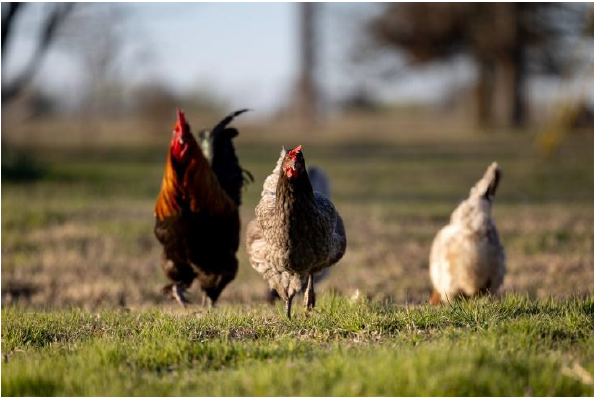 Influenza (HPAI) H5N1 continues to be a concern for backyard and commercial poultry producers. The disease has resulted in flock losses, reduced income, and trade restrictions. In October alone, 11 commercial flocks in Kansas, Illinois, Indiana, Minnesota, North Dakota, South Dakota, and Wisconsin were infected, along with 16 backyard flocks in multiple states. Since the start of the current HPAI outbreak on February 8, 2022, more than 210 million domestic birds have been lost. This total includes both commercial and backyard flocks. In addition, many wild birds and wild mammals have also died. Thirty-two dairy cows were diagnosed with HPAI in October as well. As wild birds begin their southern migration, Oklahoma poultry producers need to be especially vigilant in protecting their flocks.
Avian influenza (AI) is a highly contagious viral disease. While there are many subtypes of the virus, H5N1 is classified as highly pathogenic, meaning it spreads rapidly and often causes severe illness and high mortality in chickens, turkeys, and other poultry. Wild waterfowl are natural reservoirs of the virus and can shed it without showing signs of illness, making them an ongoing threat to domestic flocks.
Clinical signs of HPAI often appear suddenly and may include:
- Sudden death with no prior symptoms
- Respiratory problems such as coughing, sneezing, watery eyes, and nasal discharge
- Decreased water and feed consumption
- Drop in egg production and/or misshapen eggs
- Swelling of the comb, wattles, head, eyelids, or hocks
- Nervous system disorders, including tremors, incoordination, and abnormal head positions
The H5N1 virus spreads through direct contact with infected birds (domestic or wild), as well as contaminated equipment, feed, water, and clothing. The virus can also travel short distances on dust particles or feathers. The risk of transmission increases during wild bird migration.
Since the United States (U.S.) has no approved treatment or vaccine for HPAI, the best defense is a strong biosecurity program. Biosecurity involves management practices designed to reduce or prevent unwanted threats from entering a flock. Key protocols include limiting traffic, keeping facilities clean, and monitoring for disease.
The first line of defense is to limit traffic on and around poultry facilities. Visitors and vehicles should not enter unless absolutely necessary. If someone must enter, they should wear clean coveralls and disposable shoe covers and wash their hands before and after visiting. All visitors should dip their shoes in a disinfectant solution upon entering and exiting. No other animals, wild or domestic, should be allowed into poultry facilities.
Sanitation is a critical part of any biosecurity plan. All equipment, feeders, waterers, and buildings should be cleaned and disinfected regularly. First, remove all fecal material and dirt. Then apply disinfectants, allowing enough contact time for them to be effective. Foot baths must be properly maintained. The property surrounding poultry houses should be mowed and kept clean. Failure to cut grass or promptly clean spilled feed can attract wild birds and animals, which have been linked to the spread of HPAI.
Birds should be monitored daily. Dead birds should be collected and disposed of promptly. Producers should be familiar with the clinical signs of HPAI. Any unusual increase in sick or dead birds should be reported immediately to the proper authorities. Poultry producers can contact their veterinarian, their Oklahoma State University County Extension Office, the Oklahoma State Veterinarian at (405) 522-6141, or the USDA toll-free hotline at (866) 536-7593. Prompt reporting helps limit the spread of the disease.
Avian influenza remains a major threat to the U.S. and Oklahoma poultry industries. It is the responsibility of all commercial and backyard poultry producers to take every possible step to protect their flocks and safeguard this vital industry. For more information about HPAI, poultry producers should contact their veterinarian or their local Oklahoma State University Agricultural Extension Educator. Additional information is available at the USDA H5N1 Influenza website.
References:
- Swayne, D.E. and Halvorson, D.A. 2003 Influenza. In Y. M. Saif (ed.). Diseases of Poultry, 11th ed. Iowa State Press: Ames, Iowa, 135-160.
- Green, A. L., Branan, M., Fields, V. L., Patyk, K., Kolar, S. K., Beam, A., Marshall, K., McGuigan, R., Vuolo, M., Freifeld, A., Torchetti, M. K., Lantz, K., & Delgado, A. H. (2023). Investigation of risk factors for introduction of highly pathogenic avian influenza H5N1 virus onto table egg farms in the United States, 2022: a case-control study. Frontiers in veterinary science, 10, 1229008.
Grazing Crop Residues to Extend Grazing and Stretch Hay Supply
Paul Beck, Oklahoma State University Extension Beef Cattle Nutrition Specialist
Drought conditions across much of Oklahoma have reduced pasture production and hay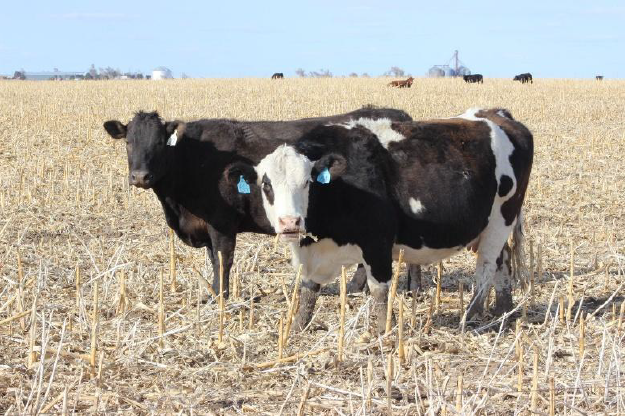 supplies going into winter. Many producers have already started feeding hay, raising concerns about having enough forage to carry cowherds through the winter.
In a past Cow-Calf Corner articles we discussed using failed cotton as a grazing resource when droughts limit forage production and hay stocks are short: Cow Calf Corner - September 28, 2026. Grazing crop residues following grain harvest is an underutilized way to economically extend grazing and conserve hay supplies in Oklahoma.
Corn and grain sorghum residues are a valuable grazing resources for beef cows, particularly during mid-gestation when nutrient requirements are relatively low. Cattle selectively graze the most nutritious plant components first, consuming any remaining grain, followed by leaves and husks. Stalks and cobs are selected last and are considerably lower in digestibility and should not be considered the primary source of nutrients for the cow.
The University of Nebraska indicates that corn residue from each acre of a field yielding 100 bushels can support a 1,200-pound cow for 30 days. A field yielding 150 bushels could provide approximately 45 cow-grazing days per acre. These estimates assume cattle consume approximately 50% of the leaves and husks, representing only about 15% of the total residue.
Grain sorghum produces 8 to 12 pounds of grazable residue per bushel of grain harvested, so an 80-bushel/acre grain sorghum crop could provide 640 to 960 pounds of grazable forage per acre.
For all crop residues nutritional value declines as grazing progresses because cattle selectively consume the higher-quality portions first. Protein supplementation may be necessary as residue quality declines, particularly for lactating cows and growing replacement heifers.
Producers should exercise caution when grazing drought-stressed sorghum or corn residues because of potential nitrate accumulation. Grain sorghum regrowth, particularly following frost, can also present a prussic acid risk. Herbicide grazing restrictions should be checked before turning cattle into harvested fields.
Grazing crop residues can delay hay feeding, reduce winter feed costs, and provide additional value from harvested cropland. However, stocking rates should reflect the amount of palatable residue available, and cattle should be moved before the remaining forage becomes too low in quality to meet their nutritional requirements.
Mary Drewnoski, University of Nebraska, presented Feeding Corn Stalks, Milo Stalks, and Soybean Hay on November 17, 2022 as part of the Thursday Rancher's Series. Feeding Corn Stalks, Milo Stalks, and Soybean Hay