

Cow-Calf Corner | September 28, 2026
Turning the Corner on the Cattle Cycle
Derrell S. Peel, Oklahoma State University Extension Livestock Marketing Specialist
There are some indications (and a lot of hope) that the beef cow herd is at a cyclical low after seven years of liquidation. The latest data from the July Cattle report showed continued liquidation with the beef cow herd down 0.7 percent year over year at mid-year. Changes in beef cow culling and heifer retention are required to stabilize the herd inventory and begin herd expansion.
The first stage of turning a cattle cycle involves slowing herd liquidation and stabilizing the herd inventory at a cyclical low. Beef cow herd culling has been slowing since 2022 as producers have held cows longer. Beef cow slaughter decreased 40.5 percent from 2022 through 2025 and is down another 13.7 percent year over year thus far in 2026. This corresponds to a decrease in the beef cow culling rate from a record high 13.2 percent in 2022 to a projected record low rate of 7.3 percent in 2026 (Figure 1, red line). The average beef herd culling rate over many years is 10.0 percent.
The sharp decreases in cow culling since 2023 means that more older beef cows now populate the herd. Beef cow culling must increase soon even though no significant heifer retention is indicated at this time. This is punctuated by the extremely low culling rate in 2026 (Figure 1). In data back to 1986, beef cow culling has only dropped below 8.0 percent twice before (2005 and 2015) and has never stayed below 8.0 percent for more than one year. After decreasing for four years, beef cow slaughter is likely to hold steady or increase in 2027 as old cows are culled. Unless sufficient replacement heifers are available, the beef cow herd will decline further in 2027.
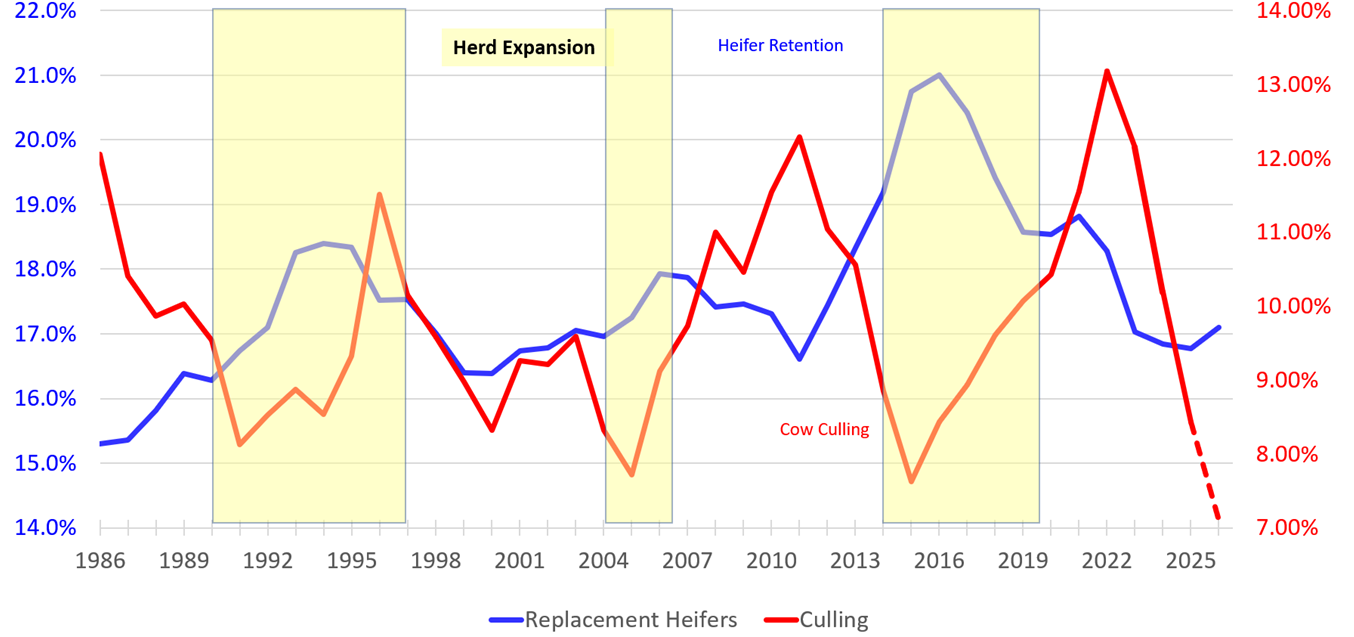 Figure 1. Heifer Retention and Cow Culling - As a % of January 1 Beef Cow Inventory
Inventory data from January indicated a small increase of 42,000 head of beef replacement heifers in 2026 (Figure 1, blue line). Since 2001, USDA has provided a breakdown of replacement heifer inventory into bred heifers (heifers expected to calve in the current year) and, by subtraction, heifer calves to be bred for next year. The number of heifer calves is always lower than the number of bred heifers the following year, which implies that some additional heifers (not initially reported as replacements) must get bred each year. I refer to these extra heifers as “impulse heifer breeding” because these heifers are presumably redirected from the “other heifer” category and used for breeding rather than feeding. Figure 2 shows the number of heifer calves each year and the calculated number of impulse heifer breeding. The vertical sum of these two sets of heifers in a year equals the reported number of bred heifers the following year.
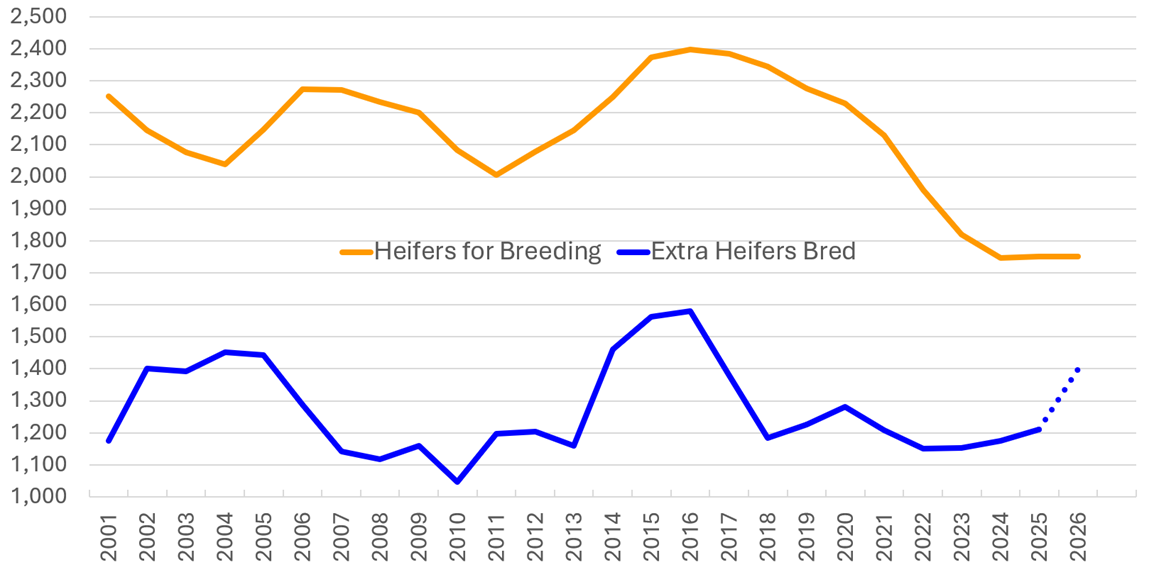 Figure 2. Heifers for Breeding and Impulse Heifer Breeding - 1000 Head
If we project that the beef cow herd will show a slight increase in 2027 and that the beef cow culling rate increases above 8.0 percent, the implications for heifer retention can be calculated. The number of bred heifers would need to increase roughly 6 – 7 percent going into 2027. From Figure 2, we already know (from the 2026 Inventory report) that the number of heifer calves that could be bred in 2026 was unchanged from the previous year (orange line). This implies that a significant increase in impulse heifer breeding would be occurring in 2026 as shown by the dotted blue line in Figure 2. This may be happening. Heifer slaughter in 2026 is down 11.3 percent through mid-September. The mid-year Inventory report included a 100,000 head increase in beef replacement heifers that may include impulse heifers bred early in the year and reported as replacements in July. Impulse heifer breeding is likely to increase more and faster than reported heifer retention. Nevertheless, it is unlikely that the beef cow herd could show more than a slight increase at best going into 2027. The January Inventory report will confirm what has happened in 2026 and what may happen in 2027. Herd rebuilding may gain more momentum after 2027.
Derrell Peel, OSU Extension livestock marketing specialist, discusses wheat pasture challenges and says cattle markets are bouncing back after a challenging summer on SunUpTV from September 26, 2026. Cattle Markets in Recovery | Livestock Marketing
Legumes in Cool Season Pasture
Mark Z. Johnson, Oklahoma State University Extension Beef Cattle Breeding Specialist
Drought, prolonged summer heat and the high price of nitrogen fertilizer lead to the topic of this article. At the time of this writing, many Oklahoma producers are either waiting to plant cool season annuals for winter grazing, or waiting to see if a stand emerges from the seed dusted in a month ago. With rain in the forecast there is still high potential for excellent cool season pasture. The benefits and return on investment of incorporating cool season legumes merit consideration.
Benefits
The most significant benefit of adding legumes into a pasture mix is potentially supplying the successive cash crop with nitrogen (N) without adding it as fertilizer. Legumes have a mutually beneficial partnership with soil bacteria, Rhizobium. These bacteria infect legume root hairs forming small nodules near the point of root elongation. These bacteria pull nitrogen gas (N2) from the atmosphere and convert it into plant-available forms of nitrogen through a process known as nitrogen fixation. The relationship benefits both partners. The bacteria provide the plant with nitrogen and essential nutrients for growth, and the legume host supplies the bacteria with sugars and other compounds they need to survive and fix nitrogen. The amount of N to be expected will vary. For example, mixing Austrian Winter Peas into winter wheat pasture is an effective strategy for Oklahoma producers looking to slash synthetic nitrogen costs while boosting forage quality. A successful winter pea stand can fix 30 – 100 pounds of N per acre, which directly translates to saving on spring top dressing of urea. While incorporating a legume into your cool season grass mix doesn’t necessarily result in greater tonnage as compared to a cereal grain monoculture, it will increase crude protein and digestibility for stocker cattle.
Management Considerations
Soil testing is an important first step to take before planting. Legumes are more sensitive to low soil pH (less than 6.0) and require adequate levels of phosphorus and potassium. Also, inoculation of legume seed immediately prior to planting is critical. When legume seeds are properly inoculated and planted in favorable soil conditions, root nodules can begin forming within three to four weeks after emergence. As the plant grows, the number and size of these nodules provide a good indication of how much nitrogen fixation is occurring. If soil conditions are suitable for growth of the legume, they are typically suitable for bacterial infection and nitrogen fixation. Rhizobium populations can be reduced by extreme weather conditions like drought and flooding which will impact nitrogen fixation in the system. Planting depth and grazing management also are important with regard to getting the maximum benefit from legumes. While some legumes can increase the risk of bloat, the likelihood is generally low when legumes make up less than half of pasture ground cover. Poloxalene, a bloat preventative, must be consumed by cattle daily, both prior to turning cattle onto legumes and thereafter, to be effective. Further details on seeding rates and management considerations are available in the reference materials below.
Mark Johnson, OSU Extension beef cattle breeding specialist, speaks with Mason Henson, OSU animal and food sciences assistant professor, about how producers can utilize legumes as forage for cattle herds on SunUpTV from May 23, 2026. Boosting Cattle Nutrition with Legumes: What Producers Should Know
References
Grazing Failed Cotton to Extend Grazing
Paul Beck, Oklahoma State University Extension Beef Cattle Nutrition Specialist
Drought conditions this summer have impacted pasture and range conditions in much of the Southern Great Plains. Many producers have already started feeding hay, which is especially concerning because hay supplies are already short going into the normal winter feeding period.
The drought and hot weather have also impacted crop conditions. The USDA Crop Progress report released on September 21 rated the U.S. cotton crop at only 34% good to excellent. But conditions in Oklahoma and Texas are considerably worse, where only 9 to 15%, respectively, of the crop is in excellent condition. In Oklahoma, 91% of the cotton is rated Fair or Poor to Very Poor, compared with 85% of the crop in Texas.
Wheat planting is currently underway and prospects for wheat pasture this fall can improve with timely rains this fall. However, dry conditions have delayed wheat crop emergence and grazable wheat pasture is still 2 to 3 months away. That leaves a forage gap that failed crop acres may fill.
A failed cotton crop can be used to extend the grazing season and delay hay feeding. The seed, lint, boll and leaf provide good nutritional value for beef cows. Cattle will not graze mature cotton stalks unless forced to do so and will not get much nutritional benefit from the stalk.
Research from Georgia showed that the stalk portion was 50 to 70% of the total cotton residue. Of the edible portion, the seed accounted for 20 to 25%, lint 20 to 25%, and the leaves and bolls made up 50 to 60%. The grazable portion of the cotton plant (the leaf, seed, boll, and lint) averages around 15 to 20% crude protein and 55 to 60% total digestible nutrients, easily meeting the proteins and energy requirements of a pregnant beef cow.
Cattle will naturally graze the more palatable plant components first so strip grazing will extend the grazing period and achieve more efficient use of the crop. Ideally cattle should be provided about one week’s worth of grazing at a time. Providing access to a round bale of hay can be an indicator of when it is time to move the fence and provide a fresh strip of cotton.
There are herbicide restrictions on grazing with several common cotton herbicides having labels that do not allow grazing of any livestock after application. Caparol®, Cotoran®, Direx®, Enlist One®, and Warrant® do not allow grazing of livestock following application. Prowl H2O® requires a 60-day interval between application and grazing, while Xtendimax® requires a seven-day interval. Dual Magnum®, Engenia®, Liberty®, Outlook®, Roundup® PowerMax®, Reflex®, Sinister®, and Staple® do not list a grazing or feeding restriction for cotton forage on their labels. Specific generic herbicide product labels should be consulted to make sure that no restriction regarding grazing or feeding of cotton forage is listed. Additionally, producers should consult with their crop insurance provider to make sure that grazing of failed cotton will not affect their crop insurance coverage.
Gossypol is a concern with cotton residues of any type. It is a naturally occurring toxin that protects the plant from insects. A beef cow can tolerate considerable amounts of gossypol but non-ruminants and pre-ruminant calves are unable to tolerate much gossypol at all because rumen microorganisms bind much of the gossypol and reduce its absorption. Developing bulls should not graze cotton residue, and breeding bulls should not graze cotton residue within 90 days of the breeding season.
Grazing failed cotton is not the outcome a cotton producer hoped for when the crop was planted. Under the current conditions, it can be a valuable forage resource providing an avenue to bridge the gap until wheat pasture is available, delay hay feeding where the hay crop is already limited and provide some additional revenue for the cotton producer.
Dr David Lalman offers guidance for producers who are considering grazing failed cotton on SunUpTV from October 22, 2022. Feeding Failed Summer Crops: Cotton