

Ag Insights January 2026
Thursday, January 8, 2026
Vertebrate Management in Forages
Josh Bushong, Area Extension Agronomist
I had a question from an alfalfa farmer recently about if and when he should manage some gophers in his fields. More than likely the rodent pest is a pocket gopher but could also be moles or voles. There are multiple ways you can try and control these vertebrate pests, but the two most practical and efficient methods are using toxic baits and trapping.
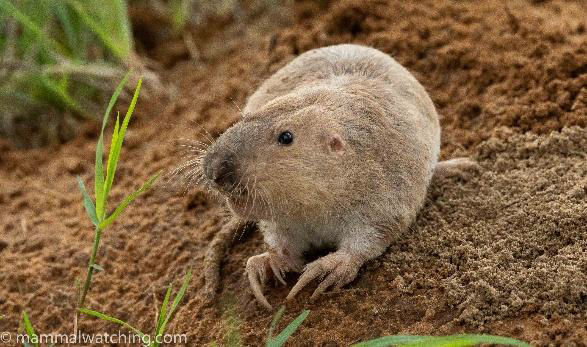 Pocket gophers do not hibernate and can be active year-round. While these gophers
are mostly solitary animals and stay in their own tunnel, there can be a community
of tunnels with over 30 gophers per acre. Each gopher can have an extensive system
of underground tunnels that extend several hundred feet, and one gopher can make as
many as 200 soil mounds per year.
Pocket gophers do not hibernate and can be active year-round. While these gophers
are mostly solitary animals and stay in their own tunnel, there can be a community
of tunnels with over 30 gophers per acre. Each gopher can have an extensive system
of underground tunnels that extend several hundred feet, and one gopher can make as
many as 200 soil mounds per year.
As far as economic damage from pocket gophers, other states have documented a 20 to almost 50 percent reduction in forage yield on annual and perennial rangelands and 35 percent reduction in alfalfa. However, the return on investment for control measures isn’t straightforward. More research is needed to understand forage recovery and the speed of reinfestations in Oklahoma.
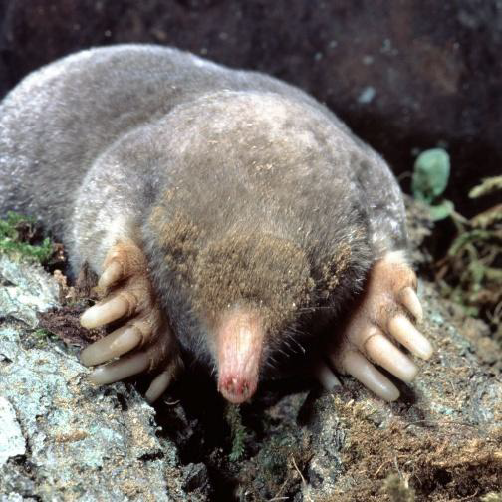
It is also hard to put a dollar value on the hassle of soil mounds on hay equipment, livestock risk of injury, and potential damage to buried cable, plastic pipe, trees, etc.. But it’s not all negative about these rodents. Pocket gophers are significant members of the grassland ecosystem. They can increase soil fertility by burying vegetation and depositing urine and manure. They can increase water infiltration, which can reduce runoff. They can also increase soil formation by bringing sub-soil to the surface.
There are multiple species of pocket gophers found in Oklahoma. The plains pocket
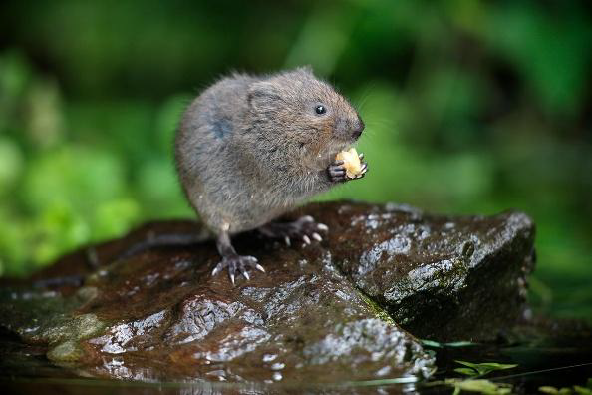
gopher (Geomys bursarius), Baird’s pocket gopher (Geomys breviceps), Mexican pocket gopher (Cratogeomys castanops), and the Hall’s pocket gopher (Geomys jugossicularis). By-in-large the main species in western Oklahoma is the plains pocket gopher. The Baird’s can be found in south-eastern Oklahoma, and the Mexican and Hall’s pocket gophers can be found in the Panhandle.
For the most part you don’t need to know which species you have on your farm. Most prefer to live in alfalfa, rangeland, and introduced pastures. They are often more prevalent in sandy or sandy-loam soils. Their tunnels are typically between 2 to 18 inches deep, but parts can be as deep as a few feet. Populations found in over-grazed grasslands will usually tunnel more to find more resources. Soil type and soil moisture are the main limiting tunneling factors.
Control methods include poisoning, trapping, flooding, gassing, encouraging natural enemies, and exclusion. Examples of cultural methods include crop rotation to small grains or selecting alfalfa varieties that have multiple large roots instead of a single taproot. Trapping is very effective on low infestations. Over large and heavily infested areas, poisoning with toxicants is the most economical option.
Toxicants are baits that should be applied underground at the depth of the gopher tunnels. Read and follow pesticide labels to know if the product has a POST-harvest restriction or should be applied when the crop is dormant. There are a few main products, including strychnine and anticoagulants.
When using toxic baits, the main keys to success are multiple feedings are needed to reach lethal dosage and don’t over use the same product because resistance can occur. There are 3-point “burrow builder” that can be applied with tractors or a hand probe can also be used if only small areas are infested.
For the tractor implements, “burrow-builder, gopher getter, etc.”, only apply when soil is at a good moisture in which the tunnel furrow made doesn’t collapse afterwards. It is best to run parallel to terraces and ditches, and to apply in a crisscross pattern in high mound densities. Only apply in infested areas, because after the toxins are decomposed the gophers can use the new tunnels to quickly infest new parts of the field. Adjust the depth to the same depth as the tunnels and adjust the press wheel to close the furrow without collapsing the new tunnel.
Fumigation is another option but typically costs too much mainly due to labor. Since every burrow must be treated. Aluminum phosphide in relatively high soil moisture has been more efficient at controlling the gophers than carbon monoxide.
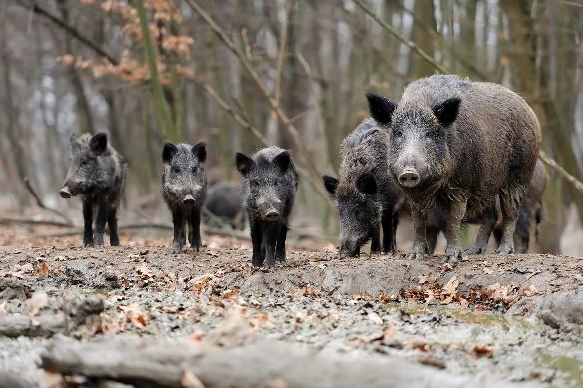 In addition to small rodents, much larger rodents like feral swine can also be managed
throughout the winter. Feral swine, or hogs, cause tremendous damage to the soil,
water, and other environmental systems. Feral swine continuously destroy significant
row crop fields every year in Oklahoma by eating seed at planting or by rooting in
the crop.
In addition to small rodents, much larger rodents like feral swine can also be managed
throughout the winter. Feral swine, or hogs, cause tremendous damage to the soil,
water, and other environmental systems. Feral swine continuously destroy significant
row crop fields every year in Oklahoma by eating seed at planting or by rooting in
the crop.
In Oklahoma, feral swine can be hunted and taken year-round during the day and night on private lands. A hunting license is only required during big game gun or muzzleloader seasons. There is no restriction on method of take or bag limit. A landowner, agricultural lessee, or designated agent of the landowner or lessee may use a headlight, thermal, or light enhancement device carried on the person, a vehicle with or without a mounted spotlight or night vision equipment while taking feral swine at night.
As of April 2024, the Oklahoma Department of Agriculture, Food, and Forestry (ODAFF) approved the use of bait to control feral swine. The product approved is ‘Kaput Feral Hog Bait’, with the active ingredient warfarin. It is a Restricted Use Pesticide, meaning you must have one of these three certifications to purchase and use it: 1A Ag Plant, 11A Bird & Vertebrate, or Private.
There is an online Stewardship training that must also be completed prior to purchase. There is a supplemental label that must be in possession when using it as well. Feeders must have lids that weigh at least 17 pounds. There’s a 1–6-week conditioning phase where just feed or corn is used in the feeder before bait can be added. After the swine start to eat from the feeder, then bait should be added.
Grazing is not allowed in the field while bait is out. The feeder must be checked every 2-4 days and swine carcasses must be buried or properly disposed. After bait is removed from the feeder, the fields will need to be monitored for two more weeks. A blue indicator dye is used in the bait that will turn the fatty tissues of animal carcasses blue. Vitamin K-1 is an antidote for warfarin, and the product is quickly metabolized with a half-life of about 42 hours.
As with all pesticides, please follow the product labels and use directions. To find out more about vertebrate control, visit your local OSU Extension office and/or review factsheets like “Controlling Pocket Gophers, NREM-9001”.
Developing Forage Efficient Heifers
Dana Zook, NW OK Area Livestock Specialist
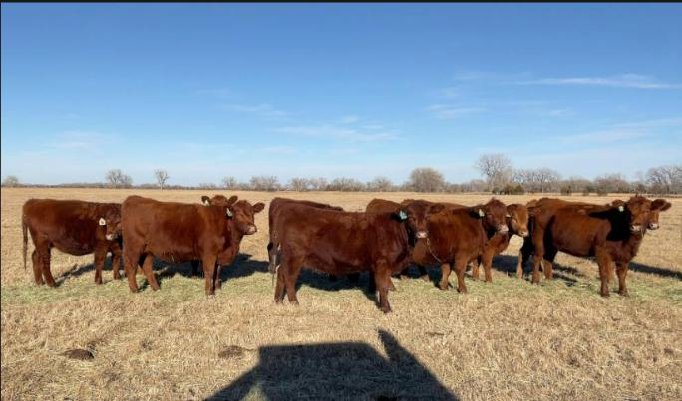 Although the national reports show little indication of heifer retention above normal
levels thus far in 2025, I know there many producers retaining heifers for future
herd replacements. Heifer retention isn’t a small task. Cattle markets are STRONG
and forgoing the value of a heifer at the sale barn is a hard decision. I could use
this article to review the identifiers of a “worthy” replacement heifer, but I de
cided to share some interesting research related to forage-use efficiency in heifers,
a topic that I believe is overlooked.
Although the national reports show little indication of heifer retention above normal
levels thus far in 2025, I know there many producers retaining heifers for future
herd replacements. Heifer retention isn’t a small task. Cattle markets are STRONG
and forgoing the value of a heifer at the sale barn is a hard decision. I could use
this article to review the identifiers of a “worthy” replacement heifer, but I de
cided to share some interesting research related to forage-use efficiency in heifers,
a topic that I believe is overlooked.
What is forage-use efficiency? In simple terms, this is how well a heifer performs with nutrition that is naturally available on a ranch. At Oklahoma State University, Dr. Lalman and his team are looking at forage-use efficiency with cows and heifers using a forage intake system which measures how much forage is consumed. Cattle are tested at the Forage Intake Facility at the Ranch Cow Research Center near Stillwater, OK. During a test, cattle spend approximately 90 days in the facility and are tested for weight gain using only forage and mineral supplement. Animals that have a balance of efficient forage intake with moderate weight gain are identified as “forage efficient”.
This isn’t just something researchers can do -producers can apply this tactic on their operation! To utilize this practice, weaned and preconditioned heifers should be individually weighed and then turned out on a forage resource such as native range for 70 to 100 days. Very little or no supplements are provided other than mineral. Cattle on the test at OSU receive 12-14% CP bermuda; a forage that wouldn’t require additional supplement. This is important because any added feed will skew the results (this is important). After the test, heifers are then pulled back in for individual weights. This information is powerful in determining which heifers will perform at the desired level and who are the best “match” to the environment on the ranch.
A contrasting practice to this method in heifer development is bulking up nutrition prior to breeding with the goal of getting the highest cyclicity and pregnancy rates. It could be that the heifer that bred early under this intensive system the first year will not perform well in the future when they only have standing forage to eat. This method of development doesn’t serve cattle producers who rely on forage-based cow-calf systems. It also doesn’t identify heifers who underperform on a specific ranches forage system. In a time when all inputs to cattle production are high, the last thing a producer wants is a cow that needs twice as much forage to survive than her herd mate. She will either not breed back in a timely manner or will cost you twice the amount in feed over her lifetime.
Dr. Lalman and his team hypothesize that “heifers demonstrating moderate forage intake with acceptable growth will ultimately become more forage-efficient cows”. As we close out the year and heifer retention slowly begins, I challenge producers to evaluate their heifer development systems. Do you provide an “artificial” environment for heifer development? Or do you challenge heifers to perform in their natural environment utilizing standing forage or moderate quality hay to allow the best heifers to shine? If you are interested in this topic, take a look at the article titled “Finding Forage Efficient Heifers by David Lalman and Bailey Tomson in the December 15th Edition of Cow Calf Corner. You can find this online when searching for Oklahoma State Cow Calf Corner. While you are there, subscribe to their weekly newsletter and get it right in your inbox! Happy Holidays to you all!
The Role of Imports in the Current Cattle Market
Alberto Amador, West Area Ag Economics Specialist
It’s incredible how fast 2025 went. Personally, I opened and closed my eyes and suddenly we are in December. Throughout 2025, agriculture experienced multiple events that changed the game or as economists say: “events changed the allocation of resources”. A clear example is the cattle market. It has experienced multiple shifts, such as record high prices, margin pressure, and different conditions for each link of the beef supply chain. On this occasion, I provide a brief recap of what happened with cattle prices, market conditions, and the main factors influencing the market.
Since the beginning of the year, prices were higher compared to 2024. The highest feeder cattle prices occurred in October, while cutout and retail prices peaked in September. However, in November, a strategy to manage high beef prices was announced. Basically, it focuses on increasing beef imports, mainly from South America. In addition, rumors about reopening the Mexican border have become more common. In theory, both actions directly affect supply, beef imports act as a substitute of domestic beef, and the Mexican live cattle imports are part of total feeder supply. As a consequence, speculation about higher supply has caused a drop in cattle future prices.
Although both live cattle imports and beef imports contribute to the total cattle and beef supply, their role in the U.S. cattle/beef industry is relatively small. Over the last 10 years, Mexican live cattle imports represented about 3% of the domestic calf crop, while beef imports accounted for around 12% of domestic beef production. In addition, imports from Argentina represent less than 5% of total beef imports, and Brazil less than 13%.
Because these factors have been trending topics, I attempted to quantify the impact of Mexican cattle imports and beef imports on calves and feeder cash price in the South Plain region. My analysis shows that Mexican imports are not significant for either calves (400 500 lbs.) or feeders (700-800 lbs.).
Regarding beef imports, an increase has a small positive effect (less than 1%) on prices for both calves and feeders in the short term. In the long term, the model shows that beef imports negatively affect calf prices and have no effect on feeder prices. This long-term effect would only occur if there were a permanent 1% increase in imports, but beef imports are volatile and driven by multiple factors. Additionally, there isn’t an impact on feeders because most imports are used for ground beef. Feeders, being closer to finishing, are more linked to higher quality cuts. In the short term, beef imports have a positive impact on both calves and feeders because imports usually increase when demand is strong.
In brief, Mexican live cattle imports don’t have a significant effect on cattle prices, while beef imports may have a small positive impact in the short term, mainly during the first 2 months. Cattle futures are the main price driver, followed by corn cash price (Texas) . Future prices have a positive impact on both calves and feeders in the short and long term, whereas corn prices have a negative long-term effect because they act as an input cost that pressure prices. Currently, only an increase in supply (herd expansion) could push cattle prices lower. This process takes around three to four years. Therefore, prices will likely remain higher than previous years under the current conditions and without major government announcements.
New World Screwworm: Current Status
Barry Whitworth, DVM
Senior Extension Specialist/BQA State Coordinator, Department of Animal & Food Services,
Ferguson College of Agriculture, Oklahoma State University
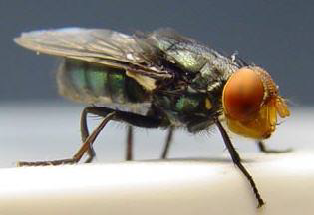 As of late December, New World Screwworm (NWS), Cochliomyia hominivorax, continues to be a significant animal and human health issue in Central America and
Mexico. As of December 12, 2025, according to the Centers for Disease Control and
Prevention (CDC) and the United States Department of Agriculture (U SDA), over 140,000
animal cases and more than 1,000 human cases have been reported in these countries.
The only confirmed NWS case in the United States (US) occurred in a human. The traveler-associated
case was confirmed on August 4, 2025, by the CDC in cooperation with the Maryland
Department of Health. As of December, the US border with Mexico remains closed to
livestock trade.
As of late December, New World Screwworm (NWS), Cochliomyia hominivorax, continues to be a significant animal and human health issue in Central America and
Mexico. As of December 12, 2025, according to the Centers for Disease Control and
Prevention (CDC) and the United States Department of Agriculture (U SDA), over 140,000
animal cases and more than 1,000 human cases have been reported in these countries.
The only confirmed NWS case in the United States (US) occurred in a human. The traveler-associated
case was confirmed on August 4, 2025, by the CDC in cooperation with the Maryland
Department of Health. As of December, the US border with Mexico remains closed to
livestock trade.
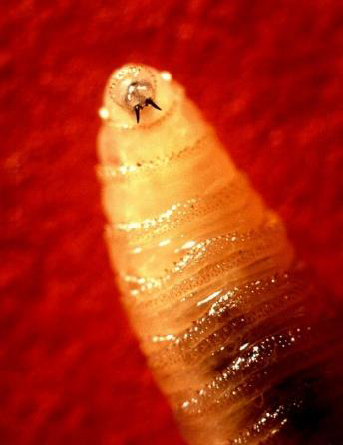 The USDA continues to monitor the US–Mexico border. NWS fly traps are deployed by
the Animal and Plant Health Inspection Service (APHIS) in Texas, New Mexico, Arizona,
and California. Over 30,000 trapped flies have been analyzed, as well as more than
6,000 wild animals. On November 21, 2025, the USDA reported that NWS has not been
detected in animals or traps in the US.
The USDA continues to monitor the US–Mexico border. NWS fly traps are deployed by
the Animal and Plant Health Inspection Service (APHIS) in Texas, New Mexico, Arizona,
and California. Over 30,000 trapped flies have been analyzed, as well as more than
6,000 wild animals. On November 21, 2025, the USDA reported that NWS has not been
detected in animals or traps in the US.
In Mexico, the vast majority of NWS flies remain in the south. A few cases have been found in northern Mexico. According to the USDA, the closest case to the US was approximately 70 miles south of Texas. On December 3, 2025, USDA officials reported a new case of NWS 120 miles south of the Texas border. At the time of this writing, all of the cases found in northern Mexico are longer active.
In a recent audit of the NWS response in Mexico, the USDA reported that progress is being made in controlling NWS. Mexico is conducting outreach and educational programs for livestock producers and is developing emergency response and treatment protocols. They have expanded the workforce and increased surveillance for the parasite. The USDA states that more work is needed but remains committed to implementing the joint NWS action plan.
NWS was eradicated from the US by using the Sterile Insect Technique (SIT). This program is the primary control measure being used in Mexico. Currently, the USDA Panama COPEG facility is producing 100 million sterile flies per week. These flies are being dispersed primarily in southern Mexico. However, a new dispersal facility was recently opened in Tampico, Mexico, which will allow for aerial dispersal in northern Mexico. Additionally, the USDA is investing $21 million to support Mexico’s renovation of a fruit fly facility to produce sterile NWS flies.
In the US, the USDA is currently constructing a dispersal facility at Moore Air Force Base in McAllen, Texas. This facility is expected to be operational in early 2026. In addition to the new dispersal facility, the USDA is planning the construction of a new NWS sterile fly production facility in the US.
When NWS was detected in Mexico in November 2024, the US did not have any Food and Drug Administration (FDA)-approved products for NWS control and prevention. Since then, the FDA has conditionally approved doramectin injection (Dectomax CA-1 injectable solution) for the control and prevention of NWS in cattle. On December 4, 2025, the FDA conditionally approved fluralaner (Exzolt Cattle-CA1) for prevention and treatment of larval infestation by NWS and treatment and control of cattle fever ticks. For cats and dogs, the FDA has conditionally approved lotilaner (Credelio) chewable tablets for the treatment of infestations caused by New World screwworm larvae (myiasis) in dogs and puppies, and lotilaner (Credelio CAT) chewable tablets for the treatment of infestations caused by the same larvae in cats and kittens.
With the start of winter, the spread of NWS into Oklahoma is unlikely. However, when spring arrives, the risk of NWS moving into Oklahoma may increase. Oklahoma livestock producers need to prepare for the possibility of an NWS outbreak. The USDA has recently launched a new website at screwworm.gov. This website contains valuable information such as clinical signs, the parasite’s life cycle, treatment and control options, and the latest updates on the current location of NWS. Livestock producers should visit this website frequently to stay up-to date on the latest information. For additional information about NWS, livestock producer should consult with their local Oklahoma State University Cooperative Extension County Agriculture Educator.