
Ag Insights June 2025
Friday, June 6, 2025
Hurry Up & Wait Wheat Harvest
Josh Bushong, Area Extension Agronomist
The recent rainfall will likely continue to negatively impact the wheat crop and throw a kink in custom harvester plans. Low-lying field areas, such as terrace channels and old plow furrows, had already caused premature termination of the crop due to saturated soil conditions. Low-lying areas of fields have started to turn white due to saturated soil conditions. Damage from flooding will be the most immediately observable impact of the recent rains, but continued harvest delays can also impact grain quality.
The amount of damage from flooding depends on the amount of time the crop was under water and the growth stage of the crop. Wheat that was covered by standing water more than 24 hours is the greatest concern. Wheat in the later stages of kernel development, such as into the soft dough stage or later, will likely see reduced test weight and an increase in shriveled or shrunken grains. For wheat that is further behind, suchas late sown fields, the injury will likely be greater and range from moderate damage to potentially a complete loss.
All of these issues are going to require a field-by-field observation to determine the extent of damage. We know that the crop as a whole is negatively impacted, but the impacts are farm-specific. There is really nothing a producer can do at this point other than sit and wait. There are not any products or spray applications we recommend at this time to assist in recovery from flooding or lodging.
Early sown wheat and early maturing varieties have started to be tested in the region. When harvesting a “test sample”, please don’t cut a full truck load to send to town. If the harvested sample is too high in moisture content, loads have been turned away. If the harvest sample is too wet, sometimes adjustments can be made to the combine to reduce the amount of foreign material or dockage which could be more wet than the wheat itself.
Producers should continue to monitor fields for pests such as true armyworms and wheat head armyworms as there have been some reports of aerial insecticide applications in west central Oklahoma. Armyworms are more frequently around waterways, areas of lush growth, or areas with lodged plants. Since armyworms tend to feed at night, it is easier to scout after dusk when activity is higher. Damage ranges from ragged leaf margins to head clipping (usually younger secondary tillers).
Current treatment threshold is 4-5 true armyworms per linear foot of row. If wheat is past the soft dough stage, control is not warranted unless obvious head clipping is continued. It is typically not economical to spray if only awn feeding is occurring past soft dough.
The wheat head armyworm can feed on the wheat kernel, which can reduce grain yield and increase price discounts. Insect damaged kernels (IDK) is the grain grading factor. The wheat head armyworm typically feed at night and usually worse at the field margins. Scouting after dusk and sampling farther into the field will give a better estimation of the infestation. If chemical control is warranted for either armyworm, be aware of any pre-harvest interval listed on the product label.
Due to a delayed wheat harvest and abundance of moisture, some fields are starting to become overwhelmed with weeds such as marestail (aka horseweed), crabgrass, cutleaf evening-primrose, etc.. Some harvest aids labeled for wheat include Ally XP, 2,4-D, dicamba, glyphosate, and Aim. Paraquat is not labeled and if used can result in condemned wheat. It is important to follow labeled directions for proper application timing and rates.
Another option to terminate the wheat crop to facilitate a more timely harvest or to manage green weeds can be to swath the crop with a draper-style head. While not common in the Southern Great Plains, swathing is commonly used in other regions. It can help mange fields with uneven maturity and potentially help reduce shatter, sprouting, lodging, and protect grain quality. Swath timing should be made once the crop reaches physiological maturity, which is when kernels reach hard dough stage or about 33-43% moisture.
As we chip away at this year’s crop, please keep in good communication with everyone involved. Pay attention to discount schedules at delivery points. We’re operating with a tight or red budget, getting less per bushel will only exaggerate the issue. Do what we can to harvest in a timely fashion and take the time to properly adjust combines throughout the day and from field to field.
Smarter Gain With Ionophores
Dana Zook, NW OK Area Livestock Specialist
When I was growing up, my dad often told me to “work smarter, not harder”. There was always a lot to get done on the farm and I had the tendency to power through the work rather than think about an easier way. In my current job, one of the topics I like to focus on is the use of products or feeding strategies that improve efficiency. Considerations that help producers increase gain in calves or reduce workload for a rancher are “smart” options. In livestock nutrition, a product that can help a producer “work smarter” is an ionophore.
What is an ionophore? Ionophores are feed additives that were developed to improve
efficiency and prevent coccidiosis. The two most common ionophores utilized are monensin
(Rumensin® and Monovet®) and lasalocid (Bovatec®). In addition to the improvement
of efficiency (more gain/less feed), ionophores have a derived benefit of preventing
and controlling digestive disorders such as acidosis and bloat.
How do ionophores work? Ionophores improve feed efficiency simply by increasing the
amount of energy available to the animal through selection of more efficient microorganisms
in the gut. Ionophores are labeled for grazing cattle as well as those in the feedyard.
Oklahoma State Animal Science has historically led the charge in research around the
use of ionophores for grazing cattle and there are benefits in a variety of grazing
situations. For instance, Dr. Paul Beck and others found that cattle on wheat consuming
a free choice mineral with an ionophore will gain 0.2 lb. more each day compared to
cattle consuming minerals without an ionophore. An additional feeding strategy supported
by strong research findings recommends offering ionophores in small package supplements
to grazing cattle to complement forage nutrients and ensure proper consumption. On
wheat specifically, numerous research studies have documented an energy supplement
fed with an ionophore increases approximately 0.3-0.4 lb. per head. Alternatively,
ionophores included with a protein supplement for cattle on summer grass increase
daily gains by 0.25-0.40 lb. An ionophore is also beneficial to feedlot cattle to
improve gain (+4%) and manage digestive upset. Note that cattle must have proper overall
nutrition, adequate forage, and have a healthy status to achieve optimum gains.
It should be emphasized that pure forms of ionophores are very potent and require
extreme precision when added to blended feeds and supplements. For this reason, most
small producers will not purchase ionophores to mix themselves. Rather, producers
would benefit from purchasing mineral and feed supplements that already include ionophores
at the proper dosage. When feeding ionophores in a pure form or within a supplement,
label instructions should be strictly followed. Monensin is toxic specifically to
equine species and some monogastric animals. Ionophores can be toxic to any animal
when overconsumed.
Increased gain across the board, less bloat, and improved health for growing cattle
of all stages; now that is what I call “working smarter”! If you are interested in
what an ionophore can do for your cattle operation, reach out to any OSU County Extension
Educator or Area Livestock Specialist. We would be happy to work with you.
Crop Outlook
Alberto Amador, Area Ag Economics Specialist
Planting season is here, and with it comes the crucial time for making crop decisions. Over the past few weeks, markets have extremely fluctuated due to multiple factors. For this reason I’d like to provide an overview of the current situation of three of the most important crops, wheat, corn and soybean, three key crops that shape the agricultural economy.
Wheat:
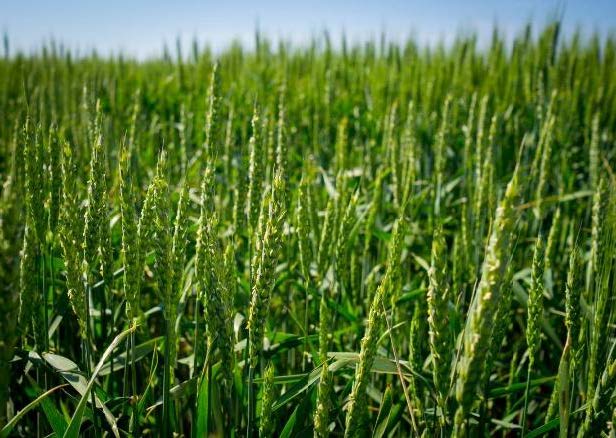
According to USDA’s planting report, wheat acreage in the U.S. might decrease 2%, or 729,000 acres, resulting in a projected total of 45.4 million acres for this year. Even though wheat acreage has reduced 10% in the last decade, production has either increased or remained constant due to higher yields.
The last USDA-WASDE report, published this month, the global wheat outlook production
increased, reaching a record of 808.5 million tons. The largest increase came from
the EU 14 million bushels, following by India (+4M) and Argentina, Canada, and China
(each +2M). The expected total global supply is 12.8 billion bushels. Wheat trade
has also increased, with exports rising 3% to 2.13 billion bushels, with the EU again
leading growth. Even with this expansion, global wheat stocks remain steady.
The outlook for the U.S wheat differs from the global trends. Based on the expected
planting area, production declined 3% and imports are also down by 20%. Despite these
reductions, the expected national total supply is 2% bigger compared to last month,
reaching 2.88 billion bushels. Mainly due to higher beginning stocks. The expected
domestic consumption rose 1% driven by increased food use. Exports are estimated at
800M bushels, which is 2% lower than the previous report. These combined factors have
resulted in higher stocks, about 10% more than the previous estimate. As a result,
the expected marketing average price decreased by $0.2, settling at $5.3 per bu.
Corn:
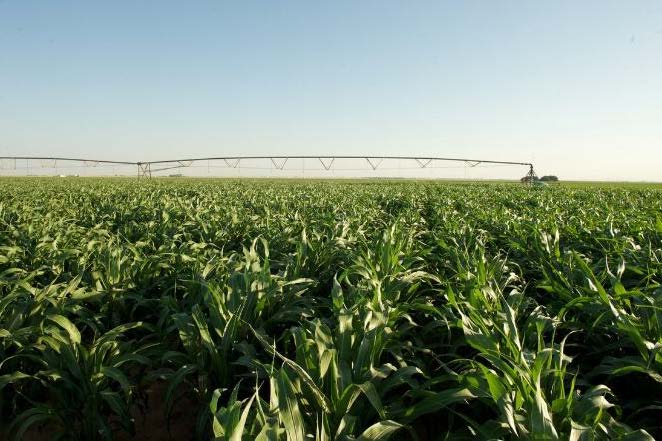
The global outlook notes an increase in total supply and trade causing a decline in stocks. The expected total global supply is 17.3 billion bushels, with production and imports rising by 3% and 2% respectively. Among the major importers, China has the highest expected import volume at 2 million bushels while the U.S and Ukraine lead in production expectations, each with 4 million bushels. Expected exports are 1.95 billion bushels. All major exporters increased their projections, except Brazil, due to a higher domestic consumption. Ukraine, Argentina and United States are the countries which have expanded their exports. As a consequence, high trade activity has reduced ending stocks by 4%, bringing them down to 2.77 billion bushels.
Regarding the national context, unlike wheat, the expected corn planting area may
increase by 5%, reaching 95.3 million acres, with production rising by 6% to 158 billion
bushels. As a result, supply increased 3%, reaching 172.6 billion bushels. Both the
expected exports and feed and residuals rose 2%. These factors have caused a 27% reduction
in stocks. Consequently, the expected price is $ 4.20, which is $0.15 lower than the
last report.
Soybean:
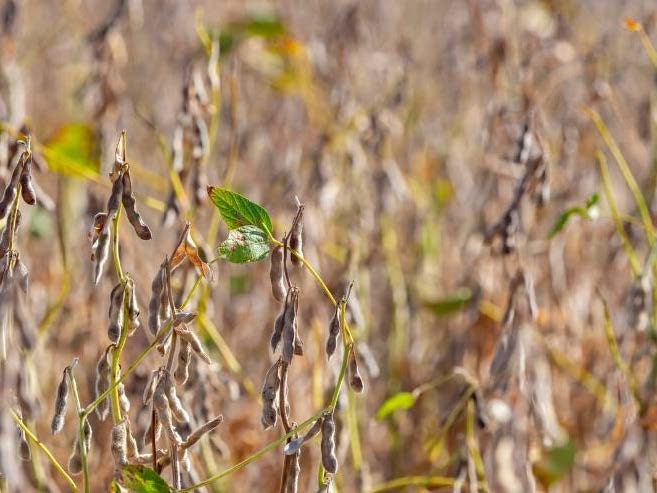
The soybean global balance sheet shows a 1.4% increase in production, reaching 4.26 billion bushels driven by higher production in countries such as Brazil, Paraguay, China and Russia while Unites Sates, Argentina, Uruguay, and Ukraine decreased their production. Global consumption followed the same upward trend, leading to an increase in global trade. Both imports and exports rose by 2% to 1.86 billion bushels and 1.88 billion bushels, respectively. Southeast Asia, Mexico, and China increased their imports volumes, with China, like the wheat market, expected to be the top importer at 1.12 billion bushels. In terms of the exports Argentina, Paraguay, and Brazil expanded their volume, with Brazil showing the most significant growth by 7% reaching 1.12 billion bushels.
On the national level, the soybean situation contrasts with previous crops. Planting
intention declined by 4% or 3.5 million acres, bringing the expected planted acreage
for 2025 to 83.5 million. This directly impacts production, which decreased 26 million
bushels, and imports also dropped by 20 million bushels. As a result, total supply
has slightly reduced. Although global consumption increased, the U.S. has lost 2%
of its share in the global soybean market, with expected export volume at 18 billion
bushels. Additionally, crushing and seed use rose by 2% and 1% respectively. With
higher domestic use projected, ending stocks are lower than the previous estimate,
at 55 million bushels. The average price changes too, increasing $0.30 reaching $10.25
per bushel.
These variations may cause producers risk aversion to the current global trade environment.
Nevertheless, daily announcements from multiple nations continue to impact markets.
Some economists and policymakers have said that this uncertainty may ease in the middle
term. While markets remain volatile, producers can manage uncertainty by focusing
on internal and manageable factors. Efficient production, good management practices,
and staying informed about global and local updates in the commodity of interest is
crucial for achieving positive results during challenging years.
Foot Rot in Grazing Cattle on Wet Pastures
Marty New, SW Area Livestock Specialist
The rainfall received across the state in the last few weeks was very much needed in many parts to provide extreme drought relief. However, with the large amounts received many pastures are muddy, soggy, and standing in water. These conditions can increase the likelihood of “foot rot” in grazing cattle. Mechanical injury, cuts, bruises, puncture wounds or severe abrasions of the foot will damage the skin in the interdigital (between the toes) area and predispose an animal to infectious agents. Fusobacterium necrophorum is the bacterium most often isolated from infected feet.
Lameness is usually the first sign of an infected animal, varying from hardly noticeable
to severe. Lameness is typically followed by reddening of the interdigital tissue
and swelling of the foot, causing spreading of the toes. One or more feet may be affected
simultaneously. Spreading of the dewclaws due to swelling is a classic sign of foot
rot.
Treatment of foot rot is usually successful particularly when diagnosed early. The
interdigital tissue should be cleaned and disinfected. Most cases respond readily
to systemic antimicrobial therapy, administered the first days of diagnosis. If treatment
is not initiated until later in the process, multiple treatments may be necessary.
Visit with your veterinarian to determine the best antibiotic treatment for your cattle
that have become infected with foot rot.
Prevention and control of foot rot begins with management of the environment. Management
practices that help reduce interdigital trauma will help decrease the incidence of
foot rot. Important preventative measures include a well-balanced mineral nutrition
program and minimized exposure to conditions that can cause skin or hoof injury.
Reference: OSU Fact Sheet AFS-3355. Cause, Prevention, and Treatment of Foot Rot in Cattle.
New World Screwworm Update
Barry Whitworth, DVM
Senior Extension Specialist/BQA State Coordinator, Department of Animal & Food Services, Ferguson College of Agriculture, Oklahoma State University
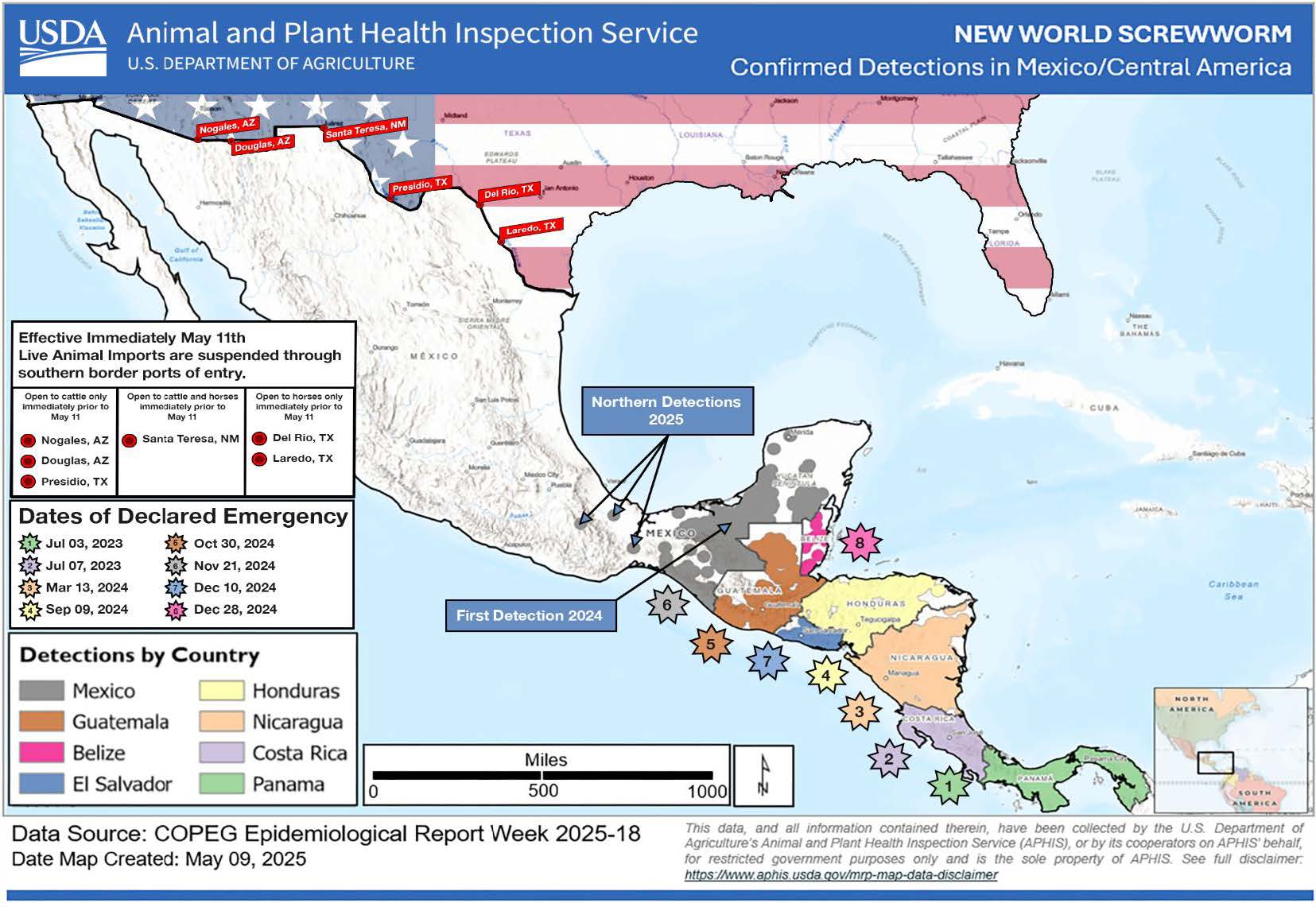
On May 11, 2025, United States Secretary of Agriculture Brooke L. Rollins suspended importation of live cattle, horse, and bison through United States (US) ports of entry along the southern border due to the continued and rapid northward spread of New World Screwworm (NWS) in Mexico. The border had been reopened in February after being closed in November 2024 following the discovery of NWS in southern Mexico. The finding of NWS in Mexico should not be a surprise since Central America has been dealing with a large increase in cases.
According to the United States Department Agriculture (USDA), NWS was eradicated from
the US in 1966. Although a few cases were found until 1982. The last officially diagnosed
case of NWS in Oklahoma occurred in 1976. Since 1982, only sporadic cases of NWS have
been diagnosed, but these were from animals or people that were infested in another
country and then entered the US.
During 2016-2017, there was a small outbreak of NWS in the Florida Keys. The first
confirmed case was found in a Key deer. The USDA confirmed 136 wildlife and 9 domestic
cases of NWS. With the exception of one case, all the cases were detected in the Florida
Keys. The one exception was a dog in Homestead, Florida. This was the first case reported
on the mainland in many years. The outbreak was contained by March 2017.
NWS were eradicated from the US by using the Sterile Insect Technique. The program
began in the 1950s. The program released male screwworm flies that were sterile. Since
female flies usually only mate once, females that mated with the sterile males produced
non-viable eggs. After several years, the population was eliminated.
Currently, the USDA maintains the COPEG facility in Panama. This facility produces
sterile male NWS flies that were previously released along the border of Panama and
Colombia. This was done to prevent the migration of NWS from South America. On February
26, 2025, the United States Department of Agriculture’s Animal and Plant Health Inspection
Service (APHIS) announced that the strategy was changing. The sterile male NWS flies
will be released in certain areas in Mexico to push the pest back south. In addition
to these changes, Secretary Rollins announced the USDA is investing $21 million in
renovating an existing fruit fly production facility in Metapa, Mexico, to further
the long-term goal of eradicating this insect. Also, the STOP Screwworm Act has been
introduced in Congress which would build a domestic sterile fly facility in the US.
NWS adult flies are slightly larger than the common housefly. They have orange eyes
and a blue green body which has 3 stripes down the back. The females typically mate
once and lay their eggs along the edges of an open wound or in the mucous membranes
(mouth, nose, ears) of an animal. When the eggs hatch, the larvae burrow into the
host flesh and feed on living tissue and fluids. Wounds attract more flies which compounds
the problem. Once the larvae mature, they drop to the ground, burrow into the soil,
and begin the pupal stage. In a few days, the adult flies emerge to repeat the life
cycle.
Animals that are infested with NWS will have a wound that has a foul-smelling odor
and oozes a blood-tinged fluid. The wound will enlarge and deepen if left untreated.
Occasionally, a wound will appear not to enlarge, but on closer examination the wound
will have many tracts under the skin. As the lesions get worse, the animal will refuse
to eat and separate from the herd. If treatment is not provided, the animal will die
from tissue damage, toxemia, and/or from secondary bacterial infections.
The first step in treating NWS infections is to remove the larvae. Once the larvae
are removed, the wound should be cleaned and any necrotic tissue removed. Next, an
insecticide should be applied to the wound. Antibiotics may be necessary to treat
secondary bacterial infections.
Before the eradication of NWS from the US, livestock producers spent a great deal of time trying to prevent NWS infestations. Navels of newborns required insecticidal treatment. If producers failed to do this, many of these babies would die due to infections. Procedures such as tail docking, castration, dehorning, or branding had to be done at certain times of the year when NWS were not a problem.
The message that Dr. Rod Hall, State Veterinarian of Oklahoma, would like livestock
producers to remember is:
- Currently, the USDA has not found a case of screwworm in the US.
- Livestock producers should develop a basic understanding of the parasite.
- The possibility exists that Oklahoma might find a case this summer.
- Even if a case is discovered, Oklahoma beef, pork, and poultry continue to be safe for human consumption.
- Information about collecting and submitting samples on potential cases is being developed and will be announced soon.
- If cases are found in Oklahoma, Oklahoma Department of Agriculture, Food, and Forestry will be advising on the best treatment options.
If producers would like more information about New World Screwworms, they should contact their local veterinarian or their local Oklahoma State University County Extension Agriculture Educator. Additional information about NWS, may be found at the USDA New World Screwworm web site.
References
United State Department of Agriculture (2025, May 28). New World Screwworm. https://www.aphis.usda.gov/livestock-poultry-disease/cattle/ticks/screwworm