

Ag Insights July 2025
Wednesday, July 9, 2025
Wheat Pasture Decision Includes Many Factors
Josh Bushong, Area Extension Agronomist
As wheat harvest comes to an end, making plans for wheat pasture this fall starts now. Hopefully farmers are making variety selections promptly and basing their selections on traits best suited for their operations. There are many agronomic traits one needs to consider when selecting a variety, especially for early sown wheat. These include forage potential, hot soil germination, coleoptile length, disease tolerance, insect tolerance, grazing recovery, grain potential, drought tolerance, and the list can go on and on.
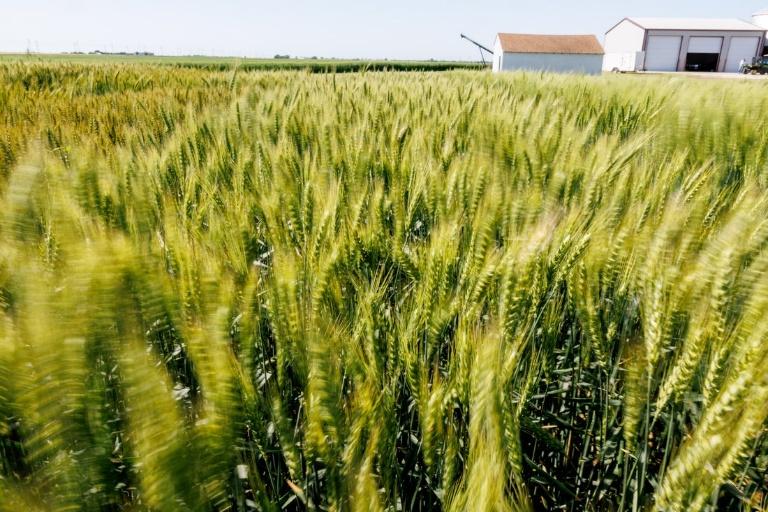
Even though popularity of a variety shouldn’t be the sole decision factor, one could assume that is popular for good reasons. The number one seeded wheat variety in Oklahoma the past four years was Doublestop CL+. Green Hammer was once again second in acres but now followed by Smith’s Gold, Showdown, and OK Corral. These “Top-Five” sown varieties were all bred at OSU and available through Oklahoma Genetics Inc..
Choosing a variety can be a challenge as there are over 100 different varieties to select from. Discussions with your Extension educator, agronomist, and seed dealer can help narrow down the list. A great resource is wheat.okstate.edu to find current research reports.
There are two OSU Wheat Variety Trials located side by side near El Reno. One managed as a dual-purpose (DP) and the other as a grain-only (GO). The DP trial was sown late-September, seeded at a higher seeding rate, and grazed. The GO trial was not harvested this year due to poor emergence caused by excessive rain after planting. Of the 40 varieties, Showdown and Doublestop CL+ had the highest grain yields over the past three years in the DP trial. For a CoAXium wheat traited variety, Cresent AX was the highest yielding the past two years in the DP trial.
When growing wheat for forage one of the easiest ways to get more tonnage is to plant
early. Research conducted from OSU has shown that more forage is produced the earlier
we plant. Some trials show that sowing wheat the first week of September yielded about
twice as much fall forage as a mid-late September planting date. When sowing wheat
this early we can sacrifice some grain potential and some pest issues can occur.
These pests include many viruses, root rots, foliar diseases, hessian flies, wheat curl mites, wireworms, army cutworms, and weeds. Some aid can be made through the use of seed treatments that include an insecticide and/or a fungicide. These seed treatments can reduce root/foot rots, bunt, smut, leaf rust, powdery mildew, hessian fly as well as reduce aphids that can transmit barely yellow dwarf virus. When selecting a seed treatment be cautious of grazing restrictions, which can range from 0-45 days depending on product used.
Mite-transmitted diseases (wheat streak mosaic, high plains disease, or Triticum mosaic) can greatly reduce spring forage and grain production when an early fall infection occurs. The best management practice would be to prevent a “Green Bridge” prior to sowing the wheat. A minimum of two weeks of nothing green (including corn, sorghums, volunteer wheat and other grassy weeds) is needed to allow the wheat curl mite to starve out prior to wheat seeding. The wheat curl mite still might vector these viruses when invading from neighboring fields, but the viruses will cause less of an impact due to a later infection.
Farmers can use seed wheat harvested from fields that tested positive for Wheat Streak Mosaic Virus. The virus can only persist on living plants and in the wheat curl mite. The virus will not persist in ripened grain or dead grasses.
The next easiest way to increase fall forage would be to increase your seeding rates.
Several field trials have shown that fall forage will increase with increasing seeding
rates up to five bushels to the acre. Fall forage can be increased with higher seeding
rates, but the economics start to become a little less favorable after a rate of two
bushels to the acre due to seed costs. Increasing seeding rates as the planting season
progresses can also assist in producing more forage due to less tiller development,
but increasing seeding rates hardly ever makes up for lost forage potential compared
to sowing earlier.
Managing soil fertility starts with a soil sample. Acidic soils can limit forage production
as much as anything else. The only solution to fix acidic soils is to apply lime,
but variety selection and banding phosphorus fertilizer in-furrow can help offset
the loss in forage production. Banding fertilizer with our grain drills is more efficient
and economical because it is placed right with the seed and rates can be greatly reduced.
To find out more about variety selection and how to produce decent wheat pasture economically
visit your local OSU Extension office.
Controlling Summer Flies
Dana Zook, NW OK Area Livestock Specialist
Due to the fluctuations of temperature and increased rain across the state, calls from Oklahoma producers about parasites have increased. More specifically, fly numbers are a mixed bag across Northwest Oklahoma, making producers question the efficacy of the fly control products they are using. I have written about flies many times but due to the inquiries about fly control, I thought a quick review on flies was warranted. In my experience, the main fly species impacting Oklahoma cattle are horn flies, stable flies, house flies, and face flies.
Horn Flies
This is no-doubt the fly species affecting cattle in the greatest numbers. These flies
are found on the backs and sometimes belly of cattle. Fresh manure is the preferred
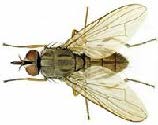 place to lay their eggs. These flies prefer hot and dry weather, which typically allows
their populations to peak in August and September. The economic threshold for treatment
of horn flies is 300 flies per animal. Horn flies can be controlled with many methods
(tags, sprays, pour-ons, IGR), however producers should be sure to rotate chemicals
to prevent the development of resistance to a particular product.
place to lay their eggs. These flies prefer hot and dry weather, which typically allows
their populations to peak in August and September. The economic threshold for treatment
of horn flies is 300 flies per animal. Horn flies can be controlled with many methods
(tags, sprays, pour-ons, IGR), however producers should be sure to rotate chemicals
to prevent the development of resistance to a particular product.
Stable Flies
Stable flies are found on the legs and belly of cattle. While these may not be seen
in the frequency of horn flies, they deliver a painful bite to cattle. Due to the
pain 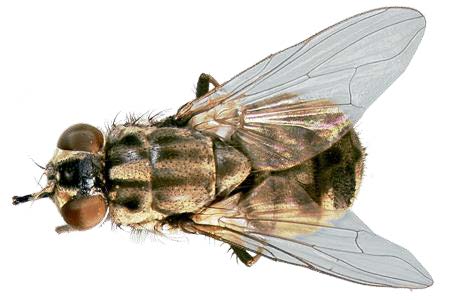 impacts, their economic threshold for control is 5 flies per leg. Spraying the legs
will provide temporary relief, however these chemicals are easily washed off in rain,
wet grass, or standing water. Fly tags and pour-ons are also not good control here.
Female stable flies prefer to lay their eggs in damp, decaying organic matter. With
a great deal of rain in the last month, hay feeding sites are the perfect incubation
for stable flies. To decrease the population of these flies, clean up all spilled
feed and hay. Drag these areas to dry them out or clean these sites completely to
mitigate growth of this pest.
impacts, their economic threshold for control is 5 flies per leg. Spraying the legs
will provide temporary relief, however these chemicals are easily washed off in rain,
wet grass, or standing water. Fly tags and pour-ons are also not good control here.
Female stable flies prefer to lay their eggs in damp, decaying organic matter. With
a great deal of rain in the last month, hay feeding sites are the perfect incubation
for stable flies. To decrease the population of these flies, clean up all spilled
feed and hay. Drag these areas to dry them out or clean these sites completely to
mitigate growth of this pest.
Face Flies
These flies are not blood feeders, rather they feed on tears, saliva, and mucus. This
feeding behavior on the eye allows for the invasion of Moraxella bovis, the bacterium
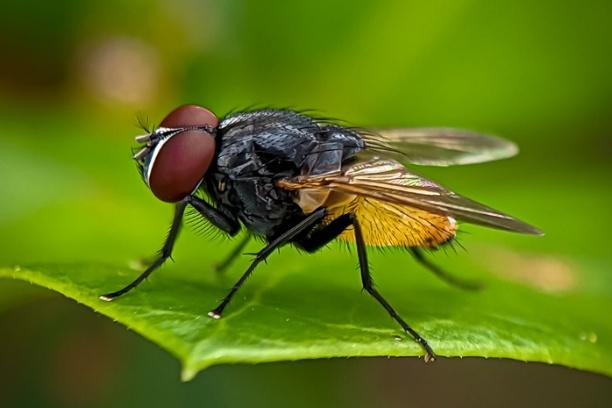 that causes pink eye. Once exposed to the bacteria, face flies transport the pink
eye to other animals. I mention this fly, not due to its prevalence, but due to the
misunderstanding of its presence in Oklahoma. These flies are limited to far eastern
Oklahoma and are not found in Western Oklahoma. However, pinkeye can still be caused
initially by an irritant of some sort. Think of growing grasses, weeds, brush, pollen,
and chaff. Round bale feeding of coarse grasses or small grains hay is also a culprit.
Producers should always refer to their vet when dealing with pink eye issues.
that causes pink eye. Once exposed to the bacteria, face flies transport the pink
eye to other animals. I mention this fly, not due to its prevalence, but due to the
misunderstanding of its presence in Oklahoma. These flies are limited to far eastern
Oklahoma and are not found in Western Oklahoma. However, pinkeye can still be caused
initially by an irritant of some sort. Think of growing grasses, weeds, brush, pollen,
and chaff. Round bale feeding of coarse grasses or small grains hay is also a culprit.
Producers should always refer to their vet when dealing with pink eye issues.
House Flies
This species is non-biting. Similar to horn and stable flies, they prefer decaying
organic matter or fresh manure to lay their eggs. They will also feed on eye 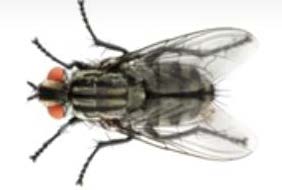 secretions and can contribute to an existing pinkeye problem, but they won’t be the
main cause of the disease.
secretions and can contribute to an existing pinkeye problem, but they won’t be the
main cause of the disease.
As always, read the label on all chemicals that are considered for fly control. The products may have recommendations on application or the amount of time that they are active. Above all, an a combination of several forms of management will provide the best control. A few caveats exist for fly control products. Keep in mind that fly tags are often only effective for 90 days in Oklahoma due to the environmental conditions. Also, rainfall events will wash off pour-on and spray products also limiting the time they are effective. Good luck with fly control this summer and give your county extension educator a call if you have any questions.
Border Closure, New World Screwworm and Feeder Cattle Supply
Alberto Amador, Area Ag Economics Specialist | W. Area Ag Economics Specialist
Recently, the cattle market has shown unusual behavior and doesn’t follow its typical seasonal patterns. High prices are a clear sign of this situation. Even though prices are influenced by several factors like input costs (corn and fuel), slaughter levels, and meat demand among others. Today I want to focus on one key driver: the feeder supply and a current factor that may further impact it.
But first let’s analyze the current cattle outlook. The national cattle on feed inventory
has decreased year-to-year, 12% over the past five years. According to the 5-Area
Direct Slaughter Cattle Report, the number of steers and heifers has increased year-to-year.
However, the accumulated fed beef through the first week of June is down 10% compared
to the same period last year. This drop is caused by fewer heifers and steers being
slaughtered, although the average carcass weight is heavier year over year. As a result,
dressed prices (steers and heifers) in the first week of June hit decade highs, with
steers averaging $354.226/cwt and heifers $360.34/cwt. Meanwhile, feeder cattle futures
for August and September gained more than $2/cwt in the past month, closing at $304
and $303.19, respectively.
As mentioned above, the current tight supply might be one reason for high prices. One contributing factor, that you have probably heard of, is the New World Screwworm (NWS), a parasitic pest affecting livestock. In late 2024, the presence of NWS was detected in the southern Mexican border. In order to handle this situation and protect U.S. livestock, the Animal Plant and Health Inspection Service (APHIS) imposed a temporal closure of the southern border to imports of cattle, bison, and horses in November 2024. Although, the border reopened for 15 weeks in February, allowing the importation of roughly 223,000 head, it was closed again on May 11, due to the continued spread of NWS in Mexico
A reduction in imports has immediate implications for supply directly. But how do
Mexican cattle imports affect the domestic cattle/beef industry? To answer this question,
it’s important to understand what role Mexican imports play.
In the last decade, monthly imports from Mexico have averaged over 90,000 head. In the same period, Mexican live feeder cattle represented around 5% of the national feeder placements in feedlots with over 1,000 head capacity. Additionally, according to Dr. Peel, the feeder cattle imported from Mexico are equivalent to 3.5% of our calf crop on an annual basis.
Although those percentages may seem small, they impact the supply directly. Especially
feedlots that rely on Mexican cattle to maintain their capacity. Data shows the most
affected region might be the Southern Plains. In fact, some experts estimate that
18% of annual feedlot placements in Oklahoma, Texas, Arizona and California came from
Mexican imports during 2015-2024.
Whether the border reopens or remains closed for a while, feeder cattle from Mexico
remain an interesting topic to analyze. The current scenario brings up some important
questions for the cattle industry. For example:
- Will the halt in Mexican feeder cattle imports impact heifer retention?
- Could it shift the beef trade balance?
- Once imports resume, will prices decrease or remain high? and by how much?
Hopefully, I’ll share the answers to these questions in a future update. In the meantime, if you have any questions about New World Screwworm or the cattle market, feel free to contact me, another specialist, or your local OSU Extension office.
Anaplasmosis: A Late Summer threat to Cattle Health
Barry Whitworth, DVM
Senior Extension Specialist/BQA State Coordinator, Department of Animal & Food Services, Ferguson College of Agriculture, Oklahoma State University
Late summer and early fall are busy times for most cattle producers. Unfortunately, this is also when most cases of anaplasmosis in beef cattle are reported across many states. It’s a critical time for producers to be vigilant and closely monitor their herds for signs of illness.
Anaplasmosis is a disease caused by Anaplasma marginale, a rickettsial, gram-negative
bacterium that infects red blood cells. Its name stems from its tendency to 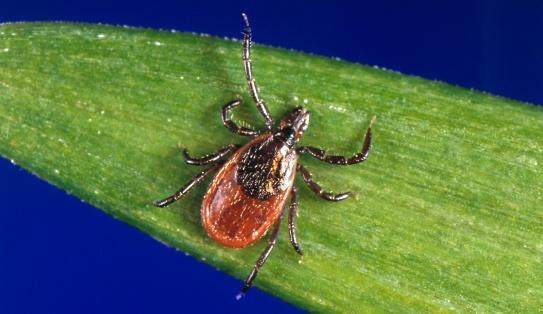 reside on the margins of red blood cells. This pathogen is commonly found in ticks,
wild and domestic ruminants. Although infections have occurred in sheep and goats,
anaplasmosis is primarily a cattle disease. It has been identified in nearly every
U.S. state, excluding only Alaska and Hawaii, and remains a global issue in cattle
production.
reside on the margins of red blood cells. This pathogen is commonly found in ticks,
wild and domestic ruminants. Although infections have occurred in sheep and goats,
anaplasmosis is primarily a cattle disease. It has been identified in nearly every
U.S. state, excluding only Alaska and Hawaii, and remains a global issue in cattle
production.
Cattle may be infected with A. marginale in a variety of ways. The micro-organism
may be transmitted when a tick that is infected with the pathogen feeds on a 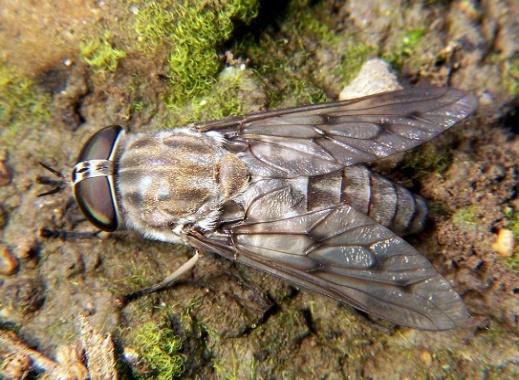 susceptible cow. Biting flies such as horseflies can carry blood containing A. marginale
from one cow to another during feeding. Contaminated equipment used during procedure
s like castration, dehorning, or dirty needles can transmit the pathogen if not properly
cleaned and sanitized between animals. Unborn calves may become infected in the uterus
from infected cows. These calves are born persistently infected with A. marginale.
susceptible cow. Biting flies such as horseflies can carry blood containing A. marginale
from one cow to another during feeding. Contaminated equipment used during procedure
s like castration, dehorning, or dirty needles can transmit the pathogen if not properly
cleaned and sanitized between animals. Unborn calves may become infected in the uterus
from infected cows. These calves are born persistently infected with A. marginale.
Once an animal is infected, clinical signs of the disease appear in 3 to 6 weeks. The severity of the disease depends on the age of the animal and virulence of the pathogen. In cattle less than 2 years of age, illness is rare or mild with very few cattle dying. Cattle that are 2 years or older tend to show clinical signs of the disease. Typical clinical signs include fever, anemia, weakness, respiratory distress, lowered milk production, abortion, jaundice, and death. Aggressive behavior is also associated with A. marginale infected cattle, so producers should be cautious when anaplasmosis is suspected. Cattle that recover often remain persistently infected and serve as reservoirs for the disease. These animals may show signs again if their immune system becomes compromised due to stress or secondary infections.
Diagnosing the disease is normally based on history, clinical signs, and finding the
micro-organism on a stained blood smear microscopically. Additional blood test may
be used to confirm the disease.
Treatment can be challenging, especially if clinical signs are severe. Treatment with tetracycline is helpful if initiated early in the disease, but maybe of little value in the latter course of the disease. In cows that are not eating, B vitamins and rumen inoculants may stimulate appetite. Blood transfusion maybe needed in cows with severe anemia, but the stress of the transfusion may result in death. Also, cattle with clinical signs of anaplasmosis need to be isolated since they harbor large numbers of A. marginale. It's important to note that treatment often reduces symptoms but does not eliminate the pathogen from the body.
Eliminating A. marginale entirely from an infected cow is generally not practical.
Additionally, clearing the infection would make the animal susceptible to re-infection.
Therefore, producers should focus on prevention and control. One option is to maintain
a herd with A. marginale so that young animals are sure to be exposed to the pathogen.
A vaccine is available, though its effectiveness is debated. Consult your veterinarian
before use. Feeding tetracycline can reduce clinical signs but doesn’t protect all
animals equally. Tick and fly control are important in eliminating transmission. Lastly,
cattle producers should keep their equipment clean and disinfected as well as change
needles frequently.
Anaplasmosis continues to pose a threat in Oklahoma. Producers should stay alert during late summer and fall, monitor cattle for signs of illness, and act quickly when disease is suspected. Cattle producers need to work closely with their veterinarian to develop a tailored prevention and control program. The local Oklahoma State University County Extension Agriculture Educator is also a valuable resource for more information on managing anaplasmosis in your herd.
References
Ierardi R. A. (2025). A review of bovine anaplasmosis (Anaplasma marginale) with emphasis on epidemiology and diagnostic testing. Journal of veterinary diagnostic investigation : official publication of the American Association of Veterinary Laboratory Diagnosticians, Inc, 37(4), 517–538.