

Common Pine Tree Problems in Oklahoma: Diseases, Pests, and Needle Drop
Tuesday, November 3, 2026
Courtney DeKalb-Myers, Assistant Extension Specialist in Consumer Horticulture
As deciduous trees lose their leaves in the fall, gardeners may look to evergreen plants for year-round color. While pines are an appealing addition to the landscape, they are susceptible to diseases and environmental stresses. Below are some common problems that may occur in pines.
Pine Wilt
Pine wilt begins with wilted, brown needles that remain attached to the tree and ends with symptoms spreading throughout the entire canopy. Pine sawyer beetle larvae introduce the nematodes to the tree. The nematodes clog the tree’s transport system, causing it to wilt even when water is available. The disease primarily affects non-native pines, including Scotch, Austrian, jack, and mugo. There is no cure for pine wilt once infection begins. Affected trees should be removed before spring to prevent further spread of the disease in the landscape. For more information on pine wilt, see EPP-7674 Pine Wilt Disease.
Dothistroma Needle Blight
Symptoms of Dothistroma needle blight appear in the fall, starting with a band in the middle of the needle. The needle eventually dies above the band, where the base will remain green. Austrian and ponderosa pines are particularly susceptible to needle blight. If a tree is affected, make sure to clean up any fallen needles to prevent the disease from overwintering. Apply fungicide in the following spring. For more details on needle blight, see EPP-7331 Dothistroma Needle Blight of Pine.
Diplodia Tip Blight
Diplodia tip blight is most common on more mature trees that have undergone environmental stresses, like drought. Needles emerge stunted in the spring. As the disease progresses, entire candles (growing points) will eventually die. It’s common to see resin droplets on the dead needles. Trees may eventually die after many seasons of infection. It’s important to prune out and destroy infected branches. Fungicides can be used in late March and early April. For additional information on tip blight, see EPP-7330 Diplodia Tip Blight and Canker of Pine.
Nantucket Pine Tip Moth
Nantucket pine tip moths will also kill candles in pine trees. Moth larvae feed on the base of the needles and migrate to the shoot tips. Their feeding hollows out the candle, distinguishing Nantucket pine moth damage from Diplodia tip blight. Insecticides can be used to control Nantucket pine tip moth once their presence is confirmed. For more details on Nantucket pine moth and survey methods, see EPP-7645 Nantucket Pine Tip Moth.
Pine Chlorosis
Chlorosis refers to the loss of green color in foliage. Pine species typically prefer acidic soil, with a pH of 5.2 to 6. Most Oklahoma soils are alkaline, with a pH well above 7. When planted in these soils, pines struggle to absorb necessary nutrients and take on a chlorotic appearance. Pine chlorosis is often more pronounced in the late winter, when the tree is preparing to grow new needles in the spring.
Needle Drop
Pines will naturally shed their older needles in October and November. This needle drop is normal and not a cause for concern. Natural needle drop differs from pine wilt in that needles on the lower parts of branches are affected. Needle drop typically occurs in October and November and can be more pronounced in some years.
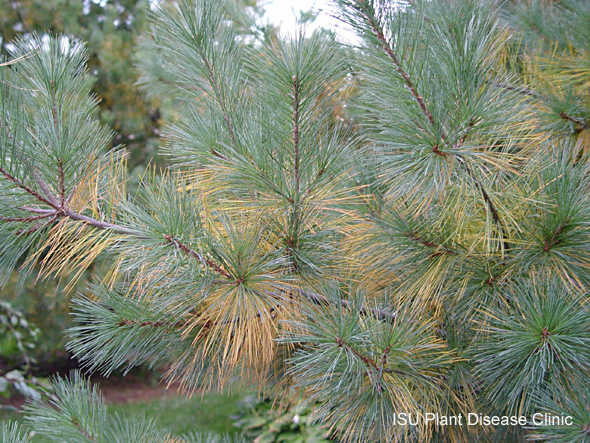 Figure 1. Pine needle drop is a natural occurence and not cause for concern. (Credit: Indiana University Extension)