

Japanese Brome
| Image | Description |
|---|---|
| Fyuse 3D Image | Common Name: Japanese Brome |
Examples of Japanese Brome Bromus japonicus
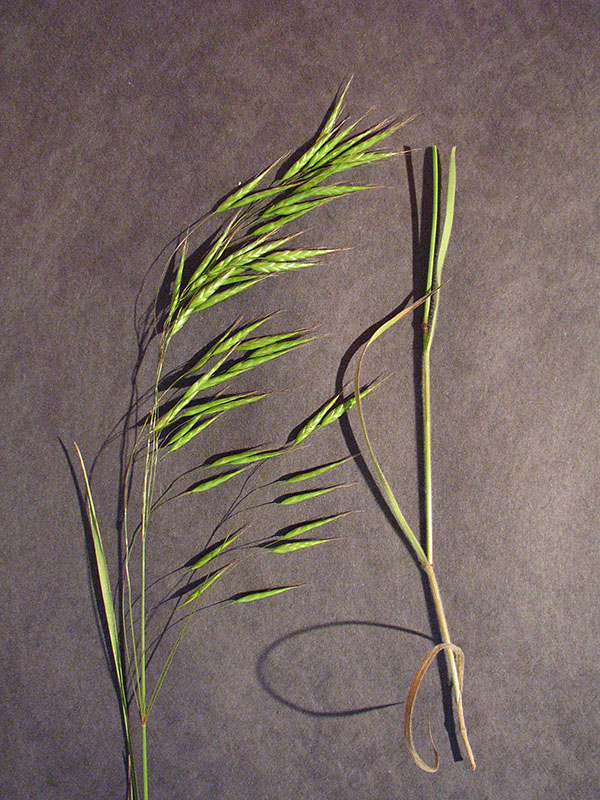
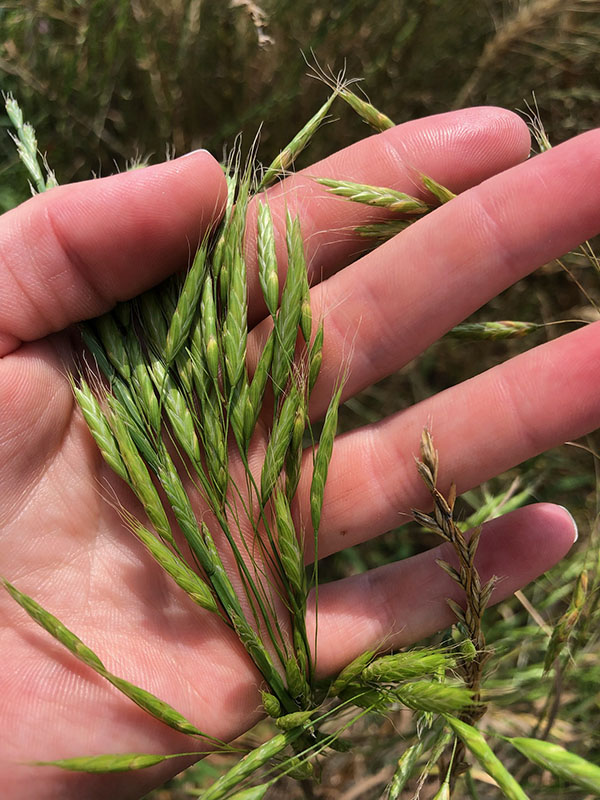
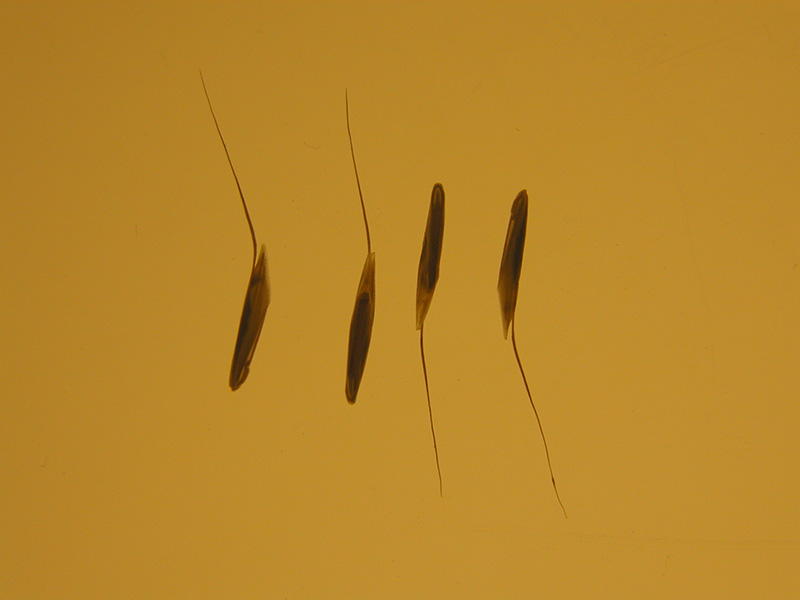
| Habitat/Ecology | Description |
|---|---|
| Origin | Introduced, Europe |
| Duration | Winter Annual |
| Season | Cool |
| Distribution in the U.S. | NE, SD, ND, KS, OK, TX, MN, IA, MO, MT, WY, CO, NM, AB, SK, MB |
| Distribution in Oklahoma | Throughout the state |
ID Characteristics
-
Field Identification Characteristics
- Spikelet: Florets 6-11 (15-25 millimeters long); lemmas broad (7-9 millimeters long, hairless, and split or lobed near the tips
- Inflorescence: Panicle (8-20 centimeters long), open; branches flexuous, slender
- Awns: Lemma of upper florets awned (8-13 millimeters long) awns become twisted and bent at maturity
- Glumes: Unequal; first glume 4-6 millimeters long, second glume 6-8 millimeters long; broad, awnless
-
Leaf and Stem Characteristics
- Sheath: Shaggy, densely hairy with long hairs.
- Leaf Blade Shape: Flat (7-20 centimeters long, 1-7 millimeters wide), densely hairy or velvety, midvein prominent
- Ligule: Membranous (less than 2 millimeters long), rounded
| Habitat/Ecology | Description |
|---|---|
| Soil Type | Sand, silt and clay |
| Habitat | Widespread on disturbed sites, waste areas, cropland and rangeland in low condition |
| Successional Stage | Early, but invades all stages |