

Downy Brome
| Plant Profile | |
|---|---|
| FUYSE 3D Image | Common Name: Downy Brome |
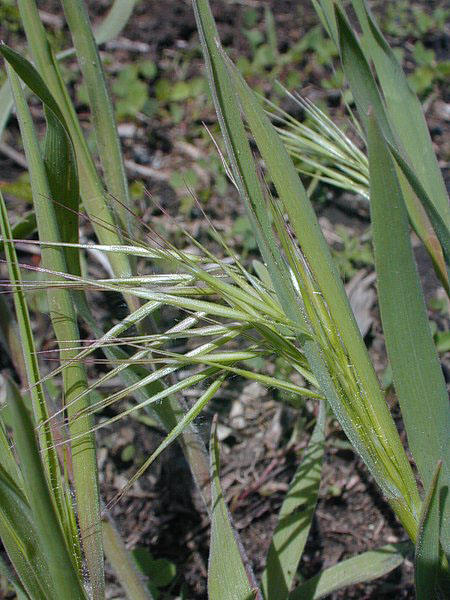
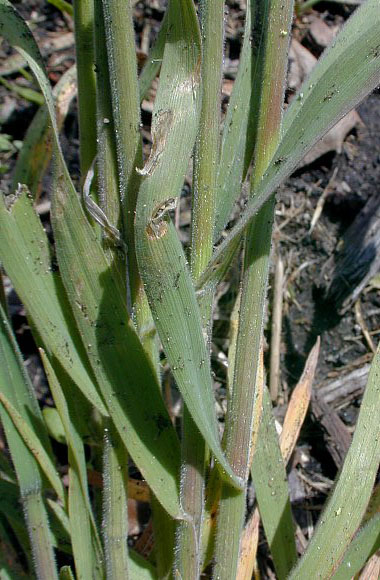
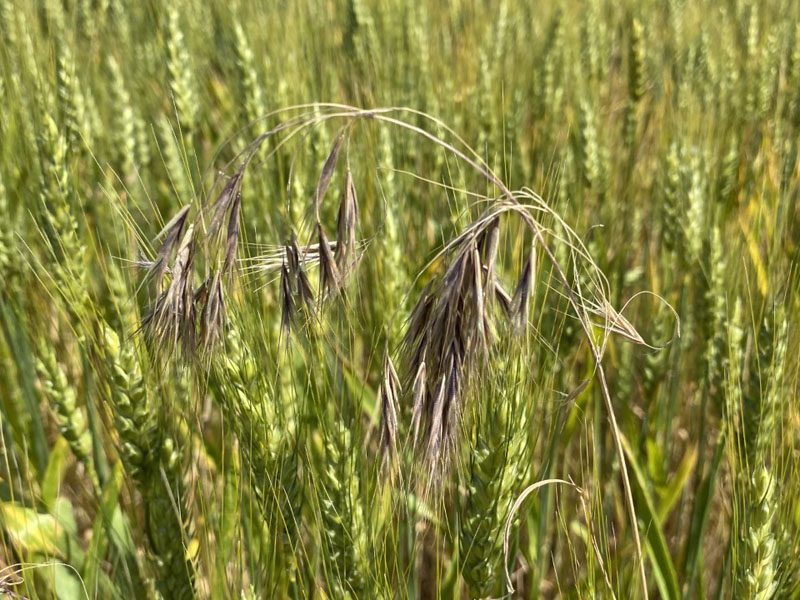
Examples of Downy Brome Bromus tectorum L.
| Plant Facts | |
|---|---|
| Origin | Europe |
| Duration | Winter Annual |
| Season | Cool |
| Distribution in the U.S. | NE, SD, ND, KA, OK, TX, MN, IA, MO, MT, WY, CO, NM, AB, SK, MB |
| Distribution in Oklahoma | Western Oklahoma |
ID Characteristics
-
Field Identification Characteristics
- Inflorescence: Panicle (5-15 centimeters long), open, much-branched; branches and pedicels slender, flexuous drooping
- Spikelet: Florets 5-8 (1.2-1.8 centimeters long excluding awns); lemmas (0.9-1.2 centimeters long) with thin membranous margins and ending in long, slender teeth (2-3 millimeters long); lemmas with soft “downy” hairs, awned
- Floral: Generally has nodding inflorescence; iconic, long, prominent awns
- Vegetative: Thin, wiry branches; closed sheath
-
Leaf and Stem Characteristics
- Sheath: Rough, flattened toward collar, softly hairy, pilose
- Blade: Flat (5-12 centimeters long, 3-7 millimeters wide), rounded to truncate, may be toothed
- Culm: Upright weak, may be branched from the base
- Plant Height: 15-60 centimeters
- Lingule Type: Membranous
- Leaves: Cauline
-
Floral Characteristics
- Inflorescence Type: Panicle
- Florets Per Spikelet:4-6
- Glumes: Unequal
| Habitat/Ecology | |
|---|---|
| Soil Type | Varying, preferred coarse textured soils |
| Habitat | Throughout the Great Plains on rangeland, fields, disturbed sites, roadsides and waste areas |
| Successional Stage | Early, but invades all stages |