

Chapter Eleven: Analyzing to Determine Lowest and Best Bids
Oklahoma law requires that the "lowest and best" bids be selected for county purchases. However, determining which bid is the "lowest and best" is often difficult and bidders sometimes question the selection of one vendor over another.
This chapter is a reliable, consistent system or procedure for use when determining the “lowest and best” bid that can help make this process easier and more equitable. Each step in the process should be recorded in case the final decision needs to be justified.
When writing bid specifications, the writer should describe a response format and require that all bids adhere to that format. This action helps to make analyzing and evaluating bids easier.
If bidders include extraneous materials only remotely related to the bid specifications, a reasonable evaluation can be almost impossible to make. All bids must be thoroughly read before an accurate analysis can be made.
In summary, a procedure to analyze bids for “lowest and best” determination should have the following characteristics:
- Be a written procedure
- Be a systematic procedure
- Be capable of being defended and justified
- Lend itself to explanation
- Prescribe a specific bid response format
- Aid in analysis and evaluation of the bids
- Eliminate extraneous material
Another important point is that the people analyzing bids should be completely familiar with the bid specifications and know what the product or service is required to do. A highly recommended best practice is to visit personally with the requisitioning officer or the individuals who are requesting the purchase. This can help determine product needs more completely.
Analysis Procedures
When the contents of all of the bids are placed in the same logical order, comparisons become simpler, and similar items can be compared more easily. Proper comparison requires a visual organization of the data.
When itemizing needs, a recommended best practice is for the analyzer to use descriptive, specific detail and identify the most important qualities and characteristics.
The system outlined in tables 11-1 through 11-9 is widely used in industry and can provide a county with a written, systematic approach to reaching a "lowest and best" decision. The procedure used in this system helps the writer to organize the data visually. Any format can be used, but a table similar to the one shown in tables 11-1 through 11-9 is suggested.
The example in Table 11-1 uses imaginary bids received for a pickup truck with relatively unsophisticated specifications. Imaginary bids are received from three companies, called ABC, DEF, and GHI.
The procedure requires that the analyzer list all the criteria that the product is expected to meet, all of which are included in the specifications, down the left side of the form, shown in Figure 11-1, in the “ATTRIBUTES” column.
For brevity, the example in Table 11-1 lists only four criteria: price, engine, wheelbase, and cab.
In cases where attributes are complex, it may be necessary to list sub-attributes under the main attribute to help remind the writer of all the important elements with which the bid should comply.
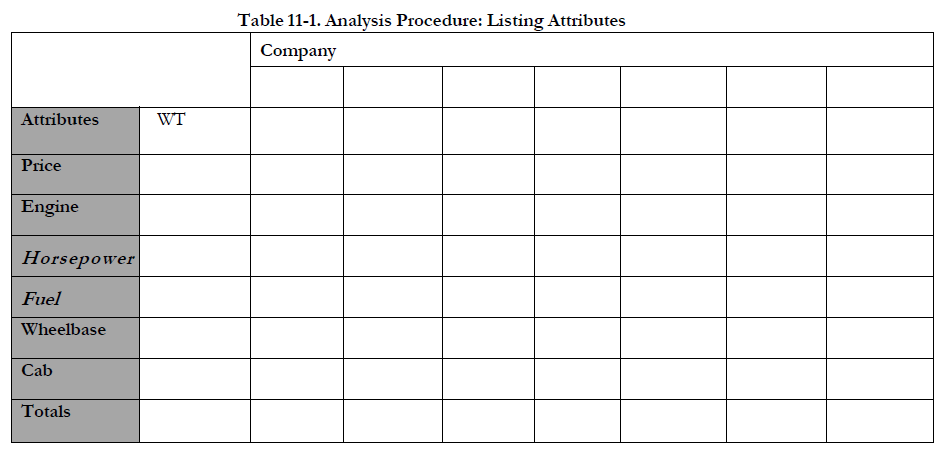
Figure 1. Table 11-1 - Analysis Procedure: Listing Attributes
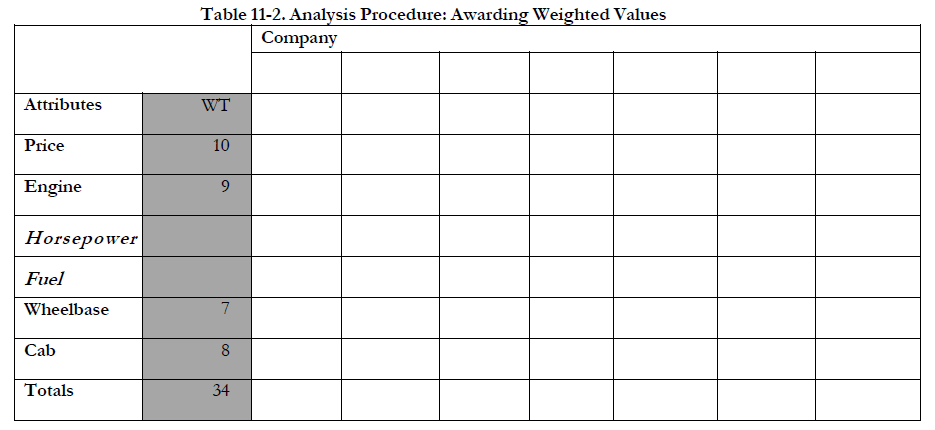
Figure 2. Table 11-2 - Analysis Procedure: Awarding Weighted Values
- Under the column "WT" as shown in Table 11-2, enter the weighted value of each particular attribute if it were to meet the bid specifications perfectly. This value will normally vary depending on the importance the analyzer places on this attribute toward meeting the needs of the requisitioning office.
Price is usually high in importance, so the weight given is 10 in the sample, as shown in
Table 11-2. The engine specifications may not be quite as important, so a weight of 9 is given. The wheelbase is of even less importance, so a weight of 7 is assigned. The cab design may be a little more important than the wheelbase because more than three people may need to ride at one time, so a weight of 8 is assigned.
The sub-attributes will be used later in the analysis. - Under "Company" list the companies offering bids as shown in Table 11-3.
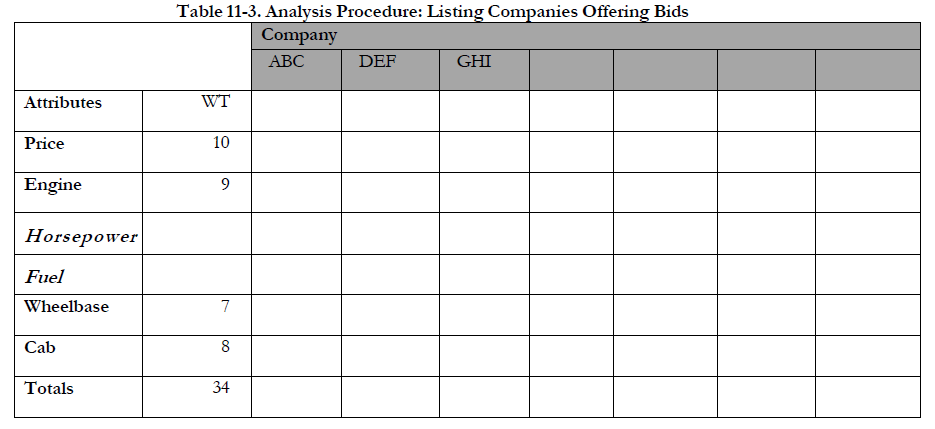
Figure 3. Table 11-3 - Analysis Procedure: Listing Companies Offering Bids - Award a weighted value for the price stated in each bid as shown in Table 11-4. The bids in the example stated the following information:
- ABC offered a diesel engine of 180 HP, long wheelbase, and 3-passenger cab for a price of Twelve Thousand Five Hundred Dollars ($12,500.00).
DEF offered a gasoline engine of 200 HP, short wheelbase, and 5-passenger cab for Eleven Thousand Dollars ($11,000.00).
GHI offered a gasoline engine of 220 HP, long wheelbase, and 6-passenger cab for Twelve Thousand Seven Hundred Fifty Dollars ($12,750.00).
Analysis of Price: ABC is awarded an 8.5; DEF is awarded a 10, and GHI is awarded an 8 weighted value.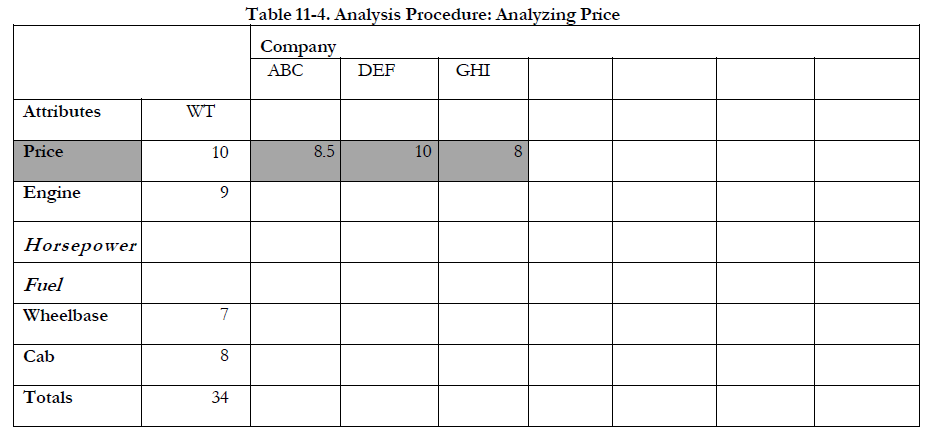
Figure 4. Table 11-4 - Analysis Procedure: Analyzing Price
- ABC offered a diesel engine of 180 HP, long wheelbase, and 3-passenger cab for a price of Twelve Thousand Five Hundred Dollars ($12,500.00).
- Use the sub-attributes to analyze the engine, as shown in Table 11-5.
First, analyze the horsepower sub-attribute: ABC is awarded a (-) because the HP is the lowest DEF is left blank GHI is awarded a (+).
Second, analyze the fuel sub-attribute:
The diesel engine is preferred; therefore, ABC is awarded a +, and the other two are left blank.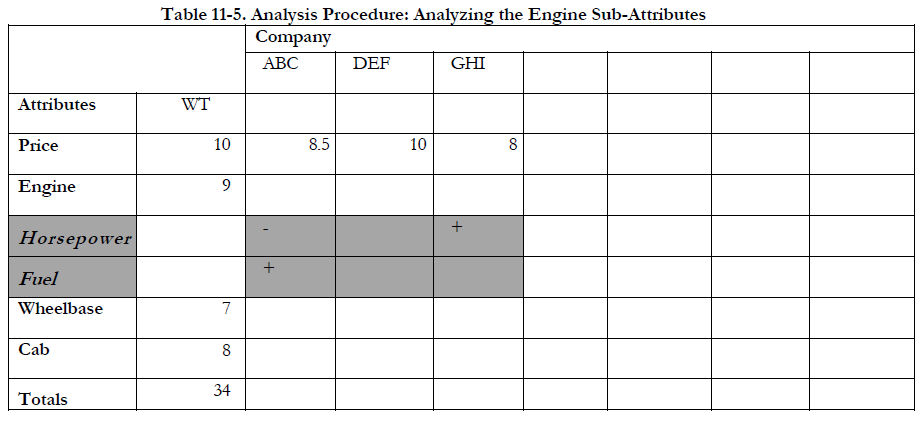
Figure 5. Table 11-5 - Analysis Procedure: Analyzing the Engine Sub-Attributes
Third, analyze the engine.
Considering the +'s and -'s, GHI is awarded a 9. ABC and DEF are each awarded an 8, as shown in Table 11-6.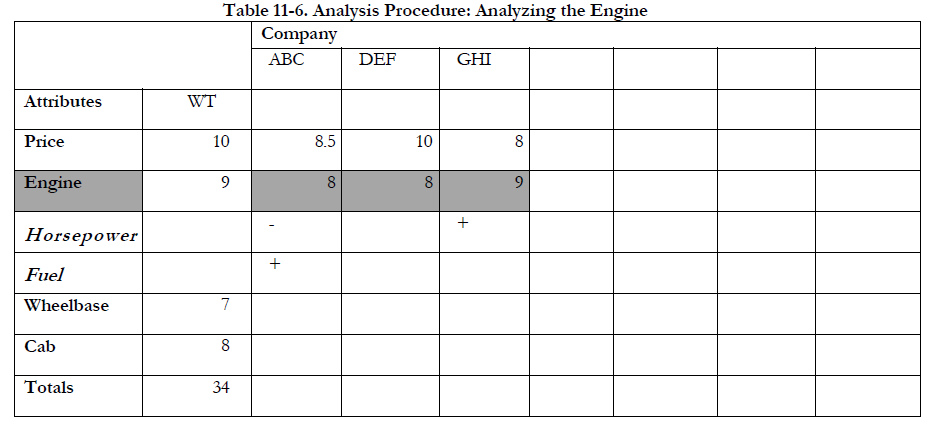
Figure 6. Table 11-6 - Analysis Procedure: Analyzing the Engine - Analyze the wheelbase.
ABC bid a long wheelbase and is awarded a 7; DEF bid a short wheelbase and is awarded a 5, and GHI bid a long wheelbase and is awarded a 7 as shown in Table 11-7.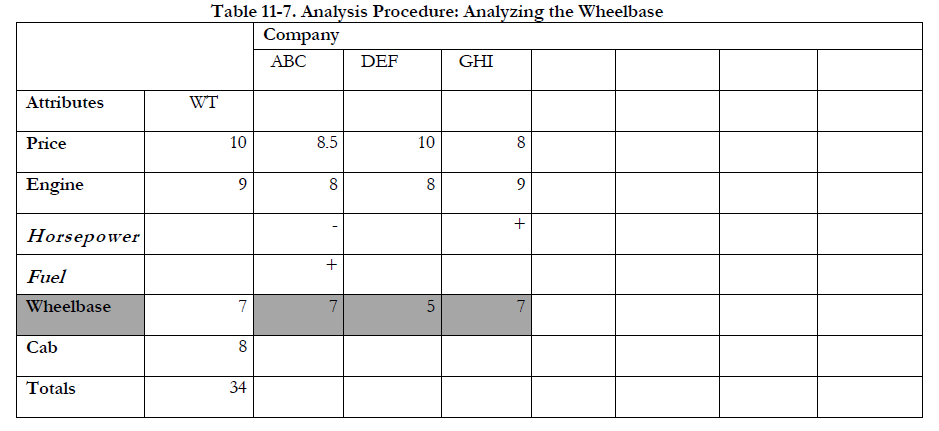
Figure 7. Table 11-7 - Analysis Procedure: Analyzing the Wheelbase - Analyze the cab.
ABC bid a three-passenger and is awarded a 5; DEF bid a five-passenger and is awarded a 7, and GHI bid a six-passenger and is awarded an 8 as shown in Table 11-8.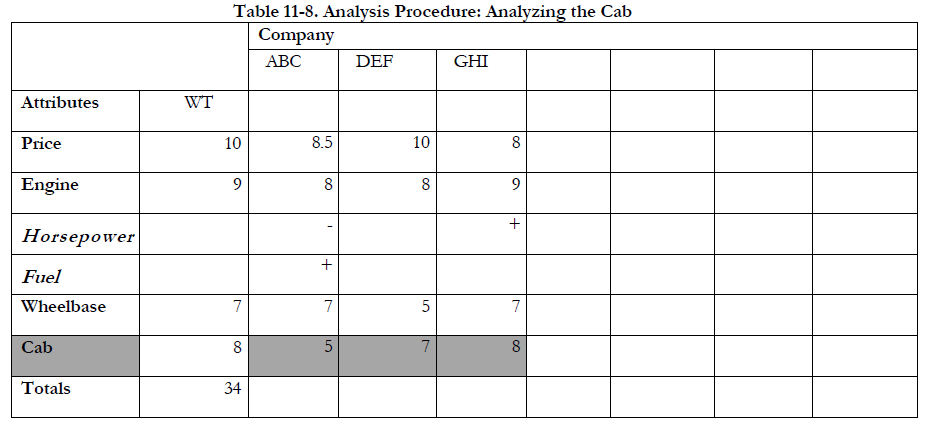
Figure 8. Table 11-8 - Analysis Procedure: Analyzing the Cab - Total each column.
The maximum points to be awarded under WT is 34. ABC receives 28.5, DEF receives 30, and GHI receives 32, as shown in Table 11-9. - From the totals, determine the "lowest and best" bid.
The “lowest and best” bid in this example is from GHI.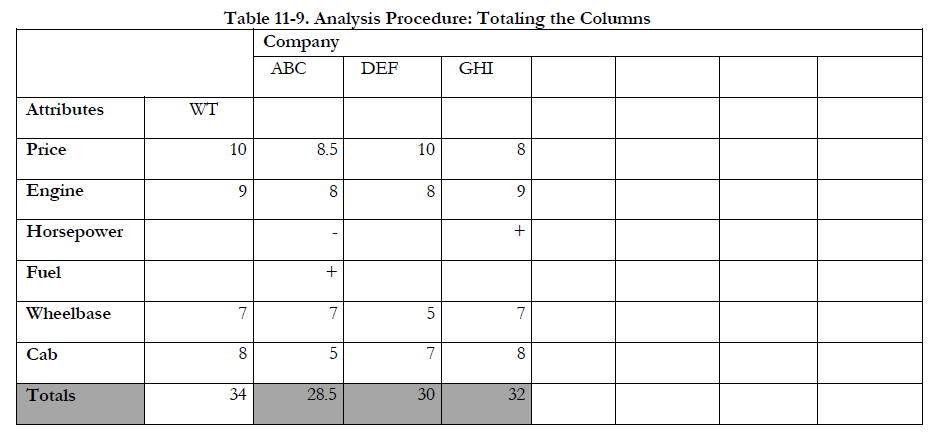
Figure 9. Table 11-9 - Analysis Procedure: Totaling the Columns
The procedure described above can be used to analyze any bid, provided the attributes are easily recognized and distinguishable from carefully written specifications, and the vendors are required to follow a strict format in their response.
A recommended best practice is to keep notes that briefly state why specific points are awarded and cross- reference them to the page and paragraph in the bid response, which helps justify the analysis at a later date. Attaching the notes to the bids when they are filed also provides a means of later justifying why a particular vendor received a bid.
Throughout this analysis procedure, do not hesitate to discuss the decision with the person(s) requesting the product or service. Ask them, “Is this what you wanted?”
Additional Considerations
When awarding contracts, a board should consider not simply the lowest bidder but the lowest responsible bidder. If the award is made to a bidder other than the lowest bidder, a board must state the reasons for that action. A statement must be placed on file, be open to public inspection, and be a matter of public record.
The following is a suggested statement to use when the decision is made to contract with a bidder other than the lowest bidder.
On occasion, situations may arise which require the immediate delivery of products to the district. Taking into consideration the ability of the company to respond to the requirements of the contract in a timely manner, the bid of _____ does not appear to be the lowest responsible bid.
In considering whether the lowest bidder is responsible, a board could consider the following factors:
- The ability, capacity, and skill of the bidder to perform the requirements of the contract
- The character, integrity, reputation, experience, and effectiveness of the bidder
- The quality of the bidder’s performance on previous contracts
- The bidder’s previous and existing compliance with state laws and city ordinances
- The sufficiency of the bidders' financial resources and ability to perform the work financially