Cotton Comments | June 23, 2026
Current Situation
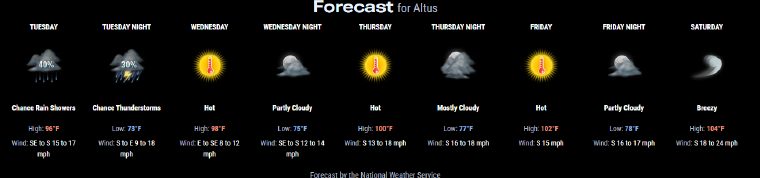
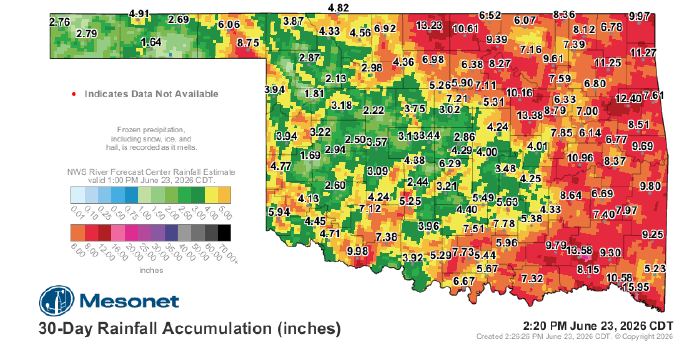
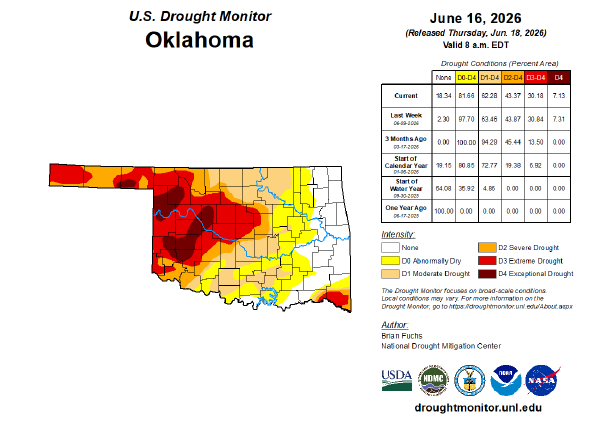
Cotton planting has wrapped up across the state and crop progress varies greatly depending on planting date and moisture. Some earlier planted irrigated cotton has begun to produce square while some later planted dryland is still making its way out of the ground. As I am typing this, a large portion of the area is receiving much needed rainfall. Conditions continue to be dry across most of the region with some rainfall breaking the cycle occasionally.
Early-Season Pest Considerations
Insect pest pressure has been low up to this point in our cotton crop. Thrips presence in the region was low, likely as a result of the dry spring. As we move into square production, we need to keep an eye out for cotton fleahoppers. I have not seen many up to this point but have observed a few in weeds and garden vegetables. Refer to the chart below for action thresholds when spraying for cotton fleahoppers. Many options for control are out there. If you have any questions about management, you are welcome to reach out to me.
| Week of Squaring | Square Set |
|---|---|
| 1st week | <90% |
| 2nd week | <85% |
| 3rd week | <75% |
| After 1st bloom, treatment is rarely justified. |
Weed pressure has been intense following recent rainfalls. Palmer amaranth and heavy annual grass pressure have shown up over the past few weeks, as well as a few less common weeds such as cocklebur and devil's claw. Glyphosate applications are still effective on many of our annual grass species and several annual broadleaf weed species. Recent high humidity has allowed us to be very effective with glufosinate applications. Keep in mind, when using glufosinate products aim for a medium to coarse droplet size, use higher carrier volume to ensure goof coverage, attack weeds when they're small, and use an ammonium sulfate (AMS) product in the mix to ensure best results. Another thing to consider when making a herbicide application is to include a residual herbicide in the mix. These options include Dual Magnum, Outlook, and Warrant.
Two-Spot Cotton Leafhopper (Cotton Jassid)
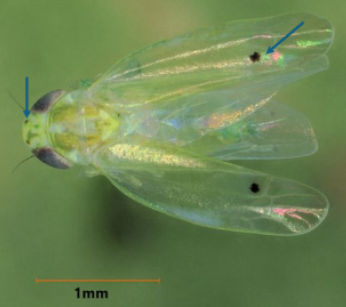
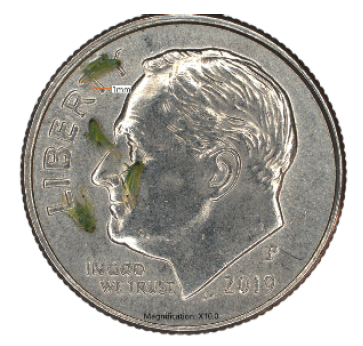
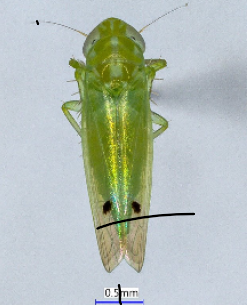
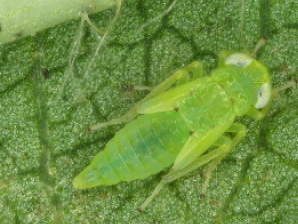
There have not been any cotton jassids observed in the state yet, but I want to remind everyone to be looking for them. Below are some images for reference. When scouting for these pests look on the underside of the fourth mainstem leaf from the top of the plant. The cotton jassid has a dark spot on each of its wings. If you observe one of these pests, please contact me, Dr. Ashleigh Faris, or Dr. Jenny Dudak. For more information about the cotton jassid, refer to OSU EPP Pest E-Alert EPP-26-9 Monitoring for Cotton Jassid a Potential New Threat to Oklahoma Cotton.
You can also sign up for updates on the cotton jassid at Texas A&M AgriLife Extension.
Weather Update