

Cow-Calf Corner | May 4, 2026
Drought Threatens the Herd Rebuild
Derrell S. Peel, Oklahoma State University Extension Livestock Marketing Specialist
Moving into May, drought conditions take on a new urgency. Pasture and hay production in the next few weeks will determine cattle production potential for much of the year. The latest Drought Monitor (Figure 1) shows that drought is widespread across much of the country. The Drought Severity Coverage Index (DSCI) is calculated from Drought Monitor categories to provide a summary measure of drought. The current DSCI for the continental U.S. is a value of 202, down fractionally from the 204 level of the previous week. The current DSCI is the largest value for the end of April in the history of the Drought Monitor, back to 2000.
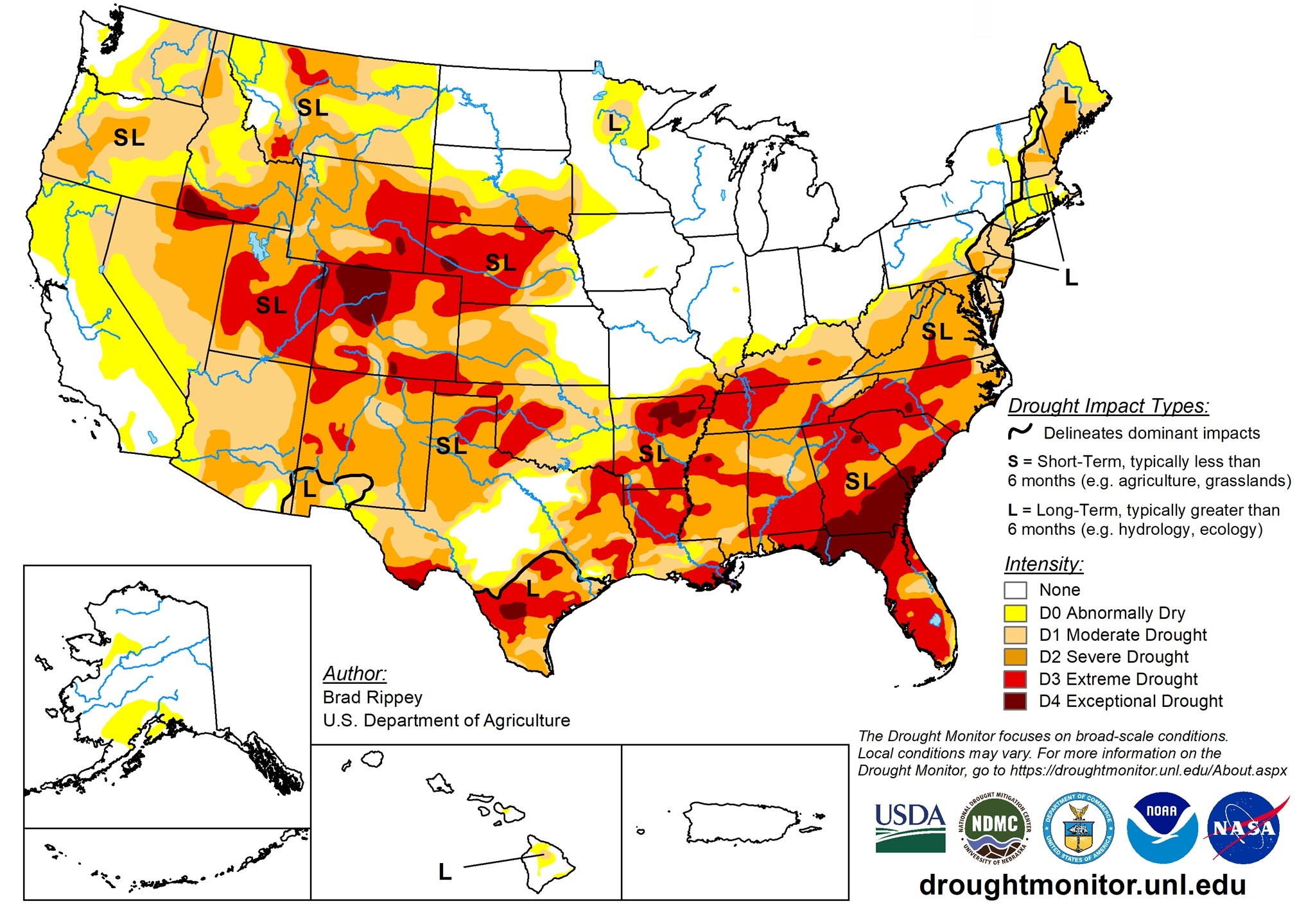 Figure 1. U.S. Drought Monitor, April 28, 2026 (Released Thursday, Apr. 30, 2026) Valid 8 a.m. EDT
Drought Impact Types:
- (Dark-lines) Delineates dominant impacts
- S = Short-Term, typically less than 6 months (e.g. agriculture, grasslands)
- L= Long-Term, typically greater than 6 months (e.g. hydrology, ecology)
Intensity: (D0-D4 color brightness)
- [white] None
- [yellow] D0 Abnormally Dry
- [pink] D1 Moderate Drought
- [orange] D2 Severe Drought
- [red] D3 Extreme Drought
- [burgundy] D4 Exceptional Drought
The Drought Monitor focuses on broad-scale conditions.
Local conditions may vary. For more information on the Drought Monitor, go to U.S. Drought Monitor/About
Image Author: Brad Rippey, U.S. Department of Agriculture
-
Not only has the DSCI never reached a value of 200 at this time of year, the DSCI for the U.S. has only exceeded a level of 200 a total of 26 times in 1,374 weeks since the Drought Monitor began. The DSCI has averaged 108, ranging from 11 to 215 over the last 26+ years. The current values over 200 are more than two standard deviations above average and have occurred less than two percent of the time in the history of the Drought Monitor.
The DSCI provides a measure of drought intensity but does not specifically address drought affecting beef cattle production. In 26 states accounting for 88 percent of the 2026 beef cow inventory, the percentage of drought in each of is applied to the beef cow inventory in each state. The results show that over 79 percent of the beef cow herd in those 26 states are currently impacted by drought. That means that over 70 percent of the total beef cow herd is impacted even without considering drought in any remaining states. It is clear that drought is a significant threat to beef cattle production and potential herd rebuilding in 2026.
Decreased cow culling is an important part of stopping herd liquidation and stabilizing the cow herd. Beef cow herd culling dropped sharply in 2023-2025, reaching a cyclically low level of 8.4 percent in 2025. Thus far in 2026, beef cow slaughter is down over 17 percent year over year, a level that would lead to an annual herd culling rate of roughly 7.0 if it persists for the balance of the year. This would be a record low culling rate and would certainly help stabilize the beef cow herd. However, current drought conditions may cause cow slaughter to increase and lead to additional herd liquidation.
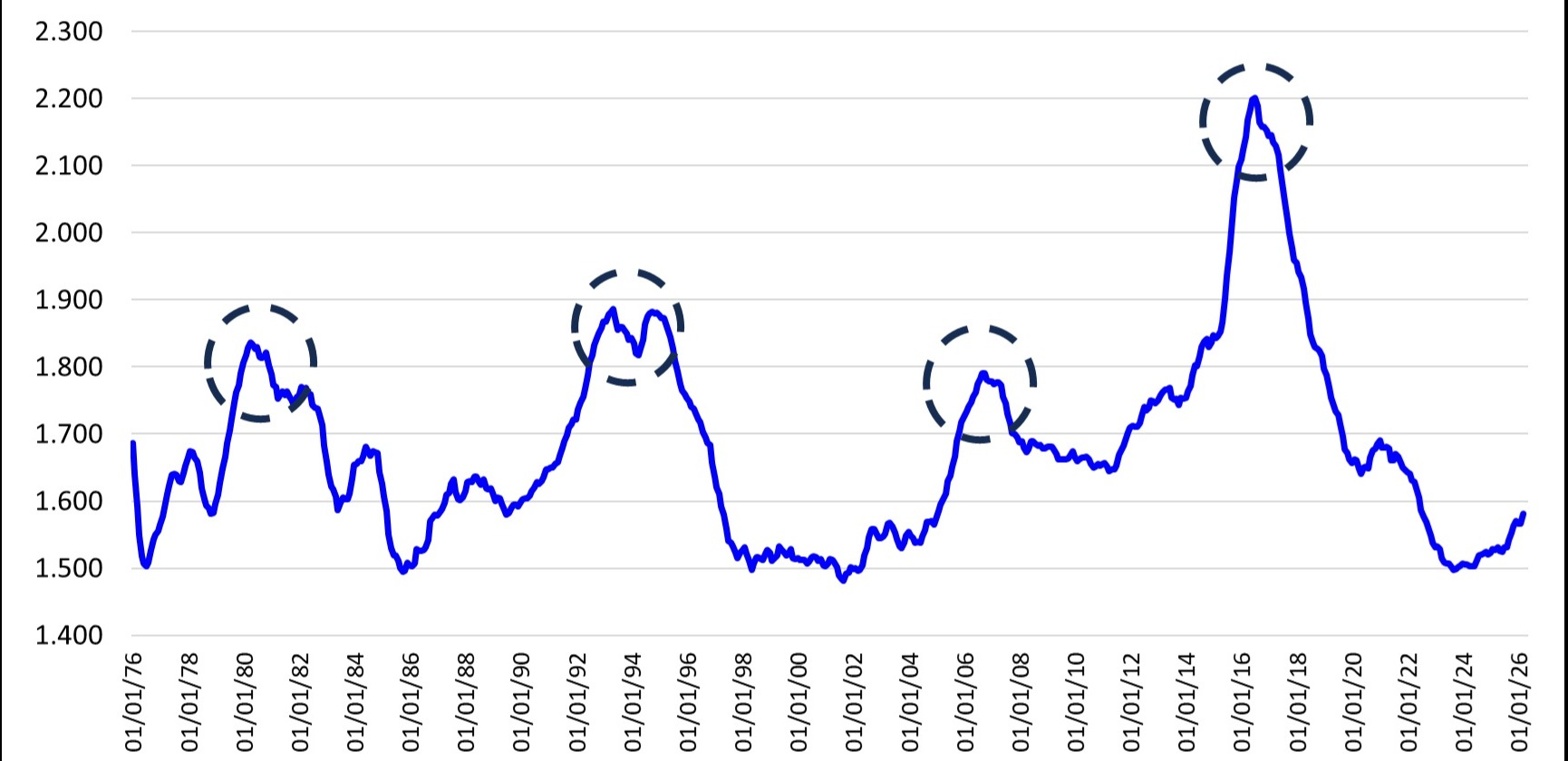 Figure 2. Steer: Heifer Slaughter Ratio. 12 Month ΜΑ
There are indications of the very early stages of heifer retention as well. The January 1 beef replacement heifer inventory was up slightly, by 0.9 percent year over year. This is consistent with the indications in the steer to heifer slaughter ratio in Figure 2. This ratio has peaked in each of the last four herd expansions and typically starts increasing prior to the herd inventory low. The chart shows that the ratio has started to increase and indicates the very early stages of heifer retention. Little or no herd rebuilding is indicated for 2026, but the process may be starting for later. However, continued or accelerated drought in 2026 could interrupt early heifer retention and further delay herd rebuilding.
Derrell Peel discusses the impact of delayed herd expansion on the cattle markets on the U.S. Farm Reports college roadshow visit at Oklahoma State University. Facebook Video: U.S. Farm Report How long can the cattle market stay hot
Timing Bermudagrass Turnout for Maximum Summer Production
Mason B. Henson, Oklahoma State University Sustainable Livestock Production Specialist & Mark Z. Johnson, Oklahoma State University Extension Beef Cattle Breeding Specialist and
Much of Oklahoma’s bermudagrass finished the summer and fall of 2025 with some degree of drought stress. Input costs, especially fertilizer have spiked in price over the past several weeks. Now, in the season when soil temperature and photoperiod are priming warm season grasses to grow, it is important to assess pastures and manage for long-term health and productivity. Over the next three weeks, we will address bermudagrass pasture management, the use of warm season annuals and legumes as a means to improve range health, beef production and profit potential.
Spring rainfall and increasing temperatures results in rapid green-up of bermudagrass, creating the appearance of readiness for grazing. However, initiating grazing too early in the growth cycle can have negative consequences for pasture productivity throughout the remainder of the season. Proper timing of initial grazing is critical to ensure plant health and maximize forage yield.
During early spring growth, bermudagrass relies heavily on energy reserves stored in roots and rhizomes. The initial development of leaf tissue is supported by these reserves rather than current photosynthetic activity. Before the plant can sustain active growth, it must rebuild root reserves and establish a functional photosynthetic system. This process requires adequate leaf area and time. Grazing during this early stage removes leaf tissue that is essential for energy production, limiting the plant’s ability to replenish reserves. As a result, root development may be restricted, and overall plant vigor can be reduced. Although the pasture may continue to appear green, the long-term effects often include decreased forage production, slower recovery following grazing, and reduced tolerance to environmental stress, particularly drought.
To minimize these risks, grazing should be delayed until bermudagrass has reached an appropriate height, generally between 6 and 8 inches, and exhibits consistent, active growth. This indicates that the plant has transitioned from reliance on stored reserves to sustained growth supported by photosynthesis. Monitoring growth patterns rather than relying solely on visual greenness can improve grazing decisions.
Delaying turnout may require temporary adjustments in management, including continued use of stored forages or alternative grazing areas. Protecting bermudagrass during this early stage helps ensure stronger growth, better yields, and improved resilience if conditions become dry later in the summer. With favorable moisture conditions, bermudagrass has the potential to produce substantial forage yields. Ensuring that grazing is initiated at the appropriate time is a key factor in realizing that potential and maintaining pasture productivity throughout the summer.
References:
- Oklahoma State University Extension. (n.d.). Bermudagrass pasture management. Stillwater, OK: Oklahoma State University.
- Hay & Forage Grower. (2017). Give warm-season perennials a fighting chance. Retrieved from Hay and Forage Grower
- Pasture Recovery Following Drought. Oklahoma Cooperative Extension Fact Sheet PSS-2592
- Mark Johnson explains how cattle producers can make the most of their fertilizer applications for stronger forage performance on SunUpTV from May 2, 2026. Youtube: The Key to Stronger Bermudagrass Starts with Nitrogen | Cow-Calf Corner
Nitrogen Fertilizer Economics in Cow–Calf Operations
Paul Beck Oklahoma State University Cooperative Extension Beef Cattle Nutrition Specialist
Nitrogen fertilizer has always been one of the most powerful tools available to forage-based cattle producers, but it is also one of the most expensive. Nitrogen is produced from natural gas, so fertilizer prices tend to rise and fall with energy markets. As fertilizer costs increase, the key question for cow–calf producers is not “Can I afford to fertilize?” but should be “Under what conditions does fertilization provide a payback?” and “Can I afford not to fertilize?”
For bermudagrass, Old World bluestem, and other warm-season perennial pastures nitrogen remains one of the most reliable inputs for increasing forage production. A good rule of thumb is that each pound of nitrogen applied will produce 30 to 40 pounds of additional forage under adequate moisture and soil fertility conditions. That response has been remarkably consistent over time and across operations.
However, the economics change as fertilizer prices increase. At $800 per ton of urea, nitrogen cost is 87 cents per pound, the cost of additional forage runs up to $60 to $80 per ton, depending on application efficiency and growing conditions. That is significantly higher than what many of us were used to just a few years ago. The decision to fertilize should therefore be based on the value of the forage produced, not just the cost of fertilizer.
One useful way to think about nitrogen fertilizer in cow–calf systems is in terms of calf value. In stocker systems, each pound of nitrogen can produce roughly 1.5 to 2 pounds of additional gain. In cow–calf operations, the response is less direct but still meaningful through improved carrying capacity and weaning weights. A practical guideline is that a calf value–to–nitrogen cost ratio of 2.5 indicates fertilization is economically justified. At current fertilizer price levels and with a 500-lb calf valued at about $5.00 per pound, the economics strongly favor fertilization in many operations, with a calf value–to–nitrogen cost ratio exceeding 5.
If fertilizer budgets are tight, producers still have options. The first is to apply nitrogen strategically rather than uniformly. Target fields with the highest yield potential, adequate soil fertility, and reliable moisture. The second is to improve forage utilization. Better grazing management, timely rotation, and maintaining proper stocking rates can increase the amount of forage harvested by cattle rather than lost to trampling or excessive maturity.
Nitrogen fertilizer is an investment not just an expense. When cattle prices are strong, the economics often favor maintaining fertility programs, even in periods of high input costs. The key is to match fertilizer use with forage demand, manage pastures efficiently, and make each pound of nitrogen work as hard as possible.