

Cow-Calf Corner | May 18, 2026
The Importance of China in Global and U.S. Beef Markets
Derrell S. Peel, Oklahoma State University Extension Livestock Marketing Specialist
The role of China in global beef markets has changed rapidly in the past two decades. China (including Hong Kong) was not a player at all in global beef markets as little as fifteen years ago but has risen rapidly to become the largest beef importer in the last decade (Figure 1). For many years, China was a large beef producing and consuming country but had almost no presence in global beef markets. Starting about 2013, rising beef consumption in China began to exceed domestic beef production leading for the first time to significant beef imports.
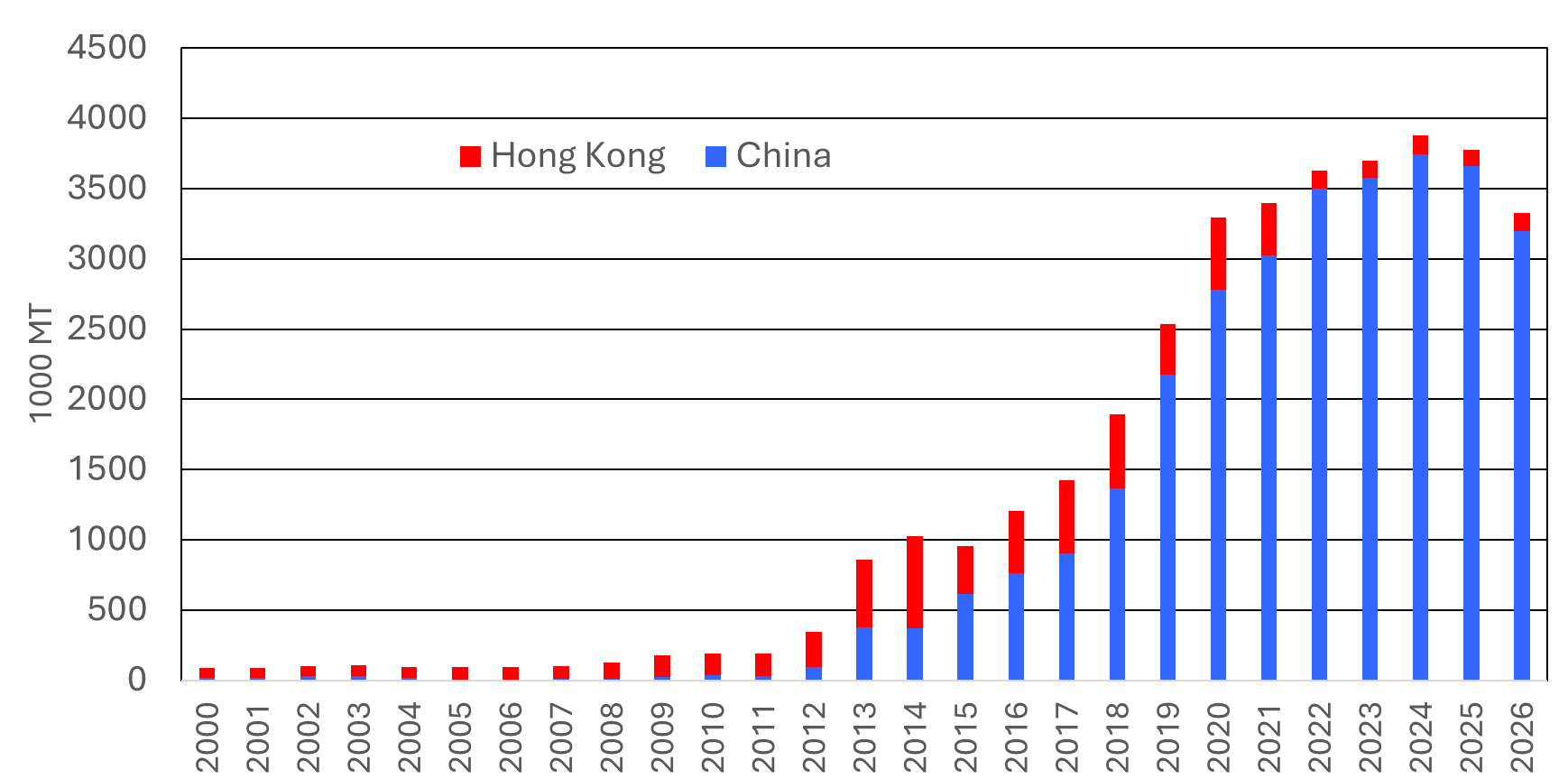 Figure 1. China/Hong Kong Beef Imports
Although per capita beef consumption in China remains relatively low, roughly 13 pounds compared to 59 pounds in the U.S., the large population means that small increases in beef consumption represent large amounts of beef in total. As a result, China/HK quickly became the largest beef importing country, surpassing the U.S. by 2017 (Figure 2). As recently as 2022, China/HK accounted for over 35 percent of global beef imports.
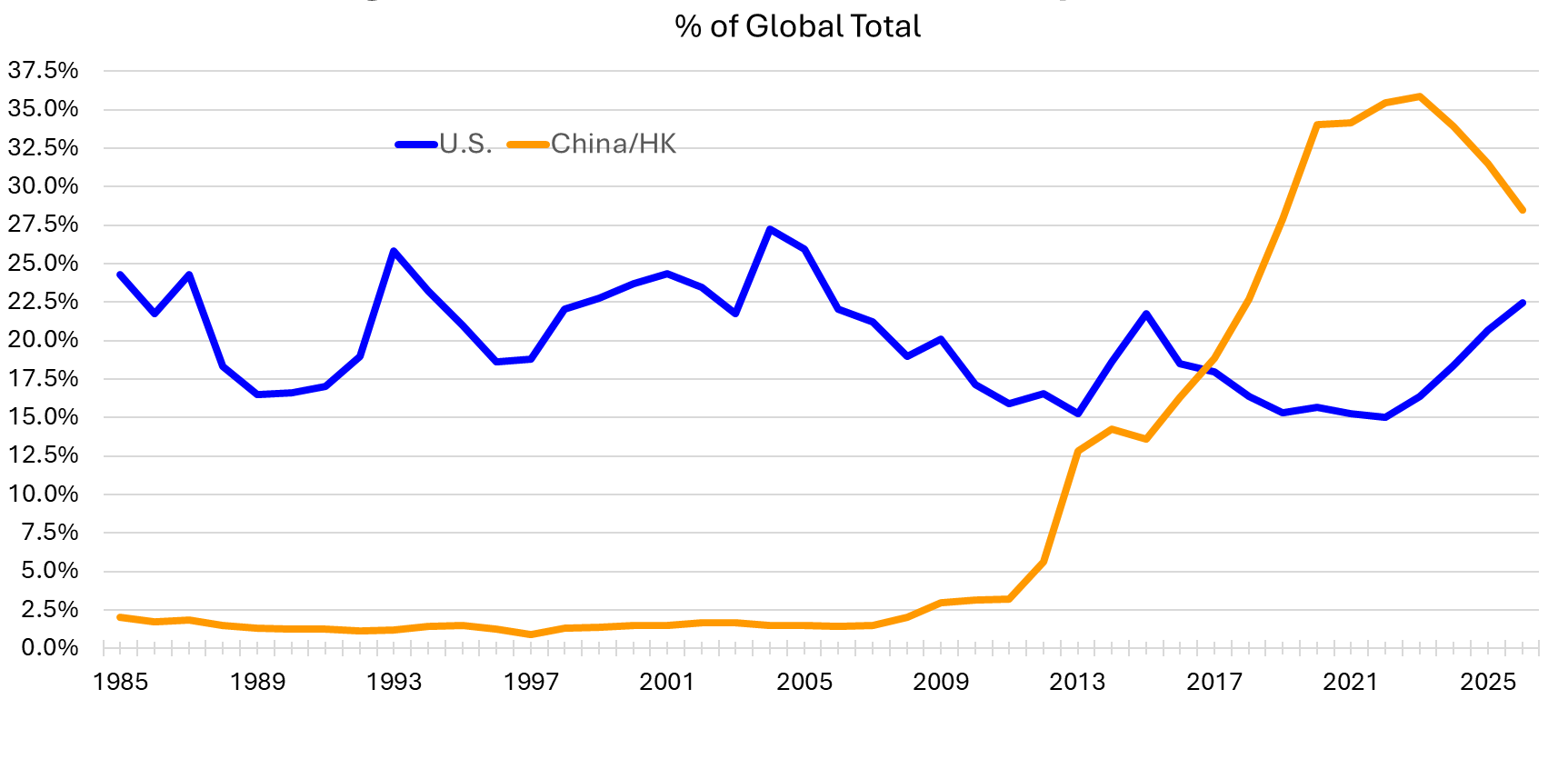 Figure 2. U.S. and China/HK Beef Imports Share
Part of the growth in beef imports in China/HK included increased exports of U.S. beef to China. Hong Kong was a significant beef export market in the 2010s, representing as much as 16 percent of total U.S. beef exports, and was the number three export market. It was generally recognized that a portion of exports to Hong Kong were subsequently transshipped into China. After the U.S. achieved official access to China, beef exports began to grow, with exports to Hong Kong decreasing as expected (Figure 3). For this reason, data from China and Hong Kong are combined, although still reported separately.
In 2025, with tariffs in place and U.S. access to China revoked, exports to China/HK decreased sharply, although beef exports to Hong Kong increased to slightly offset the total decrease (due to different political responses in Hong Kong). The China/HK share of U.S. beef exports dropped from 18.7 percent (third largest) to 10.4 percent of total beef exports and fourth place among beef export destinations (Figure 4).
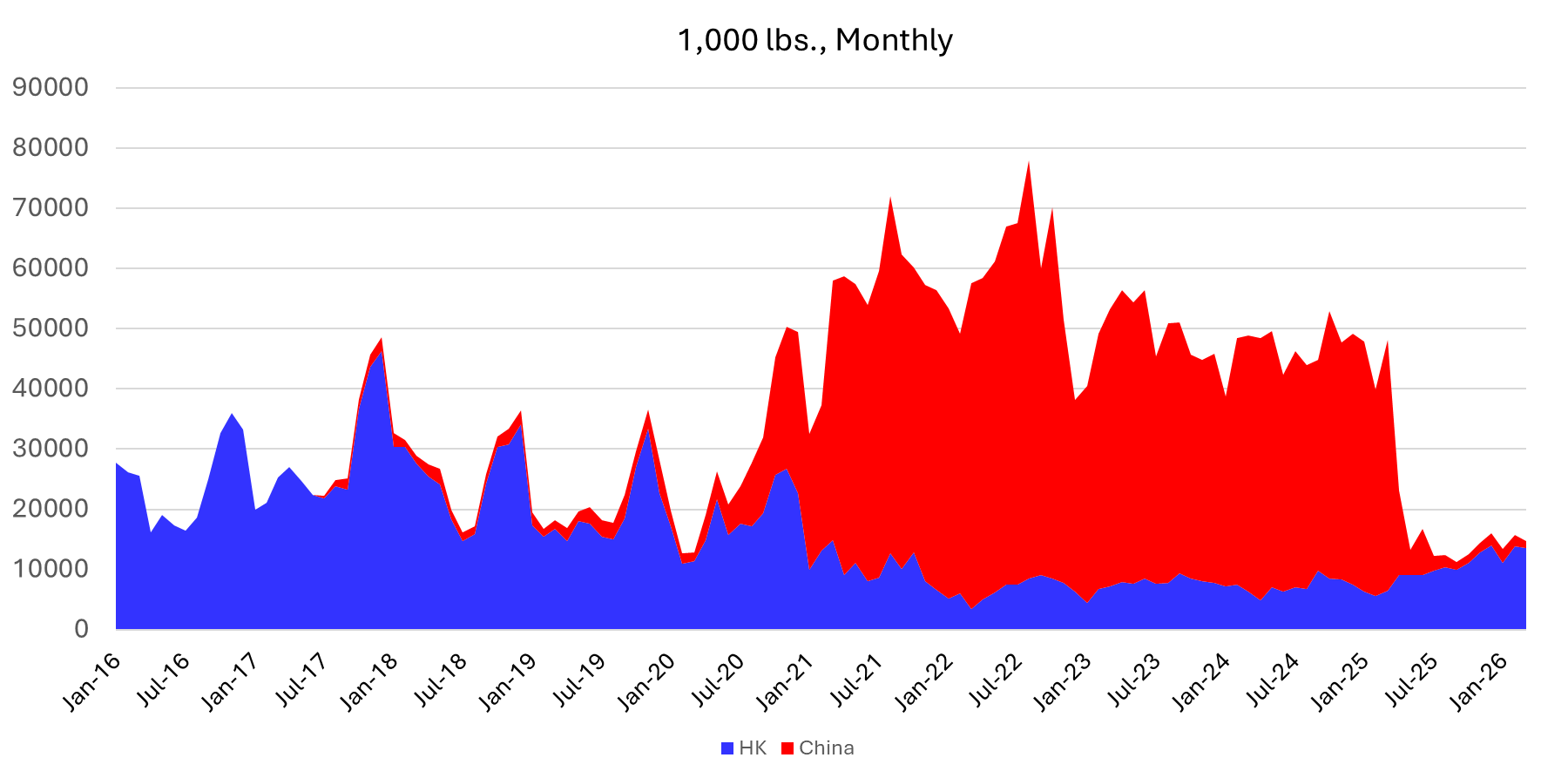 Figure 3. Beef Exports to China/Hong Kong
While China/HK quickly grew to be a major U.S. beef export market after 2020, the U.S. share of total China/HK beef imports has been relatively small. The U.S. share of total beef imports in China/HK peaked at 8.8 percent in 2022 and dropped to 3.7 percent in 2025. There is no doubt that China/HK generally represents significant beef export potential for the U.S. in the absence of political barriers.
Figure 4 shows the dramatic loss of China/HK beef exports in 2025 relative to other major beef export markets. Decreased beef exports to China/HK accounted for 68 percent of the total decrease in U.S. beef exports in 2025. The impact of this loss in U.S. beef market was largely unrecognized simply because the domestic U.S. market was so strong and trending higher. Under different market circumstances, the impact would be much more evident. Part of the future prospects for herd rebuilding and increased beef production in the U.S. will depending on maintaining and building robust beef export markets and China/HK will certainly be a key component.
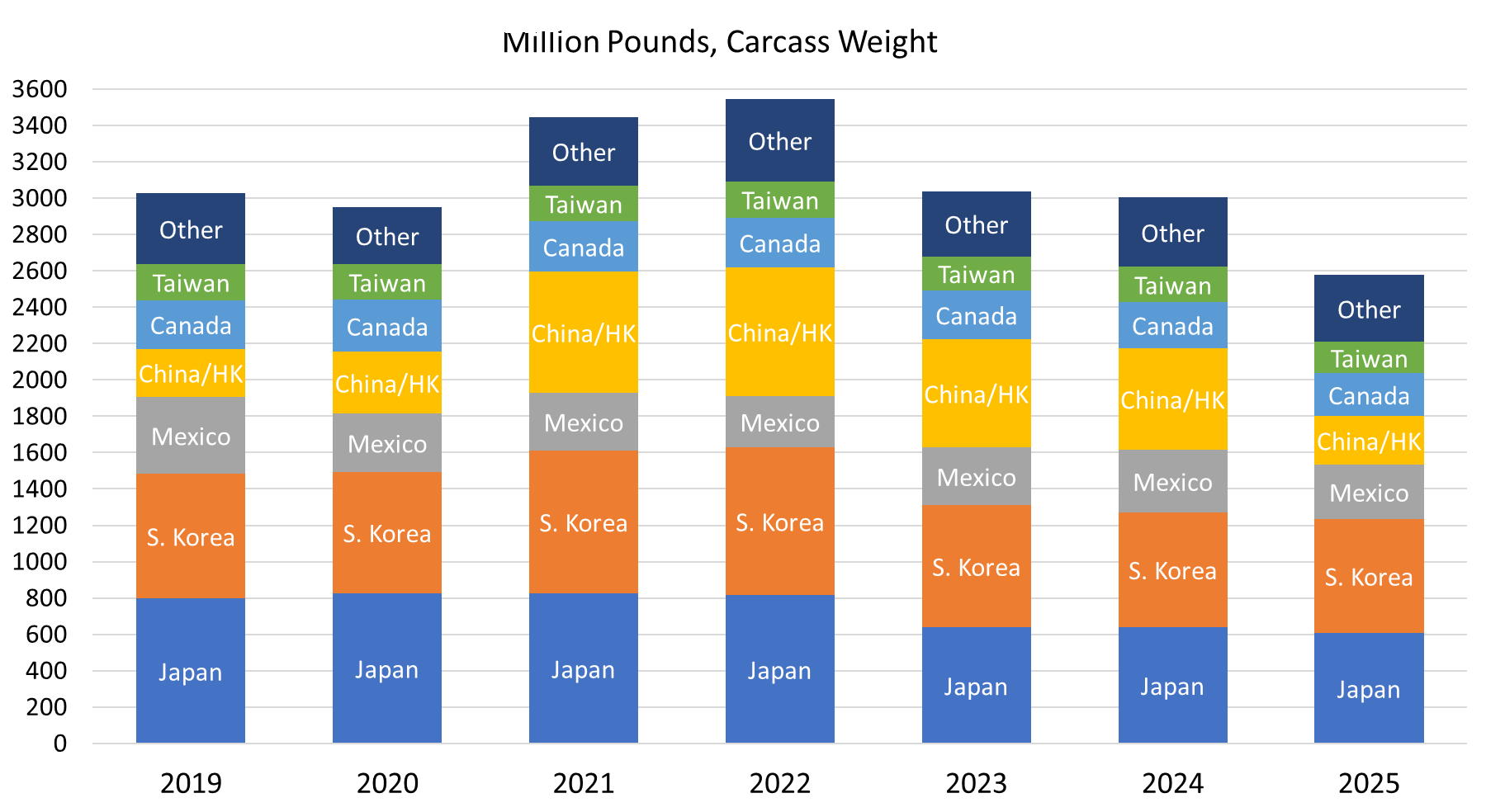 Figure 4. U.S. Beef Export, 2018-2025
Warm-Season Legumes: Expanding Nitrogen Management into Summer Systems
Mason B. Henson, Oklahoma State University Sustainable Livestock Production Specialist
Legumes are commonly associated with cool-season forage systems, particularly through the use of clovers to improve spring grazing and reduce nitrogen fertilizer requirements. However, warm-season legumes can provide similar benefits during the summer months. As input costs remain elevated and forage quality becomes more variable through the summer, incorporating warm-season legumes offers an opportunity to improve both system efficiency and nutritional value.
The primary advantage of legumes lies in their ability to fix atmospheric nitrogen through a symbiotic relationship with rhizobia bacteria. This biological nitrogen fixation can supply a portion of the nitrogen required for plant growth, reducing dependence on synthetic fertilizers. During the summer, when warm-season grasses such as bermudagrass actively growing and highly responsive to nitrogen, the inclusion of legumes can contribute to both forage production and crude protein content.
Several warm-season legumes are adapted to Oklahoma and similar environments. Cowpeas are widely used due to their relatively strong establishment and grazing tolerance, along with their contribution to forage quality. Sunn hemp has gained interest for its rapid growth and high biomass production, although it tends to mature quickly and requires timely utilization to maintain quality. Forage-type soybeans are another option that can be incorporated into systems targeting higher nutritional demands.
Warm-season legumes are generally most effective when included in mixtures rather than grown as monocultures. When combined with grasses such as bermudagrass or summer annual species, they contribute to a more balanced forage system. Grasses provide yield and persistence, while legumes enhance protein concentration and supply nitrogen. When 30%-50% of the total forage production in a pasture is from legumes, it is predicted that the N fixation annually is the equivalent of 100-150 units of N. A grass-legume combination can improve overall forage utilization and animal performance, particularly in grazing systems where diet selection plays an important role.
Soil temperatures should be consistently warm, generally above 60 degrees, and adequate soil moisture is necessary to support germination and early growth. This typically makes ideal planting fall in May across much of Oklahoma. Proper inoculation is essential to ensure effective nitrogen fixation.
While warm-season legumes are not a complete substitute for nitrogen fertilizer, they represent a practical tool for reducing input costs and improving forage quality. Incorporating these species into summer forage systems can enhance overall productivity and provide greater flexibility in grazing management.
Sources
Oklahoma State University Extension, USDA-NRCS, University of Georgia Extension, and Hay & Forage Grower.
Extended Days on Feed Increasing Carcass Weight, Carcass Quality and Fat
Paul Beck, Oklahoma State University Extension Beef Cattle Nutrition Specialist
Carcass weights have been steadily increasing at about 5 pounds per year for the last 60-years, but in the last few years they have increased by over 20 pounds per year. We evaluated the impact of extended days on feed on carcass composition from 5,656 cattle to model either a historically typical marketing endpoint of 10% of the pen graded Yield Grade 4 or 5 or a longer-fed endpoint more common to the beef industry currently, where approximately 30% of the pen grade hit Yield Grades of 4 or 5.
The extended-feeding scenario increased average hot carcass weight from 889 to 918 pounds, a 29-pound increase per head. Increased marbling score increased the percentage of carcasses grading Choice or greater from 77.8% to 90.7%.
Backfat thickness increased from approximately 0.54 to 0.64 inches. Estimated total body fat increased from approximately 262 to 287pounds, or about 25 pounds more fat per head, making up 87% of the extra 29 pounds of carcass weight.
Extended feeding can increase carcass weight and improve quality grade, which increases gross carcass value when Choice and Prime premiums are strong and heavy carcass discounts are limited.
Extended days on feed are a marketing and management decision. Longer feeding can be profitable when the value of added carcass weight and improved quality grade exceeds the added feed cost, yardage, death loss risk, interest cost, and yield grade discounts, but can be costly if market conditions change to increase discounts for heavyweight or over-finished carcasses or if feed costs increase.