

Cow-Calf Corner |May 11, 2026
U.S. Beef Packing Industry Structure
Derrell S. Peel, Oklahoma State University Extension Livestock Marketing Specialist
In 2025, total cattle slaughter was 29.252 million head, down 6.4 percent year over year and down 13.1 percent from the recent cyclical peak in 2022. Cattle slaughter in 2025 was at the lowest level since 2015. Table 1 shows the breakdown of 2025 cattle slaughter by size categories of beef packing plants. This includes both fed and cow slaughter plants. Out of a total of 937 federally inspected packing plants, 94.8 percent (888 plants with capacity up to 100,000 head per year) accounted for 1.92 million head, 7.14 percent of total slaughter. By contrast, a total of eleven plants, with capacity in excess of one million head per year, accounted for 13.834 million head, or 47.3 percent of total cattle slaughter. On average, fed slaughter is about 80 percent of total cattle slaughter. These eleven plants accounted for 58.1 percent of fed slaughter (Figure 3). Fed slaughter is currently 81.4 percent of total cattle slaughter, the highest percentage since 2007. Low cow slaughter since 2022 has increased the fed slaughter percentage.
| Size | 2000 # of plants | 2000 Head | 2000 Avg Capacity | 2000 % of Total | 2025 # of plants | 2025 Head | 2025 Avg Capacity | 2025 % of total |
|---|---|---|---|---|---|---|---|---|
| Head/Year | 1000 HD | Head/Day | 1000 HD | Head/Day | ||||
| 1-999 | 546 | 160.2 | 1.15 | 0.4 | 677 | 223.7 | 1.30 | 0.8 |
| 1,000-9,999 | 99 | 329.4 | 13.1 | 0.9 | 174 | 408.2 | 9.2 | 1.4 |
| 10,000-49,999 | 27 | 644.3 | 93.6 | 1.8 | 25 | 586.4 | 92.0 | 2.0 |
| 50,000-99,999 | 11 | 786.2 | 280.3 | 2.2 | 12 | 869.3 | 284.1 | 3.0 |
| 100,000-199,999 | 15 | 2,277.3 | 595.4 | 6.4 | 11 | 1,630.3 | 581.2 | 5.6 |
| 200,000-299,999 | 6 | 1,483.3 | 969.5 | 4.2 | 7 | 1,773.7 | 993.7 | 6.1 |
| 300,000-499,999 | 9 | 3,590.0 | 1,564.3 | 10.1 | 13 | 5,119.0 | 1,544.2 | 17.5 |
| 500,000-999,999 | 9 | 5,297.5 | 2,308.3 | 14.9 | 7 | 4,806.6 | 2,692.8 | 16.4 |
| >1,000,000 | 16 | 21,063.2 | 5,162.5 | 59.1 | 11 | 13,834.7 | 4,932.2 | 47.3 |
| Total | 738 | 35,631.4 | 937 | 29,252.0 |
Source: Livestock Slaughter Summary, USDA-NASS, 2001 and 2026
The general structure of the beef packing industry has been in place for nearly 35 years. Figure 1 shows the four-firm concentration ratio for beef packing as calculated by the Packers and Stockyards Division of USDA. Beef packing in the U.S. consolidated rapidly in the 1980s and early 1990s. By 1993, the industry achieved a high level of concentration that has remained mostly constant since. The annual Livestock Slaughter summary first reported plants with a capacity of one million head or more in 1991. The number of large plants has varied between sixteen plants in 2000 to the current eleven plants in 2025. The closure of the Lexington, Nebraska plant this year will drop the number of one million+ head plants to ten.
Table 1 shows that the basic size structure in 2025 is not appreciably different than in 2000, the only year with 16 large plants. Fed slaughter was at a record level of 29.6 million head in 2000 and has dropped to 23.8 million head in 2025, a decrease of 19.5 percent. However, Figure 2 shows that large plants have been accounting for a declining percentage of fed slaughter since 2019, with the current percentage the smallest since 1994.
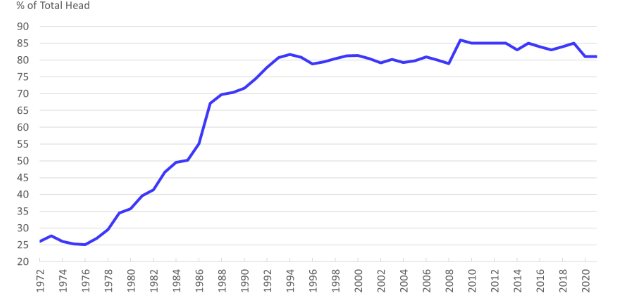 Figure 1. Four-Firm Concentration Ratio, Steer/Heifer Packing
Source: Packers and Stockyards Division, USDA
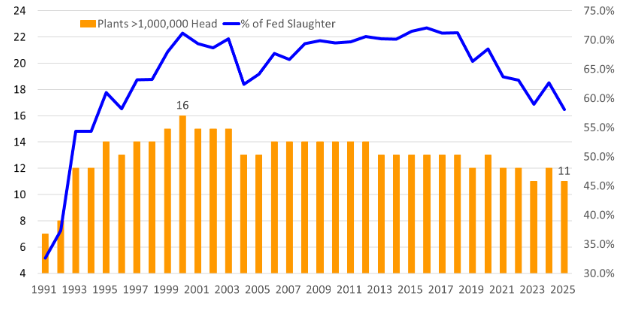 Figure 2. Large Beef Packer % of Fed Slaughter
Between 1991 and 2007, the total number of federally inspected beef packing plants decreased from 1,031 plants to 626 plants. Recent interest in small packing plants has resulted in the total number increasing since 2021 to 937 plants in 2025. Plants with less than 100,000 head capacity accounted for 3.9 percent of cattle slaughter in 2007 and has increased to 7.1 percent in 2025.
Derrell Peel breaks down how global beef markets are shifting and what that means for U.S. cattle producers today on the Cattle USA Daily Podcast from May 4, 2026: What Global Beef Market Changes Mean for Cattle Producers Today
Incorporating Warm-Season Annuals
Mason B. Henson, Oklahoma State University Sustainable Livestock Production Specialist
As wheat pasture declines in late spring, many producers face a transition period in which forage availability and quality may be limited. This gap between cool-season and warm-season perennial forages can be particularly challenging for operations with higher nutritional demands, such as stocker cattle or cow-calf operations. Summer annual forage mixtures offer a practical way to maintain productivity and extend high-quality grazing into the summer months, and early May is an ideal time to begin planting across much of Oklahoma.
Summer annuals are valued for their rapid growth, high yield potential, and flexibility in use. They can be utilized for grazing, hay production, or as part of a broader soil management strategy. In many cases, these forages provide higher nutritive value than warm-season perennial grasses, particularly during periods when perennial systems are still developing or beginning to decline in quality.
Effective mixtures typically include both grass and legume components. Sorghum-sudan hybrids and pearl millet are commonly selected for their productivity and adaptability, while crabgrass offers excellent forage quality, palatability and regrowth potential under appropriate grazing management. The inclusion of legumes such as cowpeas or sunn hemp can enhance crude protein content and contribute nitrogen to the system, reducing fertilizer requirements if implemented annually.
Establishment is a critical factor in the success of summer annual mixtures, and planting method can influence both stand success and early growth. In most systems following wheat pasture, producers will either drill seed directly into residue or broadcast seed with light incorporation. Each method can be effective when managed appropriately, but seeding depth, rate, and seed-to-soil contact become especially important.
No-till drilled plantings generally provide the most consistent establishment due to improved seed placement and moisture access. This approach is particularly beneficial in drier conditions or when planting into heavier residue. A general rule of thumb is to plant seeds at a depth 2-3 times the diameter of the seed.
Broadcast plantings can be effective when equipment or time limits drilling, particularly when rainfall is expected. However, success depends heavily on achieving adequate seed-to-soil contact, often through light disking, dragging, or cultipacking. Broadcast systems typically require slightly higher seeding rates to compensate for reduced uniformity and potential seed loss.
Across both methods, planting should occur when soil temperatures are consistently above 60°F and adequate moisture is available to support germination.
Regardless of method, mixtures should be adjusted to avoid excessive competition, and fertility programs should account for the inclusion of legumes, which can reduce nitrogen requirements. Careful attention to planting depth and timing will improve establishment success and help ensure these systems reach their full production potential.
Sources: Oklahoma State University Extension, USDA-NRCS, Kansas State University Extension, Texas A&M AgriLife Extension, and Hay & Forage Grower.
Dr. Mason Henson and Mark Johson discuss how grazing timing impacts pasture productivity on SunUpTV’s Cow-Calf Corner at: When Should Cattle Graze Bermudagrass?
Selecting the Right Calving Season for Your Ranch
David Lalman, Oklahoma State University Extension Beef Cattle Nutrition Specialist
One of the most important management decisions in a cow/calf operation is determining when cows should calve. Yet, there is no single “best” calving season for every ranch. The ideal system depends on forage resources, labor availability, weather patterns, marketing plans, and overall management goals. Regardless of whether producers choose spring calving, fall calving, or even a combination of both, having a defined and controlled calving season is one of the most effective ways to improve efficiency and profitability.
Research and standardized performance analysis (SPA) data collected from nearly 400 herds in Texas, Oklahoma, and New Mexico demonstrated that longer breeding seasons increased cost of production. In fact, each additional day in the breeding season increased cost per hundredweight of calf weaned. Herds that reduced breeding seasons from year-round exposure to approximately 75 days substantially lowered production costs while also improving calf uniformity. Uniform groups of calves are generally worth more at sale time because buyers prefer cattle that are similar in age, size, and management background.
Controlled breeding and calving seasons also simplify management. Vaccination schedules, nutritional management, pregnancy diagnosis, weaning, and marketing can all be streamlined when cows calve within a relatively short window. In contrast, year-round calving often creates nutritional and labor challenges because cows are in different stages of production simultaneously.
Spring calving remains the most common system in Oklahoma and much of the Southern Plains. One advantage of spring calving is that cows are typically dry (not producing milk) and pregnant during winter feeding. The dry, gestating period represents lower nutritional requirements compared to post-calving when cows are producing milk. Thus, wintering costs are generally lower for spring-calving cows. Calving too early (January and February) in Oklahoma offsets some of this advantage.
Spring-calving systems are not without challenges. Severe late-winter and early-spring storms can result in newborn calf losses. Another disadvantage is that cows can slip in body condition during early spring forage green up. They tend to burn a lot of energy “chasing” bits of tender green forage and ignore available low-quality standing forage or hay provided, resulting in inadequate forage intake and weight loss. This challenge is exacerbated when the early green up period coincides with peak lactation. Finally, delaying the calving season too long exposes females and herd sires to extreme late-summer heat stress during the breeding season.
Fall-calving systems offer a different set of advantages and disadvantages. Fall-calving cows are usually in excellent body condition at calving because they have recovered body reserves during summer grazing. Calves are also generally older and heavier at weaning. However, on most ranch operations in Oklahoma, winter supplementation costs are greater in fall-calving cows. Increased nutrient requirements for lactation in combination with lower quality winter forage or hay results in a dramatic gap in nutrient supply. Without proper adjustments in the nutritional program, cows can experience rapid weight and body conditions loss during the breeding season. In addition, if calving starts too early, extreme heat during late summer can lead to weak or even stillborn calves.
Heat stress deserves increasing attention in Southern beef systems. Breeding cattle during periods of high heat and humidity can reduce conception rates, lengthen the postpartum interval, and negatively impact bull fertility. In some regions, pregnancy rates may decline substantially when cows are bred during late July through early September. Adjusting breeding and calving seasons to avoid predictable periods of extreme heat may improve reproductive performance.
Regardless of calving season, body condition management remains critical. Mature cows should generally calve in a body condition score (BCS) of approximately 5, while first-calf heifers should be closer to a BCS 6. Long-term data consistently show that pregnancy rates decline dramatically in thin cows. Producers should evaluate whether their calving season aligns with forage availability and allows cows to maintain adequate body condition economically. Adoption of synchronization and artificial insemination (AI) is gradually increasing in the commercial beef cattle operations. Recent research indicates that pregnancy rates to AI are improved when cows are slightly gaining weight and condition during the breeding season. This is most economically achieved through timing of the calving season and selection for cattle that are a good match to the forage system.
There are also tradeoffs between operating one calving season versus two. A single calving season simplifies management and creates larger, more uniform groups of calves to market. Multiple calving seasons may spread marketing risk and increase bull utilization, but they also complicate labor, nutrition, and herd health programs.
Ultimately, the “best” calving season is the one that best matches the ranch environment and available resources. Producers should design systems that minimize purchased feed, maintain reproductive efficiency, and fit local forage resources.
Dr. David Lalman discusses calving Season & Cow Efficiency at the 2019 OSU Cow/Calf Bootcamp in Ada, OK on April 15-17, 2019.