

Cow-Calf Corner | March 2, 2026
Regional Beef Herd Liquidation and Rebuilding Potential
Derrell S. Peel, Oklahoma State University Extension Livestock Marketing Specialist
The January 1, 2026 beef cow inventory was 27.607 million head, down 1.0 percent from one year ago. The beef cow herd has decreased a total of 4.033 million head since the cyclical peak in 2019, a decrease of 12.7 percent. The beef cow herd may be at a cyclical low in 2026, though it is uncertain and likely depends on weather conditions in coming weeks. A slight increase in beef replacement heifers in the latest data raises hopes that some momentum for heifer retention is building that would lead to eventual herd rebuilding. This raises questions about where the most herd liquidation has occurred and where herd rebuilding might be most likely.
A proportionally larger share of herd liquidation has occurred in the heart of beef cow production regions (Figure 1). In 2019, 13 states in the middle of the country accounted for 64.6 percent of the total herd but by 2026, the share had dropped to 63.1 percent. The herd inventory change in these 13 states in the past seven years totaled 3.0 million head, 74.3 percent of the total herd decrease.
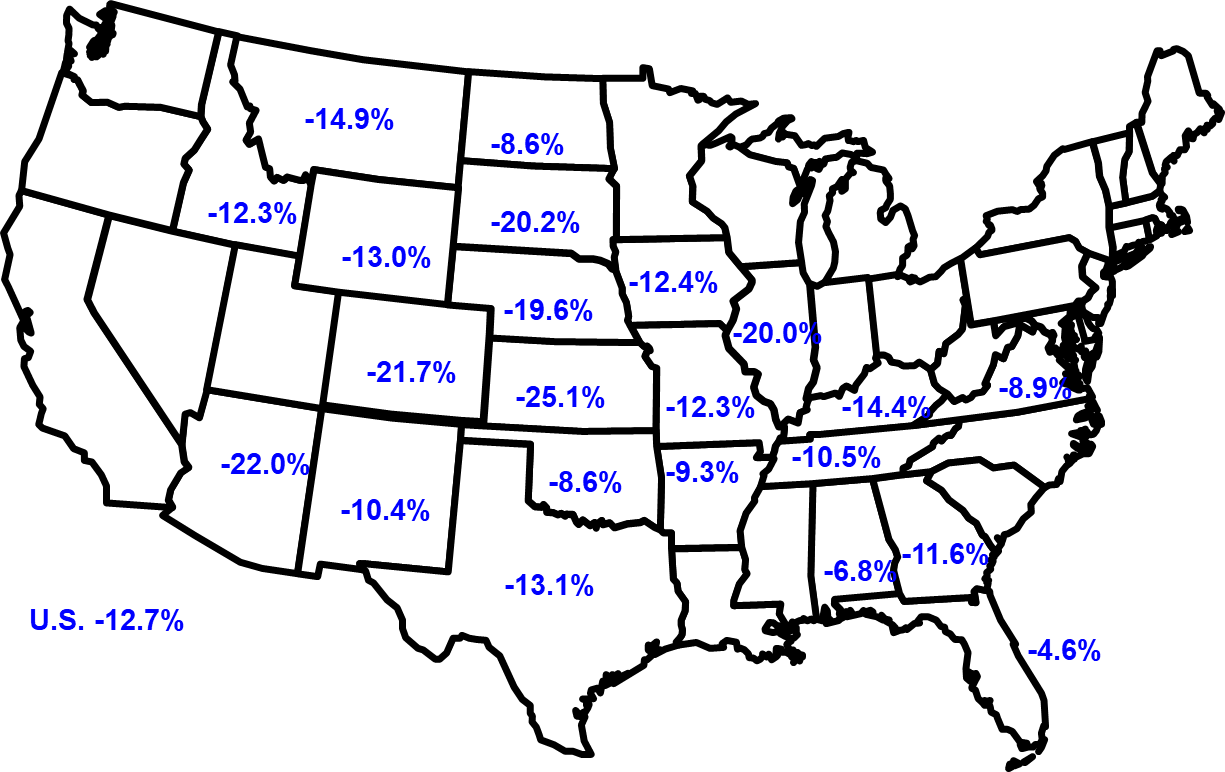
Figure 1. Beef Cow Herd % Change from 2019, Selected States
Table 1 shows more detail for the current top ten beef cow states. The top five states remained in the same rank order though all have significantly lower beef cow inventories in 2026. Among the top five states, Texas decreased the most in absolute terms, but South Dakota lost the largest percentage, followed closely by Nebraska. Oklahoma decreased the smallest amount, in part due to a small increase in the beef cow inventory from 2025 to 2026. Kansas experienced the largest percentage decrease among major beef cow states and dropped from number 6 to 7 in the top ten rankings. Montana, though down 14.9 percent, moved ahead of Kansas into the number 6 place. The North Dakota beef cow inventory is currently down 8.6 percent from 2019 and puts the state up one place from number 9 to 8. North Dakota, along with Oklahoma and Florida, was one of three top ten states that showed an increase in the beef cow inventory from 2025 to 2026. Florida, with just a 4.6 percent decrease in the beef cow herd, moved into ninth place, while Kentucky dropped from eighth to tenth place. Arkansas was number 10 in 2019 and dropped to eleventh in 2026.
| State | 2019 Inventory 1000 Head | 2019 Rank | 2026 Inventory 1000 Head | 2026 Rank | Change 1000 Head | % Change |
|---|---|---|---|---|---|---|
Texas | 4,655 | 1 | 4,045 | 1 | -610 | -13.1 |
Oklahoma | 2,150 | 2 | 1,966 | 2 | -184 | -8.6 |
Missouri | 2,059 | 3 | 1,806 | 3 | -253 | -12.3 |
Nebraska | 1,941 | 4 | 1,560 | 4 | -381 | -19.6 |
South Dakota | 1,818 | 5 | 1,450 | 5 | -368 | -20.2 |
Montana | 1,448 | 7 | 1,232 | 6 | -216 | -14.9 |
Kansas | 1,529 | 6 | 1,145 | 7 | -384 | -25.1 |
North Dakota | 975 | 9 | 891 | 8 | -84 | -8.6 |
Florida | 914 | 11 | 872 | 9 | -42 | -4.6 |
Kentucky | 1,007 | 8 | 862 | 10 | -145 | -14.4 |
Top Ten (2026) | 18,496 | 15,829 | -2667 | -14.4 | ||
U.S. | 31,640.7 | Total | 27,607.2 | Total | -4,033.5 | -12.7 |
There is little doubt that drought from 2021-2025 prompted much of the beef cow herd liquidation in major beef cow states. Continuing drought conditions and drought threats are likely to keep cattle producers cautious and hesitant to aggressively restock in much of the region and in other areas.
Changes in crop production and land use are also a factor in some areas. From 2019 to 2025, corn and soybean planted acreage in the U.S. increased by 8.6 percent, an increase of 14.2 million acres. In South Dakota, planted crop acreage increased by 3.38 million acres, up 24.5 percent from 2019 to 2026, with corn and soybean acreage up by 52.2 percent. Simultaneously, hay acreage in the state decreased by 710 thousand acres. It appears increased crop production is likely to limit herd rebuilding in South Dakota. Increased crop production may limit herd rebuilding in the Midwest and eastern regions of Great Plains states including Kansas, Nebraska and North Dakota, along with South Dakota. Ongoing weather conditions and longer-term structural adjustments in agriculture suggest that beef cow herd rebuilding will continue to be a slow process.
Dr. Derrell Peel, Oklahoma State University Extension Livestock Marketing Specialist, breaks down the major drivers behind this year’s market volatility — and shares what producers can expect heading into 2026 on SunUpTV from February 26, 2026 at US Cattle Herd Not Growing? Here’s What It Means for 2025
Dystocia and Abnormal Presentations
Mark Z. Johnson, Oklahoma State University Extension Beef Cattle Breeding Specialist
Dystocia is calving difficulty. The term applies to an abnormal or difficult birth. Dystocia can be a major cause of calf loss and a serious issue for the beef industry, especially when calving first calf heifers. What are the causes of dystocia? Most common is relative fetal oversize, which could be defined as a calf too big, pelvis too small, or both. As for calving difficulty, an ounce of prevention is worth a pound of cure. Proper sire selection is vital to preventing calving difficulty. Underdeveloped heifers and heifers bred to bulls with large birth weights are both factors that cause increased incidence of calving difficulty. The second most prevalent cause of dystocia is an abnormal presentation of the fetus. The normal presentation in cattle is an anterior presentation with front legs and head extended into the pelvic canal as shown below.
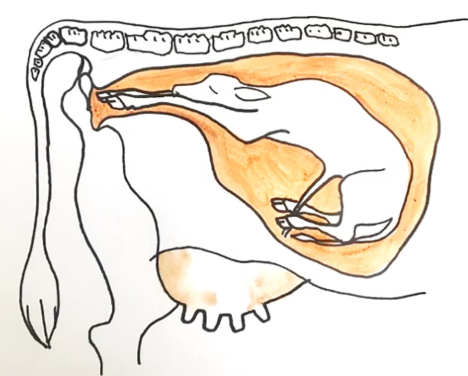
Any position that is different from the above illustration such as forelegs or head turned back, breech, rear end position, sideways or rotated, etc., is an abnormal presentation of the fetus. A normal delivery cannot be achieved unless the head and both front limbs are presented into the pelvic canal and on through the vulva. If the calf is normally presented and the pelvic area is large enough, the vast majority of animals will give birth without assistance.
On average, about 5% of all calves are in abnormal positions at birth. When this occurs, correcting the problem will require an experienced herdsman (or assistance of a veterinarian) to position the fetus correctly prior to delivery. If fetal position cannot be corrected, it may be necessary to perform a caesarean section. Abnormal presentations during calving are considered extremely low heritability and are considered random events. Unlike Birth Weight, with a heritability of 46%, and Calving Ease Direct, with a heritability of 19%, abnormal presentations are rarely inherited. Thereby genetic selection to avoid abnormal presentations in beef cattle is ineffective.
Bottomline
Even when selection pressure has effectively been applied to traits influencing calving ease in sire selection, abnormal presentations can still occur during calving. It is advised to observe the cowherd closely during calving season, especially first-calf heifers because they will require the most assistance. Observation permits cattlemen to detect abnormal fetal presentations in the early stages of delivery and increases the likelihood of calf survival.
References:
Calving Time Management for Beef Cows and Heifers
Heritabilities and Genetic Correlations
Mark Johnson discusses the typical gestation period in beef cows, factors that influence variation, and what producers should consider when planning for calving season on SunUPTV Cow-Calf Corner from February 26, 2026, at Gestation Length.
How Fast is Mature Cow Size Increasing?
Paul Beck, OSU Cooperative Extension Beef Cattle Nutrition Specialist
Over the past 60 years, mature cow body weight has increased at an annual average of 7.7 pounds per year, but it has not increased at a constant rate. The following chart shows the average annual estimated cow live weight estimated from USDA reports for monthly cow carcass weights. When we look at annual average live weight data, we see that the major structural shift in cow size began in the mid-1960s when selection for larger framed growthier cattle became popular. Prior to that mature cow weight was relatively stable and even slightly declining. After 1965, cow size began a steady upward climb increasing by approximately 6.5 pounds per year until 1995.
However, the rate of growth in cow size has not been uniform throughout the years.
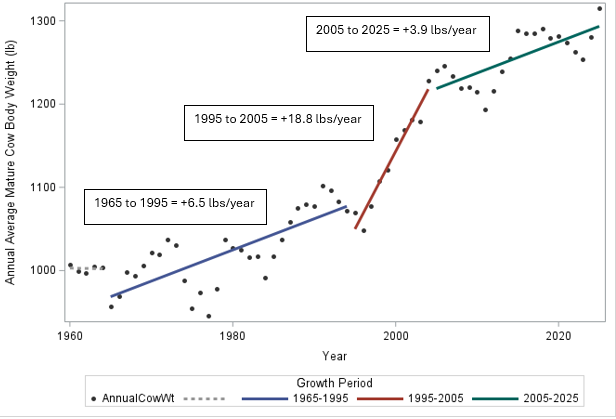 Figure 1. Average annual cow bodyweight estimated from cull cow slaughter data from 1960 to 2025.
During the 1960s and 1970s, cow size really changed very little. The increase in cow mature size began with the introduction of larger frame Continental genetics into the US cowherd in the 1980s. This resulted in the rapid acceleration in cow weights of nearly 19 pounds per year from 1995 to 2005 During the 80’s, mature cow weight increased at roughly 8 pounds per year, 80 pounds in 10-years. Along with the widespread adoption of larger framed genetics and Continental breed influence across commercial herds, the increased emphasis on growth EPDs has increased cow mature size but is also important to modern increases in post-weaning beef production and efficiency. Selection pressure for growth, heavier weaning weights, and changing market signals all contributed to that trend.
After 2005, cow weights have shown a moderate increases of around 4 pounds per year, which is essentially a plateau relative to the “acceleration decade” from 1995 to 2005. The recent moderation in the increase in cow size indicates our efforts to improve maternal efficiency have been fruitful. Cow size remains substantially larger than in the 1960s. Over the 6 decades, that translates to over 450 additional pounds per cow.
That increase in cow size has consequences on ranch sustainability and risk tolerance. If stocking rates are not adjusted for the increased cow size, long term rangeland productivity will suffer from overgrazing and weather disruptions such as drought will have greater impacts.
Bigger cows require more forage, greater maintenance energy, and influence stocking rates. While larger cows can wean heavier calves, they are often not as efficient. The cow efficiency question remains critical: are we adding pounds where they generate greater returns?
Understanding how cow size has changed can help producers evaluate whether their current cowherd aligns with forage resources and profitability goals. Bigger cows are not inherently good or bad—but cows must fit the production environment, or we will be required to fit the environment to the cow by providing more supplemental feed from harvested forage and concentrates.
As always, the most efficient cow is the one that matches her environment and pays her own way