

Cow-Calf Corner | March 16, 2026
Challenges to Beef Packing Infrastructure
Derrell S. Peel, Oklahoma State University Extension Livestock Marketing Specialist
Recent announcements of facility closures from the beef packing highlight the continuing challenges that low cattle inventories pose for the beef industry. Beef packing represents large investments in facilities and a long-term perspective. Adjustments in packing capacity occur slowly and are not just the result of current cattle inventories but the cumulative impacts over time. Figure 1 shows how average cattle inventories have decreased over time.
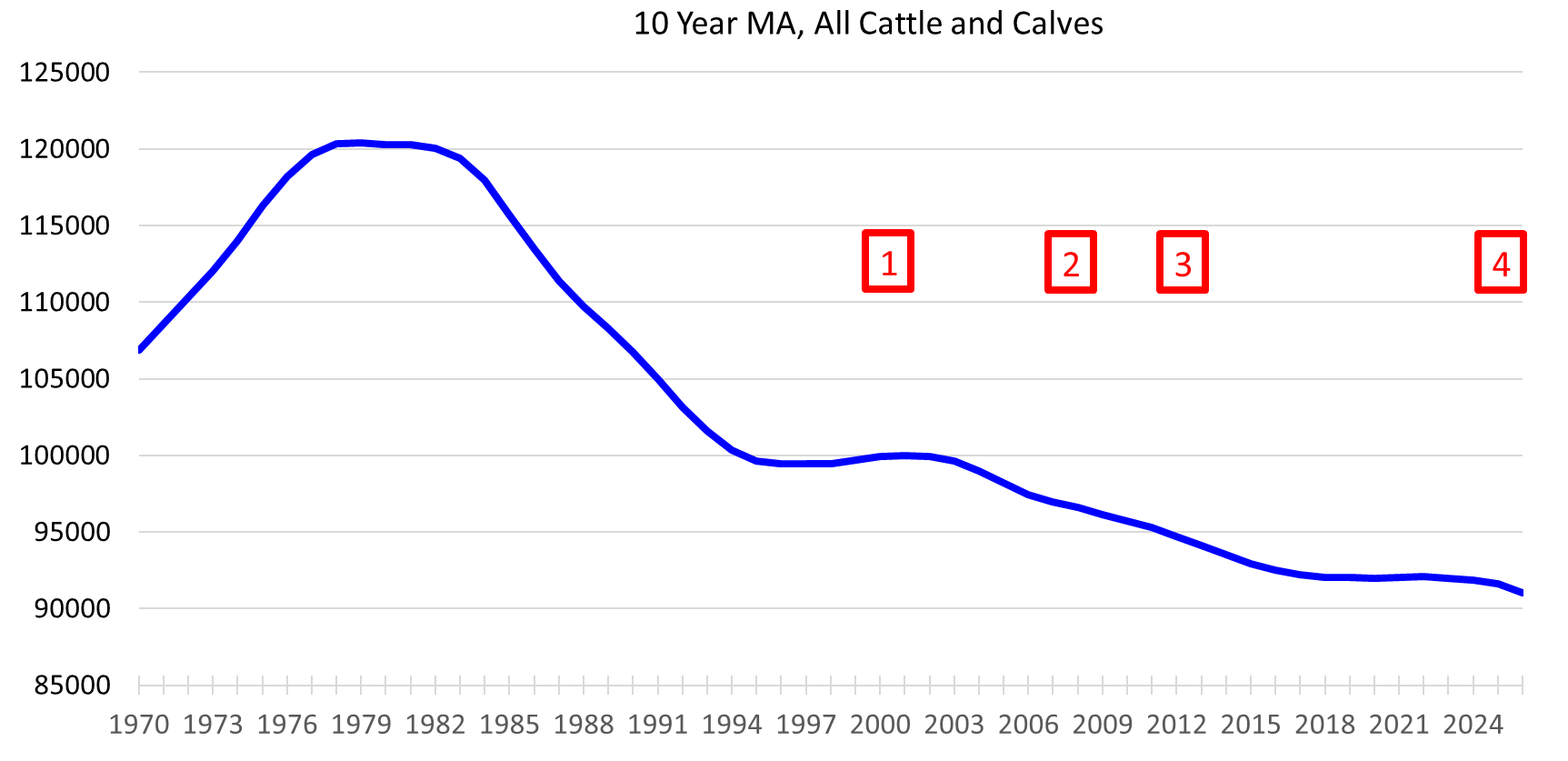 Figure 1. Average Cattle Inventory.
The majority of beef packing capacity was built from the 1960s into the 1980s when average cattle inventories were 20-30 million head larger than today. Adjustments to packing infrastructure occur slowly and abruptly with different regional impacts. The numbered boxes in Figure 1 correspond to the major adjustments to fed packing capacity in the past 26 years:
- ConAgra plant burned, 2000, Garden City, KS (unplanned reduction; plant not rebuilt)
- Tyson plant closed, 2008, Emporia, KS
- Cargill plant closed, 2013, Plainview, TX
- Tyson plant closed/Amarillo plant reduced, 2026, Lexington, NE/Amarillo, TX
With both plant numbers and capacities fixed in the short run, Saturday slaughter is the principal source of flexibility for the packing industry to adjust to short run changes in cattle numbers. Figure 2 shows Saturday slaughter as a percentage of total slaughter for the past thirty years (red symbols correspond to plant closures). When cattle numbers are insufficient, the Saturday Slaughter percentage decreases. The previous cyclical low in cattle inventories prompted generally low Saturday slaughter rates from 2009-2015. The one-year bump in 2013 was likely the result of the plant closure that year.
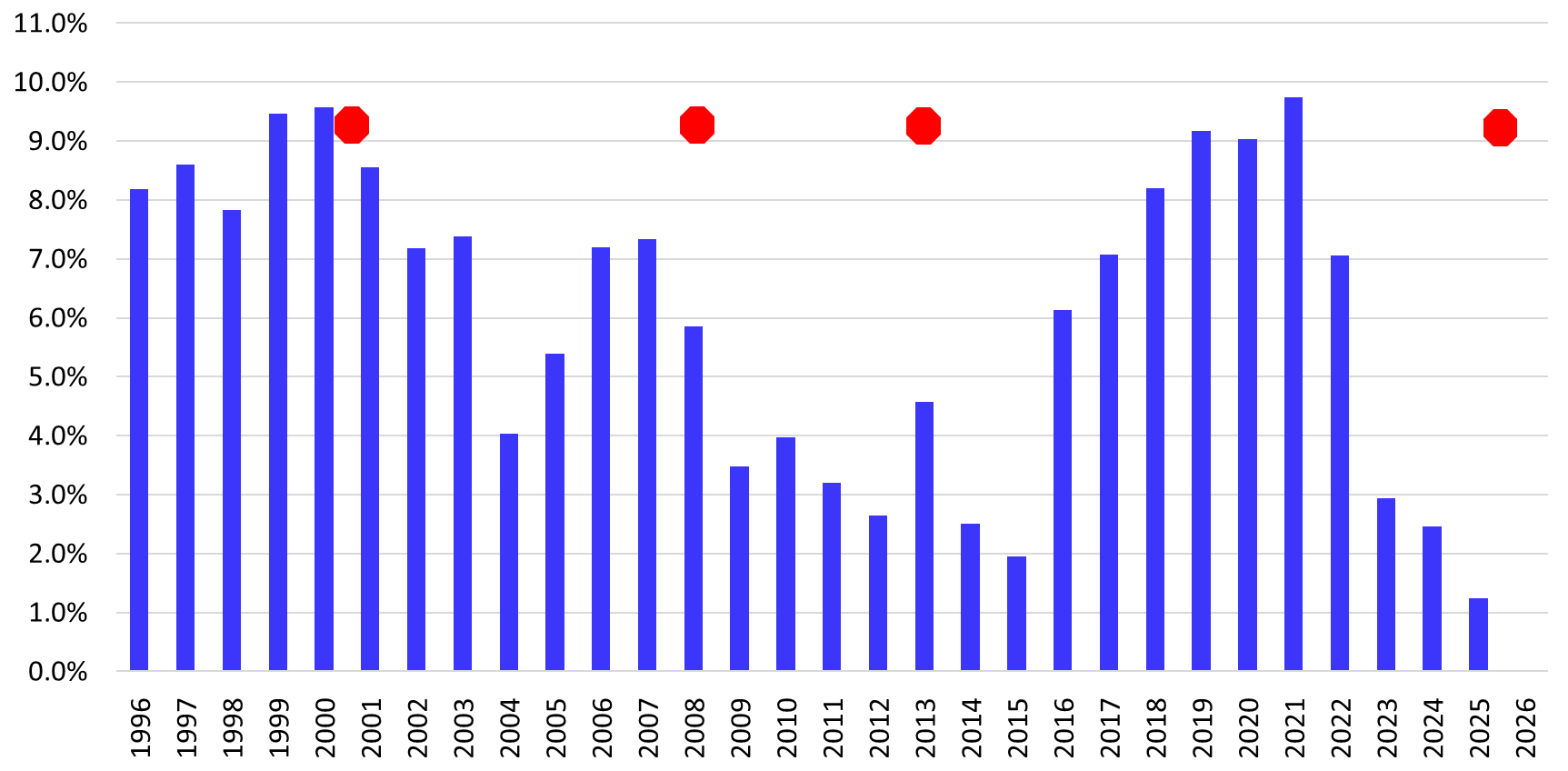 Figure 2. Saturday Slaughter as % of Fed Slaughter.
Low Saturday slaughter rates since 2023 show the impact of current low cattle inventories on the packing sector. The 2025 Saturday slaughter rate of 1.2 percent is the lowest in the past thirty years. The recent plant closure and reduction by Tyson will provide some relief in 2026. With cattle inventories unlikely to grow much, if any, in the next couple of years, it is not clear whether additional packing sector adjustments will be needed.
Derrell Peel discusses the current cattle market outlook and explains why boxed beef prices may trend higher as spring approaches on SunUpTV from March 14, 2026 at Why Boxed Beef Prices Could Rise This Spring
Calving Ease and Selection For Extremes
Mark Z. Johnson, Oklahoma State University Extension Beef Cattle Breeding Specialist
Several conversations with cattle breeders over the past few weeks while attending bull sales lead to addressing the topic of selection for extremes; particularly, as it relates to calving ease. Selection for extremes refers to choosing animals that have the maximum or minimum genetic values for a specific trait. While this approach can lead to rapid genetic progress in a targeted area, if taken too far, it can lead biological extremes and economic risks due to genetic antagonisms, environmental sensitivity and nature’s resistance to biological extremes.
Throughout the recorded history of beef cattle breeding, selection for extremes usually results in a needed “correction” in breeding programs to improve cattle resilience and profit potential. A few examples. The selection for extremely “comprest”, early maturing cattle from the 1940s – 1960s resulted in the discovery of dwarfism and carcasses that didn’t fit the industry standards for red meat yield once grain finishing became the norm. In the 1970s – 1980s, intense selection pressure was applied to increasing frame size and growth which resulted in excessively tall, late maturing cattle that came at a cost in the form of maintenance requirements and fleshing ability. Selection for extreme milk levels leads to increased maintenance requirements and excessive rebreeding intervals in the cow herd.
This leads to the question: Does selection for extreme calving ease come with a downside? In short, yes it can. Selection for extremely low birth weights does reduce calving difficulty. Those smaller calves can also have less vigor, higher mortality and reduced growth potential. In short, most studies show the highest survival rate of new born calves is at intermediate birth weights. Calves that are extremely small, or extremely large when born are less likely to survive. Birth weight, like most traits, has an “intermediate optimum”.
Calving ease is best managed (and selected for) as a threshold trait. Once we reach the desired threshold, (in this case), a live, vigorous calf born unassisted, we have achieved the goal. No one wants to assist heifers during calving season. That being said, abnormal presentations (a non-genetic, random event) occur about 5% of the time. Accordingly, monitoring heifers during calving season is a prudent management practice.
EPDs for calving ease direct and birth weight are important selection tools to consider when selecting bulls to use on virgin heifers. Since EPDs within a breed are comparable across time and geography, past production records and reviewing the EPDs of the sires of past calf crops can serve as an excellent guide to how to apply selection pressure for calving ease in future bull purchases.
The Connection Between Cow Size and Hot Carcass Weights
Paul Beck, Oklahoma State University Extension Beef Cattle Nutrition Specialist
As discussed in the March 2nd Cow-Calf Corner Newsletter, mature cow bodyweight has increased by an average of 7.7 pounds per year in the last 60 years. Recently, the industry has focused attention on the large increases in hot carcass weight (HCW) observed in 2024 and 2025, HCW increased by more than 20 pounds and 24 pounds, respectively. Producers often assume that heavier carcasses are simply the result of larger cows, but the relationship between the two is more modest than many expect.
Hot carcass weight has increased at an average rate of about 4.8 pounds per year over time. The rate of increase differs slightly between sexes, with heifer carcass weights increasing about 0.8 pounds per year faster than steers (Figure 1).
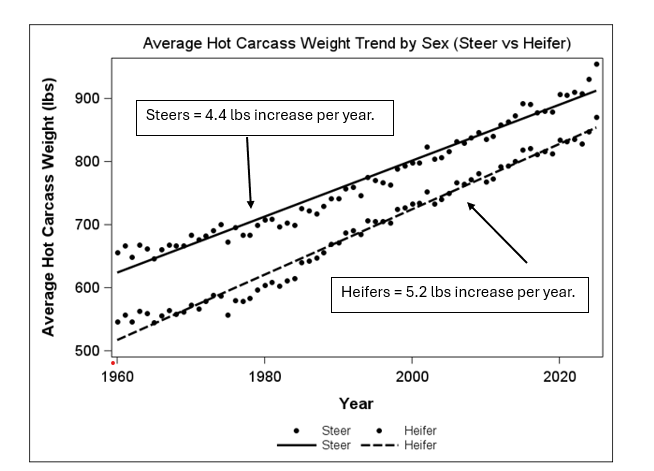 Figure 1. Increase in HCW since 1960 by sex. The average increase has been 4.8 pounds per year, but the increase has been greater for heifers than steers over time (5.2 lbs/year vs 4.4 lbs/year).
While the recent increases in 2024 and 2025 appear dramatic, they are not unprecedented. Similar year-to-year jumps occurred in 1994, 1998, 2002, 2006, 2012, 2015, and 2020, showing that periodic spikes in carcass weight are part of a longer-term pattern.
Looking at national data provides a similar perspective (Figure 2). The amount of carcass weight produced per 100 pounds of cow body weight has increased only gradually (0.12 lbs/year). In the early 1960s, cattle produced about 60 pounds of hot carcass weight for every 100 pounds of cow body weight. Today that figure averages around 69 pounds per 100 pounds of cow weight—an increase of only about 9 pounds over the past 66 years.
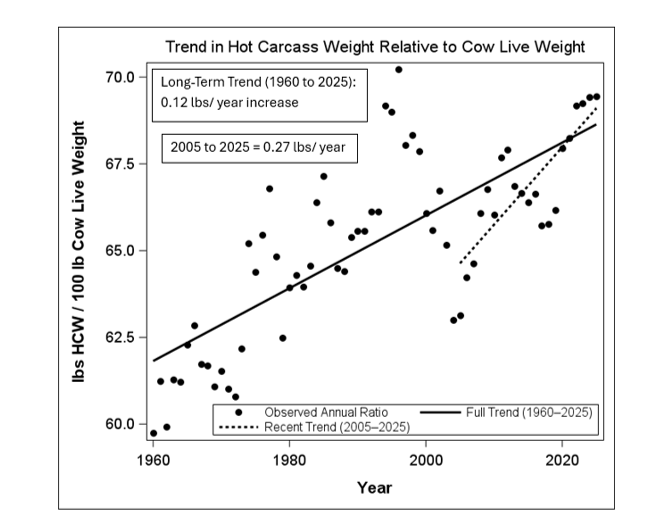 Figure 2. Trends in average annual fed cattle HCW/100 lbs of cow bodyweight since 1960.
An analysis of a research cowherd in Arkansas reported that carcass weight increased by about 0.3 pounds for each pound increase in cow body weight. In other words, larger cows do tend to produce calves that finish with heavier carcasses, but cow size alone explains only a portion of the overall increase. As cows get larger the efficiency of HCW production per cow bodyweight decreases.
This indicates that improvements in carcass weight are not driven solely by larger cows. Other factors play major roles, including genetic selection for growth and carcass traits, the use of growth-promoting technologies, improved nutrition and feeding management, and economic incentives in the cattle market. For example, tight cattle supplies and relatively small discounts for heavier carcasses have encouraged feedlots to feed cattle longer, allowing more weight to be added before harvest.
Bigger cows are only part of the carcass weight story for the beef industry. Increasing cow size is a very inefficient way to increase total beef production. Next week we will discuss other factors that affect fed cattle production efficiency and HCW.
This Thursday March 19th the OSU Rancher’s Thursday Lunchtime Webinar Series will focus on “Cow-Size and Post Weaning Management Effects on Carcass Weight”. Register to attend this event at Rancher's Thursday Lunchtime series