

Cow-Calf Corner | June 29, 2026
Cattle on Feed Up; Beef Production Down
Derrell S. Peel, Oklahoma State University Extension Livestock Marketing Specialist
The June Cattle on Feed report showed a feedlot inventory 2.1 percent larger year over year. This was the second consecutive month of larger feedlot totals (May was up 1.8 percent year over year) after 17 months of year over year decreases in cattle on feed inventories. However, a bigger feedlot total does not mean that cattle numbers are increasing. Feedlot inventories increased year over year in May and June because feedlot marketings have decreased more than feedlot placements. In the past twelve months, feedlot placements have decreased 6.1 percent while feedlot marketings have decreased 7.8 percent. Figure 1 shows that average feedlot placements and marketings have decreased sharply in recent months.
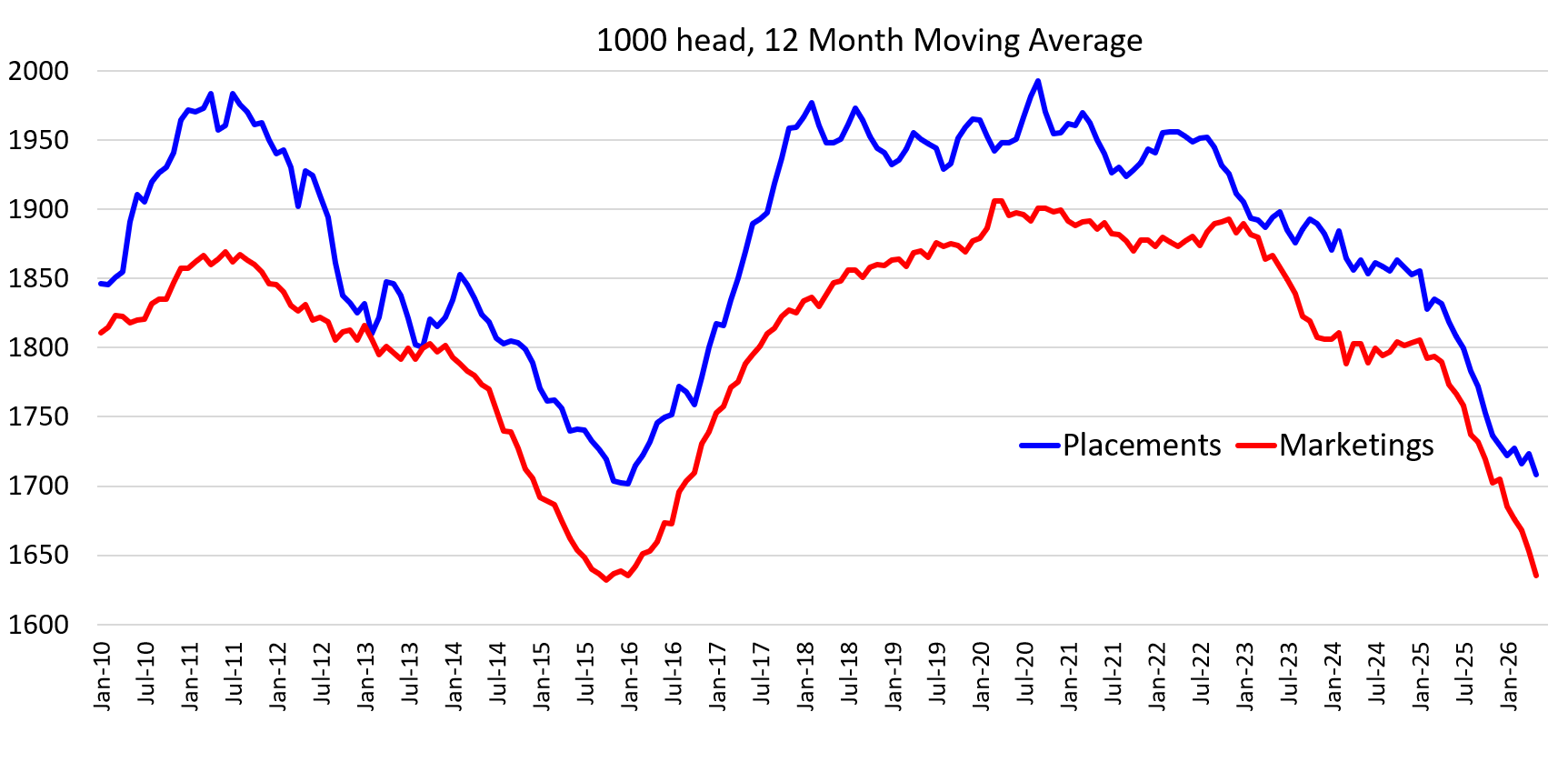 Figure 1. Feedlot Placements and Marketings
Decreased feedlot flows (placements and marketings follow from ever tighter feeder cattle supplies. The 2025 calf crop was the eighth consecutive smaller calf crop and was the smallest in 84 years. The resulting slowdown in feedlot production, while maintaining feedlot inventories, is accomplished by an increase in average feedlot days on feed and heavier final weights for fed cattle. The Kansas Focus on Feedlots data shows average of 188 days on feed for the last year, with recent months up to 198 days. Final fed steer weights in Kansas feedlots have increased 105 pounds in the past eighteen months, currently averaging 1523 pounds.
Lower feedlot production means declining cattle slaughter and beef production. Fed cattle (steer + heifer) slaughter in the first half of 2026 is down 8.7 percent year over year. Decreased fed cattle slaughter is partially offset by increased carcass weights. Steer carcass weights are currently at 968 pounds. Steer carcass weights have averaged 35 pounds heavier thus far in 2026. Heifer carcass weights are currently 884 pounds and are averaging 26.6 pounds more than one year ago. Cow slaughter is down 5.3 percent this year leading to total cattle slaughter down 8.1 percent for the year to date.
Total beef production is down 5.5 percent year over year through the first half of 2026. Average fed beef production is currently at the lowest level since 2017, and average nonfed (cull cow and bull) beef production is now at the lowest level since 2006. Average monthly commercial beef production is at the lowest level since late 2016. Total beef production is projected to be down 4.5 – 5.0 percent in 2026 compared to last year and is expected to decrease again in 2027 to the lowest beef production since 2015 (Figure 2).
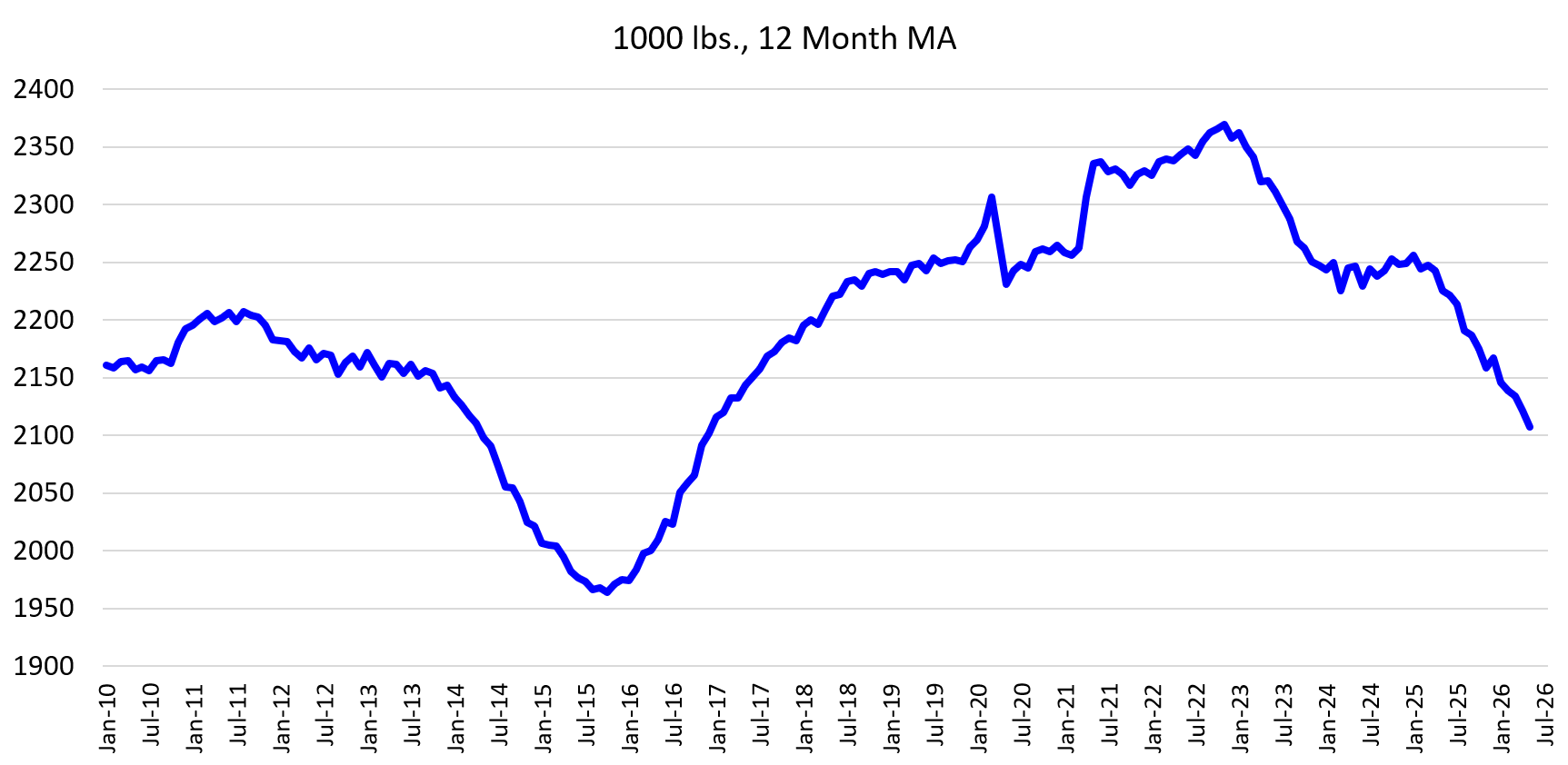 Figure 2. Beef Production, Monthly
Derrell Peel discusses how recent rainfall across much of the United States is improving pasture conditions and setting the stage for cattle herd rebuilding as producers look toward the fall and beyond on SunUpTV from June 27, 2026.
Bovine Congestive Heart Failure in Feedlot Cattle
Mark Z. Johnson, Oklahoma State University Extension Beef Cattle Breeding Specialist
Over time, Bovine congestive heart failure (BCHF), sometimes referred to as “late-day” or “late stage” morbidity has emerged as a condition of significance to the cattle industry. BCHF is a significant cause of death in feedlot cattle at low to moderate elevations (2600 – 5200 feet). Mortality from BCHF has reached 7.5% in severely affected pens of cattle, with annual losses exceeding $250,000 for a single operation. In the cattle finishing sector it can be the single most costly health-related problem, even surpassing losses from bovine respiratory disease. Symptoms of BCHF can often look similar to those of high-altitude (or “brisket disease”). While recovery from high altitude disease is possible by moving cattle to lower elevations, BCHF is an untreatable, fatal condition involving pulmonary hypertension that culminates in right ventricular heart failure. BCHF is occurring in well managed operations, feeding high genetic merit cattle at low elevation feedlots in the Midwest and higher elevations of the Western Great Plains of North America. Accordingly, reducing the incidence of BCHF is a high priority for the cattle industry.
Heart Scores and BCHF
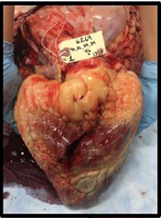
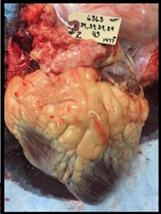
Heart Scores (which can be collected at the harvest endpoint of fed cattle) are used as an indicator of heart remodeling and cardiovascular health in cattle. As shown below, a score of 1 indicates a healthy bovine heart. Higher heart scores indicate more severe heart remodeling, which is associated with a greater risk of BCHF.
| Image | Grading Score |
|---|---|
 | Grading Score 1 |
 | Grading Score 2 |
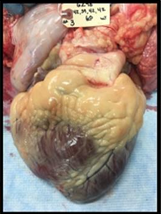 | Grading Score 3 |
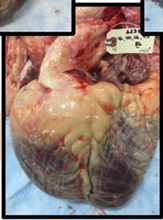 | Grading Score 4 |
 | Grading Score 5 |
The Genetic Component of BCHF
While there are many non-genetic factors that can contribute to BCHF, it is encouraging that several on-going research projects preliminary data indicates the potential to address BCHF through genetic improvement and selection. A summary of the information presented at 2026 Beef Improvement Federation meetings:
- Heart failure can occur in any cattle operation, at any age and at any altitude.
- Heart scores are measurable and phenotypes are being collected.
- Heritability estimates of heart scores are in the low to moderate range – indicating selection for
- lower heart scores can be effective.
- Heart scores are influenced by polygenic inheritance
- Heart issues exist in every breed
Bottomline
The potential exist to develop selection tools (EPDs) to select for healthier hearts. While the incidence of BCHF occurs primarily in feedlots. The selection tools developed can be implemented at the seedstock and cow-calf levels to make cumulative, permanent genetic improvement.
References
- Beef Improvement Federation 2026 Presentation Archive
- Bovine Congestive Heart Failure (BCHF) in Feedlot Cattle
OQBN: An Extension Success Story That Changed Calf Management and Increased Value for Producers
Paul Beck, Oklahoma State University Extension Beef Cattle Nutrition Specialist
For more than two decades, the Oklahoma Quality Beef Network (OQBN) helped Oklahoma cow-calf producers capture added value for calves managed to meet the needs of stocker operators, feedyards, and ultimately beef consumers. This program will close following the final official OQBN-certified sales in spring 2026. Looking back on the decades of success, we realize that QBN was more than a marketing program. It has been one of Oklahoma Extension’s long-term beef industry success stories.
OQBN began as a collaboration between Oklahoma State University Extension and the Oklahoma Cattlemen’s Association with the simple goal of helping producers document management practices that improve calf health, and make calves more predictable and more valuable. The OQBN VAC-45 program has built value around practical management. Calves had to be weaned at least 45 days, vaccinated, castrated and healed, dehorned and healed, identified with OQBN tags, and verified by Extension personnel. That verification gave buyers confidence that calves were managed according to a defined protocol and gave producers a clear way to document the work done before marketing.
The program’s success never depended on one person or one office. It was a true Extension team effort involving a team consisting of the Oklahoma Cattlemen’s Association, livestock markets, county Extension educators, area livestock specialists, OSU beef specialists, and veterinarians,. Leaders including David Lalman, Gant Mourer, Jeff Robe, Paul Vining, and many others helped guide the program. Economic evaluation by Kellie Raper, Derrell Peel, and their graduate students documented the value of preconditioning.
The economic record was important. Across many years, OQBN calves sold for premiums over similar non-preconditioned calves at the same sales. Those premiums showed buyers were willing to pay for calves with reduced health risk, better management history, and greater confidence in performance after purchase.
The longer-term impact may be even greater than the sale premiums. OQBN helped teach producers, markets, and buyers what effective preconditioning looks like. Practices such as castration, dehorning, weaning, vaccination, bunk training, documentation, and Beef Quality Assurance are now more commonly discussed as part of routine calf management and marketing. Some producers adopted these practices through OQBN, while others now use similar practices through local auction-market programs, video and internet sales, or industry-based programs.
Although the formal OQBN program is concluding, its influence continues. OQBN helped move value-added calf management from a specialized marketing option toward a broader industry expectation. It showed that Extension can bring education, market access, economic analysis, and producer commitment together in a way that improves cattle management and returns more dollars to Oklahoma ranchers.