

Cow-Calf Corner | June 22, 2026
The Never-Ending Battle Against New World Screwworm
Derrell S. Peel, Oklahoma State University Extension Livestock Marketing Specialist
The reemergence of New World Screwworm (NWS) in the U.S. has prompted much discussion about eradicating the pest once again after having the country NWS-free for over 40 years. Sometimes overlooked or not understood is the fact that the battle has never stopped. Eradication of NWS from a particular region is a matter of pushing the boundary away from the region and maintaining it with sterile fly dispersals. After NWS was eliminated from the U.S. in 1966, NWS continued to be a problem in the U.S. because the barrier at the U.S.-Mexican border was too long and impossible to maintain. A major NWS outbreak in 1972 spurred the U.S. and Mexico to increase cooperation with a goal of eliminating NWS from both countries. Figure 1 shows that more than 90,000 cases of NWS were reported in Texas alone in 1972. Progress in pushing NWS south in Mexico eventually resulted in the last case of NWS in the U.S. in 1982. The sterile fly facility in Mission, Texas was replaced with a new facility in Tuxtla, Mexico.
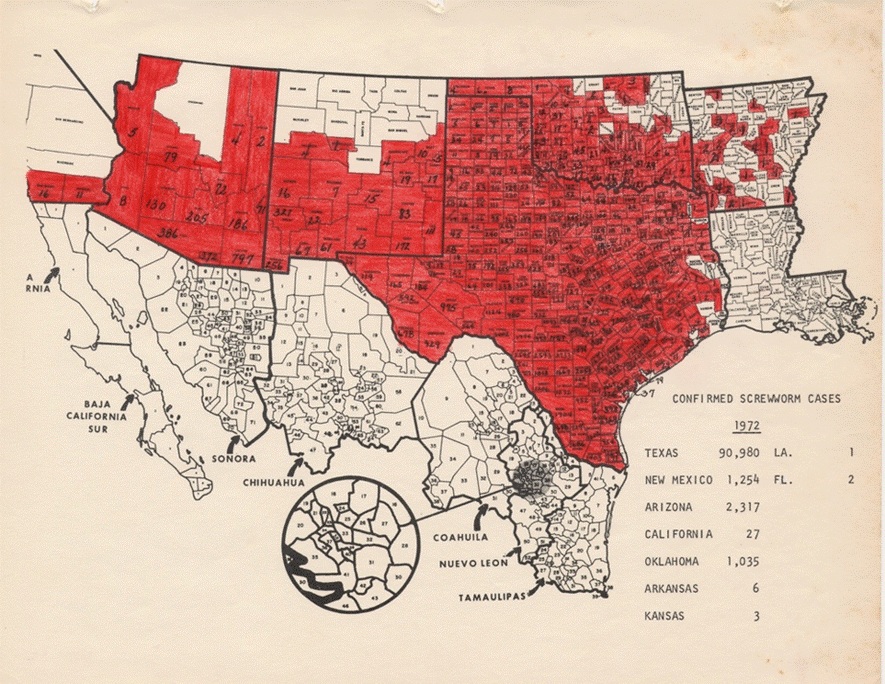 Figure 1. Confirmed Screwworm Cases, 1972
- Confirmed Screwwoorm Cases (1972)
Texas 90,980;
New Mexico 1,254;
Arizona 2,317;
California 27;
Oklahoma 1,035;
Arkansas 6;
Kansas 3;
Florida. 2;
Louisiana 1; - Source: Confirmed Screwworm Cases: 1972
As the NWS barrier in Mexico approached the 93rd Meridien (Isthmus of Tehuantepec), the decision was made to extend the NWS barrier south through Central America. Mexico was declared NWS-free in 1991. Progress in pushing the NWS barrier south through Central America led to the decision to establish the permanent barrier in Panama against the endemic NWS presence in South America.
Eventually a new sterile fly facility was located in Panama, replacing the Mexican facility. The Panama facility (COPEG) has continued to produce and disperse trillions of sterile NWS flies since then. Central and North America north of the Darien region of Panama has been NWS-free since 2004. In 2023, NWS breeched the barrier in Panama and moved rather quickly north through the Central American countries; back in Mexico by November 2024; across Mexico in 2025 and into the U.S. once again in June 2026. The U.S., Mexico and the Central American countries once again face the challenge of pushing NWS south. The history of NWS highlights the fact that the battle never stops – it is simply a question of where the front lines are located.
The current situation illustrates that it just takes a brief lapse for NWS to once again advance. Changing cattle market conditions and demands likely contributed to more movement and cattle movement through areas not covered by sterile fly coverage. There is little doubt that human transport (both legal and illegal) of cattle (and possibly horses) contributed to the rapid advance of NWS across Central America. Once in Mexico it spread rapidly, in part because the Mexican cattle market has evolved in recent years to include much more movement of cattle across the country.
It was beneficial before to control NWS and establish the barrier in Panama. It will be worth it again and that means that joint efforts and cooperation between the U.S., Mexico and Central America will be critical. The battle against NWS is fundamentally different than eradication efforts against diseases such as Brucellosis and Bovine Tuberculosis, where successful eradication efforts are replaced by on-going surveillance programs. The battle against NWS never stops and thus it is important to determine where the front line will be maintained and operated, recognizing continued evolution of cattle production and marketing in all regions.
Derrell Peel discusses how the latest New World screwworm news is influencing cattle markets and what producers should watch moving forward on SunUpTV from June 13, 2026 at How Is New World Screwworm News Affecting Cattle Markets?
2026 Beef Improvement Federation Meetings – Take Home Points
Mark Z. Johnson, Oklahoma State University Extension Beef Cattle Breeding Specialist
Earlier this month I had the opportunity to attend the Beef Improvement Federation (BIF) meetings in Boise, Idaho. The topics were interesting, timely and covered by an excellent panel of speakers. With regard to the selection of replacement heifers and rebuilding the nation’s cowherd, the key, actionable take home points are as follows:
- The best cows fit their production environment. As carcass weights continue to rise (with steer carcass weights up 82 pounds, year to date, over what they were in 2023), doesn’t the cow-calf operator need to modify genetics toward more growth and mature size? No! First, packers are discounting carcasses over 1100 pounds and even more substantially discounting carcasses over 1150. A higher percentage of the weekly beef carcass harvest mix is now subject to these discounts. Second, a new (more accurate) index of beef carcass red meat yield will replace the existing USDA Yield Grade equation within the next few years. While consumer demand will continue to economically incentivize the production of marbling and quality, a better index of red meat yield will act to de-incentivize feeding cattle longer, to heavier weights and fatter endpoints. Other factors (feed cost, producing the tonnage of beef wanted by consumers relative to lower cow inventory and fewer cattle on feed) will continue to influence finishing endpoints. The point is, growth and pay weight is a positive incentive at any marketing endpoint of our calf crop but needs to kept in balance with mature cow size. Accordingly, mature cow size (and milk) level need to be in accordance to production environments which vary dramatically across the U.S. The “best” cows breed early, calve early and wean a calf each year because their nutritional requirements can be met by the pastures they graze.
- A change in thinking is needed whereby cow-calf producers consider the $s/profit produced per acre of pasture as opposed to the $s/profit produced per cow. See my Cow-Calf Corner article titled “The Cowboy Math of Mature Cow Size and Calf Revenue Generated“ from June 17, 2024.
- Producers who know their cost of production prioritize maternal performance.
- When selecting replacement heifers from your calf crop, it is sage advice to favor the earliest born heifers produced by your oldest cows. Your older cows (6 years +) have proven their fit to your production environment and their daughters should have more lifetime productivity in your operation.
Lingering drought over much of the nation continues to stifle heifer retention and widespread expansion of the nation’s cowherd. That being said, consumer demand for beef remains robust and persistent. This information should inform decisions made regarding the selection of your next generation of beef cows.
The Market Value of Extended Weaning Periods
Kellie Curry Raper, Oklahoma State University Cooperative Extension Livestock Marketing Specialist
The weaning period for beef calves prior to them leaving your place for the next production phase is a critical time that strengthens their future performance in terms of health, gains, and production efficiency. Calves are usually considered “weaned” if they have been off the cow for at least 30 days. With respect to longer weaning, research has suggested that calves weaned for a minimum of 45 days before shipping have significantly fewer cases of bovine respiratory disease and lower death loss rates than calves weaned for shorter periods. Those benefits continue through the rest of the beef supply chain. The market has historically rewarded producers selling weaned calves with market premiums as compared to prices for similar unweaned calves. But how do those premiums change if producers choose extended weaning periods?
A recent OSU study looked at this question using Oklahoma feeder cattle data collected at multiple auctions during 2020-2022. In addition to noting whether calves were weaned or unweaned, OSU Extension personnel documented how long those cattle had been weaned, as communicated from the auctioneer to buyers at the auction. Figure 1 illustrates the estimated weaning premium by 15-day increments as compared to otherwise similar unweaned cattle with respect to physical characteristics and management characteristics at those auctions. The premiums reported here are each relative to lots with calves weaned 0-29 days, as most cattle buyers consider those calves to be unweaned.
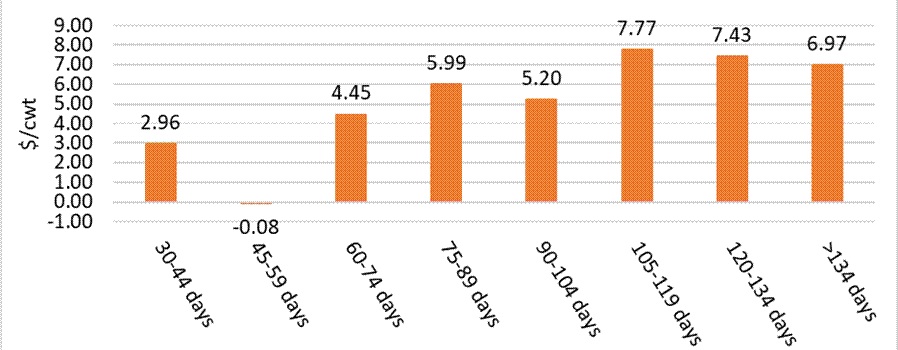
Figure 1. Premium over Unweaned Calves($/cwt) with Otherwise Similar Characteristics at Selected Oklahoma Auctions, 2020-2022, Days Weaned Prior to Marketing
An unexpected result in this data set is that calves weaned 45–59 days prior to sale did not receive prices that were statistically different from unweaned calves; that is, there was zero premium in this data set for those cattle. Aside from that, weaning premiums do generally increase as weaning length increases, with premiums ranging from $2.96/cwt for 30-44 days to $7.77/cwt for 105-119 days. Statistically speaking, the premiums from 60 days weaned to 104 days weaned are similar levels per hundred weight. Then, estimated weaning premiums take another jump up at 105 days, with premiums at similar levels through the >134 days category. Overall, the results indicate a positive relationship between weaning period length and feeder cattle prices in Oklahoma.
Why higher premiums for longer weaning periods? The premiums reflect buyer preferences for lower health and performance risks. Longer weaning periods provide more time for calves to recover from weaning stress, more time to develop stronger immune systems, and more time for feed bunk training. It is consistent with anecdotal indications from cattle buyers that longer weaning periods are a valuable way to manage health risks of purchased calves, especially for fall sales as weather fluctuations increase immune system stressors. While the standard weaning protocol in preconditioning programs has typically been 45 days, some programs have moved to 60-day minimum weaning protocols. Results here suggest that the market encourages that move and beyond. The stability of weaning premiums beyond 105 days suggest little additional effect on calf health risk beyond that.
Keep in mind that these estimates are revenue estimates only. The numbers here do not consider the associated costs for holding calves on the ranch longer. As with any management decision, pencil out the expected increase in revenue and the expected costs incurred as you consider alternatives.
Is it Time to Begin Late-Summer Protein Supplementation?
David Lalman, Oklahoma State University Extension Beef Cattle Nutrition Specialist
As we move through July and August, forage quality across Oklahoma’s tallgrass and midgrass prairie rangelands and bermudagrass pastures decline. Assuming adequate forage availability, forage quality becomes the primary factor limiting cattle performance.
Grazing studies have documented substantial declines in both crude protein concentration and digestibility as summer progresses. Native range crude protein commonly falls from approximately 15% in the spring to 7% by late summer and continues declining into fall. Consider that a 650 lb. steer gaining 2 lbs. per day requires a diet with about 11% protein.
When forage quality declines, cattle performance becomes limited by protein, energy, or both. In many late-summer grazing situations, protein is the first limiting nutrient. Rumen microbes require adequate protein to efficiently digest forage fiber. When protein becomes deficient, forage digestion slows, forage intake declines, and animal performance suffers. Therefore, in Oklahoma grazing systems when dietary protein drops below 11%, protein intake is the primary factor limiting the animals’ rate of gain.
Fertilized bermudagrass follows a similar pattern, although the protein concentration is higher initially, and remains higher throughout the grazing season. The point in time that protein becomes the limiting dietary factor is certainly influenced by stocking rate and grazing management. While both forage species can be expected to fall below growing cattle’s protein requirement, that point in time may occur as much as 60 days later in bermudagrass grazing systems.
Numerous Oklahoma studies have demonstrated that relatively small amounts of protein supplement can substantially improve performance of growing cattle grazing native pasture during late summer. Across several trials, stocker cattle receiving approximately one pound per day of a high-protein (30 to 38%) supplement gained an average of 0.37 lb more per day than unsupplemented cattle. These responses occurred because forage protein concentration was the first limiting nutrient and filling the gap between protein supply and the animal’s requirement increased forage intake and digestibility.
Research has consistently shown additional improvements in rate of gain by including an ionophore; a feed additive such as Rumensin® (monensin) or Bovatec® (lasalocid). Ionophores alter rumen fermentation in ways that improve feed efficiency and increase the amount of useful energy cattle obtain from forage. Research conducted in Oklahoma and summarized in recent meta-analyses indicates ionophores typically increase gains by an additional 0.13 to 0.28 lb per day. Combined with protein supplementation, total improvements in average daily gain commonly range from 0.5 to 0.6 lb per day.
These responses are especially attractive because supplement efficiency is generally favorable. In many Oklahoma grazing trials, less than two pounds of supplement were required to generate one pound of additional gain. Few management practices consistently provide that level of return on investment.
The benefits of ionophores extend beyond weight gain. A recent meta-analysis conducted at Oklahoma State University evaluated results from 18 studies involving replacement heifers and 21 studies involving mature beef cows. Across studies, ionophore supplementation improved average daily gain while reducing feed intake, indicating improved efficiency of forage utilization.
For replacement heifers, the ionophore Rumensin increased the proportion of females cycling before the breeding season by nearly 16 percentage units and reduced age at puberty by approximately nine days. In mature cows, monensin reduced the interval to first estrus by approximately 18 days and increased the percentage of cows exhibiting estrus before the breeding season by 19 percentage units.
Interestingly, these improvements in reproductive readiness occurred despite little evidence for increased pregnancy rates. Nevertheless, earlier puberty and a greater proportion of females cycling at the start of the breeding season are generally considered favorable outcomes because they increase opportunities for conception early in the breeding season.
Taken together, available research suggests that a modest amount of protein supplement combined with an ionophore can improve forage utilization, increase average daily gain by approximately one-half pound per day, and enhance reproductive preparedness in both developing heifers and mature cows. Few nutritional technologies have demonstrated such consistent benefits across a wide range of forage-based production systems.
- Gadberry, S., P.A. Beck, M. Moore. F.J. White, S. Linneen, and D.L. Lalman. 2022. Meta-analysis of the effects of monensin on performance of beef replacement heifers and beef cows. Trans. Anim. Sci. 6: 1 – 9
- Gadberry, S., D.L. Lalman, F. J. White, S. Linneen, and P. A. Beck. 2022. Meta-analysis of the effects of monensin on growth and bloat of growing beef calves on pasture. Transl. Anim. Sci. 6: txac031
- Dave Lalman with Oklahoma State University discusses late summer supplementation to enhance cattle performance as a part of the Rancher’s Thursday Lunchtime Webinar Series from July 31, 2020 at OSU Extension: Late-Summer Supplementation to Enhance Cattle Performance