

Cow-Calf Corner | June 1, 2026
Cattle Cycle Expansions: Lessons from History
Derrell S. Peel, Oklahoma State University Extension Livestock Marketing
The U.S. cattle industry has been characterized by cycles of inventory and prices since the modern ranching industry developed in the late 1800s. There have been twelve cyclical inventory peaks in the last 129 years, with the first in 1890 and most recently in 2019 (Figure 1). Cycles have been persistent regardless of whether the inventory has been trending higher or lower.
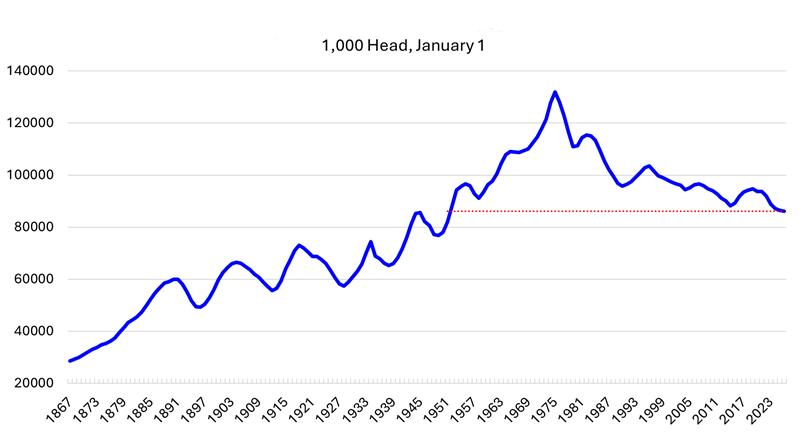
Figure 1. All Cattle and Calves
From the current inventory low (maybe, depending on drought), the most important question in the industry is when herd rebuilding will begin. Both increased heifer retention and reduced cow culling are needed to stabilize the herd inventory at a low and begin expansion. Beef cow culling has decreased sharply since 2022, from a peak of 13.2 percent to 8.4 percent in 2025. Beef cow slaughter is down again year over year in 2026 and currently indicates a beef cow culling rate of 7.1 percent for the year, which would be a record low culling level.
The high calf prices that historically trigger heifer retention have been in place since 2023. More heifer retention means that heifer slaughter must decline. Heifer slaughter has declined in total numbers since 2022; however, it has declined little relative to total fed cattle slaughter. In other words, heifer slaughter is down simply because there are fewer cattle, but it has not declined enough to indicate substantial heifer retention. The beef replacement heifer inventory was up a scant 0.9 percent year over year on January 1, enough to suggest only the beginning of heifer retention.
Ultimately, the best indicator of herd rebuilding is the combination of heifer and cow slaughter into total female slaughter. Figure 2 shows a twelve-month moving average of total female slaughter as a percentage of total cattle slaughter. The female slaughter percentage peaked most recently in 2023 at 51.8 percent (the highest level since 1985) and has decreased to the current level of 48.8 percent. Female cattle slaughter is still above the average level (red dashed line). Most of the decrease observed thus far in the female slaughter percentage is due to decreased beef cow slaughter. Further decreases will depend on increased heifer retention (i.e. reduced heifer slaughter).
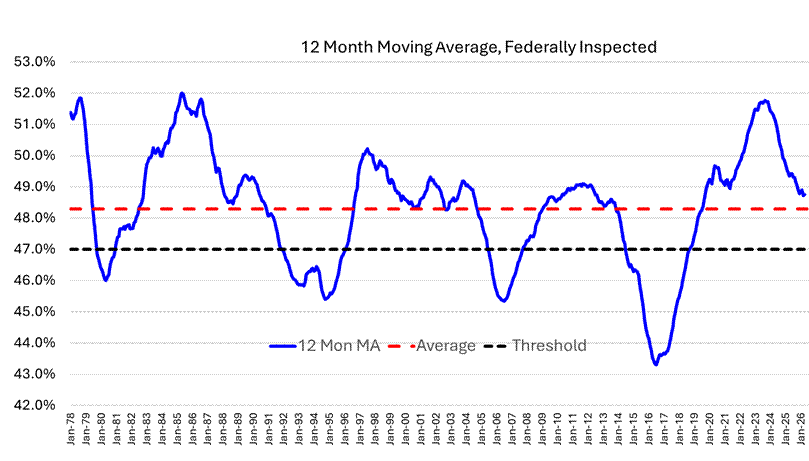
Figure 2. Female Cattle Slaughter % of Total Cattle Slaughter
A commonly recognized threshold for herd expansion is when the female slaughter percentage drops below 47 percent (black dashed line). Figure 2 shows the last four cattle cycles and the female slaughter percentage that corresponded to herd rebuilding. The female slaughter percentage dropped below 47 percent from October 1979 – November 1980 (46.0 percent low); February 1992 – January 1996 (45.4 percent low); July 2005 – September 2007 (45.3 percent low); and July 2014 – August 2018 (43.3 percent low). On average, the female slaughter percentage remained below the 47 percent threshold for 35 months, ranging from 14 months to 49 months (in the most recent expansion).
The beef cattle industry is well above the threshold at this time. The decrease in the female slaughter percentage thus far are signs of the beginnings of heifer retention. However, history suggests that it might take another 6-10 months for the female slaughter percentage to drop from the current level of 48.8 percent to the 47 percent threshold and then remain there for 14 to as much as 49 months depending on the amount of herd expansion. The initial stages of this process mean that cattle slaughter and beef production will continue to decline and that the highest cattle prices of this cycle are still ahead.
Selection for Teat Size and Udder Suspension in Beef Cattle
Mark Z. Johnson, Oklahoma State University Extension Beef Cattle Breeding SpecialistConformation of the teats and udder of beef cows are economically important traits in cow-calf operations. Correct teat and udder conformation are traits essential to a productive cow. Beef females with poor teat and udder conformation are a management problem that can drain profitability. Substandard teat and udder conformation requires extra management intervention to physically “milk-out” quarters to prevent infection, save the quarter and permit new born calves to nurse. As well as increasing the likelihood of mastitis and calf sickness while reducing weaning weights and cow longevity.
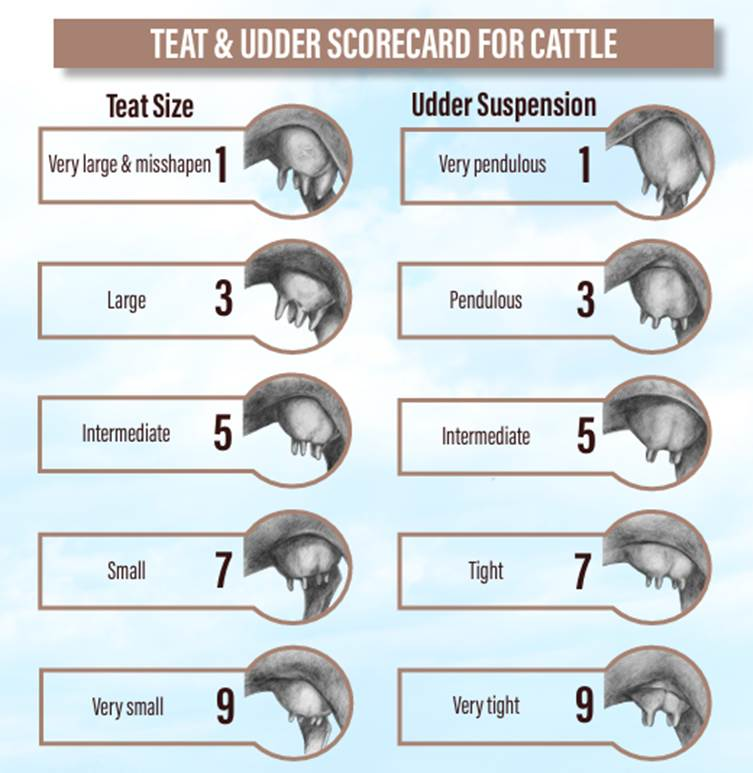
Teat and udder scores are moderately heritable meaning improvement can be made when selection pressure is applied. Since teat and udder conformation is a challenge to evaluate at selection time in weaned or yearling heifers, it is best to monitor in the cow herd and avoid keeping replacement heifers from dams with substandard teat and udder conformation. Teat and udder conformation can also be considered in sire selection. For example, since 2025, the American Angus Association generates EPDs for Teat Size and Udder Suspension. Higher EPD values indicate smaller teats and tighter suspension. These EPDs are generated using breeder submitted data, pedigrees and genomics. The guidelines for collection of teat and udder score phenotypes are as follows:
- Collect within 24 hours of calving
- Use the worst quarter to score teat size and udder suspension
- Best if the same person scores all the females in a management group
- Score teat size and udder suspension independently on a scale ranging from 1 – 9. Using the following chart as a guide:
Resources Available for New World Screwworm Information
Paul Beck, Oklahoma State Beef Cattle Nutrition Specialist
New World screwworm is the larval stage of a fly that lays eggs in wounds of living animals, even very small wounds like tick bites or scratches, in warm-blooded animals. The flies are drawn to fresh blood for laying their eggs. After hatching, larvae burrow into living tissue, causing painful, expanding wounds that may become infected and can be fatal if not treated. Cattle, horses, small ruminants, wildlife, pets, and occasionally people can be affected. A native to North and South America it was eradicated in the United States in 1982.
New World screwworm is not currently present in the United States, but the northward movement of cases in Mexico has increased concern for cattle producers. USDA-APHIS reports that the U.S. remains free of New World screwworm, while cases in Mexico and Central America continue to be monitored closely. Recent detections near the U.S.-Mexico border reinforce the need for awareness, rapid reporting, and practical prevention. The map below is updated as new information is available and can be found at USDA website.
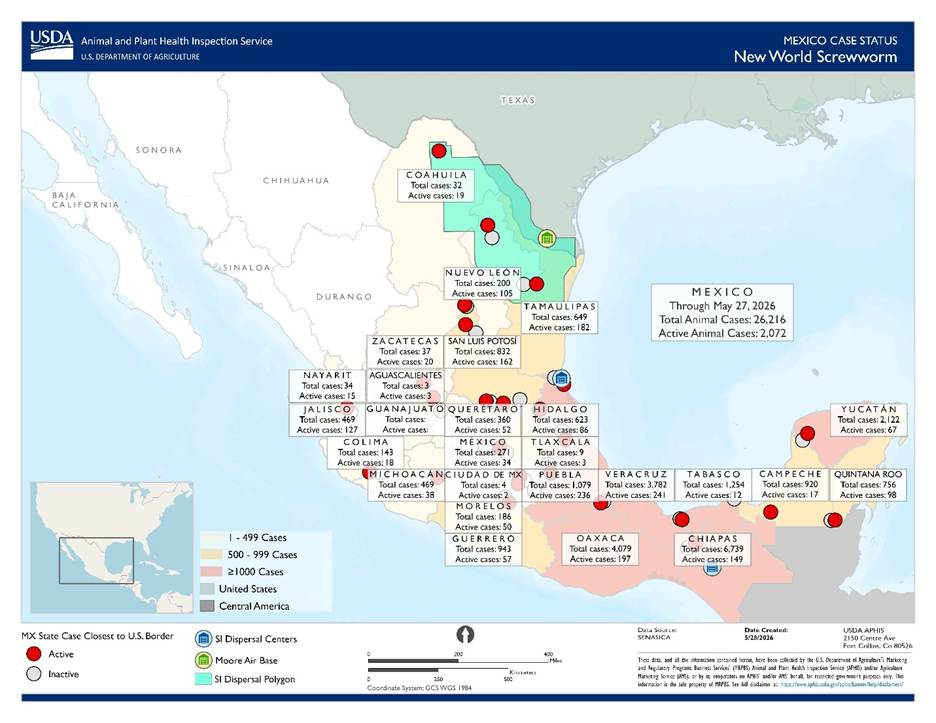
Oklahoma State University Extension livestock entomologist Dr. Jonathan Cammack emphasizes that Oklahoma and the U.S. are not currently experiencing screwworm infestations, but producers should know what to watch for. OSU College of Veterinary Medicine/OADDL resources also stress that early recognition, accurate diagnosis, and prompt reporting are essential.
What to Look for in Animals
- Irritation or discomfort
- A smell of death or decay coming from a living animal, particularly around a wound or natural body openings
- Open wounds or sores, that may be oozing or weeping
- Wounds that have become colonized by maggots
Prevention starts with good wound management. Inspect cattle regularly, especially newborn calves, cows after calving, bulls after injury, and cattle following processing, branding, dehorning, castration, or predator injury. Treat wounds promptly, control other flies, and avoid unnecessary animal movement if screwworm is suspected. Do not try to quietly manage a suspected case. Contact animal health officials at the Oklahoma Department of Food and Forestry so larvae can be collected and identified and the appropriate response can begin.
Other Useful Resources
- The Oklahoma Department of Agriculture, Food and Forestry partnered with OSU Extension to host a workshop training responders on how to detect and control the dangerous livestock pest. Learn why ranchers, veterinarians, and agriculture leaders are taking the threat seriously on SunUpTV from May 9, 2026.
- OSU Extension New World Screwworm page, Dr. Jonathan A. Cammack contact and resources.
- OSU Pest E-Alert by Cammack: Oklahoma history, signs to watch for, prevention, and key takeaways.
- OSU College of Veterinary Medicine/OADDL newsletter note: emphasizes early recognition, diagnosis, and prompt reporting.
- Dr. Rosslyn Biggs, OSU Extension beef cattle specialist, shares important information about the newly approved treatment for New World screwworm on SunUpTV from December 20, 2025.