

Cow-Calf Corner | July 20, 2026
Beef Export Update
Derrell S. Peel, Oklahoma State University Extension Livestock Marketing Specialist
From January through May of 2026, total beef exports are down 17.2 percent year over year. Beef exports have declined by one third since 2022, the year of record exports (Figure 1). Decreasing beef production and rising beef prices are moderating beef exports as expected. Beef exports to all markets have decreased since 2022 but the impacts vary across markets depending on the nature of the trade to a specific country, the types of beef products traded, currency exchange rates, and policy impacts in various markets.
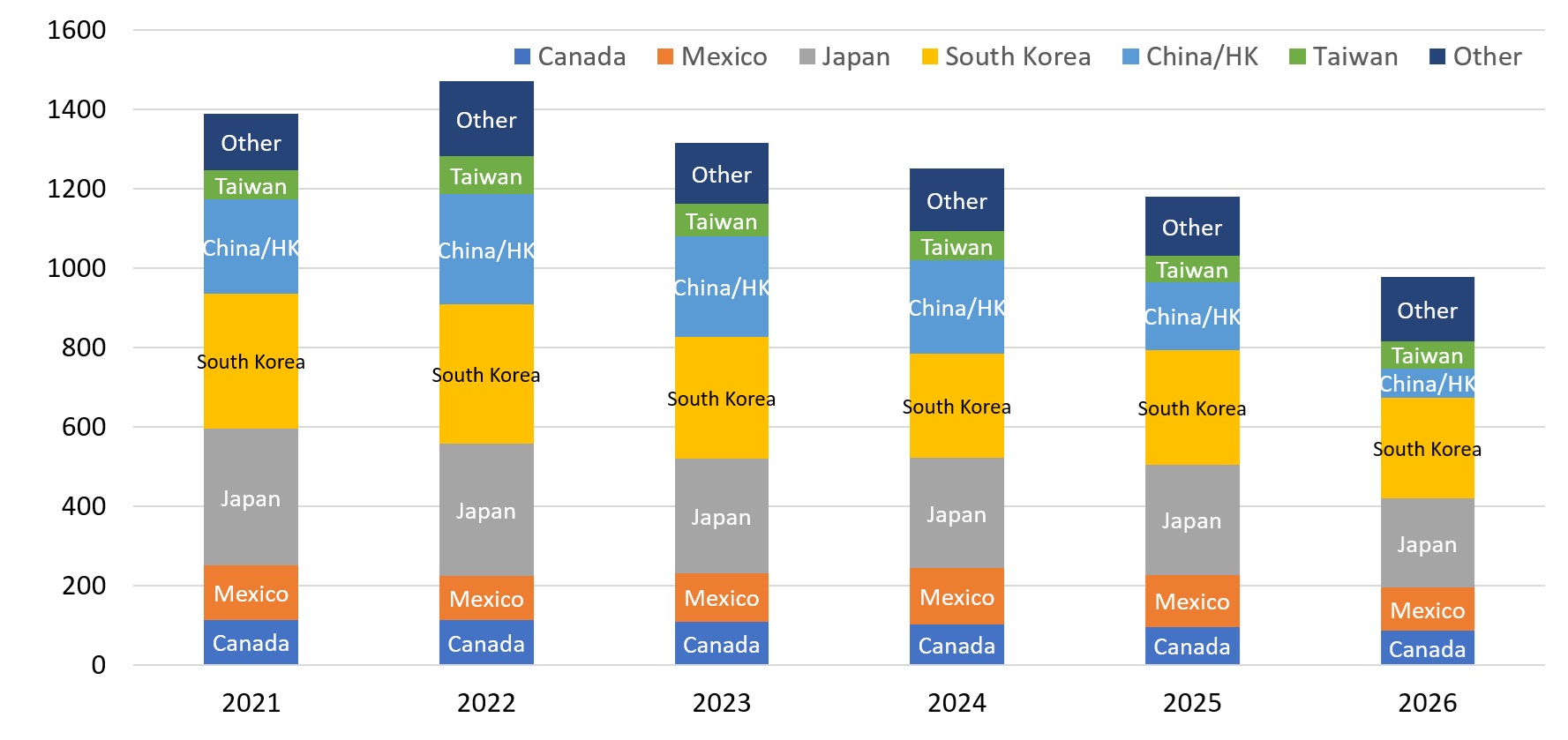 Figure 1. Beef Exports, January-May; Million Pounds
Figure 2 shows beef exports in a way that makes it easier to see country by country changes for the January – May period since 2022. So far in 2026, South Korea is the largest beef export market, down 12.2 percent year over year. Japan is the second largest beef export destination, down 19.4 percent from last year. Beef exports to Japan have dropped more sharply in 2026, after holding steady from 2023-2025 (Figure 2). South Korea currently accounts for 26.0 percent of total beef exports; a growing share compared to 22.8 percent for Japan.
Mexico is the number three beef export market, down 16.0 percent year-over-year and accounting for 11.3 percent of total beef exports. Beef exports to Mexico increased from 2022-224 and have decreased in 2025 and 2026. The number four beef export market is Canada, down 10.9 percent from one year ago. Beef exports to Canada have been relatively steady with the Canadian share at a current level of 8.7 percent of total beef exports. Both Mexico and Canada have seen an increase in export share with relatively stable exports while other markets have declined.
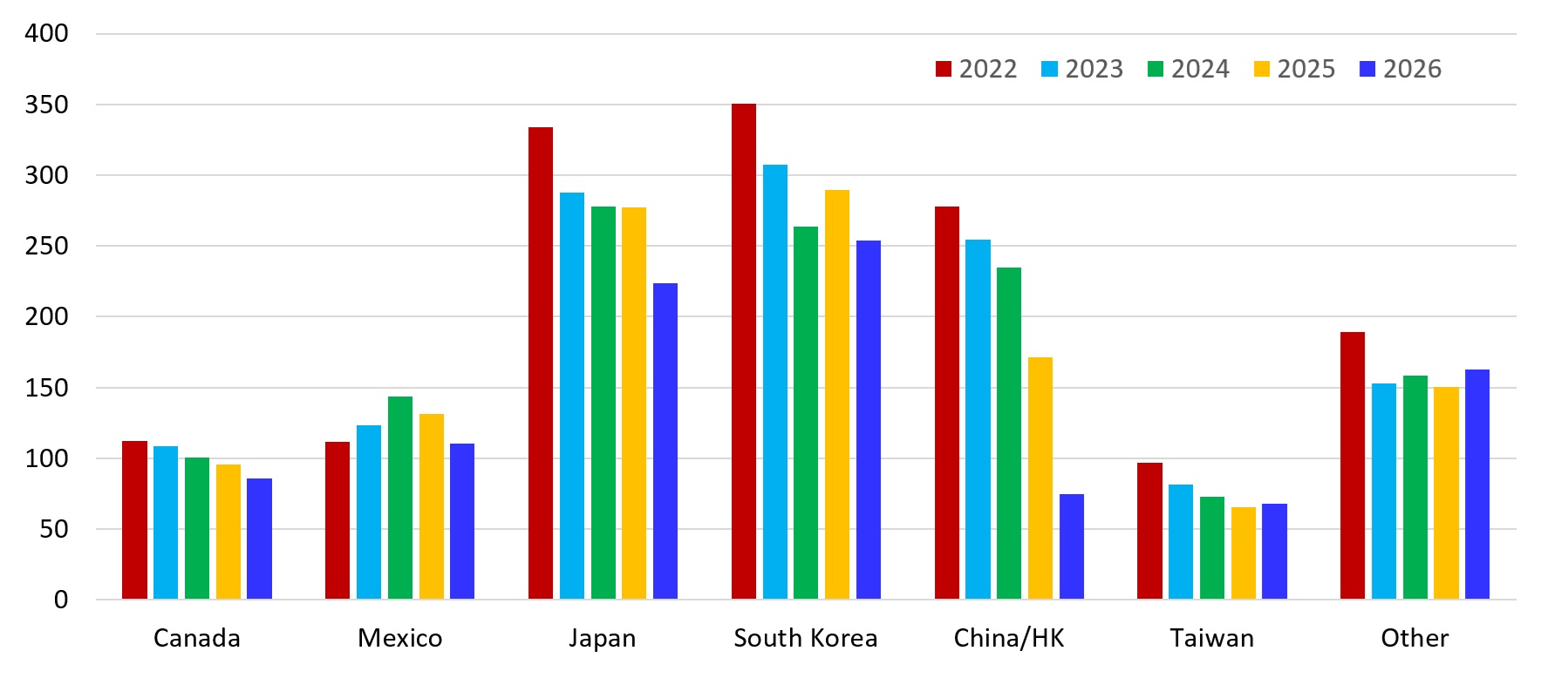 Figure 2. Beef Exports, January - May; Million Pounds
The combined China/Hong Kong market have dropped sharply with the continuing trade war with the U.S. The China/HK market is currently the number six beef export market, down 56.6 percent year over year and down 73.2 percent since 2022. As recently as 2024, China/HK was the third largest beef export market, but now accounts for 7.6 percent of beef exports, down from 20.0 percent in 2022. China and Hong Kong are reported as a combined market because, although they are technically separate with separate data, the two markets interact unofficially – especially when China is closed. In 2022, beef exports to Hong Kong were 11.4 percent of the total for the combined market. Thus far in 2026, beef exports to Hong Kong are 91.4 percent of the total, with exports to Hong Kong alone up 84.1 percent year over year, while beef exports to China alone are down 94.8 percent from last year. Beef exports exports to Hong Kong appear to be “unofficially” moving into China, as they did a few years ago before China was open for U.S. beef.
Taiwan is the number six beef export market and the only growing market in 2026, up 3.7 percent from last year for the first five months of the year. Taiwan currently accounts for 7.0 percent of total beef exports. Like Mexico and Canada, Taiwan has an increasing share of total exports as the major Asian markets have declined.
Derrell Peel, OSU Extension livestock marketing specialist, discusses whether the cattle markets have reached their peak and what factors could influence prices moving forward on SunUpTV from July 18, 2026.
Critical Control Points in a Cow-Calf Operation
Mark Z. Johnson, Oklahoma State University Extension Beef Cattle Breeding Specialist
One of the attributes of a commercial cow-calf operation is that the cows don’t require day to day monitoring and management to do their job. Cows are very self-sufficient with regard to their ability to convert forage into pounds of weaned calves, even during the intense Oklahoma summer heat. That being said, there are some specific management practices that offer great return on investment. Depending on your calving season and schedule, each of the following (if not done yet) will pay off in the future.
- Growth implants
- Castration
- Dehorning
- Fly, tick and internal parasite control
- Administering the first (or second) round of vaccinations. Two rounds of vaccinations prior to weaning reduces stress at weaning and will set up calves for long-term health, growth and productivity. A documented vaccination protocol will pay dividends when marketing calves.
- Monitoring the availability of shade and water quality.
- Management to avoid heat stress. If working calves or moving cattle, do it at dawn and be done as early in the morning as possible.
- Balance the quality and quantity of hay harvested from native grass meadows. May was a fairly dry month across most of Oklahoma, June provided moisture but not much intense heat, as a result many native grass meadows are lagging behind in forage quantity at the time of this writing. Baling native grass meadows by early July is typically the sweet spot to optimize quality and quantity of hay produced. If you plan to bale native grass meadows, do it now. Waiting later into summer not only decreases quality but also potentially damages long-term health and productivity of native grass plants.
When Summer Grass Starts Running Out of Gas
Paul Beck, Oklahoma State University Extension Beef Cattle Nutrition Specialist
Perennial warm-season grasses can still look green in midsummer even as their nutritional value declines. Forage analysis from several Oklahoma forage systems shows that this change begins earlier than many producers expect.
Tallgrass prairie dominated by big and little bluestem, Indiangrass and switchgrass at the OSU Range Cow Research Center near Stillwater peaked in nutritive quality in May with 10.55% and 75% digestibility. After May, protein and digestibility declined steadily as forages mature with less than 6% crude protein and 65% digestibility in the late summer.
The same pattern has been observed in other warm-season pastures. In OSU data from midgrass prairie, crude protein declined from 9.8% in May to 7.1% in July, while total digestible nutrients declined from 64% to 61%. Old World bluestem declined even more sharply, from 12.9% crude protein and 60% TDN in May to 7.4% crude protein and 55% TDN in July.
One useful way to evaluate this change is the ratio of TDN to crude protein. Ratios between about 4:1 and 7:1 are generally considered balanced. When this ratio approaches 7:1 or above the crude protein is too low for optimal forage fiber breakdown in the rumen, limiting forage digestion and intake. In the early summer the TDN:CP ratio is 7:1, 6.5:1, and 4.6:1 for tallgrass prairie, midgrass prairie, and Old-World bluestem. But, July, the ratio had increased to 10.8: for tallgrass prairie, 8.6:1 for midgrass prairie and 7.4:1 for Old World bluestem, indicating that rumen-degradable protein was becoming limiting.
This determines the kind of supplement cattle need. When adequate standing forage remains but protein has declined, a pound of high-protein supplement increases microbial activity, fiber digestion, passage rate and forage intake; but only if adequate forage is available. This is the basis of the Oklahoma Gold supplementation program, where 1-pound of a high protein supplement (38 to 40% crude protein) increases late summer stocker gains by 0.4 to 0.5 pounds per day. This is a very efficient program requiring only 2 to 2.5 pounds of supplement for each pound of added gain. The Oklahoma SuperGold supplementation program is based on feeding 2.5 pounds per day of a moderate (25-30%) protein supplement to provide both protein and energy to the calf. This can improve daily gains by 0.6 to 0.7 pounds per day with supplement efficiency of around 3.5 pounds of supplement per pound of added gain.
If forage quantity is also limited, protein alone cannot replace missing forage. Higher levels of moderate protein-energy supplement will be needed to maintain performance and stocking rates. High feeding rates of supplements containing a large amount of grain can reduce forage intake and fiber digestion.
The first question should not be, “What supplement should I buy?” It should be, “What is limiting performance?” Forage testing provides the best answer, but pasture maturity, manure consistency, cattle fill and weight gain also provide clues. Start supplementation before gains fall sharply, match the supplement to forage quality and availability, and remember that the supplement that fits one forage—or one month—may be the wrong tool for another.
Paul Beck, OSU Extension beef cattle specialist, explains the key differences between the Oklahoma Gold Program and Super Gold Program to help Oklahoma beef producers determine which program best fits their operation. Learn the eligibility requirements, benefits, and practical considerations for selecting the right program to support your herd and management goals on SunUpTV from July 18, 2026.