

Cow-Calf Corner | September 22, 2025
Upcoming Program Flyers
- Livestock and Range Field Day, Stillwater, OK, October 9, 2025
- 5-State Beef Conference, Beaver, OK, October 14, 2025
- 5-State Beef Conference, Dalhart, TX, October 15, 2025
Feedlot Production Continues to Decline
Derrell S. Peel, Oklahoma State University Extension Livestock Marketing Specialist
The September 1 feedlot total was 11.08 million head, down 1.1 percent year over year and the tenth consecutive monthly decrease compared to one year earlier. Feedlot inventories continue to decline slowly. Average inventories the past year are down just 3.1 percent from the peak in 2022, but the September 12-month moving average is at the lowest level since January 2019. With the September on-feed total up slightly from the previous month, the August total was likely the seasonal low for the year. The feedlot inventory on August 1 this year was the lowest monthly inventory since October 2017.
Total feedlot production is declining more rapidly than the slowly declining feedlot inventories would indicate. Feedlot placements in August were 90.1 percent of last year and the smallest August placement total since 2015. Figure 1 shows the relative comparison between 12-month moving averages of cattle on-feed and feedlot placements. Placements have declined more than the on-feed inventory up to this point aided by a slower turnover rate in feedlots.
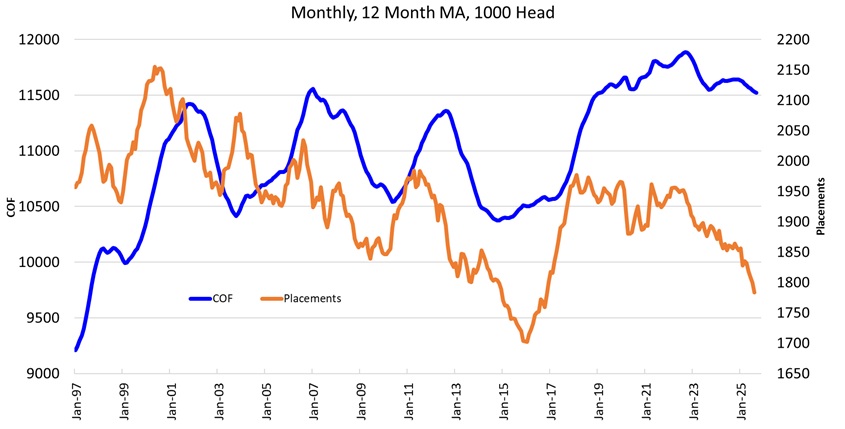
Figure 1. Cattle on Feed and Feedlot Placements
August marketings were down 13.6 percent compared to last year. Feedlot marketings for the first eight months of 2025 are down 5.4 percent year over year. Average feedlot marketings the past year are down 8.2 percent from peak average marketings in 2022. Smaller calf crops and limited feeder cattle supplies mean there is less cattle available for feedlot production. Feedlot production and beef production are expected to continue to decline into 2027.
Preventing Anaplasmosis in Cattle
Mark Z. Johnson, Oklahoma State University Extension Beef Cattle Breeding Specialist
With cattle at record values it is more important than ever to eliminate risk and protect the health of our cattle inventory. Anaplasmosis is a common disease in cattle with worldwide distribution. The disease is regularly found in cattle in the state of Oklahoma. Accordingly, Anaplasmosis will occur every year in Oklahoma with some variation of intensity based on the strain ofAnaplasma marginale. Anaplasma marginale is a bacteria that infects red blood cells and once an animal becomes infected they are infected for life. Anaplasmosis is transmitted through the bite of ticks and flies, as well as blood contaminated instruments like needles, tattoo tools, castration equipment and dehorning instruments. This bacteria does not harm the red blood cells directly but the cow’s immune response recognizes it when it reaches certain levels which then causes anemia due to the immune system killing the red blood cells that are infected. This will limit the amount of oxygen that is transported throughout the animal’s blood, which can then lead to aggressive behaviors exhibited by normally docile cows or bulls. Other clinical signs that animals are infected with the bacteria are extreme lethargy, yellowing of the mucous membranes, abortions, weight loss, and difficulty breathing.Most producers will not know they have an anaplasmosis problem until they see dead cows or bulls that are older than 2-years of age. This disease can be devastating with death losses in some herds approaching 50%. Fortunately, Anaplasmosis can be effectively controlled through several management practices outlined in this article.
Best Management Practices for Treatment and Prevention
First, consult with your veterinarian so that they can develop a comprehensive plan to limit the impact of anaplasmosis. This relationship is critically important because the most commonly utilized control plan is to administer tetracycline antibiotics through mineral supplements or feed and the only access to this preventative treatment is to obtain a Veterinary Feed Directive (VFD). Clinical signs of infections can be treated with injectable antibiotics via an intramuscular injection of oxytetracycline administered multiple days and should be given under a veterinarian’s directions. Successful antibiotic therapy curing the clinical signs of infection results in a carrier animal. Carrier cattle will be immune to further disease from anaplasmosis but will remain a source from which needles, flies and ticks can spread the disease. A vaccine is available in some states and Oklahoma is approved for this vaccine. This vaccine does not prevent infection but anecdotal evidence demonstrates a reduction in clinical signs.
In Oklahoma it is not a matter of “if” but rather a matter of “when” anaplasmosis will impact your cattle herd. Additional best management practices to prevent and control the transmission of this disease include:
- Feeding tetracycline antibiotic during the fly and tick seasons (essential)
- Rotating pastures (when possible) to avoid pastures with a history of tick issues during tick season
- Burning pastures in the spring to control ticks
- Controlling fly and tick populations to the extent possible
- Changing needles and disinfecting any instruments which may result in transmitting blood from animal to animal when working cattle.
Reference:Anaplasmosis: People, Ticks and Certain Flies. Justin Talley. Cow-Calf Corner Newsletter. June, 2021.
Tracking Costs Tied to Calf Value
Scott Clawson, Oklahoma Extension Area Economist
The excitement surrounding the cattle markets is undeniable. The cow-calf producer is set to benefit greatly under these conditions. Yet, being curious by nature, I can’t help but wonder how these record-breaking calves will work through the supply chain for the next 18 months from a business point of view. Cheap abundant feed could land calves in the feedyard this fall, but many will end up in the countryside until spring. These record level calf prices will impact two cost categories specifically as we budget wintering calves in 2025/26. Interest expense and the cost of death loss go hand in hand with the value of the cattle.
First, interest expense will increase meaningfully. This is a function of the sizable rise in calf value and a rate environment that has changed in recent years. The value of a 450lb. steer has increased roughly 60% from last fall. This purchase price increase combined with a flat or slightly improved interest rate environment will hike our interest expense per head significantly. Even if these are your own ranch raised calves not purchased on a line of credit, the interest is important. This is the potential interest that could be earned by selling calves this fall and investing the proceeds elsewhere. No matter what side of the interest coin you fall on, the sheer dollar value of the cattle makes this significant. This example calculates interest expense at $89.30/head.
Death loss expense is also rising as a function of the increasing cattle value. While death loss percentages vary by year, having a solid understanding of the death loss percentage on your operation is important. In this example, 2% death loss is used. It is assumed to have occurred day one before feed and other inputs are invested in the calf for the sake of simplicity. At a minimum, the remaining 98% of calves will have to pay the tab for the 2% mortality. Just recovering the lost funds from the purchase price of those calves pencils out to $44.10/head in this example, yours will vary.
Even with the historic cattle prices, keep the pencil out and keep it sharp. A good plan is a great place to start our decision-making process.
5 States Beef Conference Returns October 14–15, 2025
Paul Beck, Oklahoma State University Extension Beef Cattle Nutrition Specialist
The 5 States Beef Conference will return this fall with two meetings bringing timely beef industry updates to area producers. The first session will be held Tuesday, October 14 at the Beaver County Fair Building in Beaver, OK. Registration begins at 2:00 p.m. with the program running from 2:30 to 7:30 p.m. The second session will follow on Wednesday, October 15 at Frank Phillips College Rahll Campus in Dalhart, TX, with registration at 9:30 a.m. and the program scheduled from 10:00 a.m. to 3:00 p.m.
The conference will feature a strong lineup of speakers addressing issues relevant to cow-calf, stocker, and feedlot operators. Topics include grazing efficiency, updates from current research, the economics of dairy beef crosses, grazing management in western rangelands, beef genetic technologies, herd expansion economics, and life cycle analysis of beef production systems.
Speakers this year represent several land-grant universities across the region, including Oklahoma State University, Texas A&M AgriLife Extension, West Texas A&M University, Kansas State University, and New Mexico State University. Presenters include Jason Smith, Emma Briggs, Paul Beck, Tim Steffens, Logan Thompson, Mozart Fonseca, Tommy Perkins, Merri Beth Day, and Jonathon Cammock.
A beef dinner and conference proceedings will be provided at both locations. The Oklahoma Cattlemen’s Association will provide the meal in Beaver.
Please RSVP by October 7 for the Beaver meeting by calling Loren Sizelove, Beaver County Ag Educator, at 580-625-3464, or Britt Hicks, OSU Area Livestock Specialist, at 580-338-7300. For the Dalhart meeting, RSVP by October 9 by calling Laura Taylor, Dallam County Extension, at 806-244-4434.
The 5 States Beef Conference has long been a valuable opportunity for producers to gather practical information from experts and network with neighbors across Oklahoma, Texas, Kansas, Colorado, and New Mexico. Make plans now to attend and bring your questions for the speakers.