

Wind Erosion: Mechanics and Management
Introduction
Oklahoma is no stranger to wind erosion. Throughout its history, Oklahoma’s soils have been subject to loss from relentless wind, culminating in the Dust Bowl of the 1930s, which affected much of the western half of the state (Lee & Gill, 2015). Severe wind erosion events like the Dust Bowl encapsulate the true risk of erosion, in which fertile prairie topsoil was lost over a few decades, limiting agricultural productivity, decreasing land value and prompting economic and social hardship in the region. The direct economic losses of the Dust Bowl have been estimated at upwards of $150 million (Hornbeck, 2009).
The hard lessons learned from the Dust Bowl in the 1930s led to great gains in soil conservation in the following decades through the development of public and private conservation services, outreach and conservation farming practices. However, for all these improvements, wind erosion remains a real threat to agriculture and public health in modern times. In many areas of the Great Plains, public health is still regularly affected by seasonal dust storms, and agricultural productivity continues to be reduced by wind erosion, with impacts ranging from seedling loss to reduced soil health, water holding capacity and fertility (Duniway et al., 2019). Altogether, the impacts of wind erosion remain problematic, totaling $155 billion in economic losses in the United States alone (Feng et al., 2025).
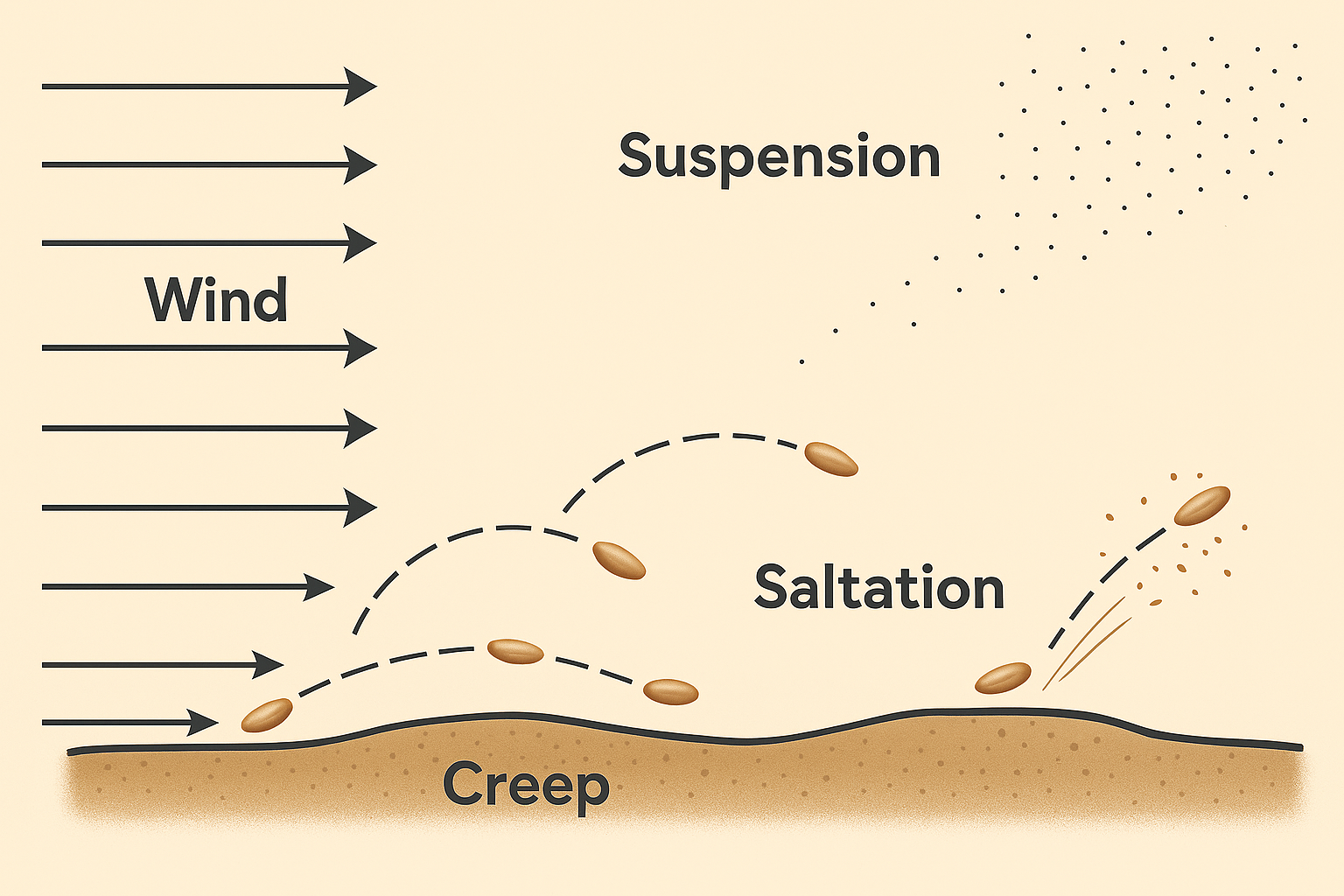 Figure 1. The basic mechanisms of soil erosion due to wind, including saltation, creep, suspension and the abrasive force of saltating sand particles hitting the soil surface. Adapted from Zobeck & Van Pelt (2011).
At its core, wind erosion of soil is a straightforward process and understanding the factors that affect soil loss to wind can help land managers combat it. This factsheet reviews the mechanisms of wind erosion and how management practices can be implemented to reduce the risk of erosion.
Mechanisms of Wind Erosion
Wind erosion begins when wind of sufficient force detaches and moves soil particles at the soil surface. For soil to begin moving in response to wind, the wind speed at the soil must reach a baseline threshold. This speed varies for different soil types, textures and structural conditions, but in general, when wind speeds reach 8-30 miles per hour, six inches above the soil surface, erosion begins (Troeh et al., 1999). Surprisingly, when winds reach this speed, the first soil particles to move are not necessarily the smallest and lightest, but rather medium sized sand grains (0.1-0.5 mm in diameter). Compared to silt and clay particles, sand grains tend to have weaker connections and aggregation with other soil particles, making them more susceptible to the initial effects of the wind. As wind moves across the soil surface, turbulent pockets of air move over sand grains at specific angles, causing them to rapidly “jump” vertically into the air (Figure 1). This jumping phenomenon is called saltation and is thought to be initiated by the vibration, contact and spin induced when sand particles bounce against each other in the wind, giving them the energy to rapidly become airborne (Zobeck & Van Pelt, 2011).
Saltating sand particles are too large to become airborne for long periods of time, so as they drop, they physically hit the soil surface and knock other soil particles loose. This abrasive action further breaks down existing soil aggregates or clods at the soil surface, releasing soil particles of all sizes into the wind. The distance soil particles can move once they are detached from the soil surface depends on particle size. Large sand grains (0.5 1.0 mm) merely creep along the soil surface and do not become airborne, while medium-sized sand grains (0.1 0.5 mm) continue to bounce and undergo saltation (Figure 1). Small soil particles, such as silt and clay (less than 0.1 mm), may become fully suspended in the air. The smallest of these (less than 0.02 mm) can move up to thousands of kilometers in strong winds (Zobeck & Van Pelt, 2011).
As soil movement mechanics continue at the soil surface, the overall impact of erosion becomes progressively more severe. Continuous wind erosion intensifies across a field, like an avalanche moving downhill. Dislodged soil particles break soil aggregates and create an unconsolidated, smooth surface that allows wind velocity to increase. This further increases the wind’s capacity to dislodge and pick up more loose soil particles. As more particles move and bounce across the field, they progress forward and continually abrade an increasingly large expanse of soil, causing the erosion pattern to grow. In areas where this expansive erosion pattern is chronic and severe, soil texture can actually change through time, since finer soil particles are lost and blown out of the field while unconsolidated sand is all that remains (Troeh et al., 1999).
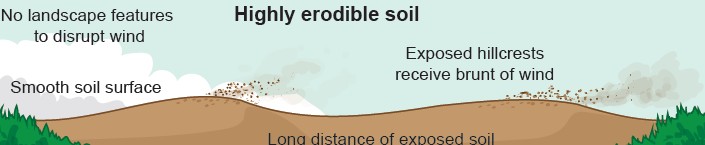
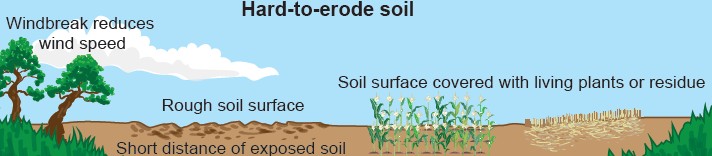
Figure 2. Examples of soil and landscape factors that favor wind erosion and soil and landscape factors that disfavor wind erosion.
Early Warning Signs of Wind Erosion
Recognizing early indicators of wind erosion vulnerability allows producers and growers to intervene before significant soil loss appears. Visual cues include visible soil drift across roads and field edges or accumulation of soil along fences or vegetative borders. Smooth, loose soil surfaces following tillage also indicate erosion (Lyles, 1988). At the plant level, seedlings showing sandblasting injury, burial or exposed roots indicate that detachment and transport are already underway (Skidmore, 1986; Van Pelt et al., 2004). Recognizing these signs early is critical, as it allows producers to implement emergency practices such as residue management, temporary wind barrier or emergency tillage before the condition deteriorates further (Presley et al, 2013). Although these practices can immediately mitigate wind erosion, they are short-term solutions and should be balanced with effective long-term management strategies.
Factors Affecting Wind Erosion
Wind Speed and Direction
Gusty winds are more likely to promote erosion, as soil particles have no opportunity to settle under a steady wind stream. Similarly, abrupt changes in wind direction from turbulence or a change in weather pattern can result in exposure of settled soil particles to a new angle of attack, restarting the eroion process (Troeh et al., 1999).
Soil Texture and Aggregation
Soil texture (the relative proportions of sand, silt and clay sized soil particles) influences inherent erodibility primarily through the way soil particles are held together. Winds cannot pick up soil particles greater than 1 mm in diameter, so large sand and gravel particles on the soil surface can actually help stabilize the soil against erosion (Zobeck & Van Pelt, 2011). The same phenomenon applies to soil aggregates. Strong soil aggregates held together with clay, silt and organic matter (OM) are practically nonerodable when they are greater than 1 mm in diameter; therefore, loamy soils with good aggregation are less erodible than sandy soils, which tend to have poor aggregation. Strong soil structure and aggregation further help protect against wind erosion by increasing the resistance of individual aggregates to abrasion and sandblasting that would otherwise break up soil particles and increase erosion potential (Troeh et al., 1999).
Soil structure at the surface depends on a variety of factors, including soil texture, OM and tillage management. In general, sandy soils have poorer aggregation because there is less clay and OM available to bind soil particles together. This is why “sugar sands” are considered a particular risk for blowouts and wind erosion when left uncovered, since most of the particles at the surface are unconsolidated and the ideal size to be disrupted by the wind.
Surface Roughness
A rough soil surface is more resistant to wind erosion than a smooth soil surface since an irregular surface disrupts air flow and reduces wind speed (Figure 2). Although the “peaks” of a rough soil surface may still be subject to the force of the wind if left uncovered, the corresponding “valleys” in between soil aggregates or clods act as miniature windbreaks that can trap and catch any eroded material, helping keep the overall surface stable throughout a wind event (Nordstrom & Hotta, 2004).
Rainfall
Moist soils are more resistant to erosion than dry soils as the cohesive and adhesive forces of water help hold soil particles together (Zobeck & Van Pelt, 2011). However, rainfall itself can create its own erosive force that can detach soil particles and make them less stable and more susceptible to wind erosion once the surface re-dries. Rainfall can also alter the quality of the soil surface. For example, crusted soil surfaces from rainfall can resist wind erosion, whereas loose, smooth soil surfaces following rain can increase the risk of wind erosion. Soil texture and structure will ultimately affect how the surface responds to rainfall and future wind erosion.
Field Size
Erosive risk of an individual field is worsened when the length of exposed soil spans a long distance parallel to the direction of the wind (Figure 2). As wind moves across a field, it has a finite load of soil particles that it can move before its energy dissipates. Long fields not only leave the wind undisturbed as it moves across the landscape, but they also allow the wind a greater amount of time to pick up its maximum load, essentially increasing the “efficiency” of the wind to move soil (Troeh et al., 1999). Long runs of bare soil also increase the “avalanche” effect, where eroded sand particles starting from the windward side of the field continue to abrade and disturb more soil as they are blown across the field, progressively destroying the surface and increasing the number of erodible particles.
Topography
Land with regular surface topography and gentle slope is more resistant to wind erosion than uneven, sloping or hummocky terrain, as the windspeed above the land surface remains relatively stable with no portion of the landscape receiving the brunt of the wind force (Figure 2). Conversely, high points and hill crests on uneven or sloping ground are more exposed to the erosive force of the wind and can be especially sensitive to erosion (Nordstrom & Hotta, 2004).
Surface Cover
Covering the soil with plant material is the most effective means of reducing soil erosion by wind (Nordstrom & Hotta, 2004). A vertical plant canopy dramatically reduces wind speed at the soil surface while also physically protecting soil particles by anchoring them to roots, blocking movement of saltating soil particles and shielding soil aggregates from abrasion (Troeh et al., 1999). These benefits can be gained from either living or dead plant material. Although standing plants or residue are most effective because they disrupt the wind flow, residue that covers the soil surface is also effective at reducing erosion by shielding the surface from the wind and blocking soil movement (Figure 2).
Landscape Characteristics
Like plant communities or standing residue, shelterbelts and windbreaks reduce erosion on a large scale by disrupting wind and slowing its velocity across the landscape (Figure 2). Well-designed windbreaks or shelterbelts reduce wind speed up to 32 times the height of the windbreak (Lee & Gill, 2015). Shelterbelts, promoted by the Soil Conservation Service following the Dust Bowl, played a vital role in reducing erosion across the Great Plains and shaped much of the landscape as seen today.
Soil Organic Matter
Soil organic matter (OM) plays a critical role in protecting soil from wind erosion because it promotes aggregate stability and improves soil structure. Aggregate stability refers to the ability of soil aggregates to resist disintegration when disruptive forces associated with tillage and water, or wind erosion are applied. The size distribution of aggregates can be used to predict resistance to abrasion and wind erosion (USDA– NRCS, 2008). Aggregate stability is associated with OM content, biological activity and nutrient cycling in soil. Generally, soil particles in small aggregates are bound together by old and stable forms of OM, while larger aggregates are held together by microbial products that are released during decomposition of fresh OM (University of Illinois, 2025).
These organic compounds act as binding agents or “glues” that hold soil particles together, forming larger aggregates that are more resistant to detachment and abrasion. Therefore, a decrease in soil OM increases a soil’s susceptibility to wind erosion via decreased aggregate stability (USDA–NRCS, 2001). Higher OM also improves soil moisture retention, which further increases resistance to wind erosion. Therefore, management practices that build OM, such as cover cropping, reduced tillage and residue retention, also decrease the potential for soil detachment and erosion.
Managing Soils to Reduce Wind Erosion
Any management decision on the farm or ranch that preserves soil cover will help avoid wind erosion. In range and pasture, this primarily means avoiding overgrazing. Care should also be taken to manage controlled burns to preserve plant roots and encourage quick reestablishment of the plant community (Duniway et al., 2019).
In cropland, rotation and cropping decisions will intricately affect wind erosion risk. Crop type and harvest method will determine the seasons of the year when soil is potentially uncovered, as well as how much residue is left on the field after harvest. For example, harvesting corn for grain rather than silage will leave more residue in the field during winter. Alternatively, choosing to plant a winter crop, such as wheat, will leave the soil covered by living plants in winter and provide residue for cover in summer. Crop rotation, double cropping and cover cropping also alter both the duration when soils are covered and the amount and type of residue left in the field to protect soil. Cotton, for example, is a crop that typically leaves fields exposed to erosion since defoliation and harvest management leave very little residue covering the soil during winter and spring. Adding a winter cover crop (Figure 3), such as cereal rye, following cotton harvest is a management option that has proven effective in reducing wind erosion and cotton seedling loss from sandblasting across the Southern Great Plains (Lewis et al., 2018).
Tillage is another major factor influencing wind erosion, as it affects surface cover and aggregate stability. Leaving residue on the field by implementing no-till or reduced-till cropping systems helps protect the soil from wind erosion (Nordstrom & Hotta, 2004). It is important to note that, in the short term, tillage can be used for emergency erosion control/reduction. A rough soil surface reduces wind erosion by both reducing wind speed and by providing a trap for eroded soil particles to re-settle in areas protected from further erosion. Therefore, soils with irregular aggregates or clods from a recent tillage event help resist erosion. In an emergency, tillage can be initiated before or during a wind event to create ridges, surface clods and furrows perpendicular to the wind to stop wind erosion that has already started (Presley et al., 2013). In this scenario, the whole field does not have to be tilled, but alternating tillage passes or pulling occasional furrows can be enough to save a field in a major wind event. It should be noted that, although tillage is effective at reducing wind erosion in the short term, the potential to lose soil cover, organic matter and soil structure from routine tillage leads to greater overall wind erosion risk from tillage on the long term.
Conclusion
Soil erosion from wind begins when an unimpeded wind of strong enough force disturbs soil particles that bounce across the field, breaking up more soil as they go and exposing loose soil particles to lift and movement in the wind. Although wind itself cannot be controlled or avoided, any factor on the farm or ranch that disrupts the wind’s movement at the landscape scale, or near the soil surface, protects against wind erosion. Wind erosion is like an avalanche — small incidents of erosion starting where soil is exposed and loose can lead to further soil disturbance and increased erosion risk in a strong wind event. However, any management that simply keeps the soil covered, builds soil OM and protects exposed soil from the force of the wind goes a long way in securing a landscape against erosion, and thereby improving its health and productivity. These practices not only prevent soil loss, but also improve soil health, water retention and long-term sustainability agriculture productivity.
References
Duniway, M. C., Pfennigwerth, A. A., Fick, S. E., Nauman, T. W., Belnap, J., & Barger, N. N. (2019). Wind erosion and dust from US drylands: A review of causes, consequences, and solutions in a changing world. Ecosphere, 10(3), e02650. https://doi.org/10.1002/ecs2.2650
Feng, I., Gill, T., Van Pelt, R., Webb, N., & Tong, D. (2025). Economic costs of wind erosion in the United States. Nature Sustainability, 8(3), 307–314.
Hornbeck, R. (2009). The enduring impact of the American Dust Bowl. National Bureau of Economic Research, 15605, 1–40.
Lee, J. A., & Gill, T. E. (2015). Multiple causes of wind erosion in the Dust Bowl. Aeolian Research, 19, 15–36. https://doi.org/10.1016/j.aeolia.2015.09.002
Lewis, K. L., Burke, J. A., Keeling, W. S., McCallister, D. M., DeLaune, P. B., & Keeling, J. W. (2018). Soil Benefits and Yield Limitations of Cover Crop Use in Texas High Plains Cotton. Agronomy Journal, 110(4), 1616–1623. https://doi.org/10.2134/agronj2018.02.0092
Lyles, L. (1988). Basic wind erosion processes. Agriculture, Ecosystems & Environment, 22–23, 91–101.
Nordstrom, K. F., & Hotta, S. (2004). Wind erosion from cropland in the USA: A review of problems, solutions and prospects. Geoderma, 121(3–4), 157–167. https://doi.org/10.1016/j.geoderma.2003.11.012
Presley, D., Tatarko, J., Brokesh, E., & Tomlinson, P. (2013). Emergency Wind Erosion Control. Kansas State University Agricultural Experiment Station and Cooperative Extension Service, MF2206, 1–4.
Skidmore, E.L. (1986). Wind erosion control. Climate Change, 9, 209–218.
Troeh, F., Hobbs, J., & Donahue, R. (1999). Soil and Water Conservation (Third). Prentice-Hall Inc.
University of Illinois. (2025). Soil Quality for Environmental Health: Aggregate Stability. https://soilquality.nres.illinois.edu/aggregate-stability/
USDA–NRCS (2001). Rangeland Soil Quality – Wind Erosion. https://www.ars.usda.gov/ARSUserFiles/30501000/RSQIS10.pdf
USDA–NRCS (2008). Soil Quality Indicators: Aggregate Stability. https://www.nrcs.usda.gov/sites/default/files/2022-10/nrcs142p2_051276.pdf
Van Pelt, R.S., & Zobeck, T.M. (2004). Validation of the wind erosion equation (WEQ) for discrete periods. Environmental Modelling & Sofware, 19(2), 163–173.
Zobeck, T., & Van Pelt, S. (2011). Wind Erosion. In Soil Management: Building a Stable Base for Agriculture. Soil Science Society of America.