

Wildfire Effects on Unmanaged and Managed Cross Timbers Forests
Introduction
Fire is a natural disturbance that is important to maintain vegetation communities in the southern Great Plains. Many wildlife and plant species are adapted to fire as part of their life history, and fire exclusion has led to woody encroachment that negatively influences both native Great Plains forests and landowners. Prescribed fire is currently being used to help meet various land management objectives across Oklahoma while minimizing risk to property. On the other hand, wildfires can pose a significant risk to life and property, especially during extreme weather conditions with high wind speeds, low relative humidity and low fuel moisture. Prescribed fire can help reduce wildfire spread and extreme fire behavior, but areas treated with prescribed fire several years earlier are still likely to burn in a wildfire. Areas in the Cross Timbers treated consistently with prescribed fire can reduce negative fire effects, such as top-killing the overstory.
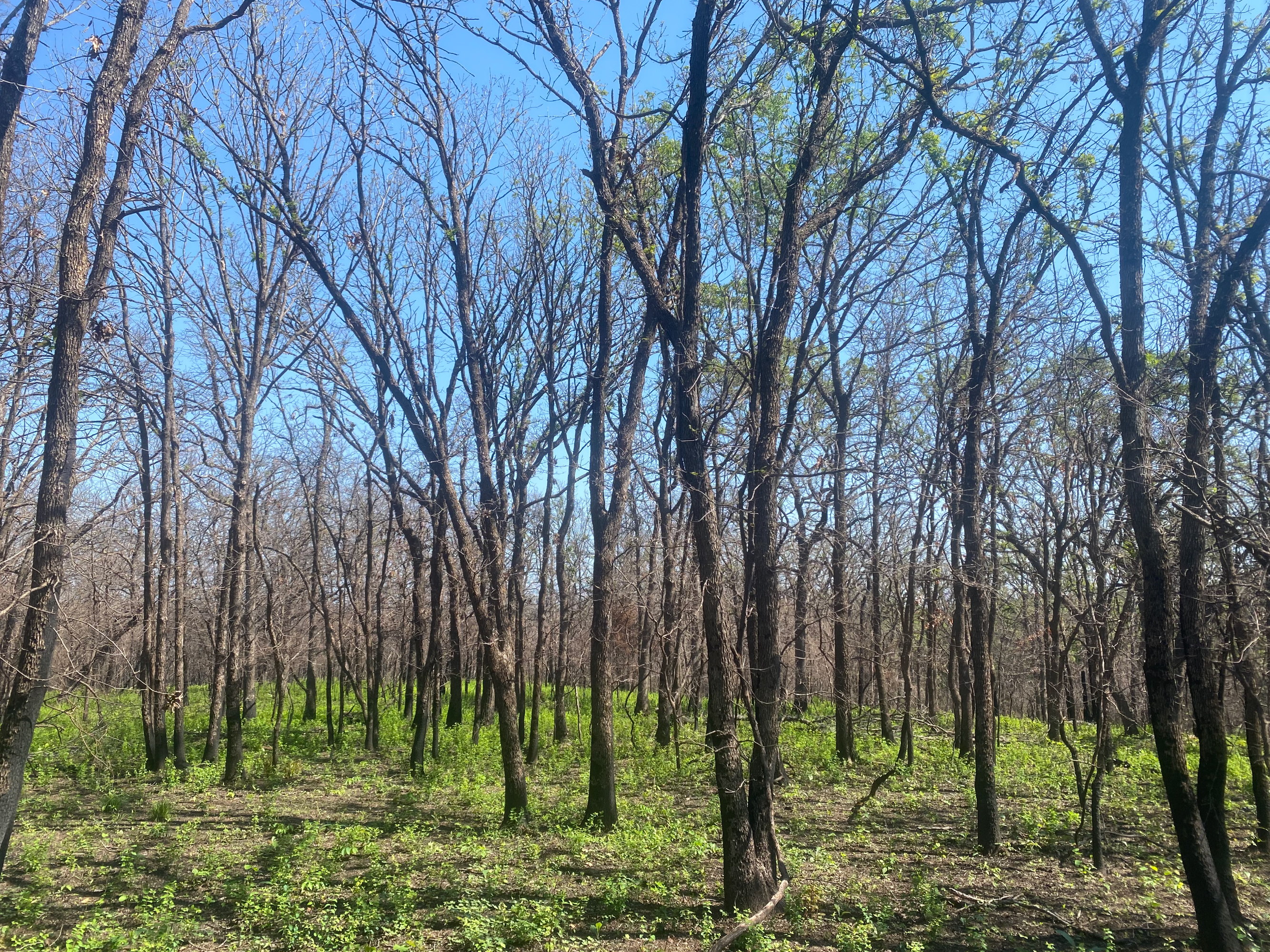 Figure 1. Unmanaged Cross Timbers forest in May 2025, two months after a wildfire burned through the stand. Notice the limited leaf growth on overstory trees and the amount of understory vegetation that is present.
Stillwater Wildfire and Cross Timbers Forest Management Plots
On March 14, 2025, several wildfires began southwest of Stillwater, Oklahoma. Relative humidity was as low as 10%, average wind speed was 20.5 MPH, and maximum wind speed was measured at 61.8 MPH. The wildfire rapidly spread under these conditions and burned through several Cross Timbers forest management plots at Lake Carl Blackwell that had been previously treated with prescribed fire and canopy reduction. Adjacent forests that had not received any type of management also burned, which provided an opportunity to compare the effects of previous management on vegetation and wildlife response to intense wildfire.
Previous treatments in the Cross Timbers forest management plots included prescribed fire and canopy reduction using a soil-applied herbicide. There are four plots, each approximately 15 acres. All plots were firequently burned prior to the wildfire event, with an average of eight burns implemented per unit since treatments began in 2007. The most recent burn in each treatment was implemented in 2021 or 2022, three or four years prior to the wildfire. Two of the four plots also received a single canopy reduction treatment in 2010. Tebuthiuron (a soil-applied herbicide) was broadcast, reducing canopy cover by approximately 40–50% to promote the growth of understory vegetation. Prior to the wildfire, both prescribed fire and prescribed fire plus herbicide plots had well-developed understories dominated by native plants such as wood oats (Chasmanthium spp.), coralberry (Symphoricarpos orbiculatus), beggarslice (Desmodium spp.) and native lespedeza (Lespedeza spp.). Both treatments resulted in a relatively open midstory and overstory dominated by post oak (Quercus stellata) and blackjack oak (Quercus marilandica). An adjacent, unmanaged Cross Timbers forest had limited understory vegetation, a well-developed midstory and a closed canopy overstory.
Wildfire Effects on Overstory Trees
Forest areas that had not been managed experienced a high level of tree mortality following wildfire. These previously unmanaged forests had higher tree density and different species composition. Unmanaged forests had a higher proportion of mesic hardwoods, such as chittamwood (Sideroxylon lanuginosum) and elm (Ulmus spp.), than forests previously managed with prescribed fire, with or without herbicide. Areas managed with prescribed fire and herbicide had the lowest proportion (0%) of eastern redcedar (Juniperus virginiana). This is likely because herbicide treatments killed trees, increased understory sunlight and promoted grass fuels. Subsequently, prescribed burn impacts on fire-intolerant species such as eastern redcedar increased. Fewer eastern redcedar acting as a ladder fuel likely reduced fire intensity, protecting oaks from wildfire top-kill.
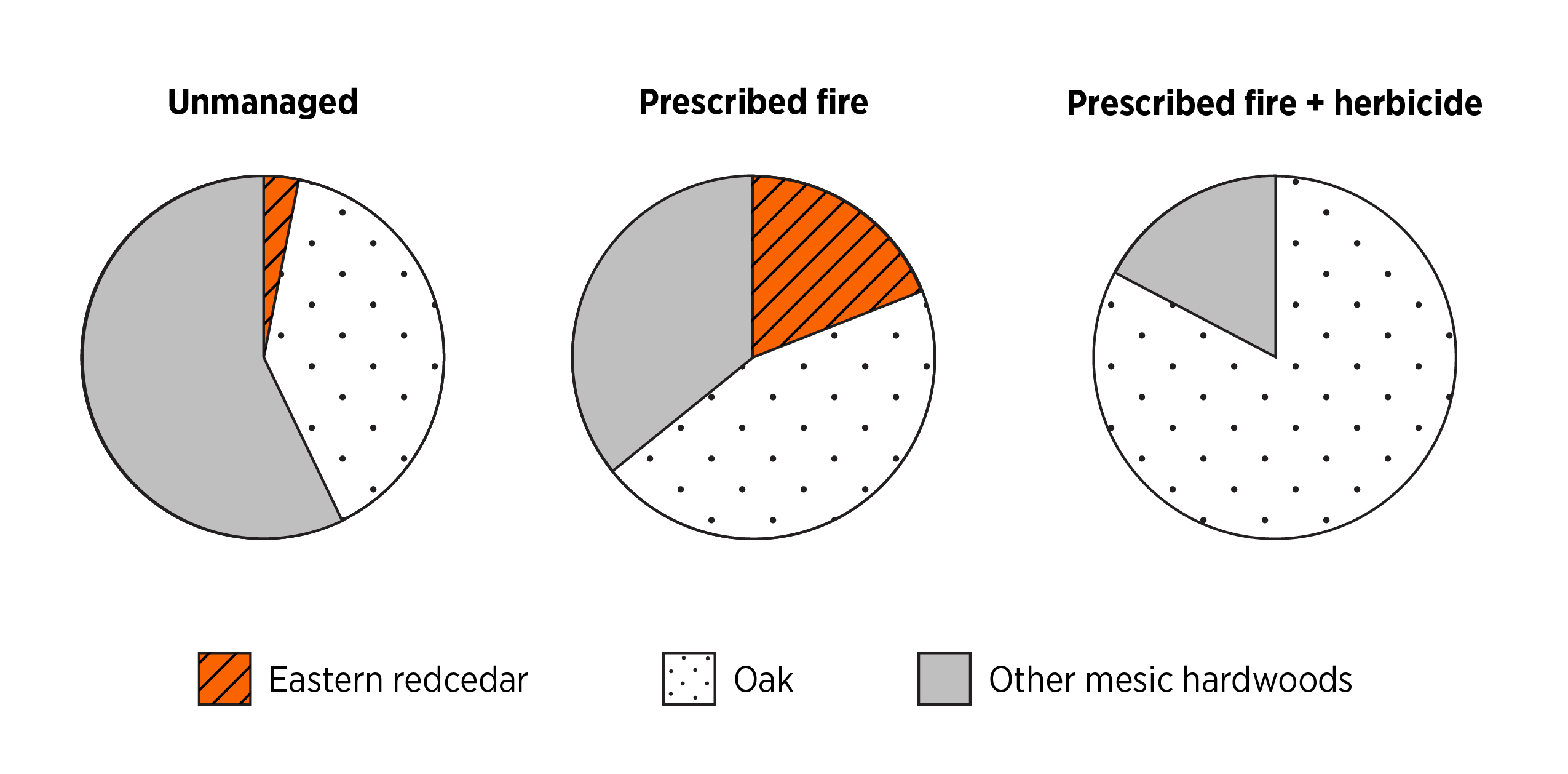 Figure 2. These graphs show the differences in major tree species group composition among management techniques, measured as the proportion of total tree density. Previously unmanaged forests had higher tree density and different species composition. Areas managed with prescribed fire + herbicide had the lowest proportion of eastern redcedar (Juniperus virginiana).
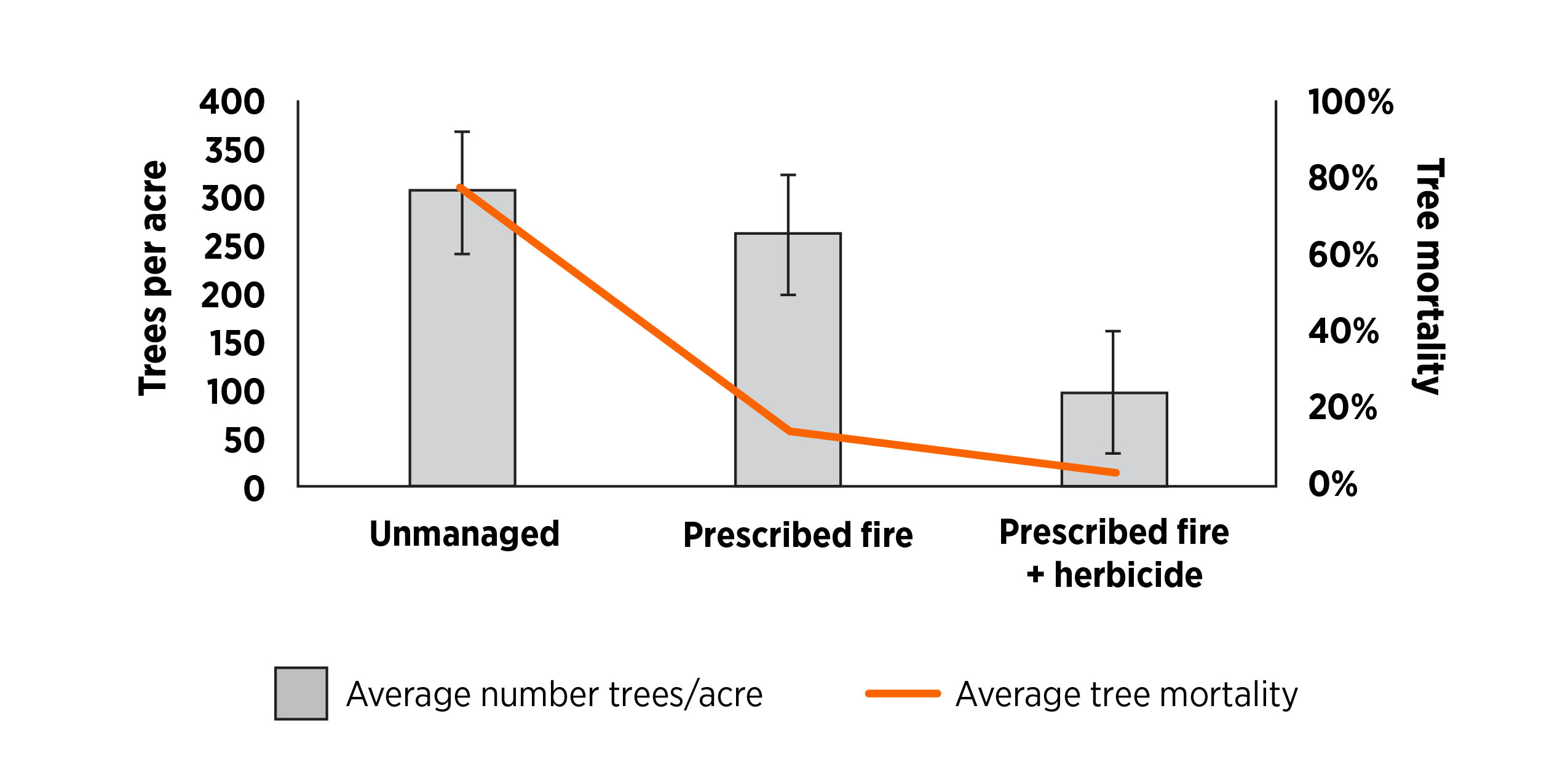 Figure 3. Tree Density, Mortality and Management - Overstory tree mortality and density in stands managed with prescribed fire + herbicide compared to an adjacent unmanaged forest. Tree density in average number of trees per acre was calculated following wildfire and includes both live trees and dead trees recently killed by wildfire. The removal of ladder fuels likely limited wildfire severity, demonstrating that prescribed fire may not stop a wildfire but can change its behavior, spread and severity.
Although many trees were top-killed by the wildfire, oak species like post oak and blackjack oak typically regenerate through stump sprouting. Many large mature oaks were top-killed, but they exhibited a high level of basal sprouting per tree. Oaks depend on disturbances like fire to stimulate dormant buds around the root collar and encourage asexual re-generation by sprouting. Allowing oaks to regenerate through sprouting will maintain the stand, which can benefit many wildlife species that use acorns.
It should also be noted that the area managed with pre-scribed fire only had a significant number of eastern redcedar in the midstory and overstory. The presence of eastern redcedar may increase the likelihood of crown fires and, in this case, increase overstory mortality. This area was burned eight times in the past 18 years, and prescribed fire killed all the smaller eastern redcedar and removed the lower limbs of the larger trees. These previous burns likely kept the surface fire from be-coming a crown fire. The removal of ladder fuels limited wild-fire severity, demonstrating that prescribed fire may not stop a wildfire but can change the behavior, spread and severity.
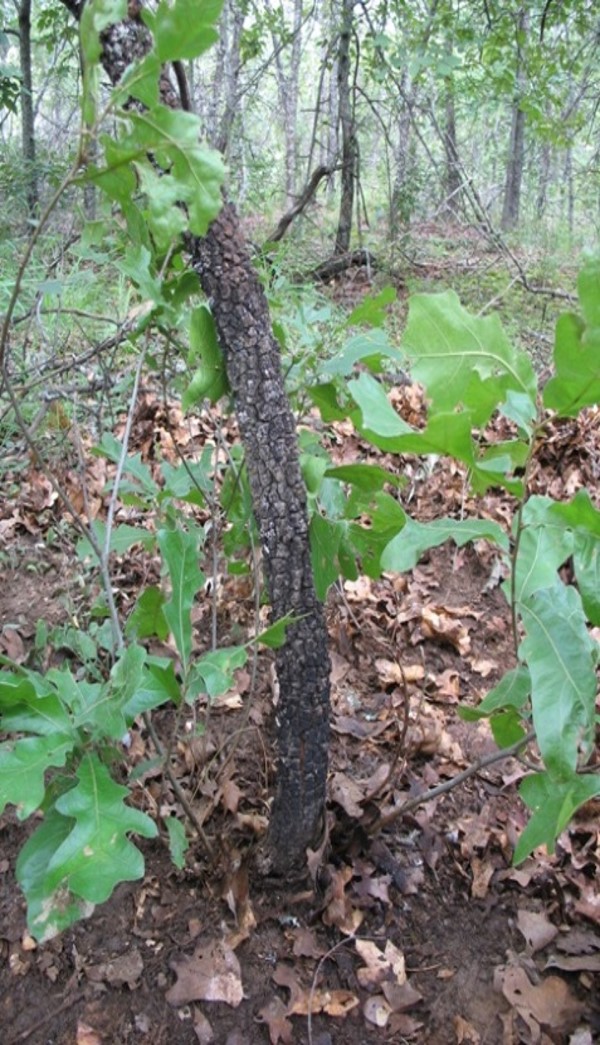 Figure 4. Overstory and midstory oaks resprouting after being top-killed by wildfire. Although many trees were top-killed by the wildfire, oak species like post oak and blackjack oak often regenerate through stump sprouting. Many large mature oaks were top-killed, but exhibited a high level of basal sprouting per tree. Small-diameter blackjack oak also exhibit stump sprouting following several years of prescribed fire.
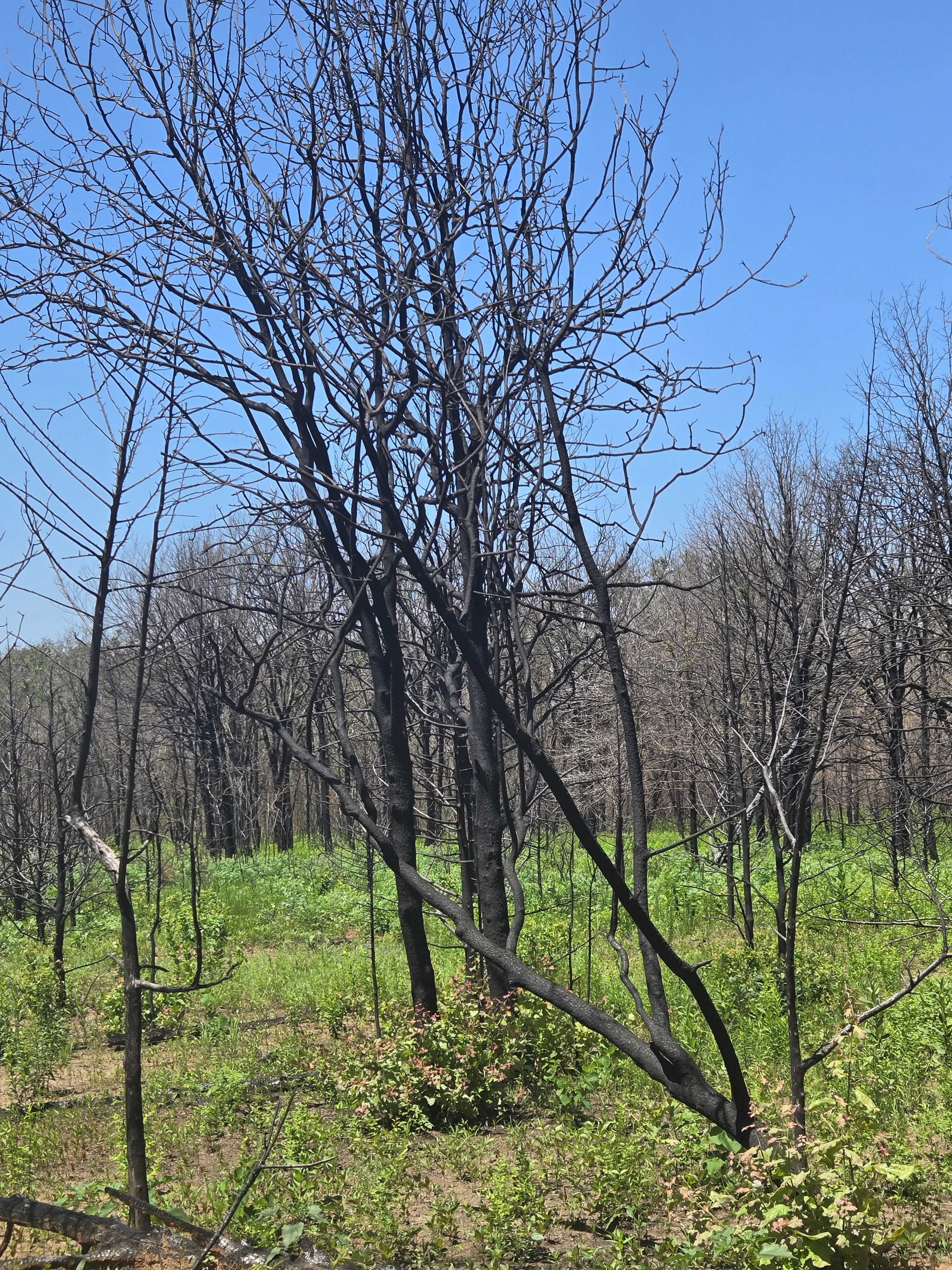 Figure 5. Overstory and midstory oaks resprouting after being top-killed by wildfire.
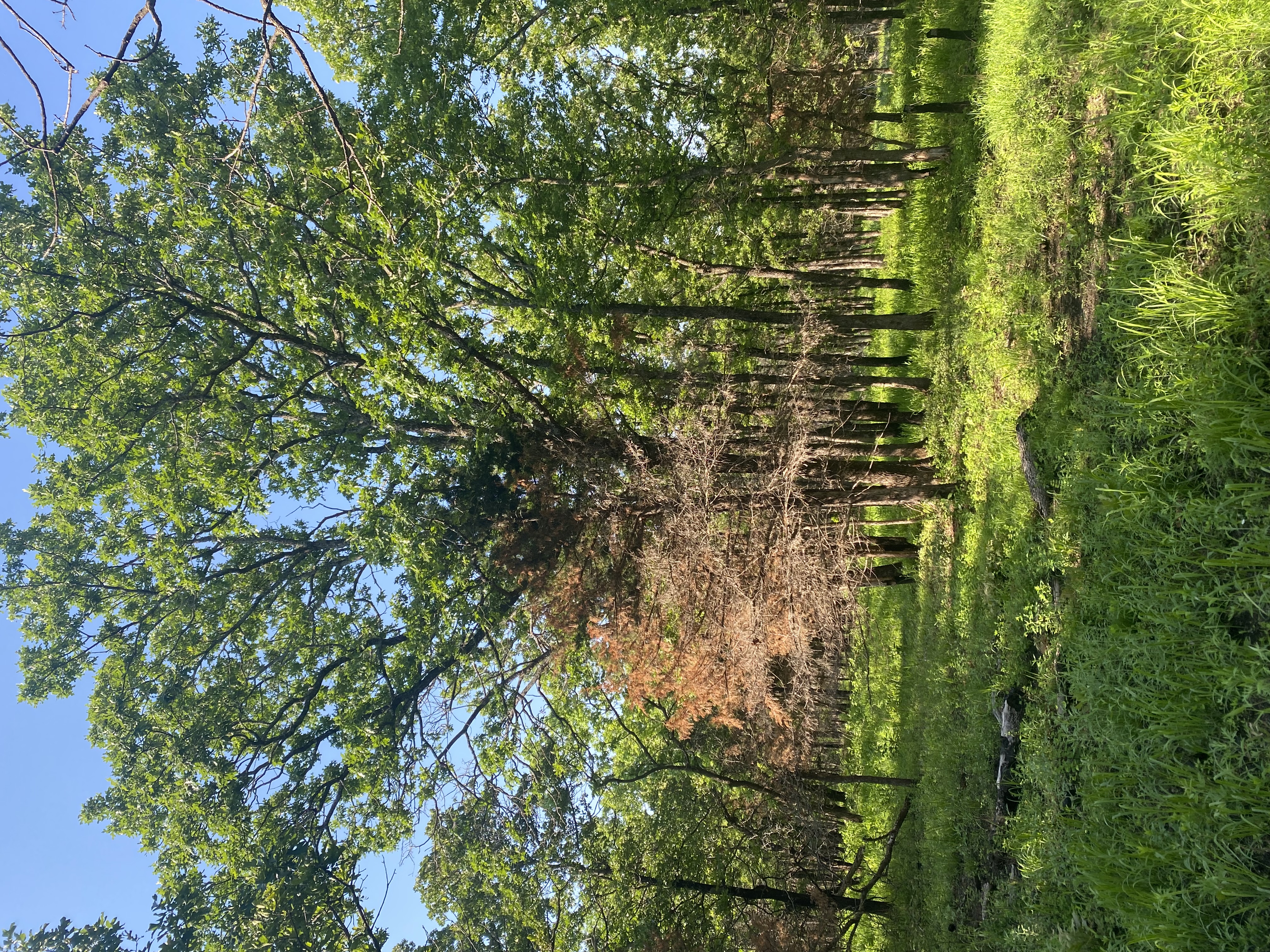 Figure 6. Previous fire treatments did not completely remove eastern redcedar, but they likely reduced negative wildfire impacts. Here, an eastern redcedar was partially top-killed by the fire, but the surrounding oaks were largely unaffected.
Wildfire Effects on Understory Vegetation
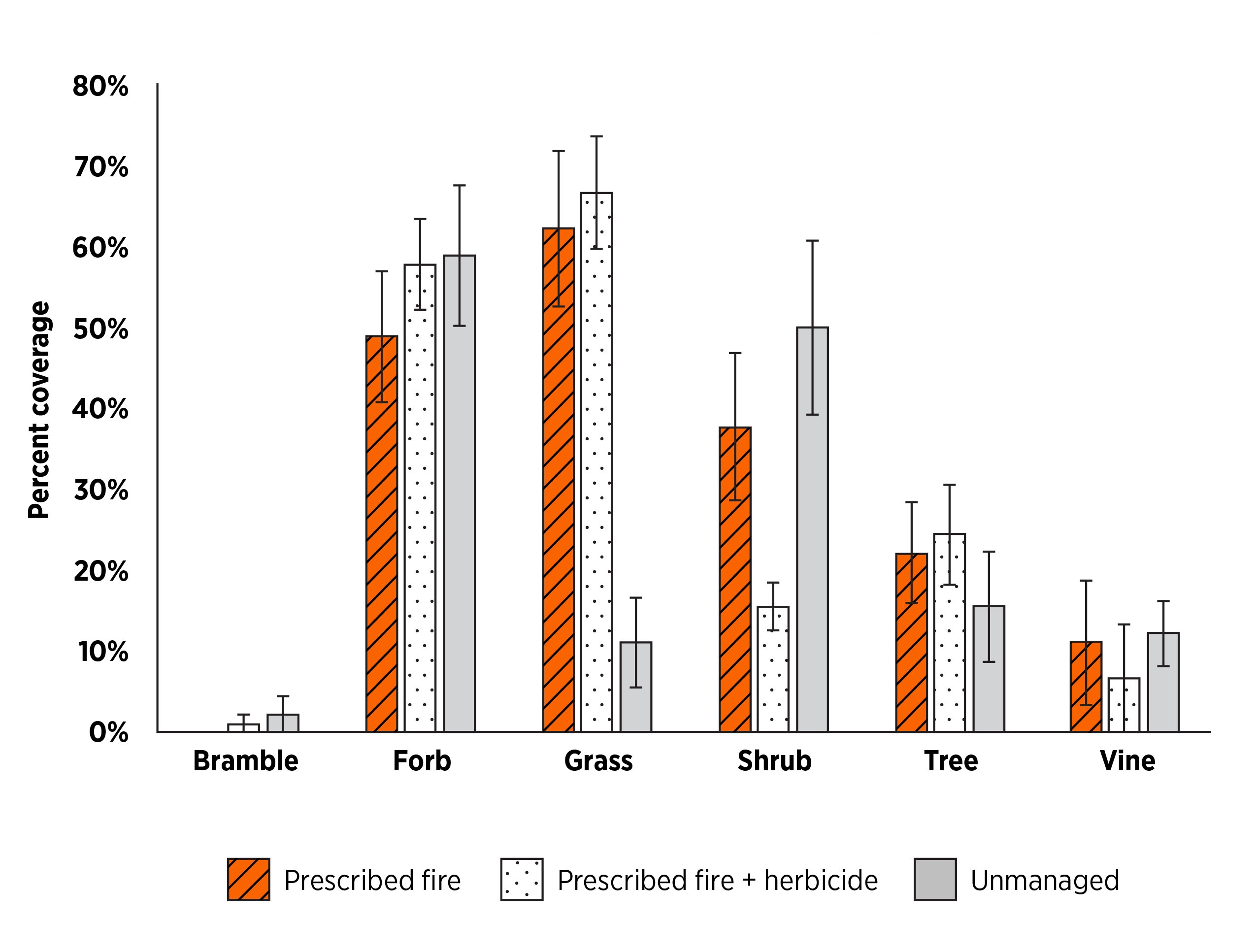 Figure 7. Lake Carl Blackwell Understory Vegetation Three Month After Wildfire - Before the wildfire, understory vegetation varied with the amount of sunlight reaching the ground following prior management. The stands were more similar after the wildfire, but there were differences in grass and shrub coverage based on previous management.
Prior to the wildfire, understory vegetation differed primarily in response to sunlight reaching the ground following prior management. The stand managed with fire and herbicide had a robust understory dominated by herbaceous grasses and forbs, because of open canopy conditions and frequent fire. Burning alone also promoted understory plants, but understory sunlight limited herbaceous grass and forb production. The unmanaged forest stand had a limited understory with a few shade-tolerant species such as greenbriar (Smilax spp.). Common tallgrass prairie livestock forage plants like big bluestem (Andropogon gerardii), little bluestem (Schizachyrium scoparium), Indiangrass (Sorghastrum nutans) and switchgrass (Panicum virgatum) were prevalent in the Fire and Prescribed Fire + Herbicide treatments prior to wildfire. They also grew back quickly after the wildfire, increasing the value of these areas for cattle grazing. The unmanaged stand had less than 15% grass cover even after wildfire, making it unsuitable for livestock until additional grass cover becomes established.
Understory vegetation responded quickly in all stands after wildfire. Within three months of the wildfire, all stands had over 90% coverage of understory plants. In previously managed stands, vegetation response was dominated by perennial species present before the wildfire. Conversely, much of the understory vegetation in the unmanaged stand was dominated by annual species such as copperleaf (Acalypha spp.). Grass coverage was lower in the unmanaged stands than in previously managed stands, as many perennial grass species were absent before the wildfire. These perennial grasses will establish over time from the seedbank and rhizomes if the canopy remains open enough to allow for increased understory sunlight. There was greater shrub coverage in the unmanaged stand compared to the prescribed fire + herbicide treatment. The most common shrub was buckbrush or coralberry in the unmanaged stand, which had previously persisted in limited sunlight and was resprouting after the wildfire. Shrubs were limited in the Fire + Herbicide stand, as firequent fire tends to reduce woody plant coverage. Future management of unmanaged forests after wildfire will determine whether the current understory community persists or changes.
Wildfire Effects on Wildlife
Wildfire can have negative, neutral and positive effects on wildlife. The effects vary widely based on factors such as wildfire severity, pre-fire forest conditions and the focal species of wildlife. For example, a low-intensity fire in a closed-canopy forest without eastern redcedar encroachment may have limited effects on various wildlife species. Conversely, a stand dominated by eastern redcedar that experiences a high-intensity wildfire will provide different resources after the eastern redcedar and many overstory trees are killed. It is important to remember that long-term benefits can follow a wildfire even when negative short-term impacts occur.
Overstory mortality following wildfire has mixed effects on various wildlife species. Species that consume acorns, such as fox squirrel (Sciurus niger), blue jay (Cyanocitta cristata), white-tailed deer (Odocoileus virginianus) and wild turkey (Meleagris gallopavo), will have decreased mast availability. Acorns are readily used by numerous wildlife species, but they are only available for a short period, and their availability is not a limiting factor for most species, including deer and turkeys. Conversely, standing dead trees (i.e., snags) will provide excellent foraging conditions for red-headed woodpeckers (Melanerpes erythrocephalus). Over time, other cavity-nesting birds will benefit from snags for nesting locations. Wild turkey may be negatively influenced if roost trees are killed across a large area. However, brooding cover for turkey is often excellent during May–August in areas where wildfires occurred in February or March. Shrubland obligate species such as northern bobwhite (Colinus virginianus) generally benefit from stand-replacing wildfire, as the resulting understory plant community provides better conditions than those in a closed-canopy forest.
Many landowners are interested in the effects of wildfire on deer because of their hunting interests or hunting lease revenue. Deer benefit from increased understory forage availability during the spring and summer when bucks are growing antlers and does are producing milk for fawns. wildfire can temporarily reduce cover within these areas and cause deer to use other locations until understory vegetation is sufficiently tall to provide visual obstruction.
Following the March 14, 2025, Stillwater wildfire, we placed three trail cameras within the previously managed with fire, previously managed with fire and herbicide and unmanaged forest stands at Lake Carl Blackwell during June and July. Deer detections varied widely between individual cameras but did not differ between the previously managed and unmanaged forest stands during this period. Deer will readily use areas impacted by wildfire as soon as high-quality forages germinate and resprout after the fire. These burned areas provide excellent forage resources that are not present in closed-canopy forest stands. Continued attraction to these areas may be promoted by considering additional management to maintain understory forage production.
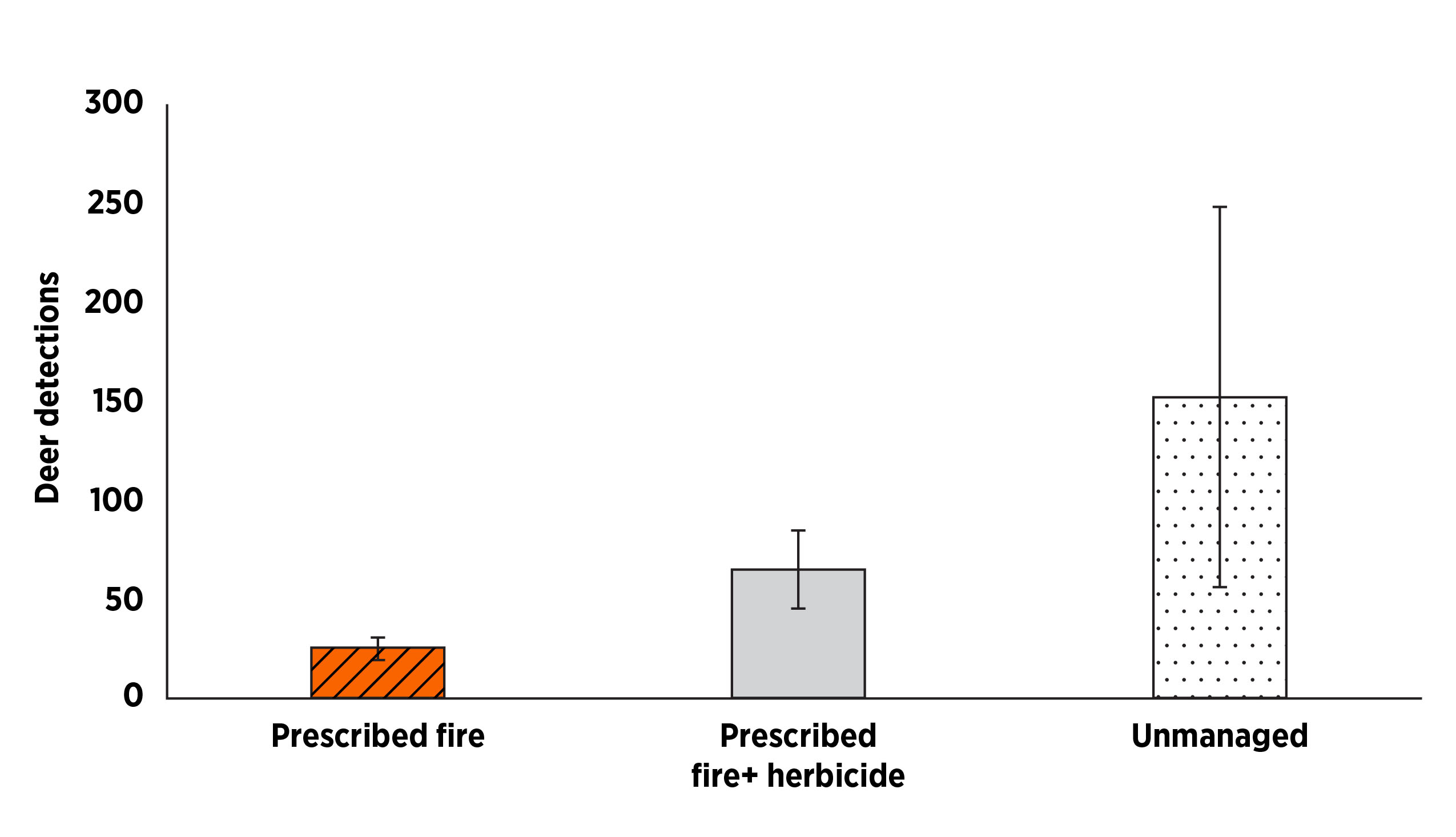 Figure 8. Deer Detection in Areas With Different Management After Wildfire - Following the March 14, 2025, Stillwater wildfires, we placed trail cameras within the previously managed and unmanaged forest stands at Lake Carl Blackwell during June and July. Deer detections varied widely between individual cameras but did not differ between the previously managed and unmanaged forest stands during this period.
Management of Cross Timbers Forest After Wildfire
Managers should first consider their goals and objectives before considering management actions following a wildfire. In addition to managing trees to reduce wildfire risk to structures, managers need to decide on their wildlife, livestock and even aesthetic objectives, as these will strongly dictate future management.
Once goals and objectives have been set, managers should assess the effects of wildfire on the overstory. Estimating the percentage of trees that were top-killed is an important step, and this often varies by tree species. Assessment should occur over several years following a wildfire, as delayed mortality of trees that initially leaf-out is possible. Oaks are relatively fire-tolerant, but in many cases, mortality may be less severe than expected. Do not consider a tree lost immediately following a wildfire, as it is worthwhile to wait one to two years be-fore making this determination. Recovery following a wildfire involves time since the fire and the amount of rainfall. This is especially true when forests have been previously managed with prescribed fire.
Fire is an important disturbance in Cross Timbers forests, and our case study demonstrates that prescribed fire can mitigate future adverse wildfire effects. When wildfire opens the canopy, it can create wildlife forage and cover, as well as livestock grazing opportunities. These effects will be short-lived without continued fire treatments. In previously unmanaged stands, it likely will take 2–3 years for fuel accumulation to reach conditions that support prescribed fire. In contrast, perennial native grass fuels in previously managed stands will respond more quickly. We recommend conducting burns soon after fuel conditions are sufficient to support prescribed fire, as undesirable species such as eastern redcedar often respond favorably to increased understory light conditions. When they are not already in place, managers should install firebreaks around their forest stands to allow for future prescribed fire. Establishing permanent bare-ground firebreaks will facilitate future management to promote improved conditions for a variety of wildlife species and livestock grazing while reducing the negative effects of future wildfires.
Snags will be a primary consideration when implementing prescribed fire following an intense wildfire. Snags can ignite and produce embers that fall outside of the burn unit, creating spot fires. Depending on the density of snags, it may be worthwhile to fell those close to firebreaks with a chainsaw before implementing prescribed fire. Use extreme caution when felling snags, as the rotting wood can make felling difficult. Snags on the downwind side of prescribed burn units should be given special attention.
It is relatively common for landowners to use heavy equipment following a wildfire. Although bulldozers and excavators have their place in various land management practices, we do not recommend their use for clearing Cross Timbers forest stands after wildfire. Even after intense fire, there are usually enough overstory trees remaining to continue managing the stand. If there is total overstory mortality, post oak and blackjack oak will regenerate through root and stump sprouting. Clearing the stand with heavy equipment may damage sprouting trees, thereby reducing forest regeneration while creating undesirable disturbances, ruts and soil compaction. Soil disturbance caused by heavy equipment may also promote the establishment of invasive plant species, such as sericea lespedeza (Lespedeza cuneata), Johnsongrass (Sorghum halepense), and old-world bluestem (Bothriochloa spp.). Given the costs associated with such equipment, most landowners benefit from assessing wildfire effects and using prescribed fire to manage forest stands.
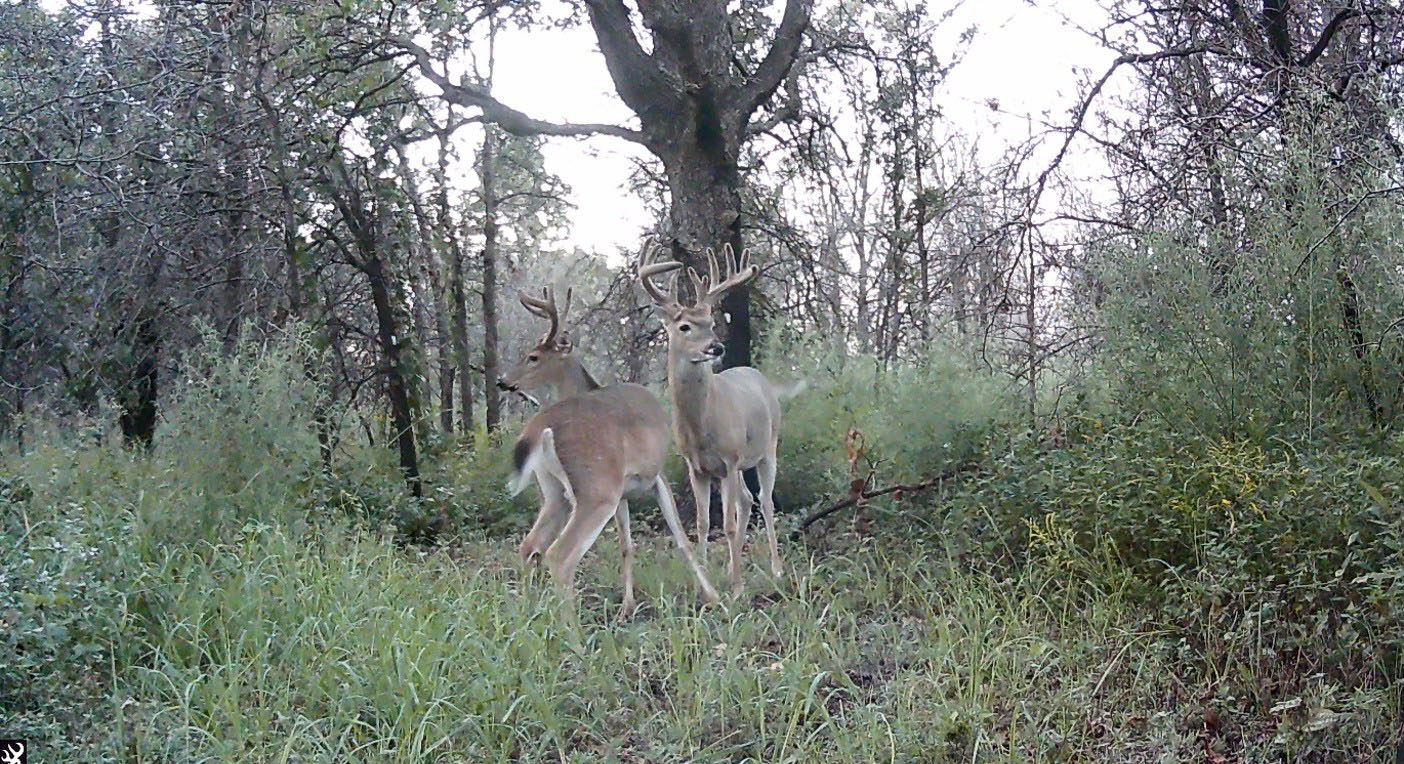 Figure 9. Deer readily use recently burned areas during the growing season, as these areas provide high-quality forage needed for bucks growing antlers and does producing milk for fawns.
Conclusions
Wildfires are common disturbances to Cross Timbers forests that can have mixed effects on forest health, wildlife and landowner objectives. Reducing ladder fuels through firequent prescribed fire can help limit overstory mortality during wildfire. Understory vegetation, which provides resources for wildlife and grazing, rebounds quickly after wildfire in stands with previous management. Active forest management can help reduce negative wildfire effects and be used to improve the stand after a wildfire occurs.