

Preventing Perinatal Foal Loss: Understanding Recessive Genetic Disorders in Horses
Overview
The United States has a strong and multifaceted horse industry, including stock, performance, ranch, draft and breeding operations across many breeds. While these horses serve different purposes, inherited genetic diseases occur across pedigrees and are passed from parent to offspring in predictable ways. Some of the most serious of these conditions are lethal, meaning affected foals do not survive.
Several lethal genetic disorders in horses are inherited as autosomal recessive traits. Horses carrying one copy of the gene often appear completely healthy. Problems arise when two carriers are bred together, leading to a foal that dies shortly after birth or before delivery. These losses are emotionally difficult and financially costly; however, in many cases, they can be prevented through genetic testing and informed breeding decisions.
This article introduces the inheritance pattern of lethal recessive genetic disorders using four representative conditions: Glycogen Branching Enzyme Deficiency (GBED), Overo Lethal White Syndrome (OLWS), Junctional Epidermolysis Bullosa (JEB) and Lavender Foal Syndrome (LFS). Although these diseases differ in clinical presentation and the populations in which they occur, they share the same mode of inheritance. This is not a comprehensive list of all inherited or lethal equine diseases; rather, these examples are used to illustrate how recessive conditions are passed from parent to offspring and why genetic testing is critical in breeding decisions. In each case, affected foals do not survive, and humane euthanasia is typically required, underscoring the importance of informed mating strategies.
How Lethal Recessive Genetic Diseases Are Inherited
Lethal recessive genetic diseases occur when a foal inherits two copies of a defective gene (n / n) — one from each parent. Horses with only one copy (N / n) are called carriers. Carriers appear healthy, show no signs of disease and usually perform normally throughout their lives.
When two carrier horses are bred, the outcomes are predictable (Figure 1):
- 25% chance the foal is affected (n / n)
- 50% chance the foal is a carrier (N / n)
- 25% chance the foal is clear (N / N)
Because carriers look normal, these diseases can remain hidden in a herd for many generations. For the diseases discussed in this factsheet, affected foals do not survive long enough to reproduce, so the defective gene can potentially continue to be inherited through carrier animals unless breeders use genetic testing to guide mating decisions.
Genetic Testing and Interpreting Results
Because carriers show no visible signs, genetic testing is the only reliable way to identify horses that carry lethal recessive genes. Testing is usually done using mane or tail hair with intact roots. These samples are easy to collect, do not require refrigeration and can be submitted at any time of year. Most equine genetic testing laboratories offer testing panels that screen for multiple conditions at once1.
Test results are reported using letter designations specific to each mutation. While the abbreviations differ among diseases, the interpretation follows the same pattern. Results are generally reported as normal/normal (N/N), normal/mutation (carrier) or mutation/mutation (affected). For example, results from GBED testing may be reported as N/N (not affected), N/G (carrier) or G/G (affected).
Regardless of the specific letters used, horses with two normal copies are clear, horses with one normal and one mutation copy are carriers and horses with two mutation copies are affected. Understanding how results are reported allows breeders to make informed mating decisions and avoid pairing two carrier animals.
Carrier horses do not necessarily need to be removed from breeding programs; however, they should only be bred to animals that test negative for the same condition.
Examples of Lethal Recessive Genetic Disorders in Horses
The conditions described below are examples of lethal autosomal recessive disorders identified in horses. While the clinical presentation varies among diseases, each demonstrates how carrier-to-carrier matings can result in affected foals.
Glycogen Branching Enzyme Deficiency (GBED)
Glycogen Branching Enzyme Deficiency (GBED) is most often found in Quarter Horses and related stock horse breeds2. The disease affects the horse’s ability to store and use glycogen, a key energy source.
Affected foals may be aborted late in pregnancy, stillborn or born weak and unable to stand. Common signs include muscle weakness, low blood sugar and heart or breathing failure. Some foals appear normal at birth but decline rapidly within hours or days. Because these signs are vague, GBED is sometimes mistaken for infection or general failure to thrive. In cases of late-term abortion, genetic testing of the foal is recommended to determine whether GBED was the cause and to inform future mating decisions.
There is no treatment for GBED. All foals are euthanized within hours of birth. Genetic testing and responsible breeding of horses is the only way to prevent affected foals.
Overo Lethal White Syndrome (OLWS)
Overo Lethal White Syndrome (OLWS) is associated with the frame overo pattern and has been identified in multiple breeds3. The condition is most discussed in horses registered with the American Paint Horse Association (APHA), but the frame overo mutation is not limited to a single registry4. Affected foals are often born with mostly white coats and blue eyes, but the most serious defect is internal.
These foals are born without a fully functional large intestine and cannot defecate. A key identifying feature of OLWS is that affected foals are typically born without a rectum, making the condition easy to recognize shortly after birth. Signs of severe colic develop shortly after birth, and the condition is always fatal. Humane euthanasia is typically required within the first day of life.
Carrier horses may show little or no visible spotting and otherwise appear healthy. Coat color alone cannot identify carriers, making genetic testing essential for breeding horses that may carry the frame overo mutation.
Junctional Epidermolysis Bullosa (JEB)
Junctional Epidermolysis Bullosa (JEB) is most seen in Belgian Draft horses and American Saddlebreds, as well as related breeds. Affected foals are usually born alive but quickly develop severe skin blistering and open wounds5.
Because the skin layers do not properly attach, even normal movement can cause painful injuries. Lesions may also affect the mouth and hooves, make nursing and standing difficult. Due to the severity of the condition, affected foals are typically euthanized shortly after birth.
JEB is a clear example of how breeding two healthy-looking carriers can lead to devastating outcomes.
Lavender Foal Syndrome (LFS)
Lavender Foal Syndrome (LFS) affects Arabian horses. Affected foals may have a pale or “lavender” coat color, although coat color alone is not always diagnostic6.
Foals with LFS have severe neurologic problems and are unable to stand or nurse. Abnormal movements, muscle stiffness, and seizures are common. The condition does not improve and is always fatal, requiring humane euthanasia shortly after birth.
Why Genetic Testing Matters
The loss of a foal represents a significant emotional and financial impact. Expenses associated with breeding, mare care, veterinary services, lost genetic potential and lost sale income can be substantial. Many producers only become aware of these genetic diseases after experiencing a preventable loss.
Genetic testing prior to an animal entering the breeding herd allows producers to:
- Prevent the birth of affected foals
- Reduce economic and emotional losses
- Maintain valuable genetics responsibly
- Improve overall herd health and sustainability
Summary
Several inherited genetic disorders in horses follow an autosomal recessive pattern of inheritance. In these cases, carrier animals appear healthy but can produce affected foals when bred together. The four conditions discussed here, GBED, OLWS, JEB and LFS, serve as representative examples of how lethal recessive diseases are inherited. Genetic testing prior to breeding is the only reliable way to prevent affected foals and protect the long-term health, welfare and sustainability of breeding programs.
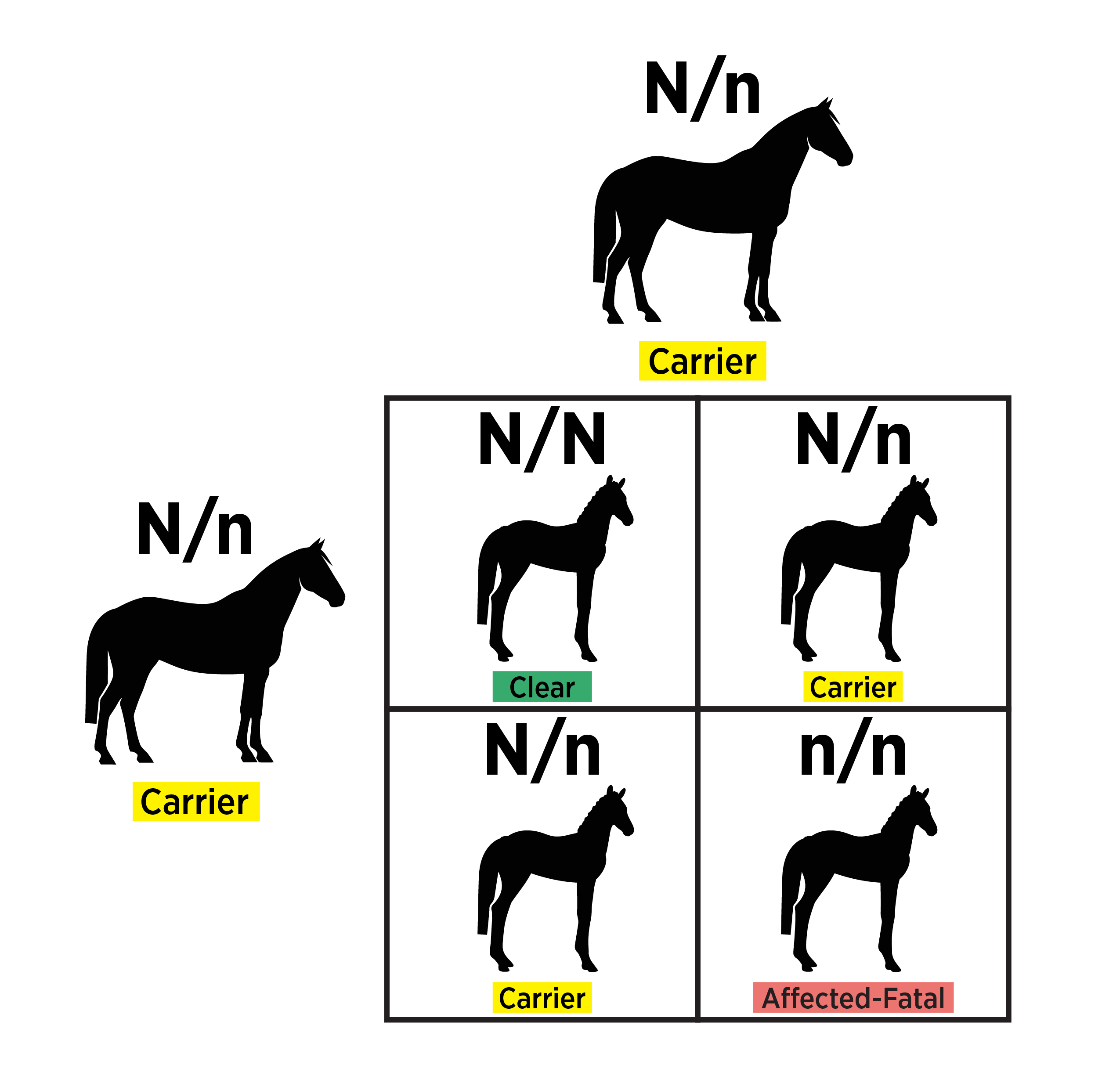 Figure 1. Lethal recessive inheritance pattern.
References
Veterinary Genetics Laboratory, “Find Horse DNA Tests,” University of California, Davis, accessed February 25, 2026, https://vgl.ucdavis.edu/dna-tests/horse.
Young, Amy, Rebecca Bellone, and Carrie Finno. “Glycogen Branching Enzyme Deficiency (GBED).” School of Veterinary Medicine, University of California, Davis, December 30, 2019. Accessed February 25, 2026. https://ceh.vetmed.ucdavis.edu/health-topics/glycogen-branching-enzyme-deficiency-gbed.
Keppers, HA and MG Gonda. 2025. Lethal white foal syndrome: a review. Canadian Journal of Animal Science. 105(19): 1-8
Veterinary Genetics Laboratory, “Lethal White Overo (LWO),” University of California, Davis, accessed February 25, 2026, https://vgl.ucdavis.edu/test/lethal-white-overo
Veterinary Genetics Laboratory. “Junctional Epidermolysis Bullosa (JEB1) in Belgians.” University of California, Davis. Accessed February 25, 2026. https://vgl.ucdavis.edu/test/jeb-belgian.
Amy Young, Rebecca Bellone, and Carrie Finno, “Lavender Foal Syndrome (LFS),” School of Veterinary Medicine, University of California, Davis, June 9, 2020, accessed February 25, 2026, https://ceh.vetmed.ucdavis.edu/health-topics/lavender-foal-syndrome-lfs.