

Parliamentary Procedure for Youth Series #1: What is it and Who does it Involve?
Introduction
Have you ever been in a meeting where everyone talked at once, no decisions were made or things just felt confusing? That’s where parliamentary procedure can help. Parliamentary procedure is a set of rules to help organizations and groups—perhaps like a 4-H club, FFA chapter or school club—run meetings in a fair, organized and respectful way. Like instructions to playing a board game, these procedures are rules for carrying out formal meetings. Parliamentary procedure may be used as a guideline to help with the flow and order of a meeting, and the extent of procedures used may be at the discretion of the organization or club. When everyone knows what to expect, meetings go faster, decisions are clearer and every voice can be heard. Join Ashley and Samuel as they discover what parliamentary procedure looks like, how it can help them add structure to their meetings and what roles they may take on.
 Figure 1. Ashley and Samuel, members of the Little Dreamers Club.
What does Parliamentary Procedure Look Like?
Ashley and Samuel do not know anything about parliamentary procedure, but they think it could be helpful to use in their Little Dreamers club meetings. The last meeting was so chaotic! Club members were talking over each other, and no one had any idea what business was being discussed. So, they decide to do some research.
They have heard of this guy named Robert and decide to investigate further. Upon finding Robert’s Rules of Order, they discover rules and guiding text that explain how to conduct an orderly meeting (UMass Extension, n.d.). They learn that these rules provide formal meeting structure and opportunities for personal growth, including organization, equal opportunities for everyone to share their thoughts and ideas, clear and fair decision-making, leadership-building and communication skill-building (Bruynis et al., 2015). They conclude that using parliamentary procedure allows an organization to maintain order throughout the meeting, focus discussion on one topic or idea at a time, hear from each member if they choose to speak and upholds the majority vote while maintaining respect for everyone in the room. The pair of friends decide that this is exactly what they need for their own Little Dreamers club! But where do they start?
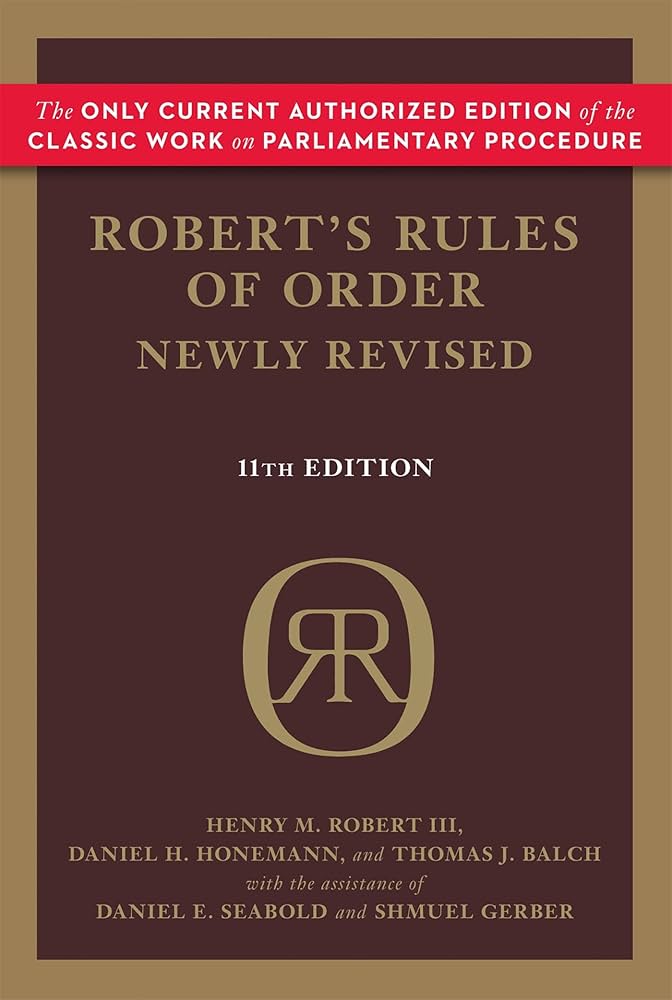 Figure 2. Robert’s Rule of Order, a book on parliamentary procedure.
What are the Key Roles?
Ashley and Samuel decide they should first learn about what each person does in a formal meeting, so they can help the rest of their friends in the Little Dreamers club figure out what to do.
The Chairperson
As president of the club, Ashley is very intrigued with the role of the chairperson. She learns that the chairperson – usually the president of the organization or club – presides over the meeting. They lead the meeting while holding the gavel and ensure everyone follows the rules. A critical part of their job is to maintain order.
Ashley thinks about her own club’s meetings, where people often get rowdy, talking over each other. She figures that she could use her role as chairperson to regain the attention in the room if this happens again. Eager for more information, Ashley reads on.
As the leader of the meetings, the chairperson calls on individuals to speak, guides discussion, makes rulings – that is, whether a motion passes or fails – and announces the result of the vote. Ashley is surprised to learn an important note to remember here – the chairperson does not participate in debates and/or discussion, as they are the person who calls on others to speak. Additionally, they do not directly vote but instead may be the deciding vote if there is a tie.
Ashley can’t wait to share this new information with the rest of her club and tells Samuel that he should look for information about the secretary.
The Secretary
As the secretary of Little Dreamers, Samuel is immediately fascinated in this role. He discovers the main role of the secretary is to keep an accurate record of each meeting by keeping minutes, or notes about what happens throughout the meeting. Samuel also learns that he should take note of who moves and seconds motions, the number of debates for each person on each motion (which will also show him the extent of discussion for each topic item), the result of a vote (whether it passes or fails), and any actions that occur or are planned to occur. That’s a lot to remember! But he presses on anyway, understanding that these actions help maintain the overall organization in a formal meeting setting and may assist the members of the group in case they get confused or off topic. Additionally, Samuel learns the secretary may (and should) participate in discussion and vote. They may also move or second a motion. In this way, they have the same role as the members. Wow! This is a big responsibility, Samuel realizes. He and Ashley wonder what the rest of their friends will do at a meeting, so they keep reading.
The Members
Ashley and Samuel find that the members make up the rest of the people in the meeting. This includes everyone in their club and may even include their friends’ parents, guests or other individuals attending the meeting. The members play an integral role in introducing, discussing and acting on business items. Members may move and second a motion to introduce a new topic or item. They then contribute to the discussion about a certain topic through their debates. Ashley and Samuel think of debating as persuading another friend to do something. In each debate, a member should tell everyone whether they are in favor of or against the proposed motion and why they have this opinion.
Ashley wonders how this would work exactly. Samuel has an idea! This would be exactly like the discussion during their last meeting, where they talked about purchasing seasonal coffee syrups. Several people supported this idea, but a few were against it. “Aha!” Ashley says. They will need to have a discussion at their next meeting to determine what their annual fundraiser will be, and practicing debates will be a great way to navigate this conversation. They see a couple reminders for practicing debate.
It’s important to remember while debating that the goal is to have an open conversation in which all opinions are equally shared and considered. They learn that they should try to avoid having heated arguments, as they will disrupt the order of the meeting and make it harder for others to arrive at a decision. Finally, all members should vote! This is very important as the members decide what the club or organization will do. The members play a very important part in following the organization’s goals and values. Ashley and Samuel have already learned so much and they feel that they are just at the tip of the iceberg! They can’t wait to share everything they learned with their friends at the next Little Dreamers meeting. Now that they know who the key players are in the game of parliamentary procedure, they wonder, what are the rules and steps to play? Be sure to join Ashley and Samuel as they learn more about parliamentary procedure in the next two fact sheets of this series!
Resources
Bruynis, K., Hoyt, J., & Malone, B. (2015). Parliamentary procedure for community organizations and boards. Ohioline: Ohio State University Extension. Retrieved September 24, 2025, from https://ohioline.osu.edu/factsheet/4H-11
Carter, D. (2008). Basic parliamentary procedure for 4-H clubs. Utah State University Weber Co. Extension. Retrieved September 24, 2025, from https://ucanr.edu/sites/default/fles/2020-09/334107.pdf
Kenkel, P. (2017). Parliamentary procedure quick reference guide to motions. OSU Extension. Retrieved October 1, 2025, from https://extension.okstate.edu/fact-sheets/parliamentary-procedure-quick-reference-guide-to-motions.html
National Association of Parliamentarians. (n.d.). What is NAP? https://www.parliamentarians.org/
Park County Colorado State University Extension. (n.d.). Parliamentary procedure for 4-H. Colorado State University Extension. Retrieved September 24, 2025, from https://park.extension.colostate.edu/parliamentary-procedure-for-4-h/
Robert III, H. M., Honemann, D. H., Balch, T. J., Seabold, D. E., & Gerber, S. (2011). Robert’s Rules of Order Newly Revised (11th ed.). Da Capo Press. https://www.votersopinion.com/wp-content/uploads/2021/10/Roberts-Rules-NR-11th.pdf
UMass Extension. (n.d.). 4-H Youth Development Parliamentary Procedure Guide. University of Massachusetts Amherst. Re-trieved September 24, 2025, from https://www.umass.edu/agriculture-food-environment/sites/ag.umass.edu/fles/pdf-doc-ppt/parliamentary_procfin.pdf