

Managing Stink Bugs in Oklahoma Cotton Production
Introduction
Green stink bug, southern green stink bug and brown stink bug can be very damaging pests of cotton. In mid- to late spring these insects begin to produce in winter wheat and will readily move through fight into other crops such as cotton, corn and soybean. In Oklahoma, these pests typically move into cotton in July through August. Stink bugs feed on developing bolls with their piercing-sucking mouthparts, which causes economic damage, yield loss and may allow for the introduction of boll rot pathogens.
Identification and Biology
Shield bugs due to their overall shape as adults. The three most common stink bug species in Oklahoma cotton acres are the green stink bug (Chinavia hilaris) (Figure 1), the southern green stink bug (Nezara viridula) (Figure 2) and the brown stink bug (Euschistus servus) (Figure 3). Green stink bugs are the largest in size out of the three. Green stink bugs can be differentiated from southern green stink bugs by the color of the bands on their antennae. Green stink bugs have black bands on their antennae and southern green stink bugs have red bands.
Stink bugs overwinter as adults in protected areas such as fence rows, grassy field borders, under stones or tree bark. They become active during the first warm days of spring and can be seen in orchards around the time of bloom through shuck-fall, as well as in winter wheat. Stink bugs will lay their eggs in clusters of 25-50 eggs on leaves (Figure 4). Eggs hatch into nymphs, which grow through five nymphal instars, molting between stages. After their final molt, they become winged adults, ready to feed and reproduce. Nymphs can vary in color and are wingless (Figure 5). Adults live for several months, overwintering in protected locations and emerging in the spring to lay eggs, beginning the cycle anew. Depending on the species and environmental conditions, the stink bug lifecycle can take anywhere between six to eight weeks. Adults can live for several months. The adult stage and the later nymphal stages are the most economically damaging to developing cotton bolls.

Figure 1. Adult green stink bug. The black bands on the antennae can differentiate the green stink bug from the southern green stink bug. Photo credit: G. Beniwal, OSU Entomology & Plant Pathology.
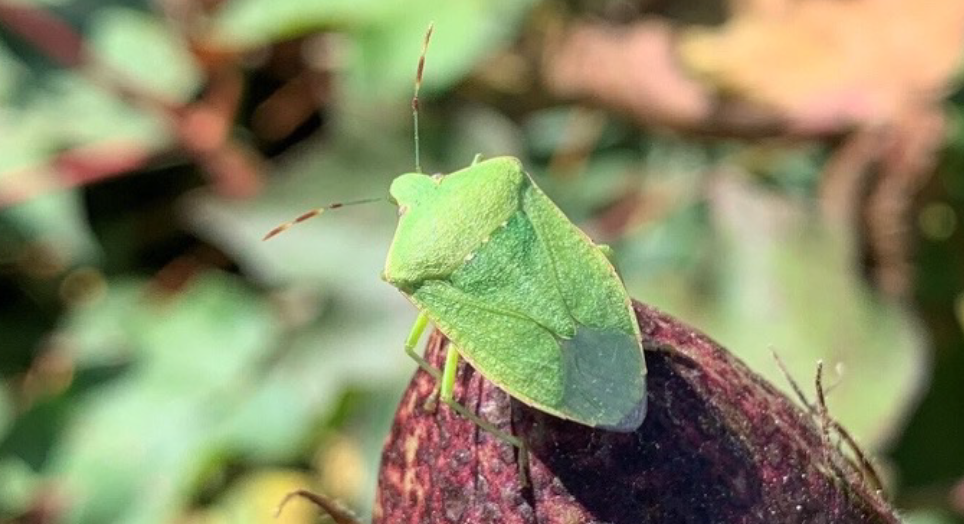 Figure 2. Adult southern green stink bug. The red bands on the antennae can differentiate the southern green stink bug from the green stink bug. Photo credit: James Russell, Americot-NexGen, Bugwood.org.
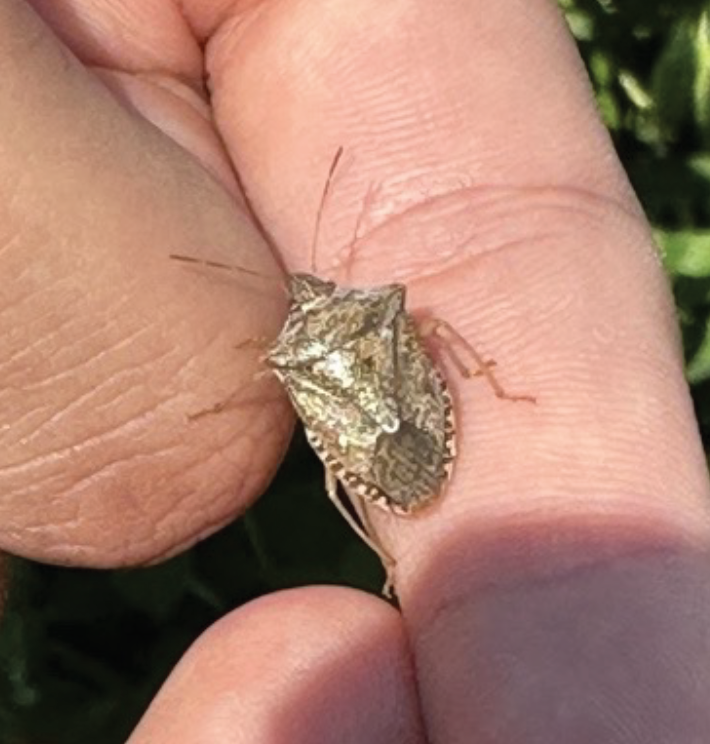 Figure 3. Adult brown stink bug. Photo credit: A.M. Faris, OSU Extension.
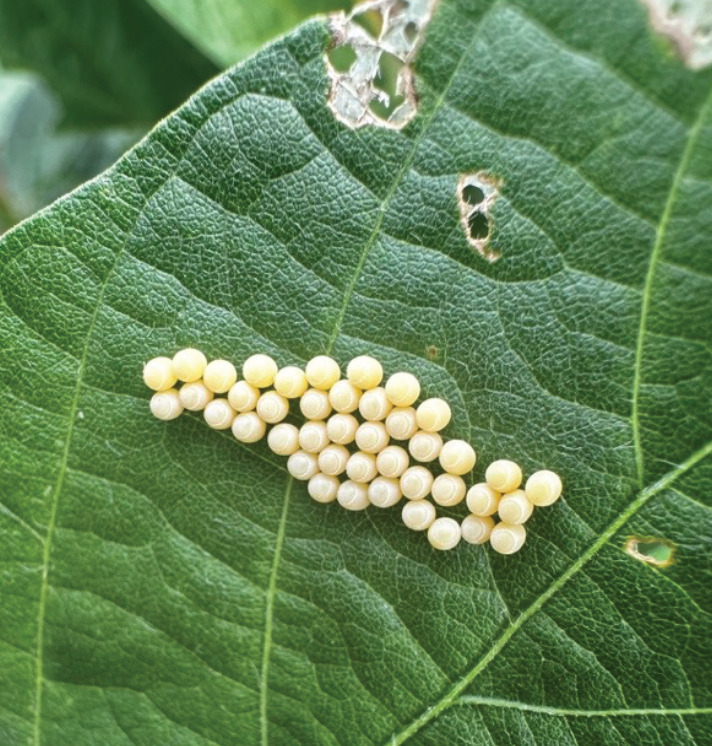 Figure 4. Stink bug eggs on a leaf. Photo credit: A.M. Faris, OSU Extension.
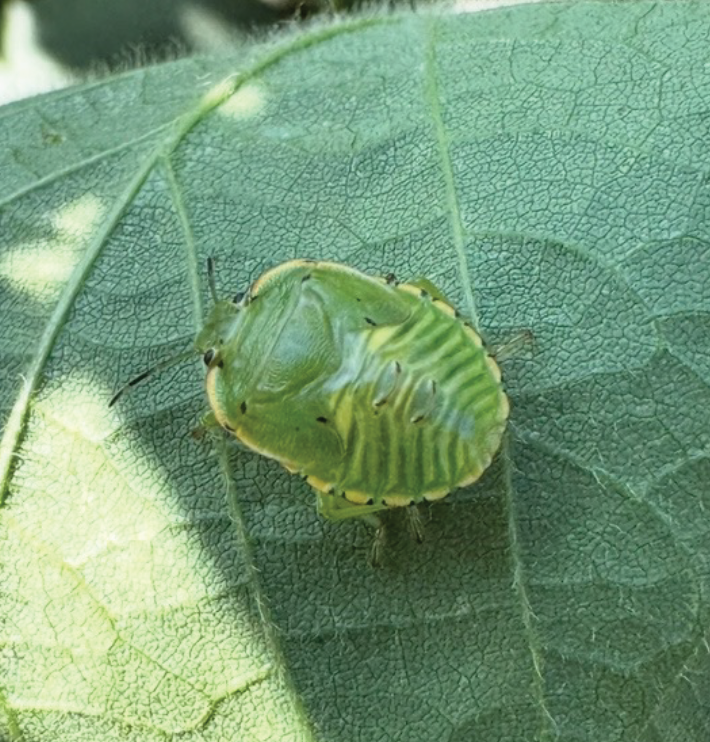 Figure 5. Stink bug nymph on a leaf. Stink bug nymphs can be variable in color from green to black, and can have bright color markings include yellow, orange, and pink. Photo credit: A.M. Faris, OSU Extension.
Crop Injury
Stink bugs damage cotton by piercing the bolls and feeding on the developing seeds. Stink bug infestations can cause sub-stantial economic losses through reduced yield, loss of fber quality and increased control costs. When stink bugs feed on bolls that are less than 10 days old, these young bolls usually shed. Stink bugs prefer to feed on cotton bolls that are 10-12 days old but will feed on bolls up to 25 days old. Externally, stink bugs can make lesions (Figure 6A), but these external injuries do not always correlate to internal damage. There may be several spots on the outside of a boll without internal feeding damage being present. Damage to the internal boll wall is a good indication that lint and seed are afected. Internal damage can consist of warts in the carpal wall of the boll (Figure 6B), stained lint (Figure 6C) and boll rot damaged locules (Figure 6D).
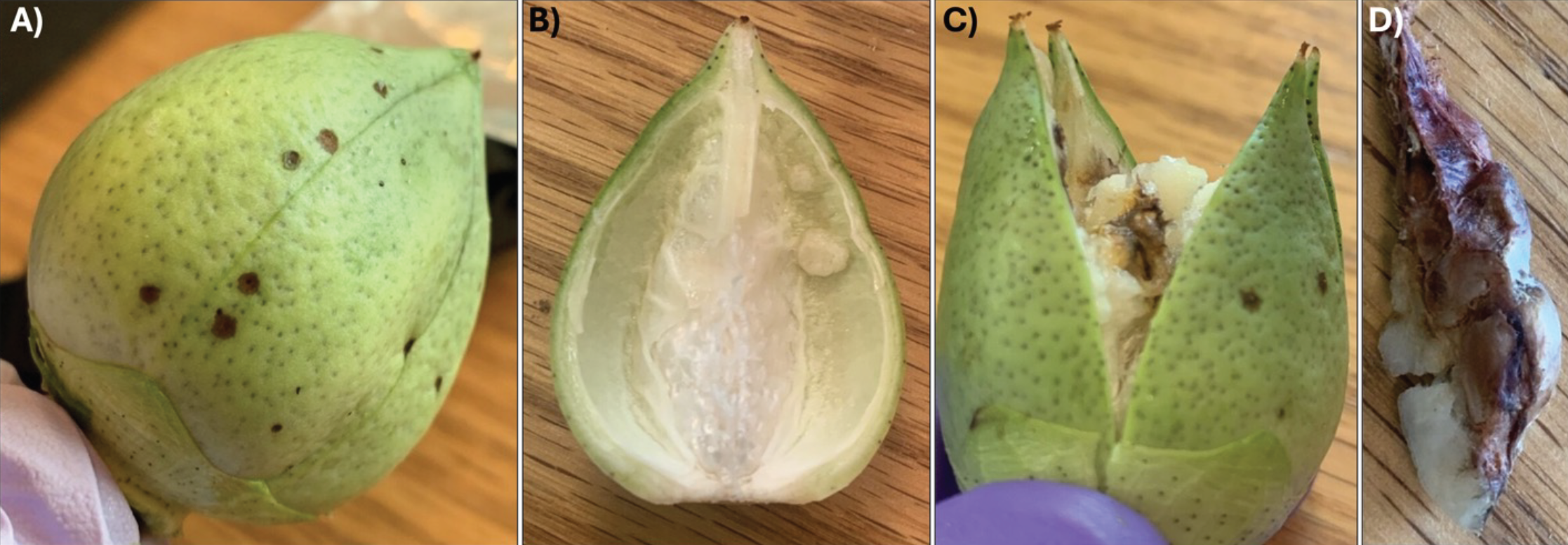 Figure 6. Stink bug damage to cotton bolls. A) External lesions. B) Warts on internal carpal wall. C) Damaged locule that will produce stained lint. D) Locule exhibiting symptoms of cotton boll rot. Photos: G. Beniwal, OSU Entomology & Plant Pathology.
Scouting Tips & Action Threshold
Stink bugs often go unnoticed until populations surpass thresholds. Unless actively scouting for internally damaged bolls, it is easy for economic damage to occur. Cotton is unable to compensate for stink bug damage like it can with thrips and square retention by putting on new blooms that will become bolls.
Stink bugs are difcult to scout, especially in tall, vigorous cotton where they blend in easily with vegetation. Adults tend to aggregate, and the distribution of stink bugs within a feld may be highly concentrated, particularly along feld margins. Growers and scouts can use any sampling technique such as visual inspection, drop cloth or sweep net for scouting. University of Georgia and Clemson University entomologists suggest that decisions to treat for stink bug infestations are best made based on the percentage of bolls with evidence of internal damage (warts or stained lint associated with feeding punctures) (Table 1). To use this technique:
- Remove 10-20 bolls, 1” in diameter, which is about the size of a quarter, from each of four parts of the field, avoiding field edges.
- Break open the bolls by hand or cut them with a knife. Look for internal warts on the boll walls and stained lint on the cotton locules.
- Check bolls with visible external lesions first to determine if the internal damage threshold has been met since bolls with external lesions are more likely to be internally damaged.
- Refer to Table 1 to determine if the boll injury threshold has been met for the week of bloom in the sampled cotton field.
| Week of bloom | Threshold (% of internal boil damage) |
|---|---|
| 1 | 50% |
| 2 | 30% |
| 3 | 10% |
| 4 | 10% |
| 5 | 10% |
| 6 | 20% |
| 7 | 30% |
| 8 | 50% |
Management
Cultural Control – Preventing stink bug population development:
- Plant early maturing varieties – outpace stink bug activity in cotton.
- Weed removal – reduce host plants to delay stink bug contamination in cotton fields.
- Residue management – remove crop residue after harvest to eliminate overwintering sites.
- There are currently no cotton varieties with known activity against stink bugs - however, ThryvOn varieties have shown positive results in laboratory-based studies. More research is needed to validate laboratory-based observations.
Natural Control – Preserving natural enemies, including predators and parasitoids, can help with stink bug management:
- Parasitic wasps – lay their own eggs in stink bugs. Parasitoid larvae hatch, feed inside the stink bug and emerge as adult parasitic wasps.
- Predatory insects and spiders – big-eyed bugs, minute pirate bugs, ground beetles, lacewing larvae and spiders will target stink bug egg and early nymphal stages.
Chemical Control – It is important to limit the use of broad-spectrum insecticides, since these products can reduce predator populations that provide natural pest control against other stink bugs and other arthropod pests. See Table 2 for chemical control suggestions for managing stink bugs in cotton.
- Brown stink bugs can be more difficult to manage than green stink bugs. Bifenthrin is the only pyrethroid recommended if brown stink bugs are present in significant numbers.
- The presence of other insect pests in the field such as whiteflies, corn earworm, spider mites and/or aphids should also be considered as some chemicals can fare these pests. If these pests are present, use insecticides that are least likely to fare these pests when spraying to control stink bugs.
| Trade Name | Active Ingredient | Activity | Targeted life stage | Mode of action |
|---|---|---|---|---|
| Birgade* | Bifenthrin | Contact | Nymphs & adults | Inhibition of ATP synthesis |
| Bidrin** | Fenpyroximate | Contact | All life stages | Mitochondril electron transport inhibititor |
| Endigo | Lambda-cyhalothrin & thiamethoxam | Contact & Translaminor | Eggs & nymphs | Growth regulator |
| Elevest | Bifenthrin & chlorantraniliprole | Contact | Nymphs & adults | Alteration of sodium channels |
| Orthene | Acephate 90, Acephate 97 | Contact & ingestion systemic | Nymphs & adults | Inhibition of acetylcholinesterase (AChE) |
| Vydate*** | Oxamyl | Contact & systemic | Nymphs & adults | Inhibition of acetylcholinesterase (AChE) |
* Bifenthrin is the only pyrethroid recommended if brown stink bugs are present in significant numbers.
** Check label for bidrin REI and follow label guidelines.
*** There are stink bug populations with documented resistance to oxamyl.
Insecticide labels change frequently and generic products may differ from the original products in their formulation, target crop, target pests, labeled rates and restrictions for use. Therefore, always read and follow the label directions to ensure target crop and pest are listed, the correct rates are being selected and all restrictions will be met before use.