

Junctional Epidermolysis Bullosa (JEB): Understanding and Preventing a Deadly Disease in Foals
Overview
Junctional Epidermolysis Bullosa (JEB) is a lethal inherited genetic disorder that affects newborn foals. It is often called red foot disease or hairless foal syndrome. The term “epidermolysis” means loosening of the skin, and “bullosa” means blister.
The disease causes severe blistering and skin loss because the layers of the skin fail to bond properly. Affected foals are usually born alive but develop open wounds and infections within hours or days after birth. Sadly, there is no cure, and affected foals rarely survive.
Of the approximately nine million horses in the United States, only an estimated 3–4% belong to the breeds most commonly impacted by Junctional Epidermolysis Bullosa. This highlights the limited population-level scope of the disease, while still under-scoring its devastating consequences within affected breeding populations.
JEB is most common in American Belgian Draft horses (about 12% of the population carries the gene) and American Sad-dlebreds (about 4% are carriers). Estimated carrier frequencies reported by breed organizations and diagnostic laboratories suggest that JEB carrier prevalence is higher in American Belgian Draft horses than in American Saddlebreds; however, these estimates can fluctuate depending on geographic location, breeding population and testing practices. It has also been identified in related breeds such as the American Cream Draft, Breton Draft and Comtois. While the phenotypic outcome of the gene is the same across breeds, specific breed mutations are genetically distinct.
- The form found in Belgians is known as JEB1.
- The form found in Saddlebreds is known as JEB2.
How the Disease is Inherited
JEB is an autosomal recessive genetic disorder, meaning a foal must inherit two copies of the recessive gene (jj)—one from each parent — to be affected. Horses that inherit only one copy of the gene are considered carriers (Jj). While carriers do not exhibit symptoms of the disease, they can pass the gene to their offspring.
Because JEB is fatal within the first few days of life, affected foals do not survive to reproduce. However, breeding two carriers is possible and occasionally occurs, resulting in a 25% chance of producing an affected foal (Figure 1).
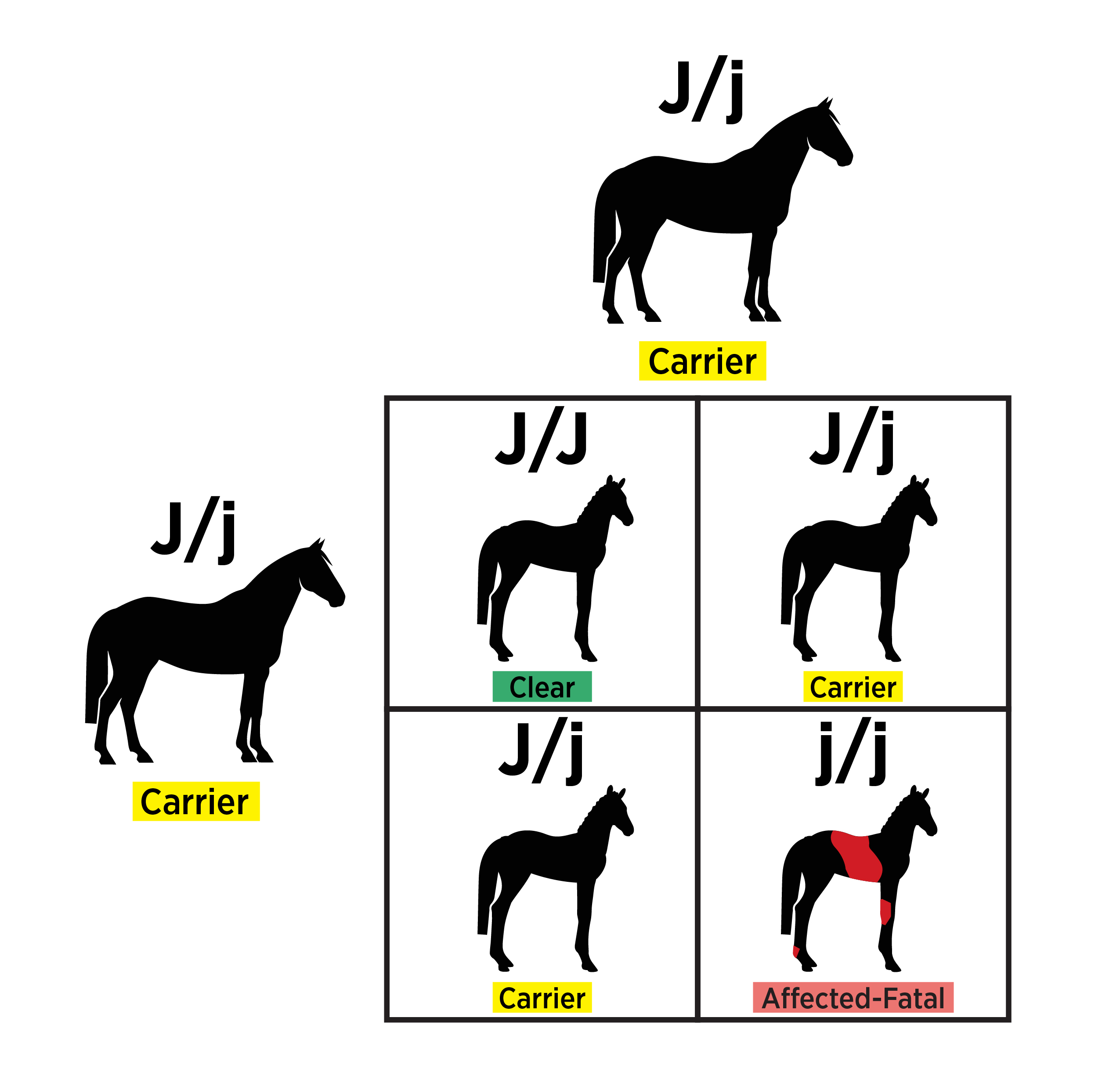
Figure 1. Example of genetic inheritance for Junctional Epidermolysis Bullosa (JEB). When two carrier horses (Jj × Jj) are bred, there is a 25% chance the foal will be clear (JJ), a 50% chance the foal will be a carrier (Jj), and a 25% chance the foal will be affected by JEB (jj).
When two carriers are bred together, there is a:
- 25% chance the foal will be affected by JEB (jj)
- 50% chance the foal will be a carrier (Jj)
- 25% chance the foal will be completely clear (JJ)
The JEB genetic mutation disrupts the production of proteins that anchor the skin layers together. Without these critical structural proteins, the skin easily tears and blisters, leading to painful lesions, rapid infection and ultimately death.
Clinical Signs
Foals affected by JEB appear normal at birth but quickly begin to show the following signs (Figure 2):
- Large patches of missing hair and blistered or raw skin
- Ulcers in the mouth, nose or tongue that make nursing difficult
- Red, inflamed feet or complete sloughing of the hoof
- Weakness and reluctance to stand or move
Even gentle contact can cause new wounds. Because the skin barrier is compromised, bacteria can easily enter the body, leading to infection and rapid decline. Most affected foals must be humanely euthanized within the first few days of life.
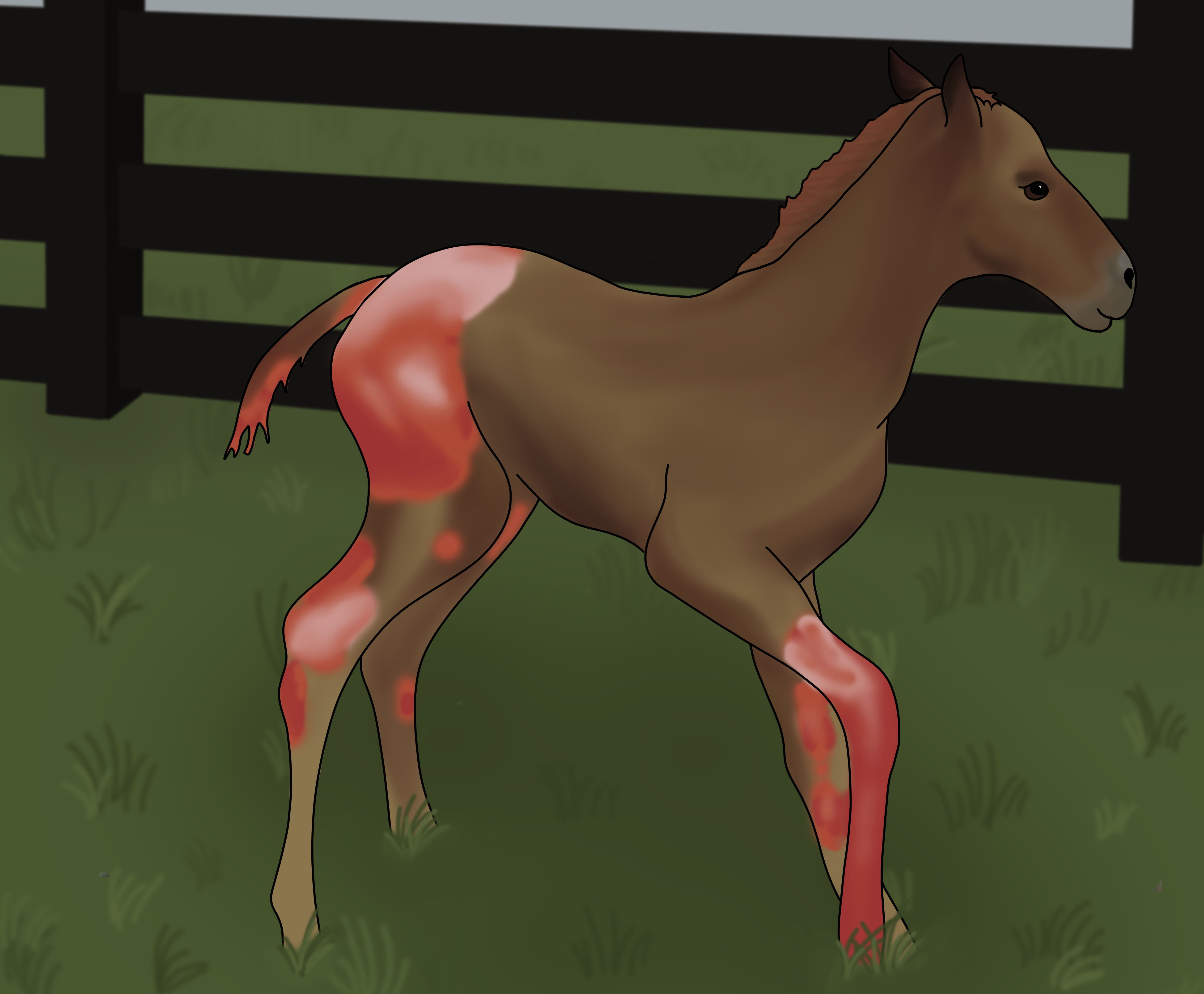 Figure 2. Foal affected by Junctional Epidermoly-sis Bullosa (JEB) showing characteristic signs such as missing hair, skin lesions and sloughing of the hooves.
Diagnosis and Testing
While visible symptoms may suggest Junctional Epidermolysis Bullosa (JEB), genetic testing is the only reliable way to confirm whether a horse is affected or a carrier.
Testing Process:
- Testing is performed using a hair sample with roots attached (from the mane or tail). Approximately 50 hairs are needed, and the roots (bulbs) contain the DNA required for analysis.
- Samples are stable and easy to collect, requiring no refrigeration or special shipping methods.
- Testing can identify whether a horse is clear (JJ), a carrier (Jj) or affected (jj).
- Carriers do not need to be removed from the breeding pool; breeding a carrier (Jj) to a non-carrier (JJ) will not result in affected foals.
Certified Testing Laboratories:
The Belgian Draft Horse Corporation contracts with the Veterinary Genetics Laboratory at the University of California-Davis for all official JEB and DNA parentage testing. Owners submit registration papers and fees to the Corporation office, which provides a barcoded DNA packet and pre-addressed envelope for UC Davis. Results are then printed on the horse’s registration papers as either “Carrier of JEB” or “Non-Carrier of JEB.”
As of Nov. 1, 2002, all Belgian Draft stallions must be genetically tested before breeding. Mares are tested at registration to prevent the JEB gene from being passed to future generations.
Additional Testing Options in Oklahoma:
For producers or veterinarians in Oklahoma seeking assistance with sample collection or preliminary diagnostics, the following laboratories can help coordinate genetic testing:
- Oklahoma Animal Disease Diagnostic Laboratory (OADDL) — Stillwater, OK: Offers molecular and DNA diagnostic services and can facilitate sample submission for equine genetic testing.
- GeneTech — Purcell, OK: Specializes in equine reproductive and genetic technologies and may be able to assist with genetic sample handling or referral testing.
Confirmatory JEB testing is typically performed through external laboratories, such as UC Davis, and producers are encour
aged to contact laboratories in advance to confirm current services and submission requirements.
Management and Ethical Considerations
Because JEB is fatal, management focuses solely on providing comfort and humane care for affected foals until euthanasia can be arranged. Supportive measures, such as gentle wound cleaning, soft bedding and pain relief, may temporarily improve com-fort but will not alter the outcome. Euthanasia is considered the most humane course of action to prevent prolonged suffering.
Responsible breeders play a vital role in preventing JEB (Table 1). By testing and openly disclosing carrier status, they safe-guard animal welfare, promote genetic integrity and preserve the market value of their breeding programs. Transparency and informed mating decisions are essential for maintaining healthy herds and public confidence within the industry.
Summary
- JEB is a fatal genetic skin disorder caused by a recessive mutation.
- It is most frequently found in Belgian Drafts and American Saddlebreds, though related breeds may carry the gene.
- Carriers show no clinical signs but can pass the gene to their offspring.
- Genetic testing before breeding is the only way to prevent affected foals.
- There is no treatment, so prevention through genetic testing and informed breeding is the only effective way to eliminate this disease.
| Mare × stallion | Possible offspring (%) | Outcome | Recommendation |
|---|---|---|---|
| JJ × JJ | 100% JJ | All foals clear | Safe breeding |
| JJ × Jj | 50% JJ 50% Jj | No affected foals; some carriers | Acceptable breeding |
| Jj × Jj | 25% JJ 50% Jj 25% jj | 25% affected foals (fatal) | Avoid |
| Jj × jj | 50% Jj 50% jj | 50% affected foals | Avoid |
References
- Belgian Draft Horse Corporation of America. 2025. DNA and JEB info. Accessed: DNA and JEB Info
- Schultz, N. and M. McCue. 2021. Junctional epidermolysis bullosa (JEB) in horses. University of Minnesota Extension.
- Veterinary Genetics Laboratory. 2025. Junctional Epidermolysis Bullosa (JEB1) in Belgians. UC Davis College of Veterinary Medicine. Accessed: Junctional Epidermolysis Bullosa (JEB1) in Belgians
- Veterinary Genetics Laboratory. 2025. Junctional Epidermolysis Bullosa (JEB2) in Saddlebreds. UC Davis College of Veterinary Medicine. Accessed: Junctional Epidermolysis Bullosa (JEB2) in Saddlebreds