

Importance of Soil Sample Handling for Accurate Soil Nitrogen Testing
Introduction
Soil testing serves as the foundation for making informed nutrient management decisions. While a large amount of attention has been given to collection techniques, proper handling of the sample after collection is equally significant. Improper handling between sampling and laboratory analysis can significantly alter test results. The primary catalysts for this change are moisture and temperature. Nutrients, especially nitrogen, have the potential to undergo microbial transformations when post-sampling conditions include warm temperatures and adequate soil moisture. Under these conditions, organic forms of nitrogen may convert into inorganic, plant-available forms such as nitrate (NO₃-N) and ammonium (NH₄-N). Microbial communities still exist in the soil sample post-collection, and if there is enough moisture, higher temperatures will lead to microbial activity to accelerate. To assess how post-collection handling affects soil nutrient measurements, a study was conducted to evaluate the influence of storage conditions and sample bag types over time, reflecting practices commonly used in real-world sample submissions.
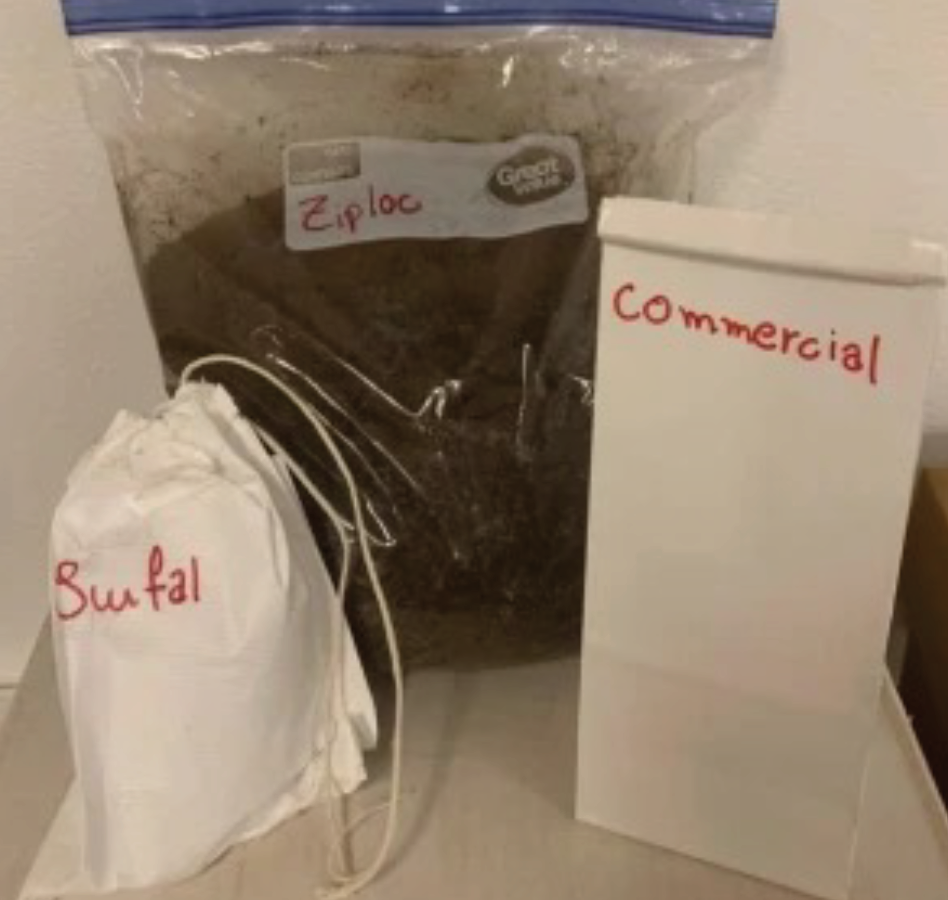 Figure 1. Examples of the different bags involved in the study. SWFAL permeable material, resin-lined paper commercial bag and Ziploc bag.
Methods
Soil was collected and homogenized from a single location, then placed at field moisture into three different types of collection bags: Ziploc, commercial (resin-lined paper that is closed) and a permeable soil bag obtained from the Oklahoma State Soil, Water, and For-age Analytical Laboratory (SWFAL). Thirty samples of each bag type were placed in two locations: One in a vehicle (Field) and the other in a climate-controlled environment (Office; e.g., maintained at 65–70°F). At both locations, temperature loggers were placed to collect hourly temperature data to calculate a daily average temperature, and three sets of samples were collected every three days over the course of 30 days. Each of the samples collected over the course of the 30-day period was subjected to a full-spectrum soil analysis to determine how different sample collection bags in different environments could influence results.
Results
Over the course of the trial, daily average temperatures and measured soil moisture amounts varied depending on which bag and environment the samples were placed in. The samples left inside the vehicle were subjected to over 100°F temperatures for the first five days; meanwhile, the samples remained cooler when brought indoors.
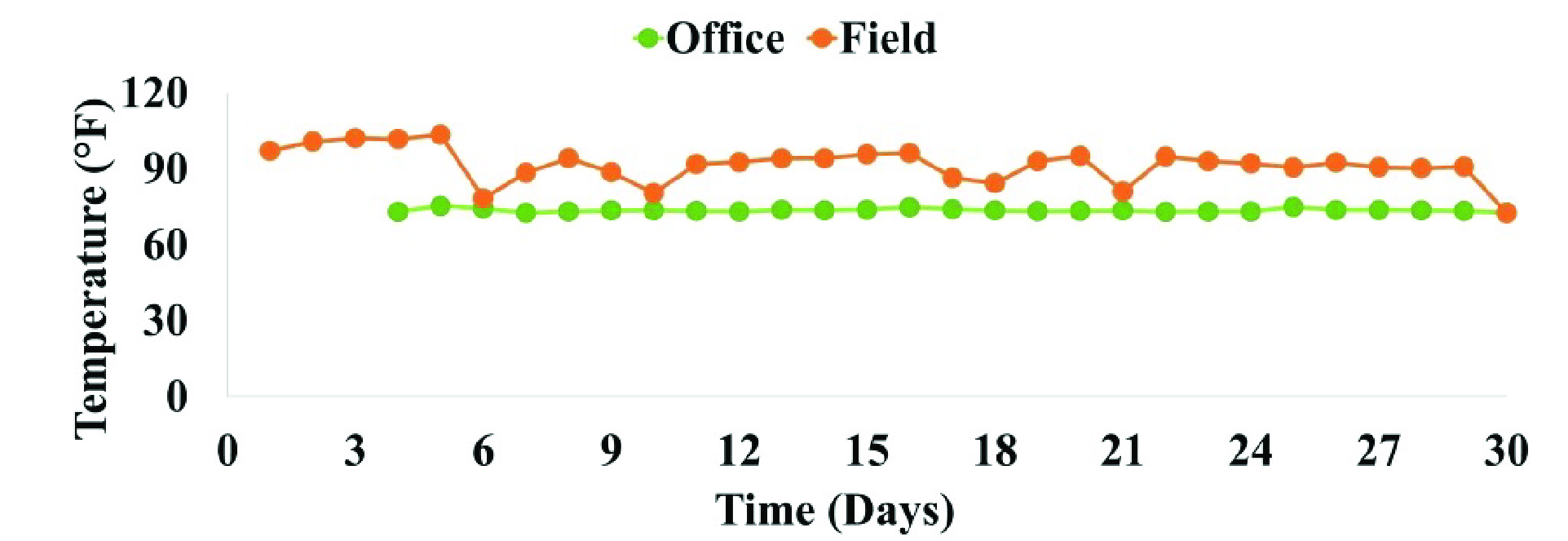 Figure 2. Average daily temperature (°F) for both the office and field locations across the trial duration.
Additionally, the measured soil moisture differed depending on the soil bags utilized (Figure 4). Both commercial and Ziploc bags across the two locations had a much higher moisture content than the SWFAL bags, regardless of storage location. SWFAL
soil bags saw no differences between the moisture content of either a field or office location and are therefore only represented by a singular line.
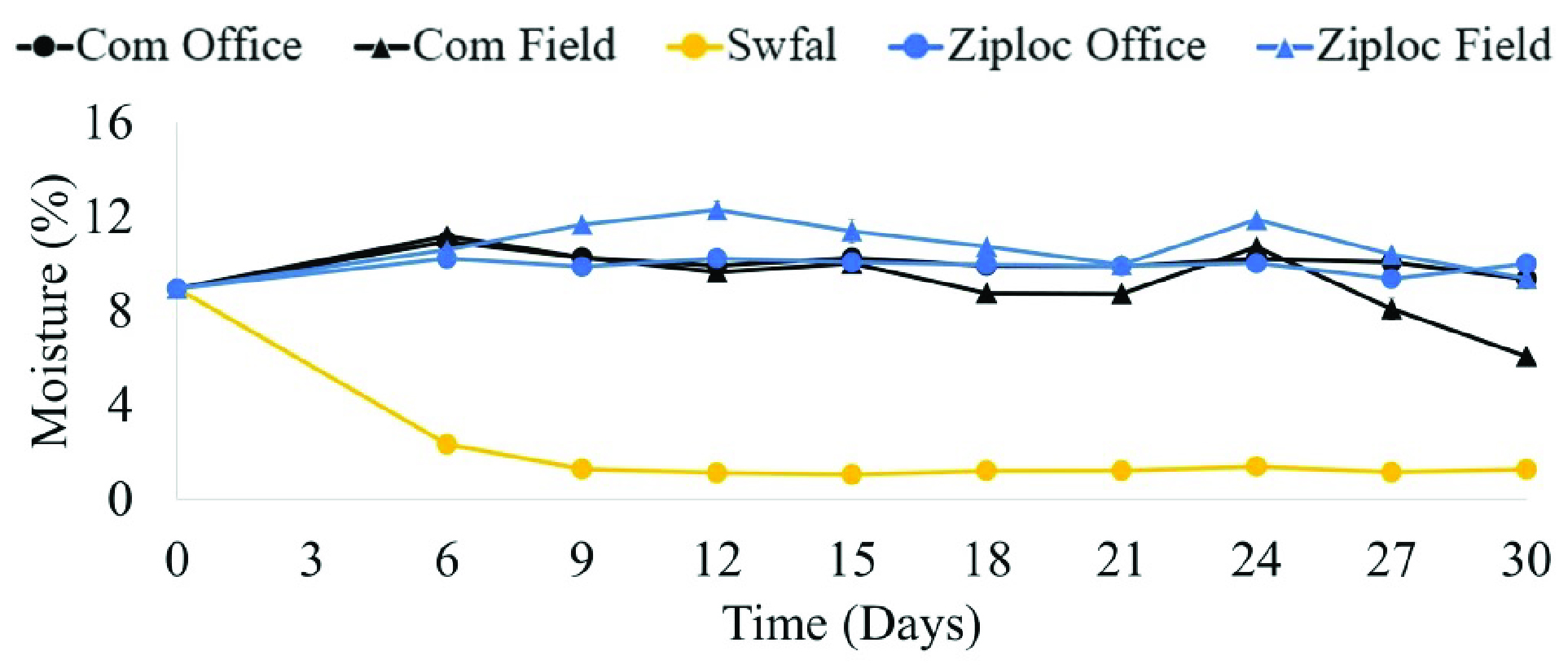 Figure 3. Soil moisture content was presented in the different bags and location treatments across the trial duration. Note day 3 moistures were lost, but the trend remained consistent.
As previously mentioned, warm temperatures with adequate moisture may result in the process of organic matter (OM) mineralization and nitrification in which the organic forms of nitrogen being transformed into NH4+ and NO3 - (NO3-N is the form of N that is measured in most soil tests). Observations in this study confirm this, where all samples began at a measured amount of 3 lbs N ac-1. After six days of being exposed to increased temperatures, the field samples in the commercial and Ziploc bags reached 16 lbs of N ac-1. Office samples analyzed in the same bags also increased,
but the change was smaller compared to field samples, reaching up to 8 lb N ac-¹. The SWFAL sample bag stayed within 3-4 lbs N ac-1 of the starting points across the duration of the study.
In addition to measuring the NO3-N present in the samples, observations were also made for the NH4-N in the samples. Results indicated that samples in the field location had elevated levels of NH4-N compared to those brought into the office. Once again, SWFAL bags across locations, as well as samples brought into the office, maintained relative consistency throughout the trial. These observations indicate that location, or overall temperature exposure, was a more influential factor in NH₄-N variation than the type of bag used.
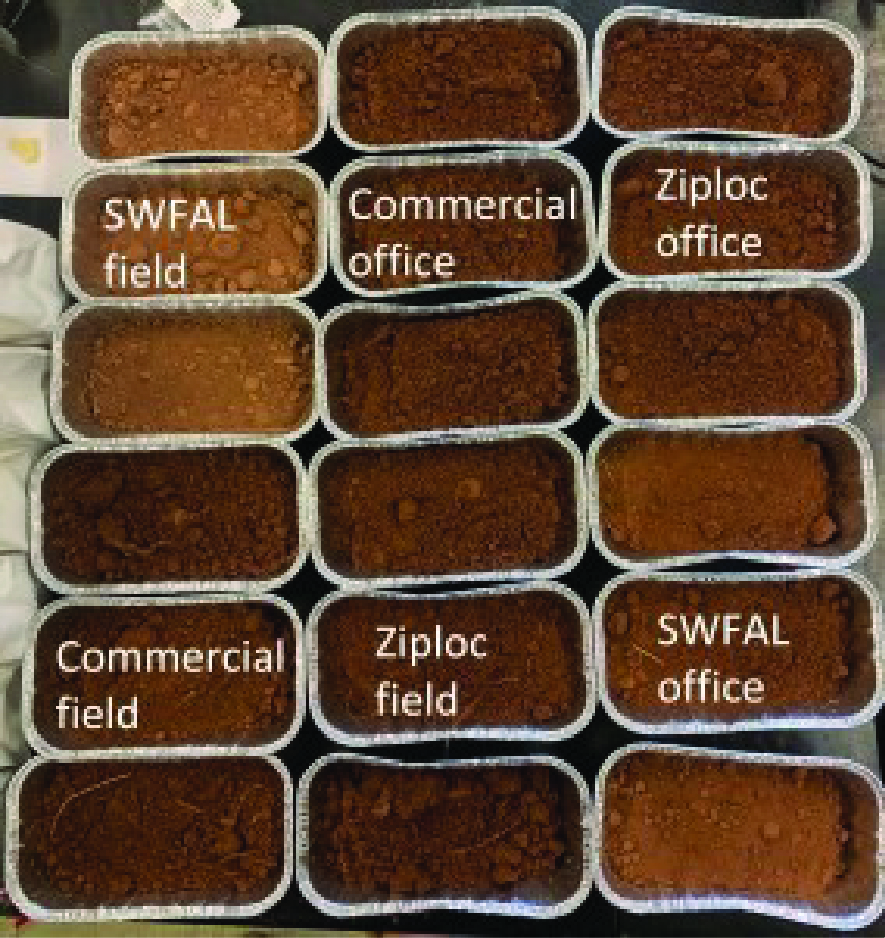 Figure 4. Soil moisture variance across different labeled treatments can be seen in soil color.
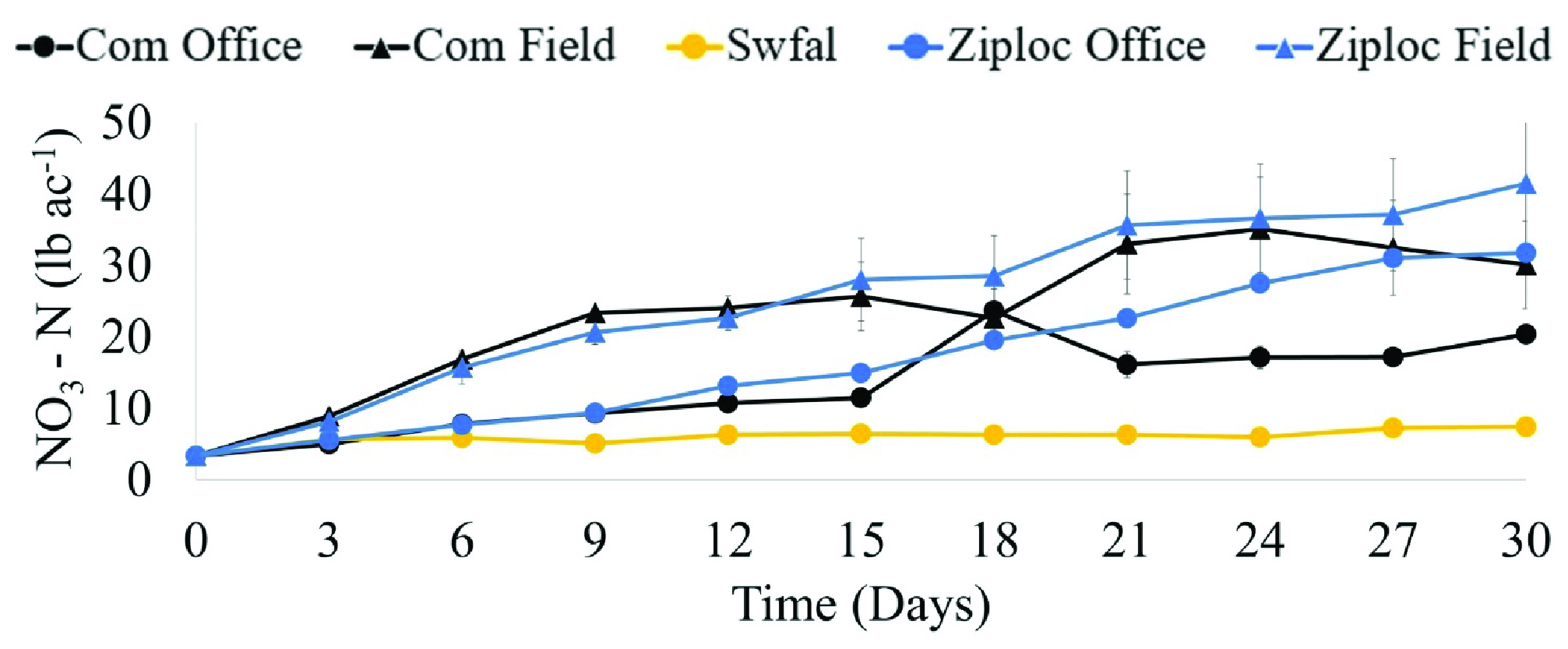
Figure 5. The soil NO3-N presents in the three bags from both the field and office locations across trial duration.
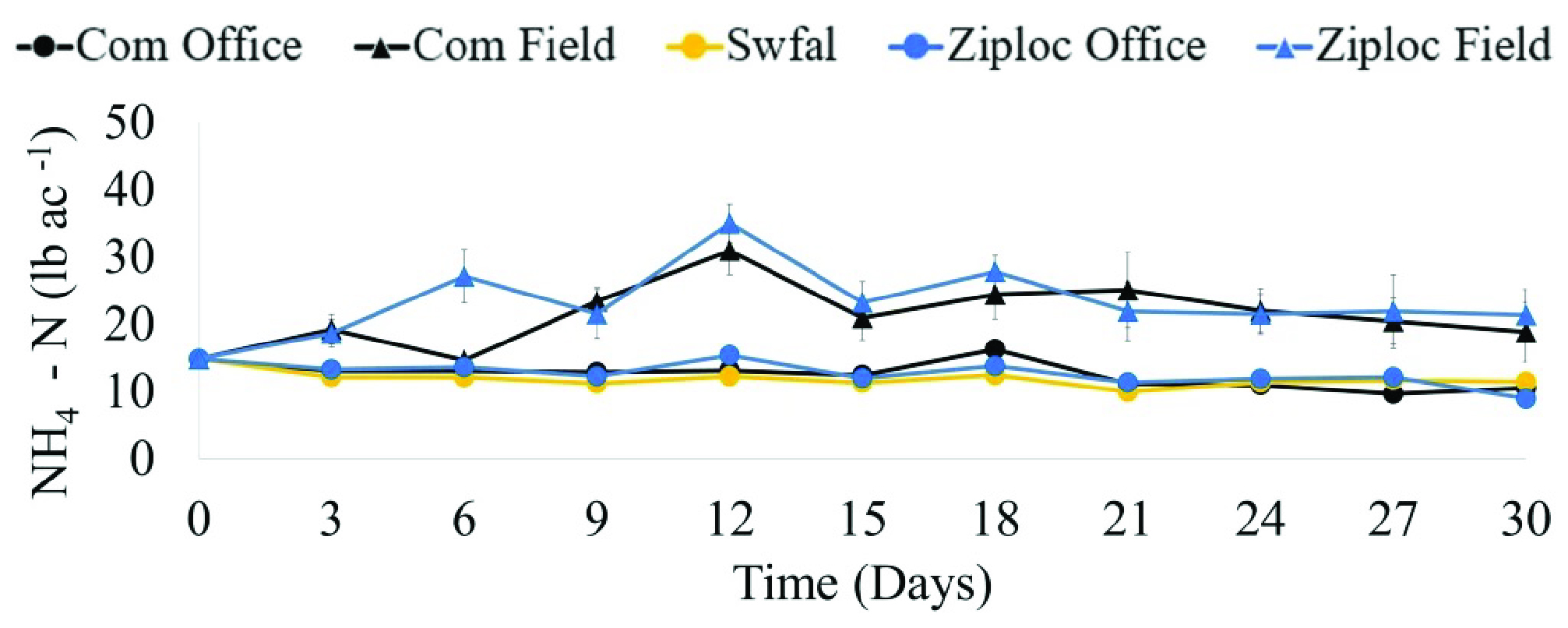 Figure 6. The soil NH4-N present in the three bags from both the field and office locations across trial duration.
Conclusions
A significant change from initial soil testing results can occur depending on the chosen sample bag and its placement. SWFAL bags were the only sample bags that were not significantly impacted by either storage methods or time. These soil bags allow
samples to breathe and limit the potential for a greenhouse effect, where moisture is trapped and can lead to microbial transformations that skew sample results. These bags are commonly used when samples are submitted through the county Extension
office. However, many producers send samples in Ziploc-style bags, and the most common choice for commercial laboratory submissions is resin-lined paper bags.
Additionally, soil analysis of the analyzed soil in this study indicated an OM level of 1.1%. Higher organic matter percentages are strongly correlated with increased biological activity. Therefore, improperly stored soils with a higher amount of organic matter content could have increased changes due to increased biological activity.
Key Points to Remember
- Proper post-collection handling of soil samples is crucial for accurate soil analysis results.
- Moisture and warm temperatures cause an increase in microbial activity that can alter nitrogen test results.
- Ziploc and commercial resin-lined bags are more likely to trap moisture and heat, resulting in potentially increased nitrogen levels.
- Permeable soil bags, such as those from SWFAL, allow airflow and moisture release, which reduces the likelihood of altered nitrogen values over time and in varying conditions.
- After soil collection, place soil samples in a cooler environment and use permeable bags to reduce moisture buildup and limit nutrient transformations.
- After approximately one week of inappropriate storage methods in certain bag types, NO₃-N levels increased by 14 lb N ac-¹. This artificial rise can lead to under-fertilization and immediate yield loss. In practical terms, this level of error can mean a 20 bu/ac yield loss in wheat and a 10 bu/ac loss in corn.