

Fire Effects: Soil Erosion
Introduction
The two main types of erosion that occur on rangelands are wind and water. Over the years, a limited number of studies have measured soil movement by wind or water on rangelands following prescribed fires and wildfires. The goal of this document is to share that research on the topic. Fire researchers have stated that the lack of studies on water erosion, especially with prescribed fire in the Great Plains and eastern US, is probably due to the lack of steep topography in most areas (Knapp et al. 2009). The steeper the topography, the greater the possibility of erosion. It was also noted decades ago that erosion on rangelands is a concern (Gifford and Whitehead 1982). However, the actual impact on plant productivity has not been measured to any extent, and this remains the case today. So, is there an amount of erosion that is expected or tolerable for a site? The Food and Agriculture Organization of the United Nations (FAO 2019) defines tolerable soil loss due to erosion as any mean cumulative soil erosion rate at which significant deterioration of soil functions and ecosystem services provided by the soil does not occur. So, the question becomes: Are these minimal amounts of soil movement following fire negatively affecting the land’s overall productivity? And does the benefit from the fire outweigh the effects of that minimal soil movement?
Soil type and climate are the two main factors that determine plant communities. Some plants grow only in certain soil types because of nutrient, air and water availability, as well as pH. An example of this would be sand sagebrush, sand shinnery oak, post oak and blackjack oak, which all prefer coarse-textured, sandy type soils. Other soil characteristics, such as depth, determine rooting depth and moisture-holding capacity, thereby favoring certain plant species. Climate factors such as rainfall, minimum and maximum temperatures and frost-free days influence which plants grow on a particular site. In addition to soil and climate, disturbances such as fire are major drivers of plant communities. Fire stimulates plant growth, alters plant structure through top killing and removes litter, allowing regrowing plants to tiller or seeds to germinate. Fire favors some plants while removing others. The effects of firer may be rapid and dramatic or slow and not as noticeable. After a wildfire or prescribed fire, land managers often have concerns about soil erosion due to the lack of ground cover. This fact sheet will address the current knowledge about erosion and fire in the Great Plains.
Erosion
Following the Dust Bowl of the early 1930s, the Soil Conservation Service was established with the Soil Conservation Act of 1935. Their primary goal, along with the Soil Conservation Districts, was to minimize soil erosion from cropland using a variety of conservation practices. Today, soil erosion remains a significant concern on all agricultural lands, driving conservation efforts and cost-share programs. The principles of soil health developed for cropland include maximizing the presence of living roots, minimizing disturbance, maximizing soil cover and maximizing biodiversity. In rangeland systems where native, perennial plant communities dominate, and grazing is the primary land use, many of these principles are readily met. Still, there is often concern about erosion when prescribed fire or wildfire occurs. Contrary to these principles, not all bareground is bad in rangelands. Many plants, insects, wildlife and reptiles need a certain amount of bareground to thrive.
Both fire and erosion are naturally occurring processes in rangeland pastures. Interactions among soil texture, vegetation type and cover, slope, weather, land use and management practices affect the probability and extent of site erosion. It is import-ant to consider that fire, whether prescribed or wild, burns across the land’s surface and rarely impacts plant structures below ground. Many times, people look at a burned rangeland, see the bare ground, and have visions of the 1930s Dust Bowl. Burned rangelands differ dramatically from deep tillage with annually grown crops that were prevalent in cropland during the Dust Bowl. Most perennial grasses and forbs are protected from fire because their crowns (where new growth originates from each year), rhizomes and roots are insulated below ground by the soil. It has been found that soil temperatures from fires vary and depend on soil moisture, fuels and weather conditions. Soil surface temperatures can range from 200°F to 1,328°F (DeBano et al. 1998). These temperatures can rise rapidly but return to pre-fire temperatures within seconds to minutes. Even with these high surface temperatures, the underlying soil is typically not heated to very high temperatures. The increased temperatures in the upper 0.25 to 1.5 inches of the soil are usually less than 122°F to 176°F and persist for only a few seconds or, in extreme conditions, minutes (DeBano et al. 1998).
In extremely dry conditions or in forested areas with large accumulations of litter and debris, underground plant parts can combust, but this is uncommon in the Great Plains rangelands. These crowns, rhizomes and roots, especially from long-lived perennial plants, hold the soil together and provide soil stability after aboveground vegetation is removed following a fire. This is why the erosion potential of naturally vegetated areas, like native rangeland pastures, is very different from that of cultivated crop fields dominated by annual plants, which have very little below-ground plant material to hold the soil in place.
Looking back historically at the estimated fire frequency, or how often an area burned, can show how resilient the soils and plant communities of the Great Plains are. Researchers estimate fire frequency using tree-ring fire scars, charcoal deposits and fire-fuel models. From this, they estimated that fire occurred, for most of the Great Plains, every two to 10 years prior to Europe-an settlement (Guyette et al. 2012) (Figure 1). These frequent fires have historically occurred for multiple centuries. If irreversible erosion and production loss had occurred, it should have happened during this time. When Europeans settled in most parts of the Great Plains, they found fertile soils suitable for farming, with rainfall the limiting factor in production, not eroded soils from centuries of frequent fires. In fact, a committee formed in 1936 came to this very conclusion. They were called the Great Plains Drought Area Committee and were formed to identify the cause of the Dust Bowl. In their report (Washington D.C. 1936), they wrote, “The present situation in the Great Plains area is the result of human modification of natural conditions. Prior to the coming of the white man, and to a large extent prior to about 1866, man did not greatly alter conditions on the Plains. The Indians did two things: they killed buffalo and they sometimes set fire to the grass. They do not seem to have reduced the number of buffalo seriously, and though their fires may have influenced the nature of the vegetation, they did not destroy primitive grass cover. There is no evidence that in historic times there was ever a severe enough drought to destroy the grass roots and cause wind erosion comparable with that which took place in 1934 and 1936; that phenomenon is chargeable to the plowing and over cropping of comparatively recent years.”
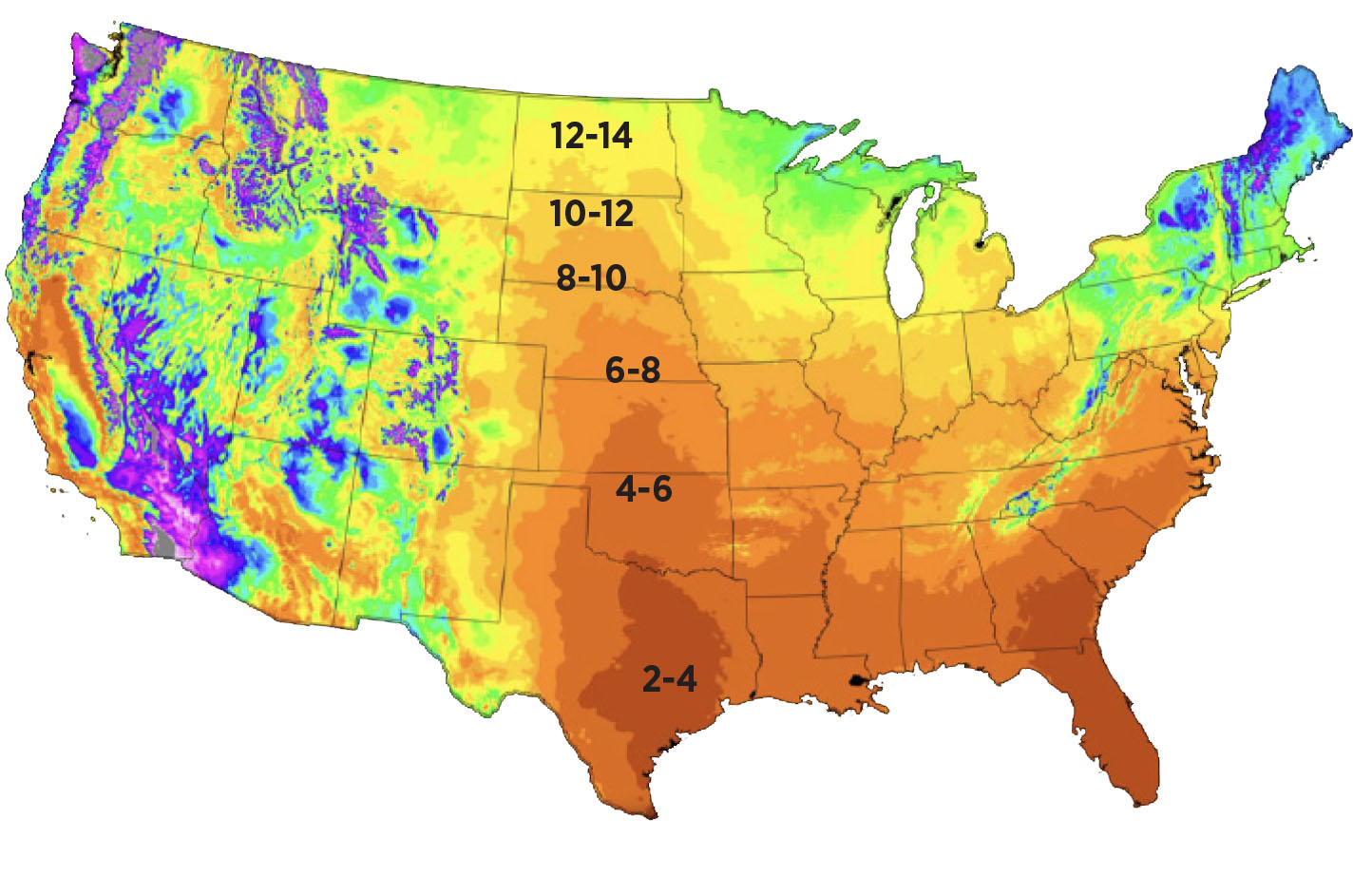 Estimated Fire Frequency
Years Between Repeated Fires
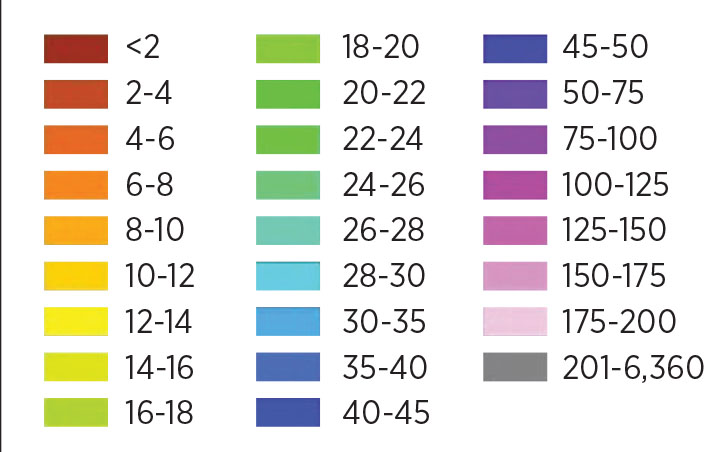 Figure 1. Fire occurred across most of the Great Plains every two to 10 years prior to European settlement. Fire frequencies are estimated using tree ring fire scars, charcoal deposits and fire fuel models (Guyette et al. 2012)
| Icon | Description |
|---|---|
 | Weather & Climate |
 | Fuel Physical Chemistry |
 | Tree Ring Fire Scars (170 Sites) |
 | Charcoal Deposits |
Wind Erosion
Wind-borne soil erosion studies following fire do show more soil movement on burned sites (Table 1). When all studies are combined, they report an average of 166% more soil movement on burned sites than on unburned sites. At first, this number appears substantial; however, the reported movement typically reflects both erosion (loss) and deposition (gain) for a given site due to frequent changes in wind direction. When the net soil loss is calculated over time, it turns out that the actual loss is relatively small. It is important to note that soil movement was also recorded on all unburned sites in these studies. This shows that soil movement is always occurring, whether burned or unburned, and if productivity is unaffected, this movement is tolerable soil loss and soil gain.
Soil type affects the probability of wind erosion. Coarse-textured sandy soils that occur throughout the Great Plains are known to be more prone to soil movement, and the threat of “blowouts” is a concern for many landowners. One study was conducted in a sand sagebrush-bluestem-dominated rangeland in Woodward County, Oklahoma, with the site’s sandy soils considered highly erodible. In this study, small patches (10 acres) on sandy dunes were burned in the fall of the year within a larger pasture grazed by cattle (Table 1). The fire concentrated the grazing pressure on the burned dunes, further increasing the amount of bare soil. Yet the study found that grazing along with fire did not significantly affect soil erosion, and total soil movement was slight. If the results of this study were extrapolated to a burn of 1,000 acres in size, only 4.2 pounds of total soil would be projected to move compared to 3.4 pounds of soil movement in the unburned area. This indicates these sandy dunes will always have some soil movement, and fire will increase the amount of movement slightly for a very short period. The amount of soil movement is small and not expected to cause long-term damage to the site. Many of the finer-textured soils (loams and clays) throughout the Great Plains will have much less soil movement than this example. Additionally, high winds and dry conditions following a fire can influence erosion potential but have not been found to cause lasting or permanent damage to the grasslands or plant productivity (Wright and Bailey 1982).
| Location and study | Soils | Vegetation | Fire type and size | Sample days | Sample height above ground | Burned soil move-ment gram/day | Unburned soil move-ment gram/day | Burned total soil loss gram/day x total days | Unburned total soil loss gram/day x total days |
|---|---|---|---|---|---|---|---|---|---|
| Woodward County, OK (Vermeire et al. 2005) | Eda loamy fine sands and Tivoli loamy fine sands | Sand sagebrush grassland | Prescribed 10 ac | 166 Year 1 168 Year 2 | 8 in | 0.1146 g 0.0250 g | 0.0047 g 0.0046 g | 19.024 g 4.200 g | 0.7802 g 0.7728 g |
| Cochran and Yoakum Counties, TX (Zobeck et al. 1989) | Brownfield fine sand | Giant dropseed, Little bluestem | Wildfire 8.5 ac | 43 | 6 in | 1.0147 g | 0.0014 g | 43.632 g | 0.0602 g |
| Eddy, County, NM (Whicker et al. 2002) | Sandy soils | Mesquite, creosote bush, sand shinnery oak | Wildfire Unknown size | 272 | 9 in | 0.3500 g | 0.0500 g | 95.200 g | 13.600 g |
| County, ID (Sankey et al. 2009) | Silt loam | Big Sagebrush, Bluebunch wheatgrass | Wildfire Unknown size | 323 | 16 in | 0.0250 g | 0.0004 g | 8.075 g | 0.129 g |
Researchers also found that as soon as burned areas began to regrow, soil movement was dramatically reduced. Most prescribed fires are conducted under milder conditions than many wildfires and are usually smaller. The majority of prescribed burns in the Great Plains are conducted in the late winter/spring timeframe, during which regrowth typically occurs within a few weeks, leaving very little time for exposed bare ground. Under these conditions, any significant soil movement would not be expected.
In the Great Plains, occasional large-scale wildfires occur under extreme conditions. When this happens, many landowners are concerned about vegetation regrowth and soil erosion. The Anderson Creek Fire is an example of this type of wildfire. It occurred in March 2016 in northwestern Oklahoma, spreading to southern Kansas. Images show that in April, following the fire, there is a major increase in bare ground in many areas with highly erodible soils (Figure 2). Yet the fire scar cannot be seen in the same area the following year (Figure 2). Also, there is no evidence of the formation of large areas of dunes or of locations with excessive bare soil, except in crop fields. This shows that the bareground caused by the wildfire lasted for only a short time. Photographs from the same area, taken on March 31, 2016, and Nov. 1, 2016, show rapid revegetation with no significant soil loss or land damage (Figure 3). This example is consistent with numerous other sites throughout the Great Plains following extreme wildfires. There is little evidence of large-scale soil movement or loss of productivity in areas with vegetation cover of native grasses and shrubs.
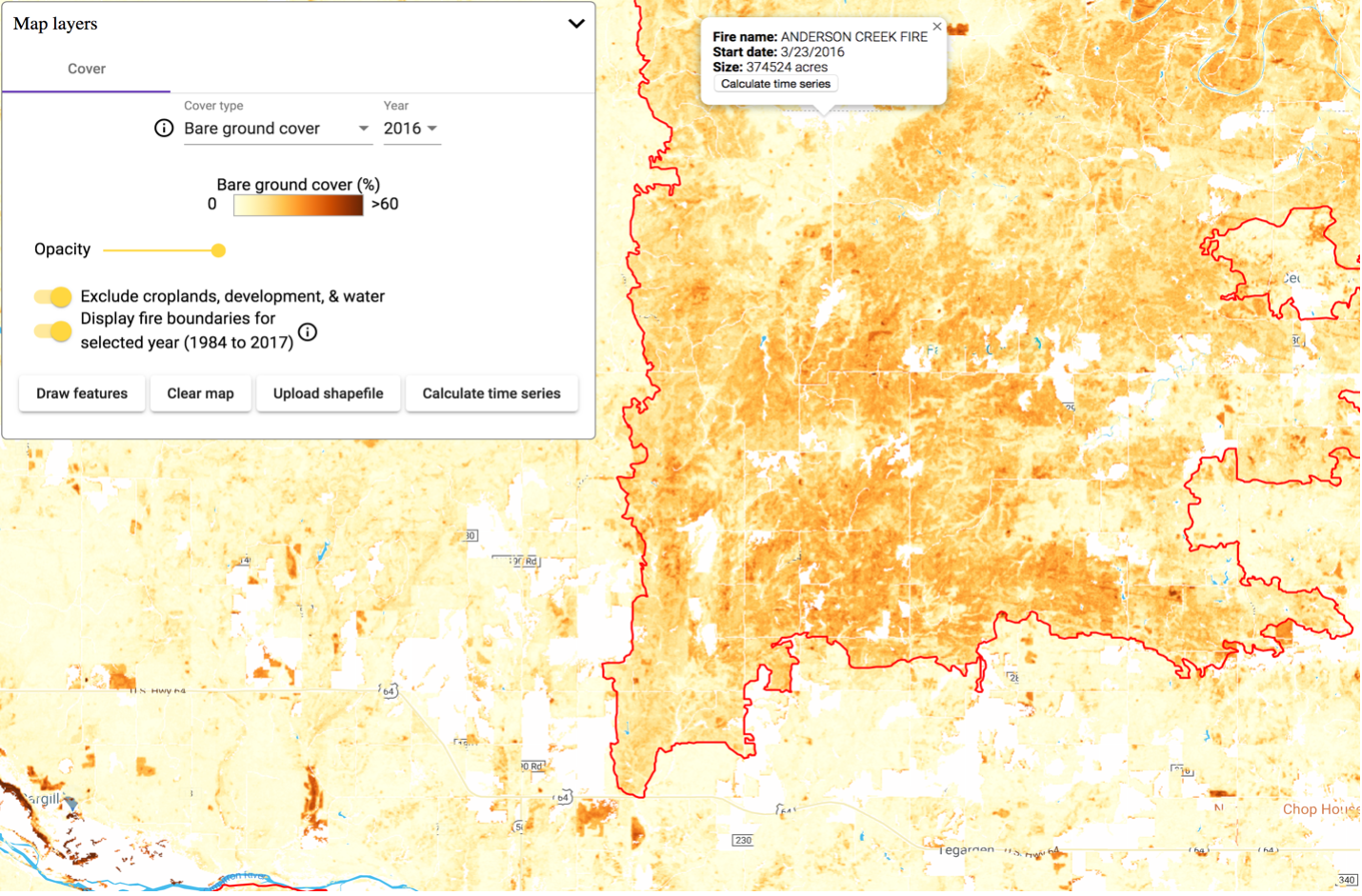 Figure 2a. A map showing the percent of bare ground from the Anderson Creek Fire, an extreme and large wildfire that started in Oklahoma and went into Kansas on March 22, 2016. The map illustrates the amount of bare ground (darker orange) immediately after the fire. Note that the fire scar is easily visible. (From the Rangeland Analysis Platform).
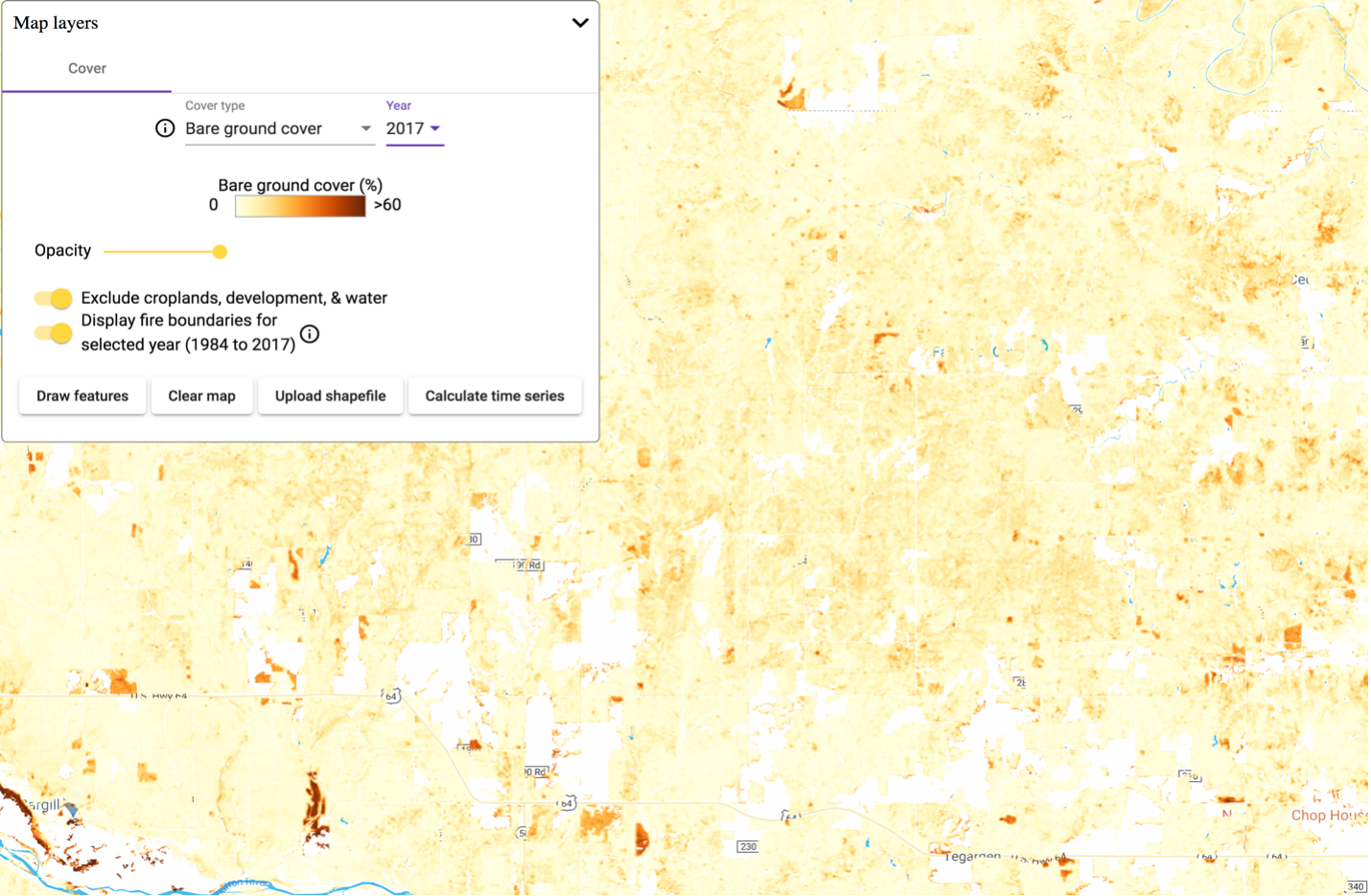 Figure 2b. A map showing the percent of bare ground in 2017 from the 2016 Anderson Creek Fire, where the fire scar is no longer visible as the native vegetation rapidly recovered. (From the Rangeland Analysis Platform).
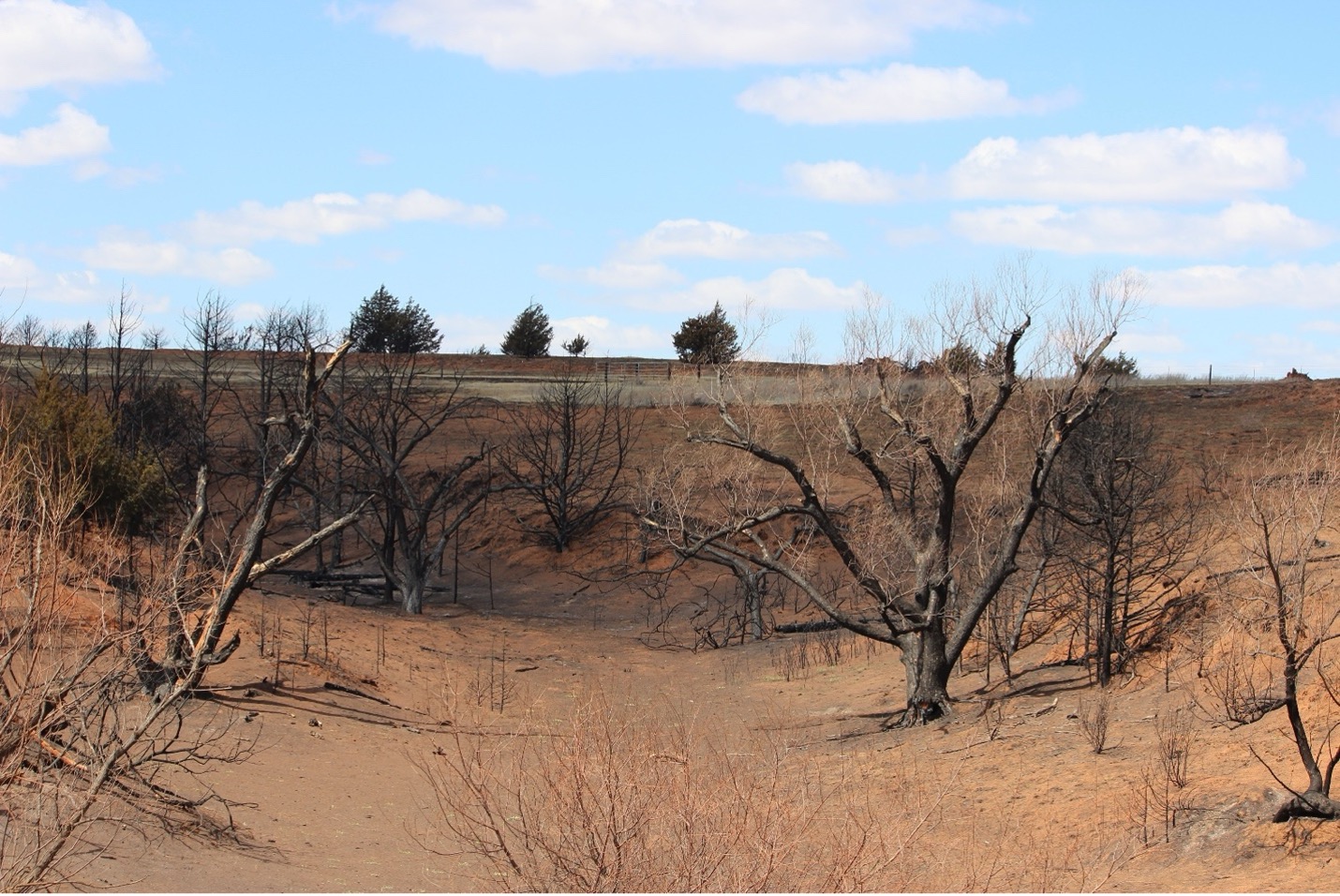 Figure 3a.
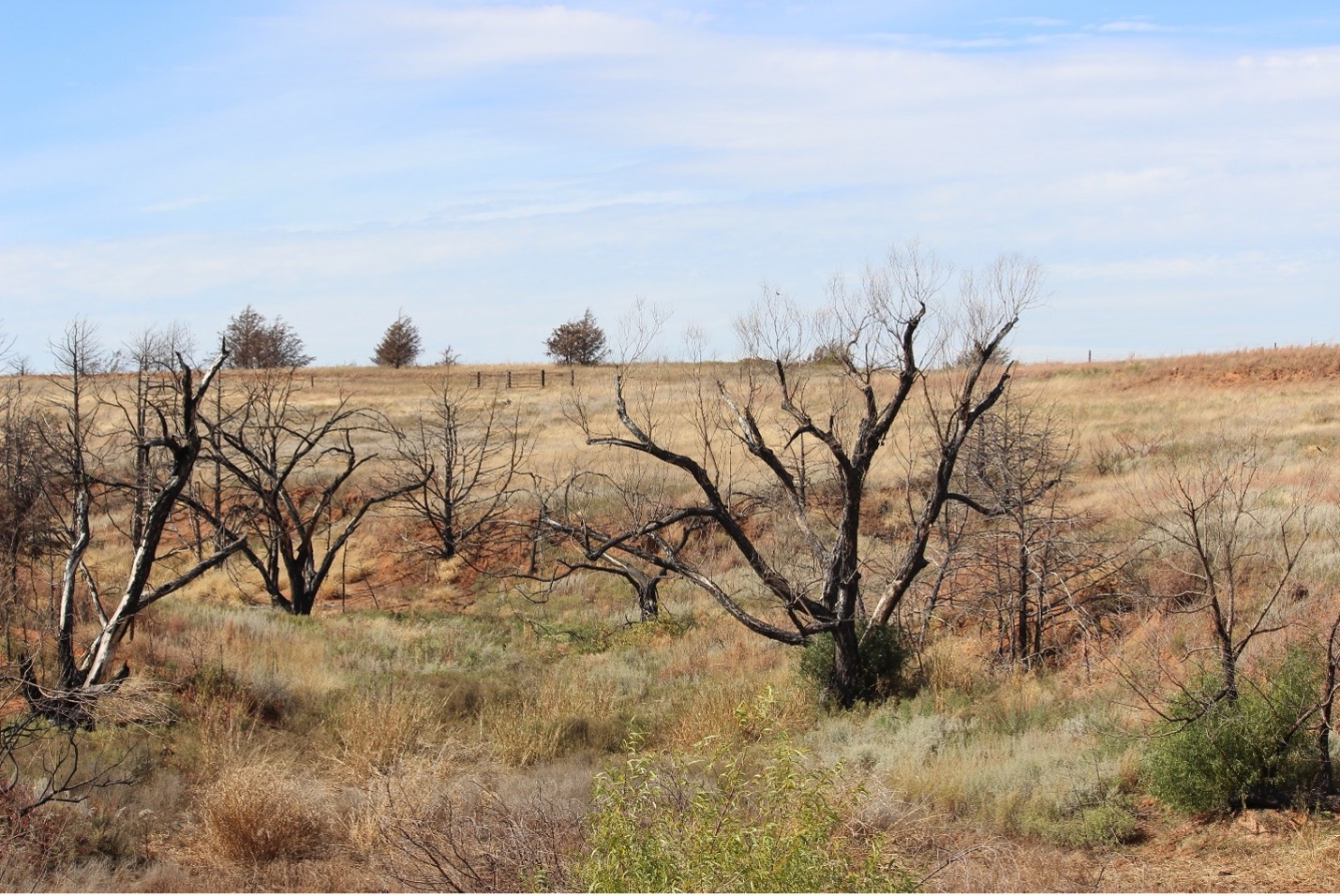 Figure 3b. Photographs taken of the same location from the Anderson Creek Fire, a large wildfre that occurred under extreme conditions. The top photo was taken on March 31, 2016 (nine days post-fre), and the bottom photo was taken on Nov. 1, 2016 (224 days post-fre). Note the rapid revegetation of this site and the lack of visible damage from erosion, even on these sandy soils and steeper slopes.
Water Erosion
Erosion from water movement following fire also has limited research within the Great Plains. Likely for the same reasons as stated earlier, a lack of topographic differences and minimal impact on productivity. Two studies, one in Arizona and the other in New Mexico, found that fire treatments increased sediment transport significantly for the first two years, but by the third year, it was the same as in the unburned area (White et al. 2006; Field et al. 2011). The NM study also found that sediment production appears to decline with multiple fires over time as grass cover increased due to the positive fire effects and reduction of woody plants on the site. Interestingly, the NM study also noted that the impact of two drought periods was equal to or greater than that of fire on sediment transport in runoff (White et al. 2006). Again, this shows that, whether burned or unburned, some sediment is always present in runoff. Another study in Arizona reported that surface runoff and sediment production immediately following a burn were no greater than the natural variation at the site or across seasons (Emmerich and Cox 1992). A study in Oklahoma found that mechanically treated cedar woodlands had greater runoff but lower sediment concentrations. This study suggests that dense cedar cover increases the potential for water erosion in grasslands. Using fire to maintain grasslands and reduce woody plants can help limit water erosion. In another study (West et al. 2016), researchers examined the effects of patch burn grazing on fine sandy loam soils in Oklahoma tallgrass prairie. They found that focal grazing on the most recently burned areas increased the potential for soil and water movement, but on older burn patches with reduced livestock grazing, soil and water loss were reduced. The study also found that increased grazing pressure from spring burning did not have a prolonged detrimental impact on hydrological properties.
Summary
Soil erosion is a concern for landowners, and some management practices could increase the likelihood of it occurring. Long-term removal of perennial cover along streams can cause significant erosion from stream flow. Further, a lack of cover on fallow crop fields can lead to sheet, rill and gully erosion, reducing the field’s crop potential. Therefore, it is understandable that land-owners would be concerned about the lack of above-ground cover following a fire. However, the available data suggest that in areas with native perennial plant communities, soil movement following fire is minimal and plants regrow rapidly, thereby reducing the potential for long-term erosion. Given the Great Plains’ long history of fire, it makes sense that these systems would be resilient to fire and erosion. When a landowner conducts a prescribed fre or experiences an unplanned wildfire, the small risk of soil movement must be weighed against the potential benefits of fire in controlling woody plant encroachment, managing wild-life habitat and improving forage quality for livestock. If you would like further information about this subject, see the references below or contact your local county Extension office or USDA Natural Resource Conservation Service office.
References
DeBano, L.F., D.G. Neary, P.F. Ffolliott. “Fire effects on ecosystems.” (1998) New York: John Wiley & Sons.
Emmerich, W.E., J.R. Cox. “Hydrologic characteristics immediately after seasonal burning on introduced and native grasslands.” 45 (1992): 476-479.
FAO. “Soil erosion: the greatest challenge to sustainable soil management.” (2019) Rome: 100 pp.
Field, J.P., D.D. Breshears, J.J. Whicker, C.B. Zou. “Interactive effects of grazing and burning on wind- and water- driven sediment fuxes: rangeland management implications.” Ecological Applications 21 (2011): 22-32.
Giford, G.F., J.M. Whitehead. “Soil erosion effects on productivity in rangeland environments; Where is the research?” Journal of Range Management 35 (1982): 801-802.
Guyette, R.P., M.C. Stambaugh, D.C. Dey, R.M. Muzika. “Predicting fire frequency with chemistry and climate.” Ecosystems 15 (2012): 322-335.
Knapp, E.E., B.L. Estes, C.N. Skinner. “Ecological effects of prescribed fire season: a literature review and synthesis for managers.” (2009) Gen. Tech. Rep. PSW-GTR-224. Albany, CA: USDA-Forest Service Pacific Southwest Research Station. 80 p.
Sankey, J.B., M.J. Germino, N.F. Glenn. “Aeolian sediment transport following wildfire in sagebrush steppe.” Journal of Arid Environments 73 (2009): 912-919.
Vermeire, L.T., D.B. Wester, R.B. Mitchell, S.D. Fuhlendorf. Fire and grazing effects on wind erosion, soil water content, and soil temperature.... Journal of Environmental Quality 34 (2005): 1559-1565.
Washington, DC. (1936). The future of the Great Plains. U.S. Great Plains Committee.
West, A.L., C.B. Zou, E. Strebler, S.D. Fuhlendorf, B. Allred. “Pyric-herbivory and hydrological responses in Tallgrass Prairie.” Rangeland Ecology & Management 69 (2016): 20-27.
Whicker, J.J., D.D. Breshears, P.T. Wasiolek, T.B. Kirchner, R.A. Tavani, D.A. Schoep, J.C. Rodgers. “Temporal and spatial variation of episodic wind erosion in unburned and burned semi-arid shrubland.” Journal of Environmental Quality 31 (2002): 599-612.
White, C.S., R.J. Pendleton, B.K. Pendleton. “Response of two semiarid grasslands to a second fire application.” Rangeland Ecology and Management. 59 (2006): 98-106.
Wright, H.E., A.W. Bailey. “Fire Ecology.” (1982). New York: John Wiley & Sons.
Zhong, Y., R.E. Will, T.E. Ochsner, A. Saenz, L. Zhu, C.B. Zou. “Response of sediment concentration and load to removal of juniper woodlands and subsequent establishment of grasslands-A paired experimental watershed study.” Catena Volume 209 (2022): Part 2.
Zobeck, T.M., D.W. Fryrear, R.D. Petit. “Management effects on wind-eroded sediment and plant nutrients.” Journal of Soil and Water Conservation 44 (1989): 160-163.