

Wheat Disease Update - March 2026
Wheat Streak Mosaic Has Been Frequently Observed in Oklahoma Wheat Fields
In March 2026, the OSU Plant Disease and Insect Diagnostic Lab confirmed wheat streak mosaic virus (WSMV) in wheat samples received from commercial fields in Blaine, Garvin, Washita, Cleveland, Kay, and Noble counties. Plants infected with WSMV often have yellow leaves with contrasting green and yellow streaks as shown in Figure 1. WSMV is transmitted by the wheat curl mite, which can also transmit other viruses like the Triticum mosaic virus (TriMV), which was confirmed in a wheat sample from Garvin County, and the High Plains wheat mosaic virus (HPWMV), which was confirmed in Blaine and Garvin counties. In these cases, both HPWMV and TriMV were detected in combination with WSMV.
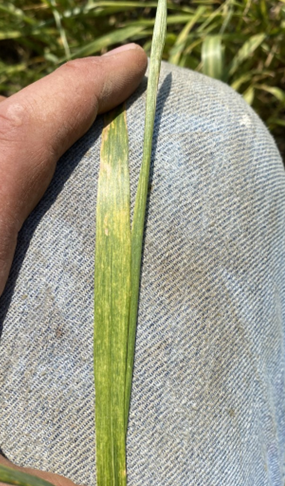
Figure 1. Symptoms of wheat streak mosaic
Last year, Oklahoma, along with neighboring states, experienced a severe outbreak of wheat streak mosaic, and similar conditions may increase disease risk this season. Once the wheat crop is infected with WSMV, there are no in‑season management options, and yield loss can be up to 100% (Figure 2).
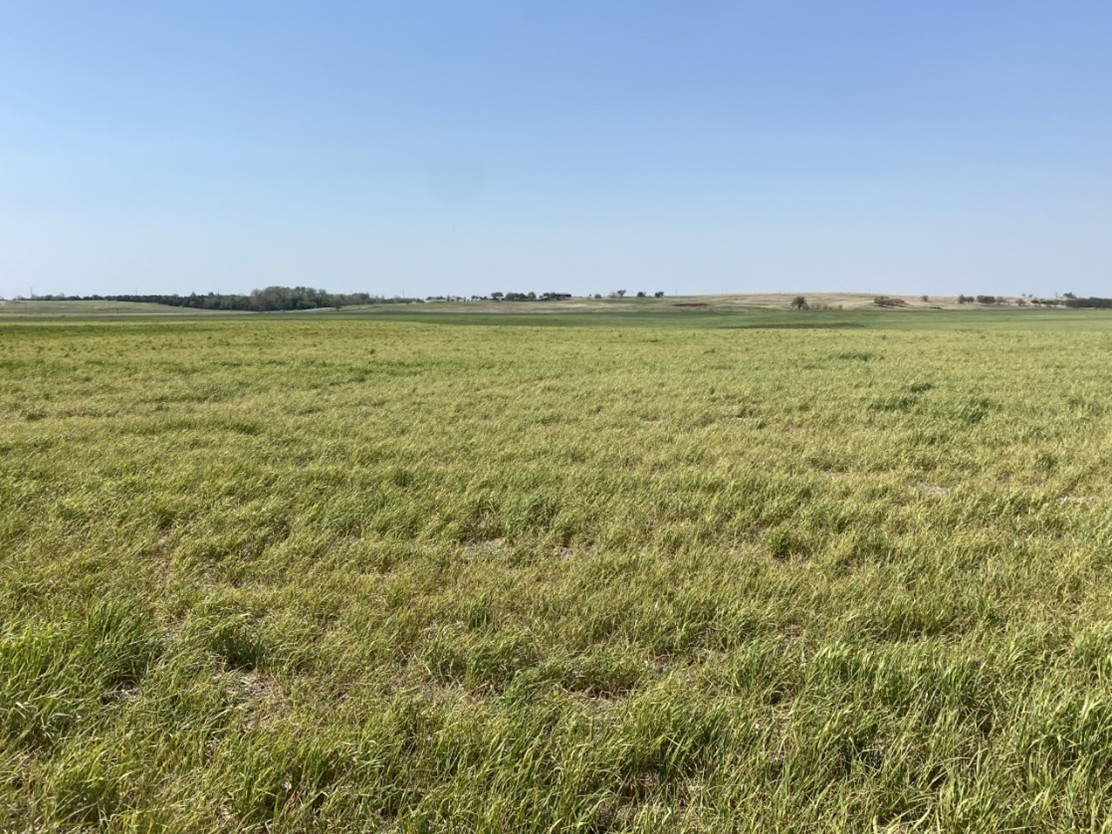
Figure 2. Wheat field infected with wheat streak mosaic in Oklahoma.
Management efforts should therefore focus on reducing the risk for future seasons using the following approaches:
- Control volunteer wheat and grassy weeds
Wheat curl mites and WSMV over‑summer on volunteer wheat, grassy weeds, and some summer crops such as corn and sorghum. Fall infestations are usually the most damaging to yield, so destroying volunteer wheat and grassy weeds in fields and surrounding areas through herbicides or tillage is needed. Volunteer wheat and grassy weeds should be completely dead and at least 2 weeks before planting the new wheat crop. - Delayed planting
Delayed planting reduces the risk that emerging wheat in the fall will be exposed to high populations of wheat curl mites carrying WSMV. Generally, early‑planted wheat is at the greatest risk for severe infection. - Use resistant or tolerant varieties
There have been only three WSMV resistance genes that have been identified, including Wsm1, Wsm2, and Wsm3. Wsm1 and Wsm2 are the only genes currently deployed in commercial varieties. Wsm1 generally provides stronger control of WSMV but is present in only a few hard winter wheat varieties, including Breakthrough and Mace. Wsm2 is found in multiple hard winter wheat varieties but has limitations as it was reported to provide resistance to WSMV only, not to TriMV or HPWMV. Examples of hard winter wheat varieties carrying Wsm2 include: Snowmass, KS Territory, RonL, KS Mako, KS Bill Snyder, KS Dallas, KS Hamilton, Guardian, Oakley CL, Joe, and KS Big Bow.
Other varieties do not carry WSMV genes, but carry the wheat curl mite resistance gene Cmc4. This gene can reduce WSMV risk under moderate pressure, but will not provide adequate protection under high pressure. Varieties that carry Cmc4 include Guardian, Canvas, TAM 112, Byrd, Avery, Langin, Kivari AX, KS Western Star, Whistler, Crescent AX, Incline AX, Fortify SF, TAM 115, TAM 204, and T158.
Some other hard winter wheat varieties have shown intermediate resistance to wheat streak mosaic despite having no known resistance genes. This includes DoubleStop CL+ and varieties with Jagger in their background. However, these varieties may not provide adequate protection under high pressure.
Barley Yellow Dwarf Virus Infection Has Been Observed in Some Locations in Oklahoma Fields
On March 10, a wheat sample infected with Barley yellow dwarf virus (BYDV) was confirmed in Noble County, and an additional BYDV infection was observed on March 26 in Payne County near Stillwater. Wheat plants infected with BYDV typically exhibit yellowing or reddish‑purple discoloration at the leaf tips and may get stunted under high infection (Figure 3). BYDV is a common virus in Oklahoma wheat production systems and is transmitted by cereal aphids. Infections that occur in the fall are the most damaging, as early infection allows the virus to persist and interfere with plant development throughout the growing season.
During the last week of March, reports from southwestern Oklahoma indicated increasing infestations of the Bird Cherry Oat Aphid in winter wheat fields (OSU Extension Pest Alert EPP-26-7, 2026). In addition, in mid-March, wheat producers from central Oklahoma reported greenbug infections in their fields (Check Your Wheat Greenbugs Reported In Central Oklahoma). Both the Bird Cherry Oat Aphids and the greenbugs are efficient vectors of BYDV.
Management BYDV is similar to that of WSMV and relies on controlling volunteer wheat and grassy weeds, delaying planting, and using resistant cultivars. The variety Uncharted is currently the most resistant OSU variety to BYDV, as it carries two resistance genes, Bdv1 and Bdv2.
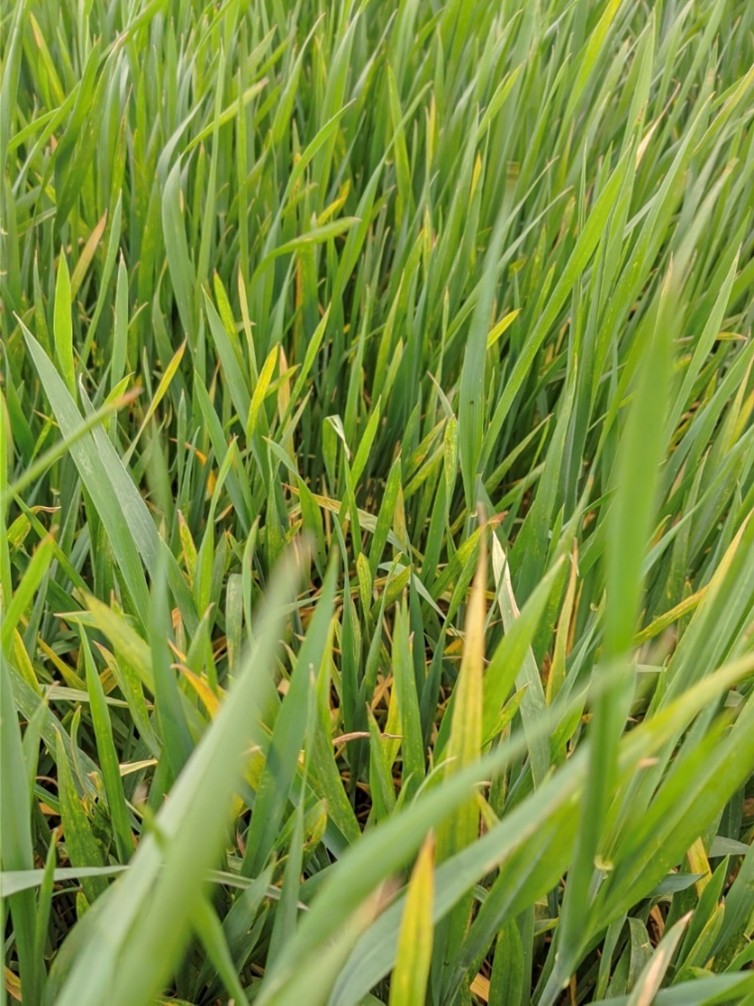
Figure 3. Barley yellow dwarf symptoms.
Tan Spot, Septoria Tritici Blotch, and Powdery Mildew Have Been Observed In Some Wheat Fields
In March, wheat samples infected with tan spot (Figure 4) and septoria tritici blotch (STB) (Figure 5) were confirmed in wheat fields in Washita County. Earlier, on January 19, Dr. Brett Carver reported severe tan spot and powdery mildew (Figure 6) in his breeding plots located in Lahoma (Garfield County). Management of these foliar fungal diseases relies primarily on the use of resistant varieties and timely fungicide applications. Resistance ratings for Oklahoma State University (OSU) wheat varieties are available at OSU Released Wheat Variety Characteristics.
Information on the efficacy of fungicide products for controlling these diseases can be found at Fungicide Efficacy for Control of Wheat Diseases.
For tan spot and STB, the pathogens can survive on infected wheat stubble, and residue management can reduce the primary inoculum levels in the field. Given the current drought conditions, these pathogens are unlikely to increase in significance unless moisture is received this spring. Therefore, scouting wheat fields following precipitation will be critical for determining whether fungicide applications are needed. We will continue to monitor the development of these fungal diseases and provide updates as conditions change.
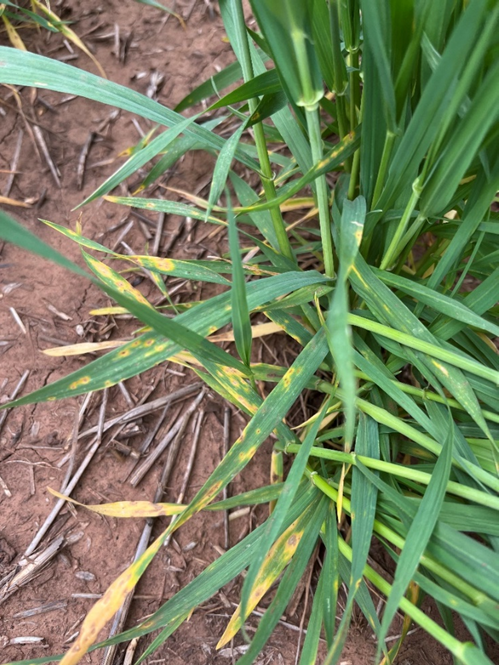
Figure 4. Symptoms of tan spot.
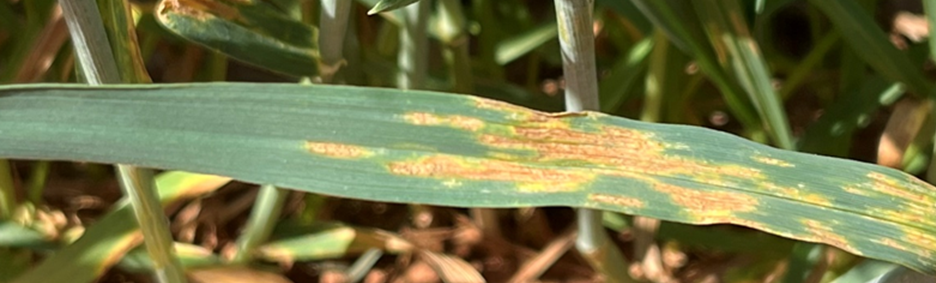
Figure 5. Symptoms of septoria tritici blotch.
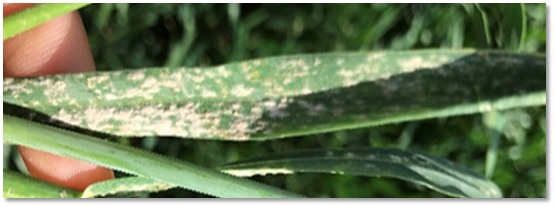
Figure 6. Symptoms of powdery mildew.
Rust Conditions in Oklahoma and Texas
In Oklahoma, trace levels of leaf rust (Figure 7) were observed in a wheat field in Washita County as early as January 6, 2026. As of today, there have been no reports or observations of stripe rust (Figure 8) in Oklahoma. We will continue to monitor the rust situation in Oklahoma and provide updates as needed. Management of these diseases relies on the use of resistant varieties and fungicide application if susceptible varieties are grown.
In Texas, Dr. Brandon Gerrish (Texas A&M University) reported on March 4, 2026, that rust was first detected on January 12 in Hill and McLennan counties (near Waco). These early detections were predominantly leaf rust, with only trace levels of stripe rust. Since then, leaf rust has been reported in 11 counties and stripe rust in 8 counties across Texas. Leaf rust has occurred primarily in South Texas and the Blackland regions, while stripe rust has been more common in central Texas and the Blacklands. Despite early detections, rust spread has been slow over the past 6–7 weeks, likely due to dry conditions statewide. With temperatures now reaching the upper 80s to low 90s across much of southern Texas, significant stripe rust development is not expected this year. However, leaf rust at the Castroville nursery (near San Antonio) has reached up to 70% leaf coverage on lower leaves of spreader rows and susceptible varieties such as ‘TAM 112.’ Similar or greater severity was observed last week at the Waco-area nursery. Forecasted rainfall combined with warm temperatures may allow for increased disease development in the coming weeks.
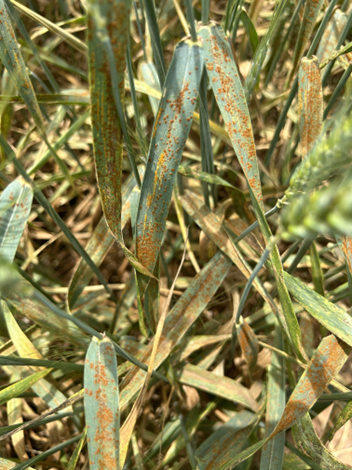
Figure 7. Symptoms of leaf rust.
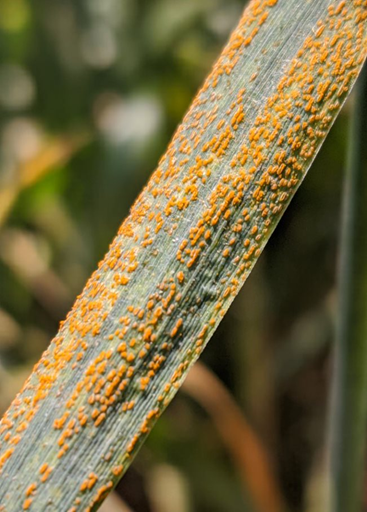
Figure 8. Symptoms of stripe rust.