

Wheat Disease Update - April 8, 2026
Leaf Rust and Stripe Rust Were Observed at Low Levels
Leaf rust (Figure 1) and stripe rust (Figure 2) were observed at the OSU Entomology and Plant Pathology Research Farm in Stillwater on March 30, 2026, when the crop was at the boot stage. Both diseases were present at low incidence overall; however, severity reached up to 40% on the flag leaf of susceptible varieties. With forecasted precipitation in the coming days, rusts are expected to increase in incidence and severity. Despite drought conditions, leaf rust has been active in Texas, and similar conditions are anticipated in Oklahoma in the coming weeks. In fields planted to susceptible varieties with high yield potential, and where the crop is still within the recommended fungicide application window, fungicide applications may be considered.
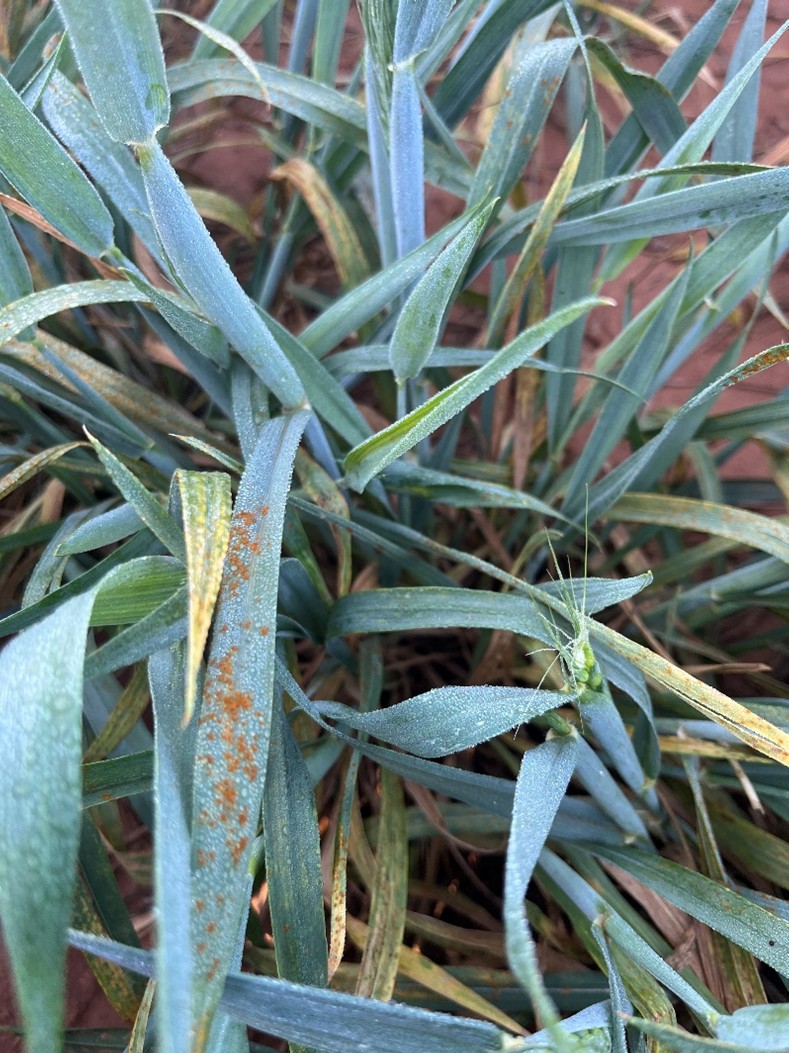 Figure 1. Leaf rust on the flag leaf of a susceptible variety in Stillwater, Oklahoma (April 7, 2026).
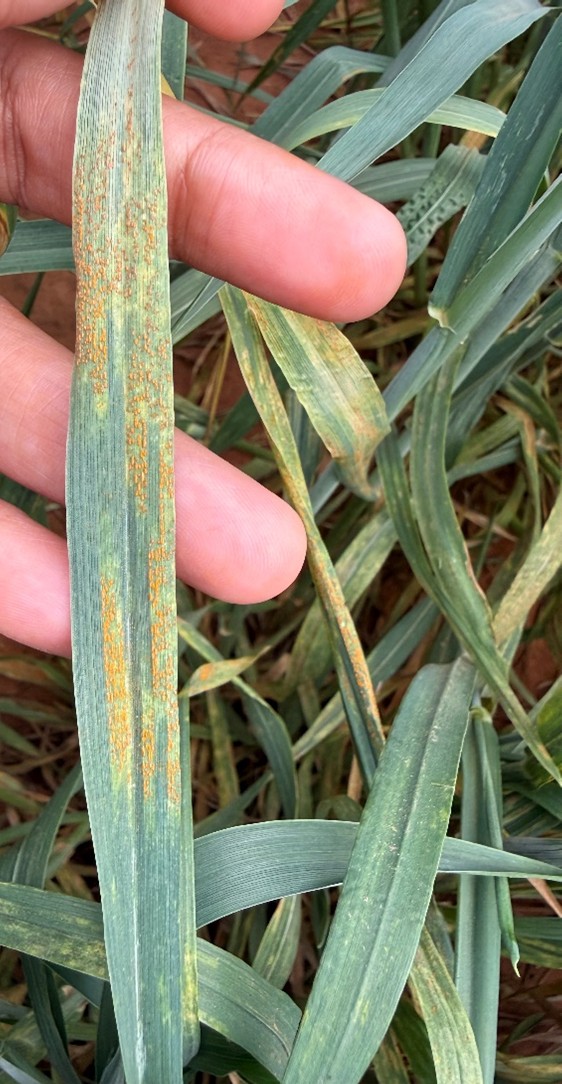 Figure 2. Stripe rust on the flag leaf of a susceptible variety in Stillwater, Oklahoma (April 1, 2026).
Barley Yellow Dwarf Has Been Observed at High Levels
During the first week of April, barley yellow dwarf (BYD) was observed at high levels at the OSU Entomology and Plant Pathology Research Farm and the OSU Agronomy Research Station. Wheat plants infected with BYD virus typically exhibit yellowing or reddish purple discoloration beginning at the leaf tips and may become stunted under high levels of infection (Figure 3). BYD is a common disease in Oklahoma, and the virus is transmitted by cereal aphids. Infections that occur in the fall are generally the most damaging. Interestingly, BYD was found at moderate to high levels even in some research plots treated with the insecticidal seed treatment Gaucho® 600F (imidacloprid). There are no-in season management options for BYD. Management for future seasons relies on controlling volunteer wheat and grassy weeds, delaying planting, and growing resistant cultivars.
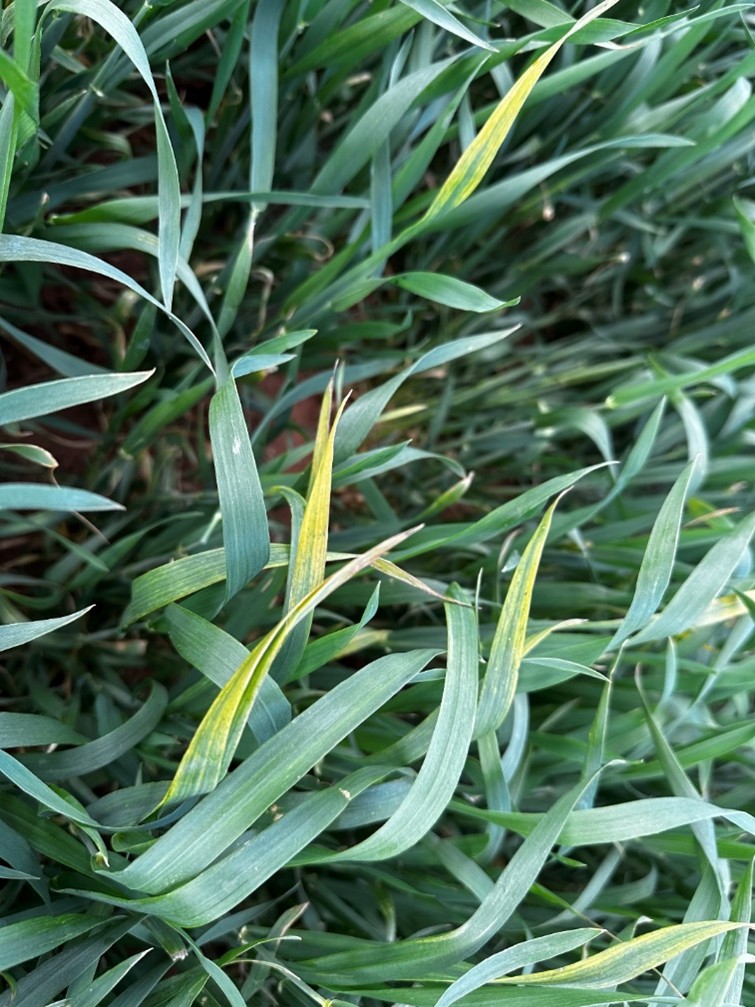 Figure 3. Symptoms of barley yellow dwarf.