

Webworm Activity Increasing in Pecan and Other Tree Hosts
Reports are coming in on increasing webworm activity. This is the time of year we start to see increase in webbing as we are navigating around town or on various road trips. Webworms are commonly seen in native trees or trees that are not in a regularly scheduled management program.
Hosts: The fall webworm (Hyphantria cunea) (Fig. 1) has been recorded on at least 88 species of shade, fruit, and ornamental trees in the United States. The preferred hosts vary from one area to another. In Oklahoma, persimmon and pecan are most commonly infested. In addition, black walnut and hickory are also common hosts. Sycamore, birch, and redbud are often attacked in years of heavy infestations, along with cottonwood, American elm, and bald cypress.
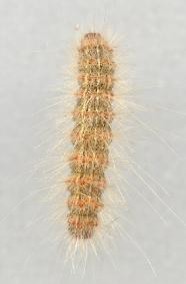 Figure 1. Fall Webworm. Oklahoma State University
Symptoms: Damage is caused by the larvae feeding on the leaves inside their web. They rarely are heavy enough to defoliate trees except for young pecans and persimmons. On most forest and shade trees, the insect is detrimental mainly to the beauty of the host and is thus more of a nuisance than a threat to the health of the tree.
However, damage can occur on smaller pecan trees as early defoliation affects tree vigor, yield, and nut quality Fig. 2). Pecan leaves are vital to the tree powering nut production through photosynthesis, regulating overall health, and serving as indicators for fertilization. The earlier the defoliation, the more harmful the damage.
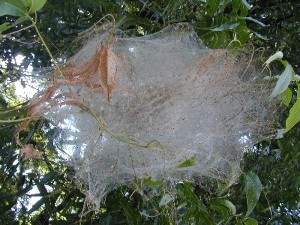 Figure 2. Fall Webworm Web on pecan. Oklahoma State University.
Life Cycle: Adults of the overwintering generation emerge during May or occasionally in late April (Fig. 3).
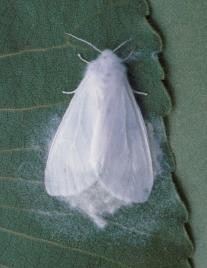 Figure 3. Webworm Adult. OSU
Egg laying occurs in late May and early June. Each female can lay 400 to 500 eggs in masses on the undersides of leaves (Fig. 4). The egg masses are covered with white hairs from the abdomen. Larvae begin hatching in early June and immediately begin to spin the web in which they feed. The web is extended as the larvae grows. The larvae mature and leave the trees to pupate in late July.
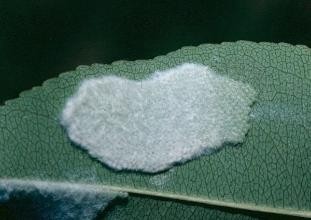 Figure 4. Webworm egg mass. Bug guide.
First generation adults emerge during August and second-generation larvae are present from late August into early October. Second generation pupae are the overwintering stage. Overwintering takes place in ground clutter, soil, and lower tree bark. There are two generations per year.
Control is rarely warranted for fall webworm since it is usually a nuisance pest. However, control may be necessary to protect pecan yield and tree vigor, especially in younger trees.
There are three main methods of control, including:
Cultural Control
Larvae and their webs may be cut out of small trees and destroyed, but larger trees with webs present high in the canopy should be treated with insecticide to achieve control.
Biological Control
More than 50 species of parasites and 36 species of predator’s attack fall webworm in North America. These natural enemies occur naturally and are likely to contribute to regulating fall webworm populations in non‐outbreak years.
Favorable weather patterns (e.g., mild winters and early springs) can allow higher numbers of overwintering pupae to survive. In addition, weather can affect naturally enemy populations.
Chemical Control
When using conventional insecticides that rely on contact, sufficient spray pressure is needed to reach and penetrate the webs of these caterpillars.
Several insecticides will normally provide control if adequate spray penetrates the webbing. A biorational approach to managing webworms can include the use of Bacillus thuringiensis var. kurstaki, a bacterial insecticide or Spinosad, another naturally occurring product. These options are more effective when webs are small and can be utilized by homeowners. Spray additional areas around the web to allow for insect ingestion as they migrate outside the web.
Products containing the insect growth regulator (tebufenozide or methoxyfenozide) are specific to caterpillar pests and easy on beneficial insects. Either of these materials can be applied near the webbing area and the caterpillars will eventually expand their feeding into the treatment zone. However, due to the nature of packaging, application rates, and buffer zones, products containing these insect growth regulators are generally not practical for homeowner situations.
These growth regulators can be used for controlling other significant early season Lepidopteran pests in pecan such as PNC and Bud Moth. Therefore, for commercial growers, a good insect management program can also help with webworm control.
More information on homeowner pecan insect control can be found in