

Soybean Cyst Nematode Detected in Fields in Southwest Oklahoma – Opportunity for Free Soil Testing for Growers
The soybean season in Oklahoma is winding down, but late-season scouting can still reveal unexpected problems. Last week, soybean cyst nematode (SCN) was confirmed in three nearby soybean fields in southwestern Oklahoma. Soybean cyst nematode (Heterodera glycines) was the leading cause of disease-related soybean yield losses in the United States in 2025, causing an estimated 70.1 million bushels in lost production; nearly one-third of all soybean losses attributed to diseases. In Oklahoma, we haven’t had many reports of SCN-affected fields in the last few years, but that doesn’t mean the problem isn't there. Previous publications documented SCN primarily in eastern Oklahoma, but recent detections in southwestern Oklahoma indicate that its known distribution in the state is expanding. In many cases, symptoms may not be visible in a field until SCN populations build to a high enough level that substantial yield loss is already occurring. Soil sampling and testing for SCN is the most effective way to identify the nematode and its presence in a field. Thus, Dr. Duffeck’s Lab at OSU is offering free nematode testing for soybean fields in Oklahoma. Fields that have already been harvested in 2026 are welcome as well.
What is SCN?
SCN is a microscopic, barely visible to the naked eye, soilborne roundworm that feeds and reproduces on soybean roots. The nematode significantly interferes with the plant’s ability to take up water and nutrients and may increase the severity of diseases caused by other root-infecting pathogens, such as fungal diseases.
Symptoms of the Disease
The main aboveground symptoms include patches of stunted plants (reduced plant size), chlorosis (leaf yellowing), and early maturity (Figure 1). However, substantial yield loss can occur without visible symptoms. By the time symptoms appear, SCN populations may already be high enough to cause considerable yield loss. Symptoms often occur in circular or lens-shaped patches that follow tillage and water patterns, are more noticeable in areas with lighter-textured soils, such as sandy or loamy soils, high soil pH, and dry conditions. Aboveground symptoms alone cannot confirm SCN infection because they can resemble damage caused by nutrient deficiencies, flooding, herbicide injury, soil compaction, drought, or root rot. Below ground symptoms may include stunted, darkened roots and fewer nitrogen-fixing nodules.
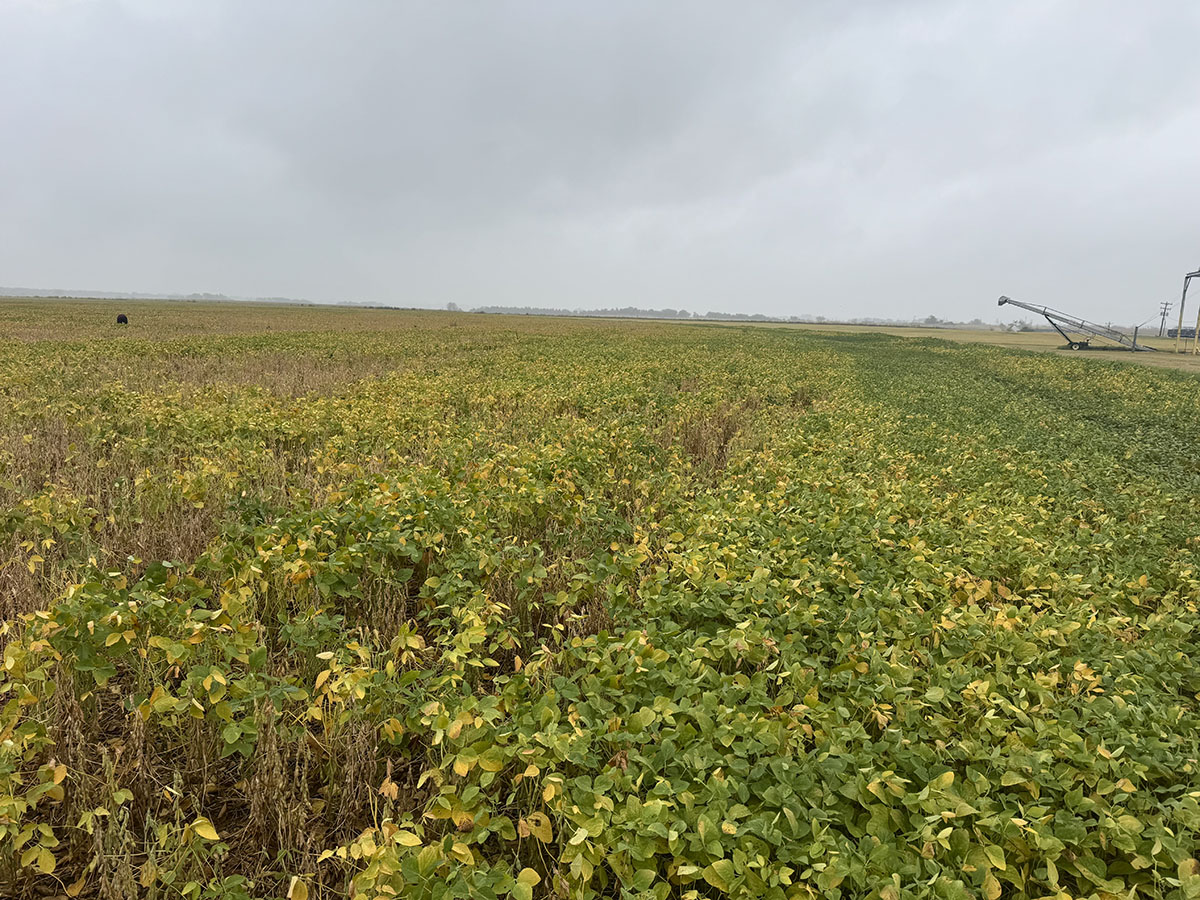 Figure 1. Yellowing, stunting, and early maturity are common aboveground symptoms caused by soybean cyst nematode. Photo credit: Maíra R. Duffeck.
Signs of the Pathogen
SCN may be detected in affected soybean plants without magnification as small, white or yellow, lemon-shaped females (immature cysts) on the root surface (Figure 2 and 3); however, a hand lens, when used correctly, can aid in identification of females. Each SCN female is approximately one-tenth the size of an average Rhizobium root nodule. As the females age, they turn brown and die, becoming egg filled cysts for which the nematode is named (Figure 4). The females and cysts are signs of this nematode and can be observed on susceptible soybean roots as early as 30 to 45 days after planting.
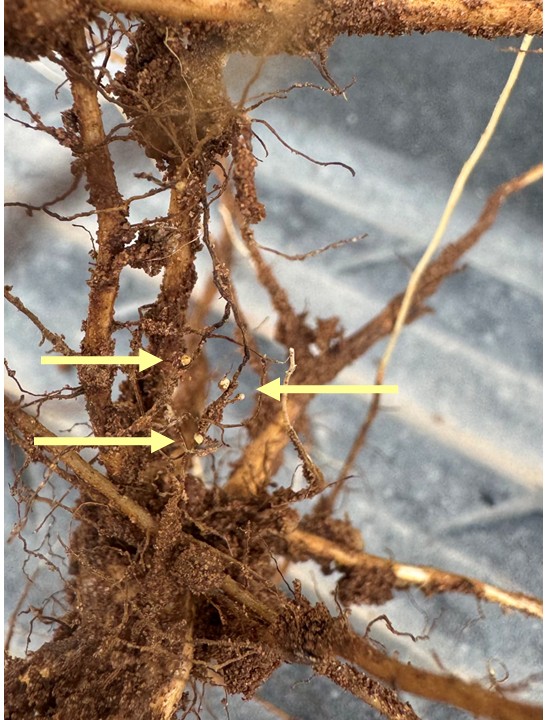 Figure 2. The body of soybean cyst nematode (Heterodera glycines) females may appear as small white to yellow objects on the root surface (yellow arrows). Photo credit: Maíra R. Duffeck.
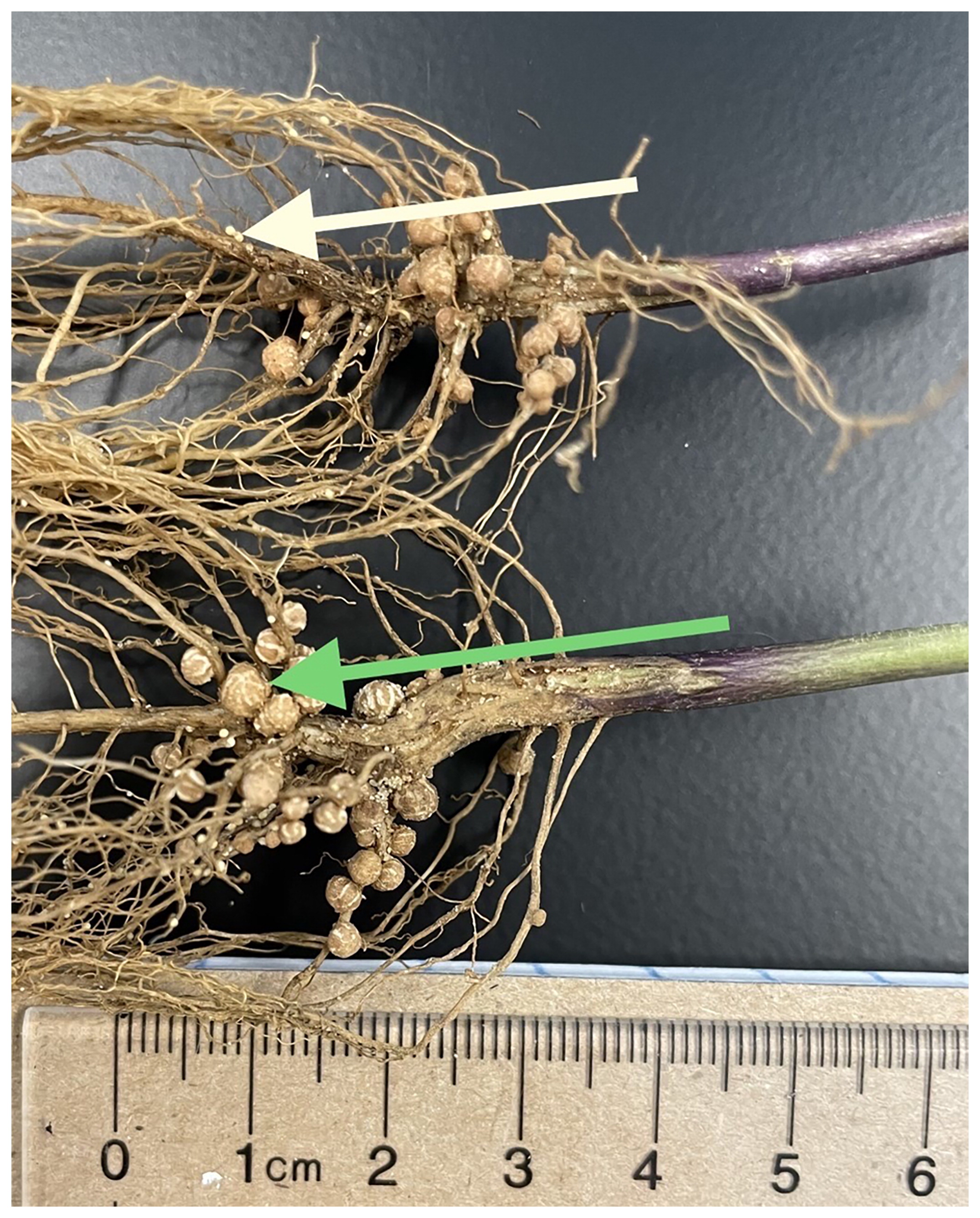 Figure 3. The body of soybean cyst nematode (Heterodera glycines) females may appear as small white to yellow objects on the root surface (white arrow). These may be compared to Bradyrhizobium nodules formed by nitrogen-fixing bacteria (green arrow). Photo credit: Soybean Cyst Nematode of Soybean: A Diagnostic Guide, Volume: 23, Issue: 4, Pages: 507-513, DOI: (10.1094/PHP-11-21-0138-DG).
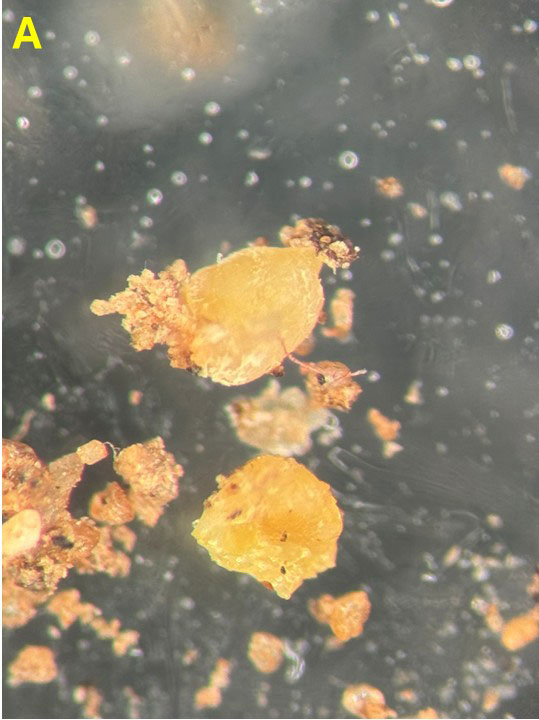 Figure 4A. Mature SCN females, white to yellow in color, removed from soybean roots and viewed under a stereomicroscope.Photo credit: Maíra R. Duffeck.
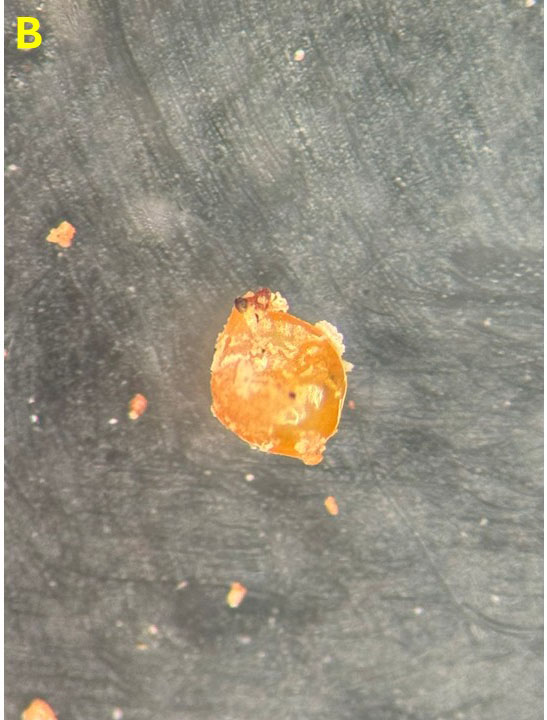 Figure 4B. Brown SCN cysts, which are easily dislodged from the root surface, viewed under a stereomicroscope. Photo credit: Maíra R. Duffeck.
Pathogen Spread
SCN moves only short distances from infested roots on its own. Tillage and irrigation can spread SCN within a field, while soil carried on equipment can introduce it into non-infested fields, this includes personal vehicles. Cysts can also spread through water, wind, and soil moved by wildlife or livestock. SCN is not seedborne, but seed lots contaminated with small clumps of dried, infested soil can introduce cysts containing viable eggs into new fields.
Host Range
SCN has a narrower host range than other economically important nematodes, such as root-knot (Meloidogyne spp.) and lesion nematodes (Pratylenchus spp.), with soybean as its primary agronomic host. It can also reproduce on other legumes, including several bean species, and many weeds, such as Canada thistle, purple deadnettle, and white clover. Weed hosts vary by region, production practices, and SCN population. Managing weeds that support SCN reproduction is an important part of reducing nematode populations.
Management of SCN
Management of SCN requires an integrated approach of host plant resistance, crop rotation, scouting/soil testing, and seed-applied nematode protectants or nematicides.
Genetic resistance: Planting SCN-resistant soybean varieties is one of the most effective ways to manage this nematode. However, performance depends on both the variety and the SCN population in the field. Most resistant varieties rely on ‘PI 88788’, while fewer use ‘Peking’ (aka PI 548402) or other resistance sources. Repeatedly planting varieties with the same resistance source can favor nematodes capable of reproducing on those plants, reducing protection over time. To maintain effectiveness, growers should rotate resistance sources whenever possible and alternate varieties within each source. Because SCN resistance involves multiple genes, varieties derived from the same source may differ in their ability to suppress nematode reproduction and protect yield. However, growers need to get their SCN population race tested to accurately deploy resistance. University of Missouri and University of Arkansas offers this service.
Crop rotation: Rotating soybean with crops that do not support SCN reproduction, or support it poorly, can help lower nematode populations. Options include corn, grain sorghum, cotton, wheat, barley, canola, and sunflower. Avoid using susceptible host crops, such as dry edible beans, snap beans, and edamame, as rotation crops for SCN management. Control volunteer soybean and weeds that allow SCN to reproduce between soybean crops. Cover crop selection also matters because some species, including certain clovers, vetches, and other legumes, can sustain SCN populations.
Limit spread: SCN can spread to new fields wherever infested soil is carried by equipment, water, wind, or other means. Remove soil from machinery before moving between fields, and thoroughly clean purchased or borrowed equipment before bringing it onto the farm. These practices help reduce the risk of introducing SCN into non-infested fields.
Seed treatments: Chemical and biological nematicide seed treatments offer an additional tool for managing SCN, but University trials across several states have shown inconsistent results. They are best considered as a supplement to resistant varieties and crop rotation, particularly in fields where more than one nematode species affects soybean.
Free Nematode Testing of Soil Samples for Oklahoma Soybean Growers
Oklahoma soybean growers can have their fields tested for SCN and other nematodes at no cost. Growers can contact Dr. Duffeck at OSU (347) 205-2180) to arrange a field visit for soil sampling or submit samples directly to her. Samples can also be submitted through the OSU Plant Disease and Insect Diagnostic Laboratory, which accepts up to 10 diagnostic samples per Oklahoma resident each year at no charge. For guidance on collecting and submitting samples, contact Dr. Duffeck on (347) 205-2180 (email: mairodr@okstate.edu) or your local OSU County Extension office.