

Plant Health Update, Year End Summary 2025
Looking back on 2025, a few trends stood out, including a higher-than-normal incidence of submissions of fruit and ornamental plants with fire blight (Figure 1). This is one of the most destructive diseases of apples, pears and close relatives, and can cause significant branch dieback and sometimes plant death. For information about managing fire blight, check out this Oklahoma Gardening segment.
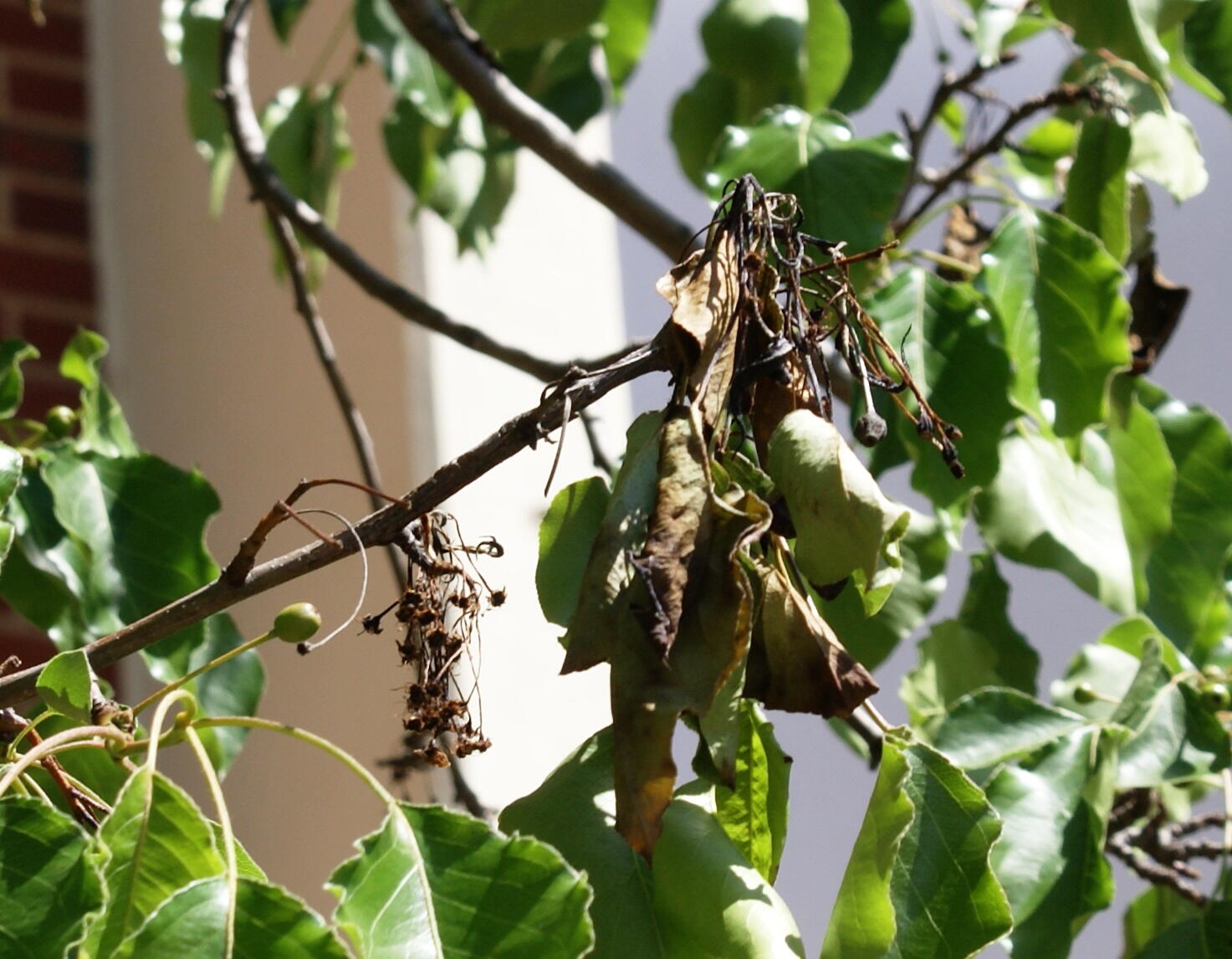
Figure 1. Pear tree with brown discoloration, wilting and shoot tip dieback due to fire blight disease.
The lab also saw several samples of crape myrtle shrubs with bark scale (Figure 2) and this was a new record for Noble county. Information about and images of this type of scale can be found in this newsletter article. If you have seen crape myrtle bark scale in your area and it is not indicated on this map , please email a few images of the insects on the tree and the property address to sickplants@okstate.edu. If you have a physical specimen, store it in the refrigerator until you hear from us because we may request that you submit it for microscopic examination.
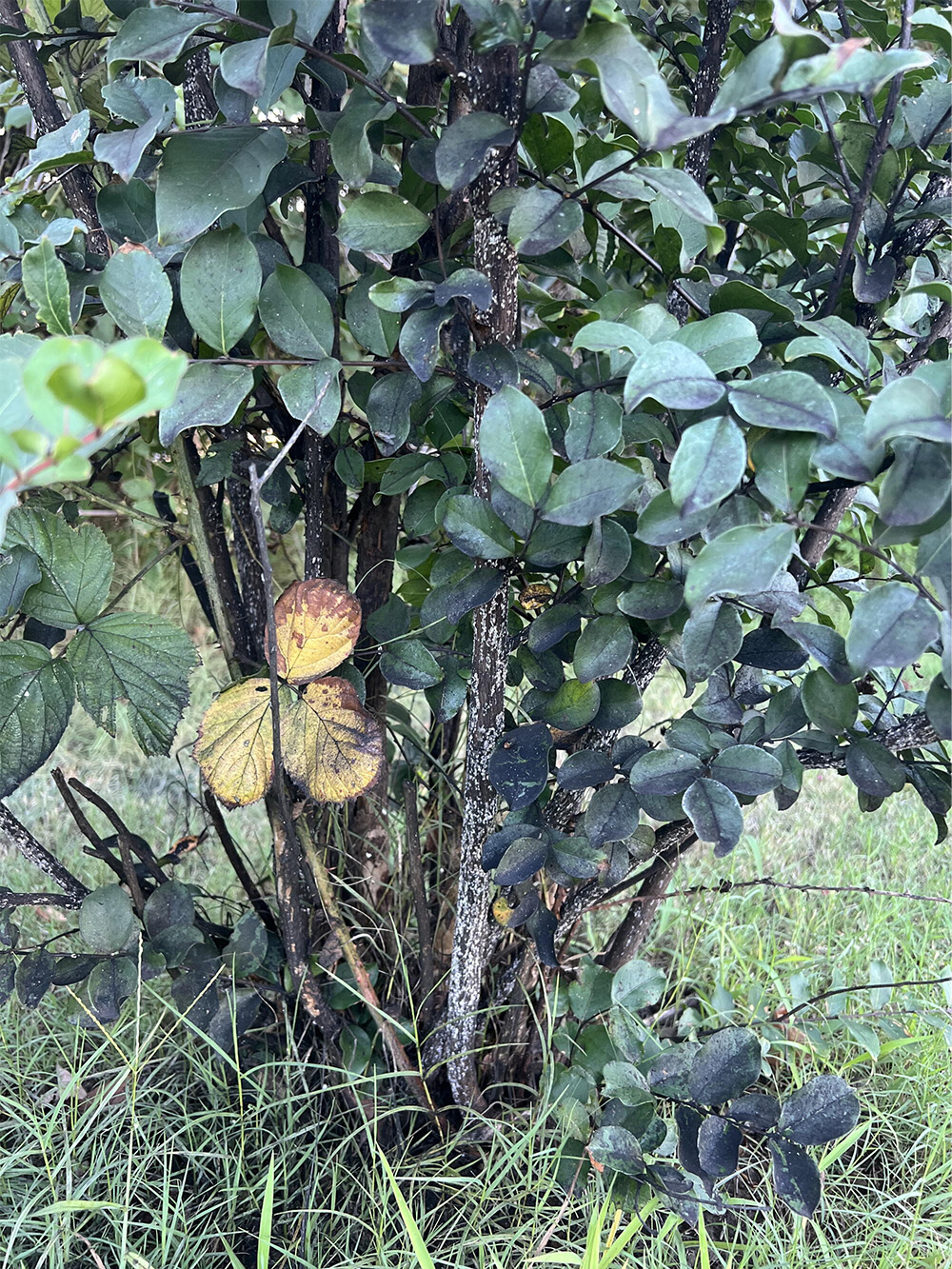
Figure 2. Crape myrtle shrub with white, waxy encrustations on trunks and branches, evidence of bark scale. The leaves have a black coating due to sooty mold, a secondary problem.
Oaks were the most common sample type submitted to the PDIDL in 2025 (over 150 samples). Rainy spring weather contributed to a higher incidence of oak anthracnose than we normally observe. Overall, however, oak trees were most affected by environmental stress problems (drought, temperature extremes, herbicide injury, pH induced problems, mechanical injury) as either the cause or a main contributor to the decline. For example, Biscogniauxia (Hypoxylon) canker is nearly always observed after a tree has suffered from drought stress.
In 2025 there were several new detections of plant diseases infecting specialty crops in Oklahoma. One was a disease called wart disease or false rust, which is caused by Synchytrium geranii. It was observed on both cultivated Crane’s bill geranium, and the wild type weed often noticed in lawns (Geranium spp.). This disease causes the formation of unusual warts or galls but does not seem to affect the overall health of the plant (see excellent images about Synchytrium geranii). This disease has likely been present in the state for many years, but unnoticed as it is of minor importance.
Previous Plant Health Updates from 2025 have reported the detection of other new specialty crop diseases including pecan bunchy top, bacterial leaf scorch of redbud, Neopestalotiopsis disease of strawberry and roselle with a virus disease. The PDIDL has one additional interesting new detection for 2025 to report.
In late August, Zinnia plants in a Payne County home landscape exhibited necrotic spots, unusual line patterns, yellowing and plant decline (Figures 3 and 4). These symptoms suggested a plant virus infection. The PDIDL tested the zinnia leaves for all reported viruses on this host with negative results. Staff then began exploring other possibilities and testing suggested that we had identified a virus in the Orthotospovirus genus. Based on tests run by the PDIDL, the specific virus was suspected to be new to the Continental United States and required confirmation by the USDA Plant Pathogen Confirmatory Diagnostic Laboratory (PPCDL). Our detection was confirmed in late November 2025.
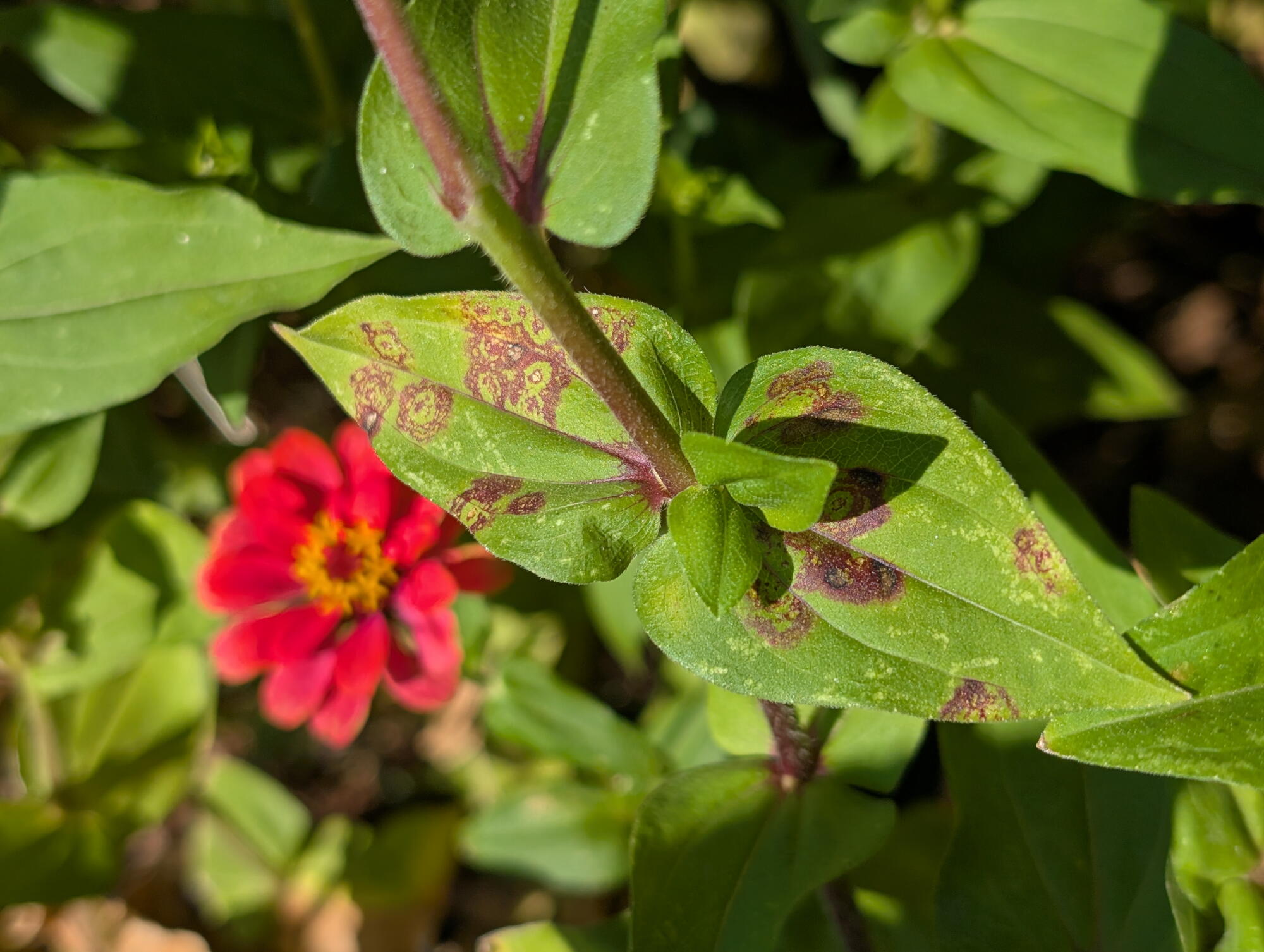
Figure 3. Multiple purple-brown colored ringspots on zinnia leaves due to Capsicum chlorosis virus.
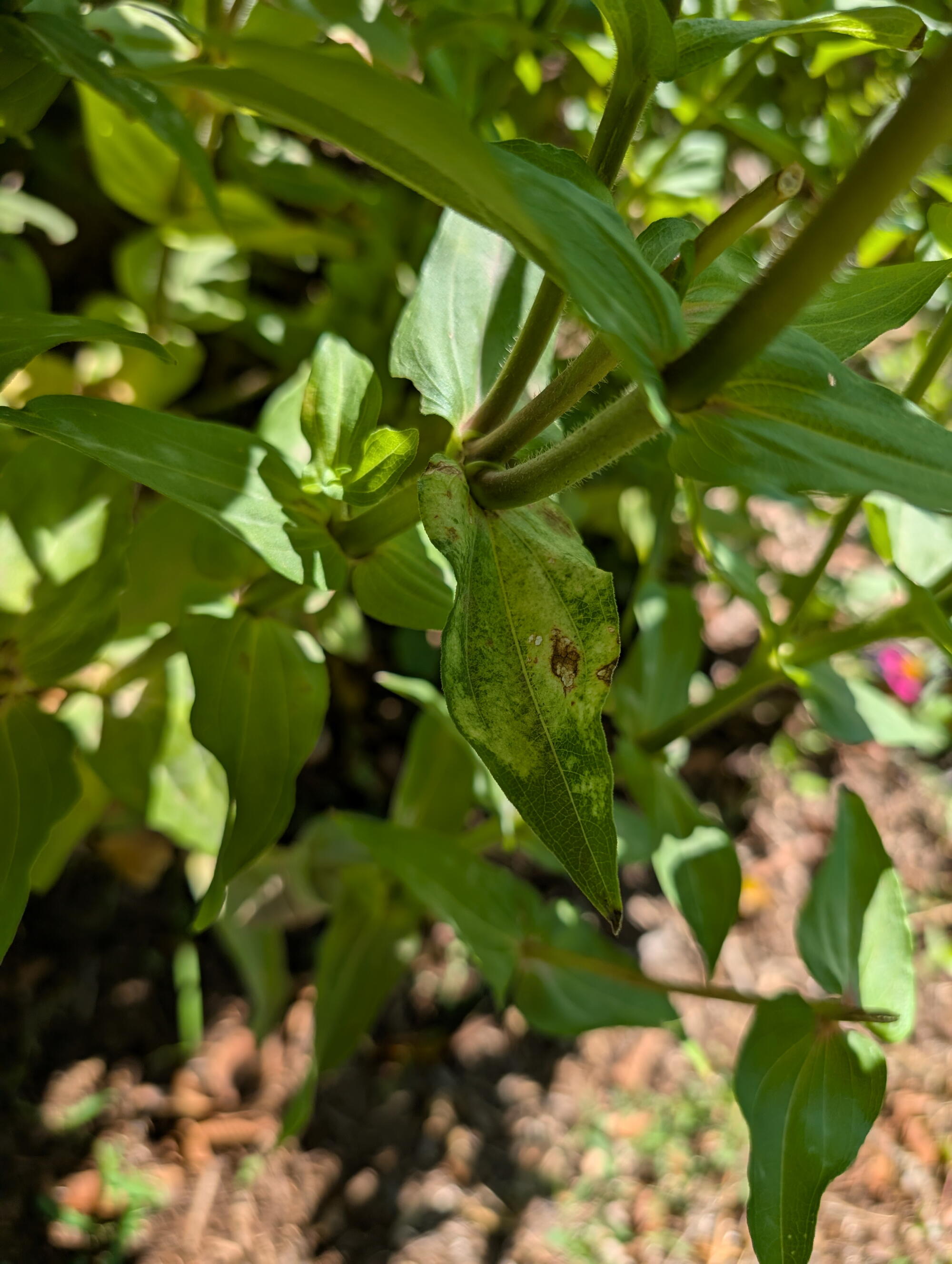
Figure 4. The zinnia leaf in the center of the image shows unusual chlorosis (yellowing) and mottling due to Capsicum chlorosis virus.
Following our initial detection, lab staff visited demonstration and public gardens in Cleveland, Logan and Oklahoma counties in Oklahoma. Symptomatic zinnia plants were observed in these locations and plant samples were collected. The PDIDL partnered with Dr. Andres Espindola and his graduate student Jing Zhang to confirm the detections in these new locations and prepare a first report for publication in a scientific journal (submitted). Only zinnia plants were found positive for the Orthotospovirus. Other tested plants included basil, pepper, tomato, Gomphrena, Salvia, and Verbena, all of which were found negative for this virus genus even though some suspicious symptoms (spots, blotches, distortion) may have been present. The symptoms were attributed to other problems such as fungal leaf spots, insect feeding damage and herbicide injury.
The virus is called Capsicum chlorosis virus (CaCV), species name Orthotospovirus capsiciflavi, and has been detected in Hawaii (2013) affecting ornamental waxflower (Hoya calycina). However, the affected plant was destroyed and no other plants in the area were found to be infected. The 2025 detection in Oklahoma is the first on the United States mainland, and since it was found in 4 counties with many miles of separation, long-distance transmission is present. Orthotospoviruses are known to spread by:
- Thrips, small plant feeding insects. The virus is acquired by thrips during their larval stage and then transmitted to healthy plants by infected adults while feeding.
- Movement of infected plant material. This includes propagation or cuttings from infected plants and shipping of whole plants or plant parts.
- Mechanical transmission. Under experimental conditions, the virus can be transmitted mechanically.
- Seed transmission. Although seed transmission is rare and unlikely, it is possible for viruses in the genus Orthotospovirus. CaCV specifically is not known to be seed transmitted.
There is no connection between the Oklahoma sites or plant material tested, and the seed sources are unknown, but likely not involved. However, thrips insects or evidence of their presence (frass or characteristic feeding damage) were present on all zinnia plants that tested positive for the virus. Therefore, an attempt was made to identify the thrips species present. Unfortunately, very few thrips were recovered since the detection was late in the growing season, and most of the insects found were immature. Molecular diagnostic testing proceeded with what was available, but the DNA was too poor quality, and then no additional specimens were available.
Dr. Espindola and Ms. Zhang are continuing to test and analyze collected plant samples. They have developed an additional molecular diagnostic testing that provides secondary confirmation of the virus on plant samples. This method is submitted for publication.
It is unclear if this detection of CaCV is important or an anomaly. This virus is a significant concern for pepper production in the US. At the Payne County location, samples from 7 different varieties of pepper (jalapeno, habanero, bell) were tested and all samples were negative for CaCV. Additional sampling is planned for the Payne County site in 2026 and home gardeners, landscapers, market growers, etc. are encouraged to monitor plants for thrips and symptoms that suggest infection with a plant virus. Oklahoma residents can submit up to 10 plant disease or insect identification samples annually for basic examination and testing for no charge. In some cases, submitters may be asked to cover shipping charges to the lab. Growers should coordinate sample submission through their local county extension office.
CaCV and other viruses cause chlorotic and necrotic spots, blotches or line patterns, distortion, yellowing, and poor plant growth. It is nearly impossible to distinguish between different types of viruses without laboratory testing. Furthermore, virus symptoms resemble other plant problems such as those caused by fungal and bacterial plant pathogens, nutritional problems, insect feeding damage and chemical injury. County educators are a local resource to help identify plant problems. They work closely with PDIDL diagnosticians and state specialists to help Oklahoma residents identify the cause of unusual symptoms on plants.
In 2025, the PDIDL used grant funds received to support advanced diagnostic testing of Oklahoma specialty crops. To determine if these funds were beneficial to clients, Oklahoma specialty crop growers were emailed a survey about their experience with the lab. There were 782 surveys successfully emailed and about a 30% response rate. When asked if clients experienced a reduction in product loss to pests or diseases following sample submission, 51% indicated they agreed and 39% did not agree or disagree. Only 10% of clients reported that they did not have a reduction in losses. For clients who had a problem with available management options, 74% of clients indicated overall crop quality improved following implementation. Twenty-three percent of clients did not have a change in crop quality and only 2% indicated that crop quality was not improved. When asked if labor costs were reduced following the management strategy, only 4% indicated that labor costs were not reduced. Most clients indicated that labor costs were reduced (34%) or that there was no change in lab cost (62%). When asked if there was a reduction in pesticide use once the plant problem was identified, 45% of respondents agreed and 43% had no change in pesticide use. Only 12% reported an increase in pesticide use once the problem was identified. Lastly, clients were asked if they would utilize PDIDL services again. Only one respondent indicated they would not use the service again out of the 219 clients that responded to this question. There were many positive comments provided by respondents and the data show that the funds from the grant were beneficial to Oklahoma specialty crop growers.
We will continue to provide plant health summaries in 2026, although we may reduce the frequency to bi-monthly. If you have suggestions for future topics to include in our monthly updates, please contact jen.olson@okstate.edu or call the PDIDL at (405) 744-9961.