

Late-Season Alfalfa Insect and Other Management Considerations During Drought
Current drought conditions in Oklahoma (Fig. 1) leave alfalfa growers facing additional challenges toward the end of the growing season. Late-season drought can change management strategies because the producer must balance water conservation, stand survival, and the need for fall regrowth. In Oklahoma, drought-stressed alfalfa should generally be managed more conservatively than a well-watered stand.
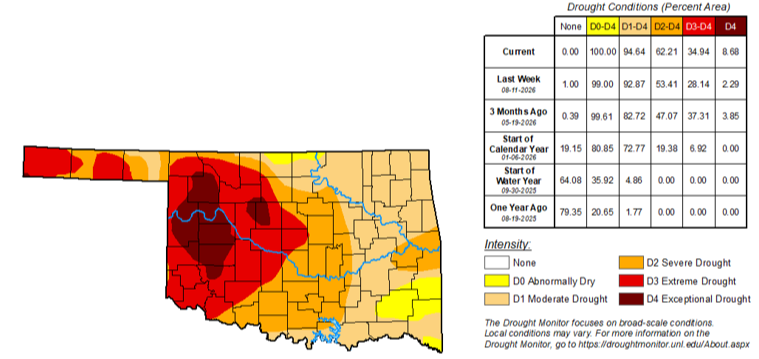 Figure 1. U.S. Drought Monitor for Oklahoma, August 18, 2026. Drought conditions for Oklahoma. Oklahoma Mesonet.
Drought-Stressed Stands
When soil moisture is limited, alfalfa may stop producing significant top growth while continuing to rely on stored carbohydrates in the crown and roots. Repeatedly harvesting or grazing a severely drought-stressed stand can further deplete those reserves and increase the risk of stand loss.
During late-season drought, producers should:
- Avoid cutting simply because the calendar says it is time to harvest. If the crop has little growth because of drought, harvesting may provide little forage while placing additional stress on plants.
- Allow adequate fall regrowth whenever moisture becomes available. The goal is to enter winter with healthy crowns and sufficient root reserves. Allowing approximately six weeks of regrowth before the first killing frost gives plants an opportunity to replenish root reserves needed for winter survival and spring growth.
- Avoid heavy grazing of drought-stressed plants. Livestock can remove remaining leaf area and damage crowns, especially when soil is dry and plants have limited ability to recover.
- Monitor soil moisture and weather forecasts before making the final harvest or grazing decision.
- Prioritize stand survival over minimum late-season forage production.
Irrigation Considerations
For irrigated alfalfa, late-season irrigation should be prioritized according to available water and the value of the crop. If water is limited, producers should consider whether available irrigation can produce enough additional forage to justify the expense.
If irrigation water is available, maintaining adequate soil moisture during the fall recovery period can help the crop produce the regrowth needed before winter. However, irrigation should be managed according to soil moisture rather than simply applying water on a fixed schedule.
Fertility During Drought
Fertilizer should not be viewed as a substitute for adequate moisture. A drought-stressed crop may not respond to additional nutrients as expected because water is limiting plant growth.
Soil testing remains important, but producers should consider when the crop will be able to utilize the nutrients before making an application. Once adequate moisture returns, correcting documented potassium and phosphorus deficiencies can help support future production.
Research has indicated the importance of soil testing and appropriate fertility management in maintaining productive alfalfa stands. For more details on collecting soil samples or nutrient management refer to the Oklahoma Forage and Pasture Fertility Guide (E-1021) or Oklahoma Soil Fertility Handbook (E-1039).
Weed Control
Late season weed control is largely ineffective because dry conditions cause weeds to develop a thick waxy leaf coating and shut down internal movement, preventing herbicides from reaching growing points. Wait to spray until moisture returns and both weeds and the alfalfa crop resume active growth.
Insect Scouting
Drought can also change pest pressure. Producers should continue scouting rather than assuming that drought eliminates insect problems. Aphids, especially spotted aphids (Fig. 2), Fall Armyworms (Fig. 3), and other pests can still damage drought-stressed alfalfa, particularly when plants begin producing new growth after rainfall.
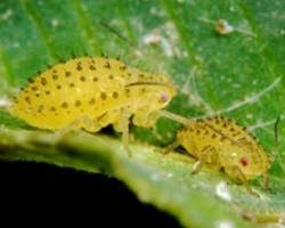 Figure 2. Spotted Alfalfa Aphid. OSU.
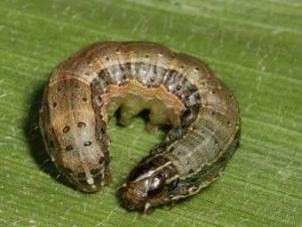 Figure 3. Fall Armyworm. OSU.
Management After Rainfall
One of the most important decisions comes after significant rainfall into late summer. If drought-stressed alfalfa begins producing new growth in late season, producers should resist the temptation to harvest immediately. Allowing adequate recovery can help rebuild carbohydrate reserves before winter.
Things to Consider
In a late-season drought, the priority should shift from producing one more cutting to protecting the stand.
If the alfalfa has adequate moisture and enough time to recover, a final harvest may be appropriate. If the stand is severely drought-stressed with little regrowth, leaving it uncut and avoiding heavy grazing may provide a better chance of winter survival and productive spring growth.
More information on alfalfa management can be found in extension publications: