

Keep an Eye on Alfalfa Weevil and Aphids
While most alfalfa growers made their first application for alfalfa weevil (AW) control in early March, monitoring is still advised.
Warming temperatures in late February prompted alfalfa plants to break dormancy and alfalfa weevil degree days to accumulate rapidly prompting early season spray decisions for weevil control. Shorter plant growth (2 inches) and increased populations of alfalfa weevil larvae reduced threshold levels meaning earlier than normal applications were needed. In most years, with ongoing cold weather events and cultural strategies, applications can be delayed until mid to late March with plant height of about 6-8 inches.
Staggered alfalfa weevil spring egg laying (Fig. 1) can occur late February through early April depending on weather events. While scouting fields in south central Oklahoma last Wednesday, I found several small (1st instar) and a few larger larvae (Fig. 2) scattered throughout the fields. Residual activity of insecticides applied in early March only have a 7-21-day residual depending on the product and environmental conditions. Therefore, early applications may lose effectiveness before timing for first harvest prompting decisions on additional application to be made.
 Figure 1. AW eggs in stem. Photos: Oklahoma State University.
 Figure 2. Alfalfa Weevil larva. Photos: Oklahoma State University.
While the fields monitored were not at threshold levels, conditions can change quickly with temperatures in the 70 – 80-degree range which is optimum for development. Monitoring must continue for another week or so as to not be surprised by a second flush of weevil activity.
Another important alfalfa insect pest to be on the lookout for this time of year are aphids. It is not uncommon to see increasing aphid numbers due to the timing of the season. Early season aphids like Pea Aphid and Blue Alfalfa Aphids like the cooler spring temperatures (60-70 °F). In addition to environmental conditions, previously applied insecticides for alfalfa weevil (early March) are starting to lose their efficacy. These early applications may have also decreased beneficial insect populations. This could allow for aphid numbers to increase rapidly due to reduction in natural enemies. Aphids can damage plants by sucking plant fluids, causing stunting, chlorosis, and potential stand death, particularly during dry springs.
Both pea aphids Acyrthosiphum pisum, and blue aphids Acyrthosiphon kondoi can be in alfalfa fields the entire summer to fall, but reproduction is dramatically slowed when temperatures exceed 85 - 90 °F such as we have had recently. Pea aphid colonies prefer to feed on stems and newly expanding leaves and are more prevalent in the early spring when temperatures are cooler and dryer (Fig. 3). Blue aphids are smaller and more blue-green compared to Pea Aphids but are more damaging. Heavy infestations of blue alfalfa aphids are characterized by severe stunting of the stems, which have shortened internodes and smaller leaves. Leaf curling and eventual leaf drop are also common symptoms in severely infested alfalfa fields.
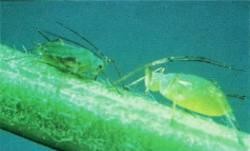 Figure 3. Blue Alfalfa aphid left, and Pea Aphid right. Photo: Oklahoma State University.
Spotted alfalfa aphids Therioaphis maculata are about 2 mm long, pale yellow, and have four to six rows of dark spots on their back (Fig 4). In contrast to Pea and Blue aphid activity, spotted aphids thrive in temperatures above 90 °F. They are usually found on stems and leaves on the lower portions of the plant but will move to the top as it kills lower leaves. Spotted aphids suck plant sap and secrete large amounts of honeydew which can develop into sooty mold and lead to harvesting challenges. Its saliva creates a toxic reaction to plants, killing seedling plants and may lower the productivity of established alfalfa fields.
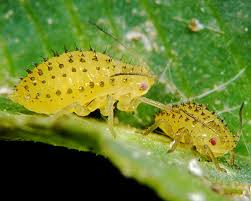 Figure 4. Spotted Alfalfa Aphid. Photo: Influential Points.
Evaluating plant vigor is often the key to determining the need to treat these insects. Closely monitor fields during the early part of the season (March, April, and May) during periods of slow growth, especially when moisture is limited.
Moderate to heavy rain events may help to alleviate aphid populations, allowing for more plant growth, and by dislodging aphids from the plants. This also allows aphids to be eaten by predators.
Control decisions should be based on the maturity of the alfalfa, the size of the aphid population, and the number of natural control agents (beneficial insects) present. A standard "rule of thumb" for biological control is a ratio of 1 adult lady beetle to every 5 to 10 aphids or 3 larvae for 40 aphids. Also look for parasitized aphids. If 10% or more are parasitized, then biological control may be effective.
Established alfalfa can tolerate low numbers of aphids without much sign of injury due to natural parasitism and crop growth. Fifty pea aphids per stem or more on shorter (<10 inch tall) alfalfa would be cause for alarm and beneficial insects would not be able to keep up. For blue aphids the threshold level is 10 or more per stem. For newly established stands the numbers are significantly lower at 1/stem for blues and 5/stem for pea aphids (Table 1).
| Aphid Sampling Thresholds | Cowpea | Cowpea | Pea Aphid | Pea Aphid | Blue Aphid | Blue Aphid | Spotted Aphid | Spotted Aphid |
|---|---|---|---|---|---|---|---|---|
| Alfalfa Growth Stage | Sweep* | Stem** | Sweep* | Stem** | Sweep* | Stem** | Sweep* | Stem** |
| Seedling | -- | 5 | -- | 5 | -- | 1 | -- | 1 |
| <10” tall | 300 | 40 | 300 | 40 | 100 | 10 | 100 | 10 |
| >10” tall | 400 | 75 | 400 | 75 | 200 | 30 | 200 | 30 |
Table 1. Economic thresholds for aphids on alfalfa at varied growth stages.
More information on alfalfa aphids can be found in EPP-7184, Alfalfa Aphids in Oklahoma and CR 7150, Alfalfa Forage Insect Control.