


OSU Extension horticulture program helps inmates plant seeds and cultivate hope
Monday, September 28, 2026
Media Contact: Trisha Gedon | Sr. Communications Specialist | 405-744-3625 | trisha.gedon@okstate.edu
Inside the fences at the Dr. Eddie Warrior Correctional Center in Taft, Oklahoma, concrete and steel define much of daily life, but for the inmates participating in the horticulture program, a patch of soil, some seeds and a few basic gardening tools bring them hope for a brighter future.
“When I come out to work in the garden and get my hands in the dirt, I find peace,” said an inmate. “There’s a lot going on in here, but being outdoors and doing something productive helps me escape the realities of prison life for a few hours every day.”
The horticulture program is a partnership with the Oklahoma State University Extension, Oklahoma Department of Corrections, Oklahoma Master Gardeners and Carabelle’s Legacy, said Michelle Carter-Brown, Muskogee County Extension program assistant.
“We were approached by an inmate asking OSU Extension to sponsor the garden to get it started,” Carter-Brown said. “We contacted the acting warden at the time, who put us in touch with a nonprofit organization that did agriculture advocating for women, and we put a plan together in the fall of 2023.”
Carter-Brown wrote a small grant to purchase seeds, and the nonprofit matched the grant to purchase tools. She reached out to Anthony Wright, a Muskogee County Master Gardener, to see if he would be interested in logging volunteer hours at the prison and helping develop the curriculum. The program launched in January 2024, with inmates receiving 25 hours of instruction over 16 weeks, using curriculum from the Oklahoma Master Gardeners and Texas A&M Junior Master Gardeners programs. Inmates also participated in nutrition education classes and hands-on activities in the greenhouse and garden plots.
“As part of the class curriculum, we’ve had the privilege of OSU faculty and community entrepreneurs sharing their wealth of knowledge with the inmates,” Carter-Brown said. “This truly is a group effort.”
James R. Cotton Jr., deputy warden at the correctional facility, said programs like this help showcase the good things that go on inside prison walls, as well as serve as an incentive for good behavior.
“Most of the things the public sees about prisons focus on the bad,” he said. “This is a unique program, and it’s something we always showcase when people visit the correctional facility.”
He said the women who participate are Level 4 inmates, which means they are doing the right thing and following the rules every day. The program is quite popular, and there is a waiting list to participate. Only about 25 to 30 inmates get to participate out of a prison population of nearly 1,000.
“This program gives the women something to do and helps them develop valuable skills they can use when they get out,” Cotton said. “It teaches them responsibility, how to grow food and work hard. The inmates see the food on the table, and they know someone had to work hard to put it there.”
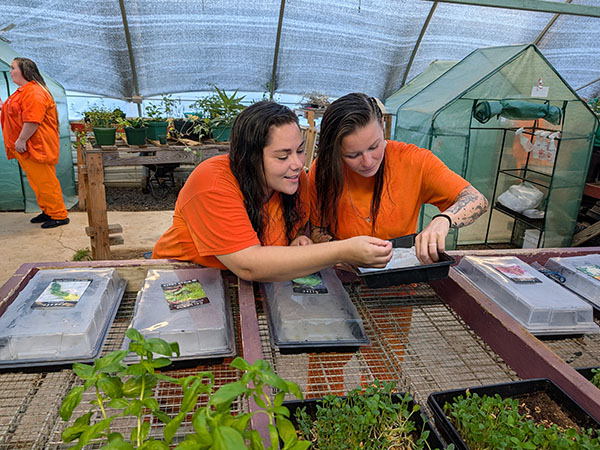
Wright said when Carter-Brown approached him about being involved, he jumped at the chance.
“I wanted to help because this was outside of the box,” said Wright, who became a Master Gardener in 2020. “I love seeing the progression of the garden over the years. In the first year, the soil wasn’t good and resources were lacking, but the ladies persevered. We have an outstanding garden today with a lot of variety of vegetables.”
Wright said he has enjoyed seeing the inmates gain confidence, develop a sense of responsibility for their work and become a team working toward the same goal. However, he said he has gained something, too.
“The ladies are great and are learning there’s nothing they can’t do,” he said. “But, through my participation, I’ve learned to be a better Master Gardener.”
One inmate mentioned the group is cognizant of all of their resources and strives to make the most of everything they have.
“We compost our vegetable scraps and garden vegetation to make rich soil to use later,” she said. “We’ve found onions growing in the compost, and we’ll dig them out and replant them in the garden. We don’t let anything go to waste. When plants go to seed, we collect those to use next season.”
Another inmate said she sees firsthand how the horticulture program benefits participants.
“I see these ladies go from rock bottom to hope,” she said. “They come to work every day, put a seed in the ground, and soon it’s a little sprout. Who couldn’t be happy about that? I love it — it’s my favorite part. We’re creating something good in a very dark place.”
Upon release, another inmate said she is looking forward to starting her own garden.
“I can’t wait to grow fruits and vegetables for my family,” she said. “Everything I’m learning here I can use later on.”
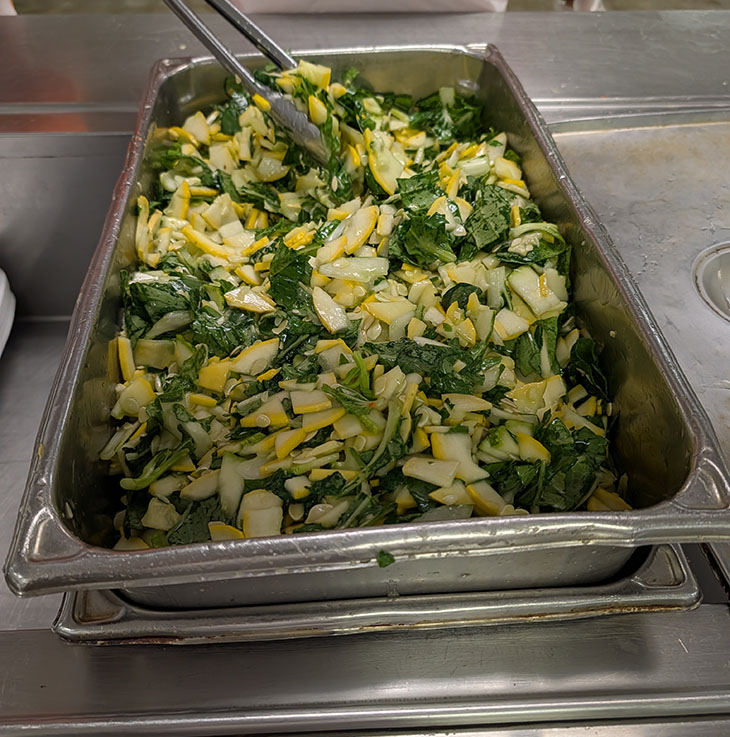
While the program is centered here and fruits and vegetables grown in the garden are served in the correctional facility’s cafeteria, the prison garden’s positive outcomes extend much further.
One example is the partnership with Carabelle’s Eats and Treats, a program for justice-impacted women within Carabelle’s Legacy in Tulsa, which provides inmates with educational and employment opportunities upon release. A 12-week training program equips them with culinary market skills for future employment.
Maria Morris, executive director of Carabelle’s Legacy and executive chef at Carabelle’s Eats and Treats, said she knows how difficult it can be for justice-impacted women to find meaningful employment.
“This really started with a closed door,” Morris said. “I wanted to be able to create opportunities for other women like me. We’ve been able to help 19 women with employment opportunities through our culinary program.”
In addition to the training program, Morris said her business uses microgreens, melons, squash and other produce, along with edible flowers, grown in the prison garden.
Although the garden at the Dr. Eddie Warrior Correctional Center may look like an ordinary garden, it does so much more than produce fruits and vegetables. It grows hope and provides skills the women will use upon their release.
“I think what I see the most is the garden gives the inmates hope, not just for the outside, but while they’re in here,” Carter-Brown said. “These ladies are able to take a negative situation and make it more positive.”
Anyone who would like to donate seeds or tools or make a monetary donation to help support the horticulture program may contact Carter-Brown at 918-686-7200 or michelle.carter_brown@okstate.edu.