

Ag Insights - September 2026
Wednesday, September 16, 2026
Trace Minerals for Calves; Not a Silver Bullet But A
Tool
Dana Zook, NW OK Area Livestock Specialist
As I write this article, it’s the first day in nearly over two months with highs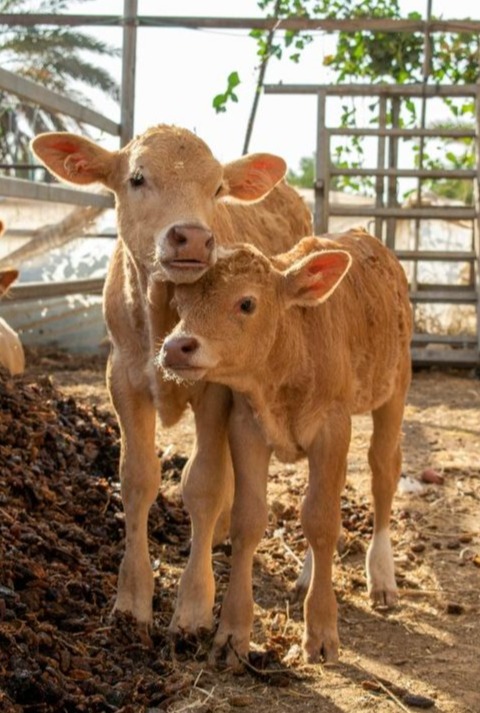 below 95 degrees. As hot as it’s been, I thought maybe the thermostat was stuck! This gives me hope that we can move into fall weaning with some temperature relief.
Even though the temps have put a full stop on plant growth, cattle herds continue their yearly cycle. Weaning is just around the corner and for some, preconditioning plans are being put in place. This summer I spoke at the Women in Ag Conference about Weaning and Preconditioning Cattle. Trace mineral nutrition was one topic of discussion and with weaning right around the corner I felt this was timely.
I’ve talked extensively in the past about weaning and benefits of preconditioning. Cattle experience many different stressors during weaning. Preconditioning is meant to help mitigate stress and help them adjust to new norms without their dam. One aspect of preconditioning nutrition that has received a lot of interest is traced mineral supplementation. Whether or not you understand mineral nutrition, you have probably heard the key terms; trace, organic, chelated. Individual minerals associated with this group are Copper, Cobalt, Manganese, Selenium, and Zinc and these are often sold at a higher price point. Compared to inorganic minerals, trace minerals are thought to be more readily absorbed by the animal. These are in contrast to the plain-Jane bag of inexpensive minerals widely available at retail locations; inorganic minerals usually make up a majority of these blends. Given all this, the question remains; do certain mineral or blends improve average daily gain while also reducing sickness and death during this critical time? A review was recently written summarizing research about this very topic. I found this very interesting so stay with me.
This review, written by McKnight and others from the Mississippi area chose to evaluate the results of 20 research studies that addressed the impact of mineral supplementation on calves within preconditioning and feedlot receiving phases of production. These studies looked at the supplementation of both organic (chelated, and organic complex) and inorganic minerals (think plain-Jane from above).
Results of this compiled study found that the supplementation of organic trace minerals led to slightly higher average daily gains (ADG). This equated to about 0.08 pounds more ADG so this is not a large number. In addition, herds with longer receiving periods had slightly greater gain impacts from organic trace minerals. In contrast, supplementation of organic trace minerals had no impact on sickness. Authors noted this was surprising given the confirmed benefits of specifically copper and zinc for the immune system during stressful periods. This study also looked at high risk (vaccine status unknow) and low risk classes of cattle (vaccine status knows) and identified that organic trace minerals increased average daily gains more in low-risk cattle.
While these results are not groundbreaking, this report gives good insight into the impact of minerals on a particular stressful stage of production in our beef industry. This shines light on the assumption that gains and sickness are strongly impacted by minerals. Basically, researchers found there is more information needed which is understandable. Given all this, mineral nutrition isn’t a silver bullet but a tool in our toolbox. Mineral history is important. Good mineral status in our cows is the best way to improve the mineral status of our calves. If producers want to provide that boost during preconditioning, consider offering a palatable mineral that is affordable and consumed well by calves. That’s all for now. Call us anytime at your local county extension office!
The Value of Wheat Forage
Alberto Amador, West Area Ag Economics Specialist
During May, I had the opportunity to attend multiple OSU wheat plot tours. In these events I talked with producers across Western Oklahoma and one of the most common topics was dual-purpose wheat. Given high cattle price projections for this and next year, I’d say that dual-purpose is still an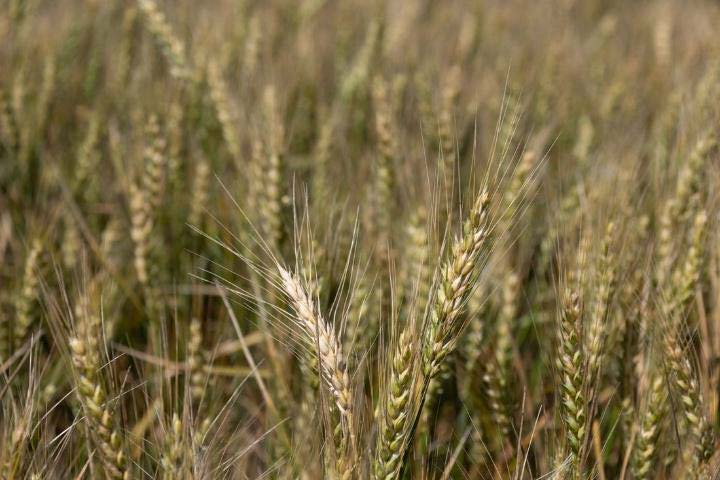 attractive business. However, with current soil temperatures and drought conditions across Western Oklahoma, planting early for forage carries significant risks. Before investing extra capital into higher seeding rates, more nitrogen, and early planting risks, you must evaluate if wheat forage is actually worth it and what the margin size looks like.
One advantage of grazing wheat is the cheap forage cost. However, what is the real cost of wheat forage? There are two ways to determine it. 1) Calculating the additional input costs and yield loss of wheat enterprise, and 2) Checking local rental rates. Both can be calculated per acre, head or pound gained. Because the rental rates vary per region, let’s analyze the extra wheat costs for forage production.
The extra inputs to consider for forage include increasing seeding rate from 60 lbs. to 120 lbs., adding 40 pounds of nitrogen (besides the base application for grain) to produce half ton or 1000 lbs. of forage, paying the fertilizer application, and accounting for the yield loss which sits between 10%-15%.
For example, the extra cost would be $85 per acre, assuming input costs of $18 for an extra bushel of seed, $33 for 40 lbs. of nitrogen using urea at $614/ton plus application, and $34 yield loss (6 bu at $5.5 selling price). Using a stocking rate of 1.2 acre per head (500 lb in 120 grazing days) the estimated costs are $102/head and $0.57/per pound gained.
The cost of wheat forage is only one part of the total Cost of Gain (COG). Besides forage, other expenses include medicine and vaccinations, supplemental feed/hay (if it provided), financial costs (if a loan was used for purchase cattle or covering operating costs), insurance premiums, and labor. Wheat forage cost helps show the potential profit margins. Margin is calculated as Value of gain (VOG) minus total COG. If the difference between VOG and forage COG is narrow, adding the other operating costs will wipe out profits. In simple terms, that difference tells you how much money is left to cover the other operating expenses to keep the business profitable.
Finally, calculating these values provides two crucial advantages. First, it helps determine what your break-even price is or what price floor you will need if you plan to sign a LRP or Put contract (which are useful tools under current cattle volatile market). Second, the forage COG serves as a key risk management information and a trigger for decision-making. If dry conditions remain through the forage planting window, skip the extra input costs and adjust your plans to grain only, in case it fits with your overall goals. Basically, the extra cost for wheat forage is the additional investment and risk required to convert grain only crop into a dual-purpose enterprise. I highly encourage you to do this exercise with your own number, because if the plan doesn’t work on paper, it will probably not work in real life. If you need help with your calculations or if you are curious about Ag business plan, please contact OSU Extension office in your county.
Local Small Grains Forage Trial Provides Valuable Insights for Producers
Erin Metcalf, Extension Ag/4H Educator CED, Alfalfa County OSU Extension Office
Cherokee, Okla. - A collaborative forage study conducted in Alfalfa County is providing local livestock producers with new information on the performance of small grain forage species and varieties for winter grazing.
With the cooperation of landowner Rogen Allen, Oklahoma State University Extension Forage Specialist Brian Pugh and Alfalfa County OSU Extension Educator Erin Metcalf, a small grains forage trial was established to evaluate forage production and winter hardiness among several commonly used forage species.
The purpose of the study was to identify forage dry matter production available for livestock utilization during the fall, winter and spring grazing periods among five small grain species: wheat, barley, triticale, cereal rye, and oats. Multiple varieties within each species were included in the trial to compare performance, recognizing that individual varieties can differ significantly in forage growth, cold tolerance, and maturity characteristics.
The trial was planted on Sept. 29, 2025. Wheat, barley, cereal rye, and triticale were seeded at a rate of 90 pounds per acre, while oats were seeded at 60 pounds per acre. Fertility at planting was 50 pounds of diammonium phosphate (DAP) per acre applied in-furrow.
To measure forage production throughout the growing season, plots were clipped monthly beginning in November. A new area within each plot was clipped at every sampling date to, represent cumulative forage growth to that harvest. Following the February 24 sampling, all plots were mowed to a 3" height to simulate a graze-out event, allowing researchers to evaluate both total fall and winter forage production as well as spring regrowth potential.
Results showed that the barley variety P919 produced the greatest total dry matter yield over the course of the study. Close behind were three Oklahoma wheat varieties Strad CL+, High Cotton and Green Hammer and the triticale variety Showtime, all of which produced over 9,000lbs of forage per acre throughout the growing period.
Researchers also evaluated winter hardiness on Feb. 24 using normalized difference vegetation index (NDVI) readings. Results showed cereal rye was the most cold tolerant, followed closely by triticale and wheat. Barley and oats were much less cold tolerant when temperatures reached single digits.
One unique aspect of the study was the inclusion of SD Momentum, a spring oat variety developed in South Dakota and known for rapid germination and fast forage production. Typically, spring oats won't survive an Oklahoma winter when fall seeded and the researchers noted temperatures near 12 degrees Fahrenheit in early January resulted in complete winter kill of SD Momentum. While this demonstrates the risks associated with planting non-winter-hardy oat varieties in Oklahoma, it is important to note that SD Momentum was among the three highest-yielding varieties in the December forage sampling. This strong early-season production suggests the variety may be a viable option for producers primarily seeking to maximize early grazing opportunities with abundant fall forage, in mixes with species like wheat that produce a larger portion of forage in late spring or where a producer wants to make an early spring transition into summer crops or forages.
Researchers noted that spring regrowth data for cereal rye should be interpreted with caution. Rye plots were terminated in late March at the pollination stage of heading, making spring regrowth comparisons within the species.
Researchers plan to investigate first hollow stem development and heading dates more closely in future studies to better understand how forage yield, grazing duration, and crop maturity interact under northwestern Oklahoma conditions. These maturity differences can have significant implications for both grazing management and dual purpose grain production systems.
The information generated from the trial is expected to help producers make more informed decisions when selecting small grain forage varieties for winter grazing programs and forage production systems.
Producers interested in reviewing detailed variety results from the trial are encouraged to stop by the Alfalfa County OSU Extension Office at 602 West 5th Street in Cherokee, OK. The small grains forage trial will be repeated this year, giving producers another opportunity to observe how varieties perform under northwestern Oklahoma conditions. Plans are already underway for a December plot tour highlighting fall forage production, followed by a March meeting and plot tour where producers can compare winter survival, spring regrowth, and overall forage performance firsthand. These events will provide valuable opportunities for producers to discuss forage management strategies with Extension specialists and fellow livestock producers.
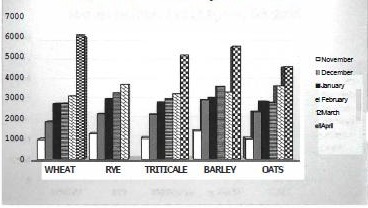
Figure 1. Small Grain Forage Yields by Species, Harvested Nov-Jan at Byron, OK, 2026.