

Ag Insights - July 2026
Tuesday, July 7, 2026
Native Grass Haying
Josh Bushong, Area Extension Agronomist
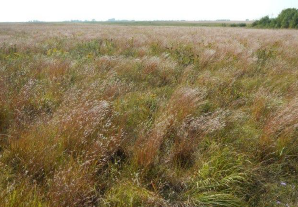
Annual haying of native grass is just around the corner. There are some basic production practices to maximize production potential of these hay meadows. Since native hay meadows are a long-term investment, they should be managed in such a way to sustain long-term productivity, especially in drought years like we are currently experiencing.
The most important management practice is cutting date. In most years, the optimum cutting date will be between late June to early July. Harvesting native hay at this time will achieve a good balance of forage yield and forage quality while also allowing the native stand to recover the rest of the year to sustain production for following years.
The main key to managing any perennial hay field is to maintain a balance between forage yield and forage quality. Time of cutting will be the primary production practice that will determine the forage yield and quality. The maximum forage yield and maximum forage quality hardly ever occur at the same time. Hay tonnage will typically peak in late August, while crude protein and digestibility are usually highest in May.
The second most important management practice is proper cutting height. Cutting height can easily be overlooked but can be highly detrimental to the life of the stand. Native grasslands should never be cut shorter than 4 inches. Growing points on these grasses are elevated during this time of year. If the growing point is cut off, then production will be greatly reduced the following year.
Cutting height is also important because most of the native grass species need time to re-grow to build root carbohydrate reserves. To sustain a native hay meadow, it is recommended to only harvest it for hay once a year. Native grass species grow rapidly through May and June but will exhibit slow re-growth in July after harvesting a hay crop. In addition to the slow growth, the regrowth is often less palatable as well. Native species have adapted through natural selection for these traits to ensure grazing animals will not exhaust the root carbohydrates prior to winter dormancy.
Instead of a second cutting, grazing the regrowth in late summer can be an option. Adequate soil moisture is often the main limiting factor for how fast regrowth occurs. Ideally grazing shouldn’t be initiated until the native grasses reach 15-18 inches in height. To acquire this height sooner, raising the cutting height at haying to 8 inches is recommended.
Field research conducted by Oklahoma State University has shown that forage tonnage can be increased with an application of fertilizer in haying operations. However, it is rarely economical to do so in solely grazing operations. When adequate moisture is available during spring and early summer, 30-80 pounds of actual nitrogen fertilizer can increase hay yield and crude protein. Herbicide applications are rarely warranted on native grasslands. If managed properly, there should be a mix of native forbs and legumes that benefit the grass production.
Some small plot studies conducted by OSU have shown that an increase in grass production is possible when broadleaf weeds (forbs) are controlled with a timely herbicide application. However, increases varied depending on growing conditions and thickness of grass stand. Previous mismanagement of the pasture often leads to thinner grass stands and more weeds. Herbicides such as 2,4-D and/or dicamba are effective when applications are made to small weeds. As weeds get bigger, more costly herbicides are often needed.
Good management practices include harvesting prior to mid-July, leave at least 4 inches of stubble, harvest only once during the growing season, and manage the re-grown forage in the dormant season with either fire or grazing.
For more information about harvesting native grasslands for hay, contact your local Oklahoma State University Cooperative Extension Office. Information can also be found from the OSU factsheet “NREM-2891 Native Hay Meadow Management”.
Regional Canola Meeting
Josh Bushong, Area Extension Agronomist
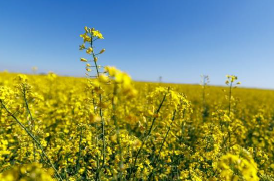
Interested in growing canola again, or trying it for the first time? The 2026 Regional Canola Meeting will be held at the Chisholm Trail EXPO Center in Enid, OK. The meeting will be on August 4th and will start at 9:30 am.
These meetings are free to attend and are open to the public, but reservations are encouraged because an industry-sponsored lunch will be provided. RSVP to Ron Sholar at (405) 780-0113 or jrsholar@aol.com or Josh Bushong at (405) 361-6941 or josh.bushong@okstate.edu.
There will be local agronomists and specialists to present as usual, but also an international keynote speaker as well this year. Dr. John Kirkegaard will discuss his research on ways to improve crop yield with fewer inputs. John is a Farming Systems Agronomist from Australia. He has extensive experience with canola and he is an expert on no-till farming and crop rotations.
Mike Stamm, Kansas State University, will discuss how his breeding program is developing varieties for the southern great plains. There are always lessons to be learned from a research and breeding program, especially in difficult seasons.
Karen Eifert-Jones, Waukomis area farmer and US Canola Association board member, will be discussing agronomics and management of canola and how similar and different it is to wheat.
I, Josh Bushong, will lead a discussion on harvest and use of harvest aids this year. I will hit on what went right and went wrong with some of these decisions and applications. Timely harvest of canola is always the goal to get the crop in the bin and out of the field, but economical decision making can be challenging.
To set the stage for the upcoming growing season, the Great Plains Canola Association, US Canola Association, Oklahoma Oilseed Commission, Oklahoma State University and Kansas State University Research and Extension, Scoular, and industry partners are joining forces to enable producers to be successful. Industry representatives will provide a variety and hybrid updates and a marketing update and outlook.
Canola acreage peaked in 2014 with over 250,000 acres planted that season in Oklahoma. There were multiple reasons for the decline in acres since then. One major reason was the price of canola at least in relation to wheat. With the new interest in Scoular, hopefully prices will be competitive again. Most farmers that have grown canola previously would agree that the addition of canola into an otherwise continuous wheat production system had greatly improved their wheat.
We have been working with winter canola for over twenty years now in Oklahoma. From day one, the main objective with adding canola into a wheat rotation has been to aid in winter annual grass management. Now more than ever due to weed pressures and herbicide resistant weeds, crop rotation is greatly needed. In addition to cleaning up wheat fields, we have almost always seen a bump in wheat forage and grain yields following canola.
Specialists from OSU and KSU Research and Extension will share their experiences working with the crop. Attendees will hear a refresher on common canola production practices and receive updates on variety development and availability.
This will be the main winter canola meeting this summer. Plan to attend to find out more about the crop from the experts and other canola farmers in attendance. We hope to see you there.
Herbicide Control of Eastern Redcedar Featured at Spring “Cedar Rodeo”
Dana Zook, NW OK Area Livestock Specialist
Garren Bastin, Graduate Research Assistant, OSU Natural Resource Ecology & Management
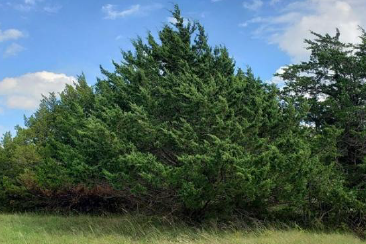
In Oklahoma, there are areas where Eastern Redcedar dominates the rangeland. In fact, tree cover in Oklahoma has increased from 12.1% in 1986 to 27.2% in 2025. That is an increase of 15.1% statewide in 39 years. This encompasses all tree species, however the Eastern Redcedar has a big role to play in that number. Did you know that a single mature female Eastern Redcedar tree produces 1.5 million seeds each year? That number of trees each producing a seed bank of that level has caused exponential growth across our state. However, their impact is not going unnoticed. State Legislation through the Terry Peach Watershed Restoration Act along with new cost share programs from the Natural Resources Conservation Service (NRCS), Oklahoma Conservation Commission (OCC), and others have lit the match and caught interest of landowners across the state.
This year, Extension Educators in Northwest Oklahoma contributed to education of Eastern Redcedar management. Educators from Woods, Grant and Kay Counties each hosted a program fondly deemed a “Cedar Rodeo”. In these programs, Extension partnered with landowners to showcase strategies to manage Eastern Redcedar including mechanical control, chemical strategies and prescribed fire. Many are familiar with various forms of mechanical control and prescribed fire in controlling cedars; however, herbicide use in controlling cedars is less common. For this reason, the NREM Department collaborated with the County Extension offices to showcase some of these strategies.
Chemical control strategies highlighted at the Cedar Rodeo events included the use of soil-applied herbicides for eastern redcedar management, such as Velpar L and Pronone Power Pellets, both of which contain hexazinone as the active ingredient. Results showed that liquid Velpar L was an effective option when applied undiluted at multiple locations within the tree dripline on the upslope side of each tree. Trees smaller than 8 feet responded exceptionally well, with an average browning of about 96% 10 months after treatment, whereas larger trees required higher application rates to achieve acceptable control. Soil type and moisture appeared to influence results, with enough rainfall needed for root uptake and excessive moisture potentially increasing herbicide movement and reducing treatment precision. Pronone Power Pellets offer another soil-applied option: convenient tablet applications around the base of individual trees, making them well-suited for scattered trees and difficult-to-access areas. Together, these herbicides provide useful tools for managing eastern redcedar along fence lines or in locations where prescribed fire or mechanical removal is difficult, while complementing those practices as part of an integrated eastern redcedar management strategy.
Cost of New World Screwworm
Alberto Amador, West Area Ag Economics Specialist
In response to the USDA’s confirmation of New World Screwworm (NWS) cases in Texas and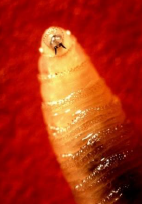 southeast New Mexico, coordinated state and federal safety protocols are underway. To actively manage the situation, official containment efforts such as localized quarantines, strict animal movement restrictions, the deployment of expert teams and strategic release of sterile flies (a highly effective method to stop NWM spreading).
What are The Economic Implications?
As Dr. Peel, OSU Livestock Marketing Specialist, noted in one of his recent newsletters, cattle markets had already begun pricing in this risk prior to the official confirmation, essentially shifting from the state of uncertainty to reality. For this reason, there was a slight drop in cattle futures the day following the official announcement, but prices quickly rebounded and rose again as the market stabilized.
Although the supply and demand fundamentals remain secure, because this pest is not considered a food safety issue, the presence of NWS is another challenge for herd expansion at a time when cattle supplies are already tight. Consequently, this low supply situation could last a long period of time. What remains a fact is that the re-opening of Mexican border is highly uncertain, despite some rumors of a possible re-opening in recent months. Although Mexican feeder imports are relatively small compared to the domestic calf-crop (around 5%), they have been a significant source of feeder cattle for feedlots in states near the border.
How Does NWS Impact Cattle Operations?
According to the USDA, prevention is the best way to manage NWS. Because the larvae feed on live tissue in fresh wounds, monitoring the cattle is crucial. For that reason, Cow-Calf operations are more vulnerable than feedlots. According to literature, in the mid-1950s NWS caused losses of millions of dollars, with an estimation of $20M per year and between $50M to $100M per year in the Southeast and Southwest regions respectively. There are three costs that could impact the cow-calf margins. 1) Medicines and veterinary services, for prevention and treatment. 2) Extra Labor hours, monitoring and checking cattle grazing across large pastures ranch/surface requires more time and resources. 3) Low performance, the hidden costs, this is only for infested animals whose production performance is affected (weight and milk) or results in an increased death loss rate.
At this point, Oklahoma is safe, but we should wait and see how the situation is handled. The information above is only to raise awareness of the threat we are facing and the possible risk to cow-calf operation margins in the state, and not to spread panic. I highly encourage you to stay tuned to official news. If you want to stay informed and up to date, visit the OSU Extension Livestock Entomology website or contact your local Extension Office. We’d be happy to help you.
Managing Forage Under Volatile Weather
Alberto Amador, West Area Ag Economics Specialist
June’s weather was volatile in Oklahoma. We experienced a random mix of climate conditions such as severe storms, high rainfall levels (more than one foot in Osage County), and high record wind gusts. Yet, despite the storms and rain during the last weekend of June, almost half of the state remains in at least a moderate drought, approximately more than 40% in severe, extreme or exceptional drought according to the U.S. Drought Monitor report published the last week of June.
Additionally, climate analyst experts are expecting a super strong “El Niño”. In simple terms, the expected summer effects for Oklahoma are normal temperatures during the warmest months and a high probability of below-normal precipitation, while the projections point to wetter and cooler conditions on average from mid-fall through early spring.
Short-Term Risks
Based on this forecast, in the short and middle term, the major risk for agriculture is drought, especially in Western Oklahoma. Rainfall at the end of June temporarily stabilized soil moisture across the State. However, weather expectations for the rest of summer follow a harsh, dry pattern. These conditions threaten spring crops and warm-season grasses for livestock. A lack of grass is the greatest threat to the cattle industry. Because cattle and beef supply will remain at low levels until herd expansion occurs, forced cow liquidations due to no-grass scenarios are highly costly and damaging to the long-term cattle cycle.
Long-Term Opportunities
On the other hand, one advantage of dry summer forecast is that hay production has a wider window for cutting and baling, allowing cut forage to sit on the ground longer without weather risk. This is good for producers who are considering cutting and bailing forage to sell because the expected wetter conditions during fall and winter are good news for cool-season forage and winter wheat. Hence, it’s a perfect time for ranchers to plan or adjust grazing strategies for cool-season grasses and dual-purpose wheat. Grazing records and soil tests are fundamental tools to obtain an accurate outlook and to develop an efficient grazing plan to protect operational margins.
Calculating forage needs is one of the first steps to determine a plan or to adjust an existing management plan. Applying fertilizer under optimal conditions to non-native grasses or wheat (dual-purpose) is one of the most feasible strategies to meet those forage needs. While fertilizer prices reached high levels in March, domestic Urea prices in the US returned to pre-war levels two weeks before the Strait of Hormuz reopened. If stability holds in the Persian Gulf, fertilizer prices for the rest of the year are expected to be like prices in late 2025. Low fertilizer prices drastically improve the margins of producers.
Applying fertilizer could improve stocking rates, extend the grazing period, and reduce extra feeding costs. The average price of Urea in Oklahoma at the end of June was around $690/ton. Based on that price, it costs the exact same to feed a cow daily by buying $60 hay bale (weighing 1,400 lbs) as it does to apply 50 pounds of actual nitrogen or 109 lbs of Urea, to produce one additional ton of standing forage (Bermuda grass).
Chart 1 shows multiple prices of urea (represented by columns) against horizontal lines indicating various hay prices. In brief, the chart highlights exactly when it becomes cheaper to fertilize and grow your own forage rather than buying commercial hay, occurring whenever the urea columns drop below the horizontal hay lines.
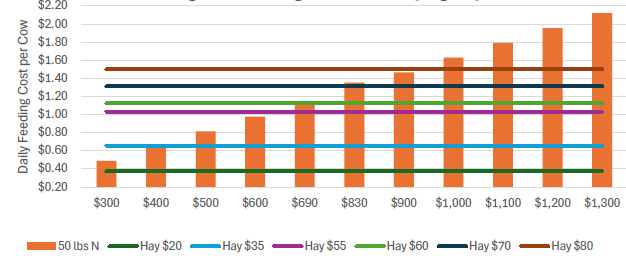
Chart 1. Feeding Grown Forage with N vs Buying Hay
Summer Pneumonia
Barry Whitworth, DVM
Senior Extension Specialist/BQA State Coordinator, Department of Animal & Food Sciences, Freguson College of Agriculture
When reviewing the Mesonet website, rainfall summaries by climate divisions indicate above average rain for the month of June in all the divisions. The one exception is the west central division which was slightly below normal. This is welcome news for livestock producers and farmers. Unfortunately, the long-range forecast indicates high temperatures and low chances of rain. With hot and dry weather predicted for Oklahoma, livestock producers should prepare for health issues that occur with these conditions.
Diseases that tend to occur in hot, dry weather are pinkeye, prussic acid toxicity, and heat stress, to name a few. One disease that has been more of a problem in recent years is summer pneumonia in nursing calves.
Summer pneumonia is the name given to bovine respiratory disease in young cattle still with their mothers on pastures. According to a survey conducted by the United States Department of Agriculture, the number one cause of death in calves is bovine respiratory disease. The disease tends to strike with no warning.
Summer pneumonia is caused by the usual suspects associated with cattle pneumonia. Viruses involved are Infectious Bovine Rhinotracheitis Virus, Bovine Viral Diarrhea Virus, Bovine Respiratory Syncytial Virus, and Bovine Coronavirus. The bacteria associated with summer pneumonia are Mannheimia haemolytica, Pasteurella multocida, Histophilus somni, and occasionally Mycoplasma bovis.
Calves diagnosed with summer pneumonia usually fall into two age categories. One group consists of calves that are usually less than one month of age. Veterinarians believe they fall victim as the result of poor quality and/or quantity of colostrum. The other group is 3 to 4 months of age. These calves tend to get sick at the same time as the protection of the colostrum begins to wane.
Studies have found several factors associated with summer pneumonia. Environmental characteristics connected with summer pneumonia are hot, dry, and dusty conditions. Adverse weather circumstances such as cool nights and warm days are also associated with calf pneumonia. As herd size increases, the chance of summer pneumonia rises as well. Herds larger than 500 head are most susceptible. Management practices that result in cattle being crowded such as estrous synchronization, intensive grazing, and creep feeding are linked with summer pneumonia. Lastly, ranches that expose their calves to older steers or orphan calves are more prone to having issues with summer pneumonia.
Common clinical signs of summer pneumonia are high fever (106° Fahrenheit or greater), reluctance to eat, droopy ears, and reluctance to move. Other signs sometimes found are coughing, ocular discharge, nasal discharge, and breathing difficulties. These signs may be difficult to observe in the early stage of the illness but normally become more severe as the disease progresses.
If the disease is diagnosed early, then treatment with most antibiotics will be successful. However, a delay in diagnosis will result in more complications and failures. Even though most treatments are successful, producers can be frustrated with the difficulties associated with treating calves on pastures.
A good prevention program for summer pneumonia includes proper cow management. Prevention starts with making sure that cows are in good condition before and after calving. Cows that are in good body condition, that are on a good nutrition program, and that have been properly vaccinated should have high quality colostrum. Colostrum plays an important role in preventing diseases. Also, producers need to address cows with dystocia in a timely fashion since difficult births are associated with calves not ingesting adequate amounts of colostrum.
A successful vaccination program to prevent summer pneumonia requires using proper vaccines and using them at the proper time. A vaccine that addresses the common pathogens (IBR, BVD, PI3, BRSV, M. haemolytica, P. multocida) involved in calf pneumonia is essential. Many ranches have begun to administer these vaccines at branding or turnout time (approximately at 60 days of age) in hopes of stimulating immunity and reducing summer pneumonia. For more information about a vaccine program, producers should seek the advice of a veterinarian.
When cattle are stressed, the immune system is compromised. This means stress needs to be managed as best as possible. Low stress handling techniques are proven to impact cattle health. Producers should castrate and dehorn calves at an early age. This should reduce stress since these calves continue to stay with their mothers. Also, producers should not comingle young and old calves together.
Cattle producers need to observe their herds frequently this summer for any clues of pneumonia in their calves. Prompt diagnosis and treatment are essential for a successful outcome. Hopefully, more information will be discovered in the future to aid producers in preventing this disease. For more information about summer pneumonia in calves, producers should contact their local veterinarian or Oklahoma State University County Agriculture Extension Educator.
References
USDA. 2015. “Cattle and Calves Death Loss in the United States Due to Predator and Nonpredator Causes, 2015”
Woolums AR, Berghaus RD, Smith DR, et al. Case-control study to determine herd-level risk factors for bovine respiratory disease in nursing beef calves on cow-calf operations. J Am Vet Med Assoc. 2018;252(8):989-994. doi:10.2460/javma.252.8.989
Woolums AR, Berghaus RD, Smith DR, et al. Producer survey of herd-level risk factors for nursing beef calf respiratory disease. J Am Vet Med Assoc. 2013;243(4):538-547. doi:10.2460/javma.243.4.538