

Ag Insights April 2026
Thursday, April 30, 2026
Dicamba’s Back, Pesticide Disposals and Applicator Trainings
Josh Bushong, Area Extension Agronomist
In this article I am going to provide three updates for pesticide applicators in Oklahoma.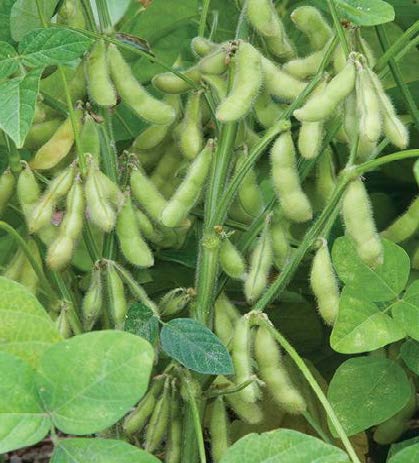 First, annual trainings for the three specific dicamba products for over-the-top use for in-season applications on dicamba-tolerant soybeans and cotton. Second, in late April there will be three unwanted pesticide disposals. Third, online training certification options for paraquat use.
There are once again in-season dicamba herbicide options for dicamba-tolerant soybeans and cotton. The herbicide Stryax is Bayer’s replacement for Xtendimax (no longer labeled or available). Both Engenia from BASF and Tavium (dicamba + s-metolachlor) from Syngenta have re-approved labels and can also be used this year.
These three dicamba containing products are the only products that can be legally applied in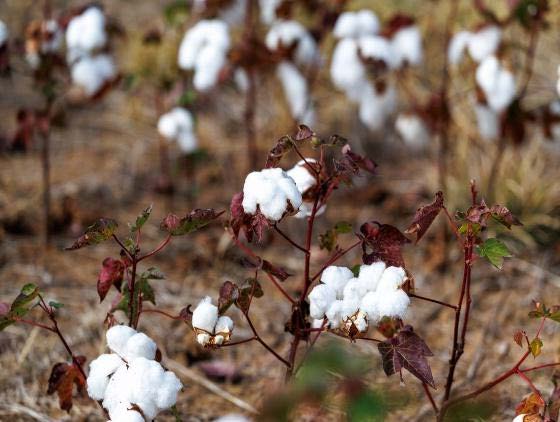 season to dicamba-tolerant cotton or soybeans. These three products are also classified as “Restricted Use Pesticides.” All other herbicide products that contain dicamba are still “General Use” and can be purchased and used by anyone.
Applicators will once again have to attend or obtain an annual training to apply these three products. There will be options to attend an in-person training provided by OSU Extension starting in March. Contact your county Extension office to find out more. Applicators can also obtain a certificate by completing one of the online training courses from the chemical companies. Please keep in mind these will be product and company specific.
There are a couple notable changes for these dicamba products this year. A major change was the removal of calendar-based application deadlines, which obviously impacted the later planted double-cropped soybeans the most. Instead of being based on the calendar, applications will have limitations based on forecasted maximum air temperature for the day-of application as well as the following day.
The Oklahoma Department of Agriculture, Food, and Forestry (ODAFF) and OSU Pesticide Safety Education Program are teaming up once again to offer the opportunity for applicators, farmers, or citizens to properly dispose of any unwanted pesticides. ODAFF funds this Unwanted Pesticide Disposal Program to provide a free service to prevent unlawful disposal of pesticides.
The first event this year will be in Sallisaw at the Sequoyah County Fairgrounds on April 28, 2026. The second event will be in Chandler at the Lincoln County Fairgrounds on April 29, 2026. The third event will be in Cheyenne at the Roger Mills County Fairgrounds on April 30, 2026. If there are any future events they will be posted on the OSU Pesticide Safety Education webpage.
Oklahoma commercial and non-commercial applicators and pesticide dealers may participate. Oklahoma farmers, ranchers, and homeowners can use this program as well. There is no cost for the first 2,000 pounds of pesticides brought in by a participant. Anything more than 2,000 pounds will be charged to the participant.
Applicators, homeowners, farmers, and ranchers are not required to pre-register. Dealers are asked to voluntarily pre-register with the OSU Pesticide Safety Education Program. Dealers are asked to pre-register to allow the hazardous waste company to properly plan for larger quantities.
Transportation of pesticides to these events is the responsibility of the participants. Wearing appropriate personal protection equipment is always recommended when handling pesticides. Inspect all unwanted pesticides to see that they are securely packaged. Do not transport pesticides in areas occupied by passengers. Lining the storage area or trunk with plastic sheeting is a good practice to prevent spillage. Containers 5 gallons or smaller can be placed in a bucket or plastic storage container if they show signs of leakage.
The Unwanted Pesticide Disposal Program has been very successful. Since 2006, this program has collected almost 1.6 million pounds of unwanted pesticides. The program is a service designed to remove unusable pesticides from storage and reduce the potential threat to public health and the environment and participants in the program will not be prosecuted for illegal management practices.
Lastly, I was contacted the other day with a question about a “Use Certification” for herbicides that contain paraquat (such as Gramoxone). There is an EPA mandated use training for anyone that plans to apply, mix, load, handle, transport opened containers, or clean contaminated equipment. This training is focused on safety and handling, and not so much about agronomic use.
The Extension Foundation Online Campus (forwarded from the URL – www.USParaquatTraining.com ) was the main host for the online training, but not since May of 2025. Syngenta has an online training module that appears to be free after creating an account. More information can also be found on the National Pesticide Safety Education Center (NPSEC) webpage. The certificate is good for three years and should be kept up to date by the person.
For more information visit your local OSU Extension office or visit the OSU Pesticide Education Safety Program webpage.
Does Garlic Work as Fly Control
Dana Zook, NW OK Area Livestock Specialist
Mother Nature has been handing out some crazy weather this year. Unseasonably warm temperatures lead to a natural increase in all types of flies that affect beef cattle. I’ve written about fly control in the past but several recent inquiries about garlic as fly control have prompted me to address that product in this article. I also want to give a quick review of horn flies since it’s that time of year. So here we go…
In Oklahoma, we have several different species of flies, but horn flies are undoubtedly the most economically impactful fly species to beef cattle. Drummond and others in 1981 reported annual losses nationally to the beef industry were estimated at $730.3 million. Adjustments for inflation put that number somewhere near $2.196 billion. These detrimental pests spend their entire life on the backs and belly of cattle and require a fresh manure pile to lay their eggs. Horn flies prefer hot and dry weather, which typically allows their populations to peak in August and September despite control methods. Horn flies can be controlled with many methods (tags, sprays, pour-ons, IGR), but resistance has reduced their effectiveness.
Garlic is a product that is becoming more popular as a fly control. It’s often included in a loose or block mineral product. Producers have mixed opinions regarding it’s effectiveness, reporting inconsistent results from one year to the next. Surprisingly there is only one scientific research report conducted in Alberta, Canada in 2021 evaluating garlic as a fly control. In this study, cattle were offered 1.) trace mineral salt with garlic powder or 2.) trace mineral salt only. All cattle were monitored for fly populations and defensive behaviors due to fly bites (side-licks, tail-flicks, head-throws, leg-stomps, and belly kicks). In year 1, cows consuming trace mineral salt infused with 2% garlic had 48% less flies compared to the control group (no fly control). This is a very effective level of control. However, in year 2 there was no difference in horn fly numbers between the group of cattle consuming garlic and those cattle without. Disappointing for sure. One notable difference was the trace mineral salt infused with 5% garlic offered to cattle in year 2 – an increase from the first year. This single two-year study is not much to go on to confirm or deny the effectiveness of garlic.
That being said, here are some things to consider. First, understand that any product fed through mineral is impacted by consumption; if cattle don’t eat mineral, they won’t be consuming the product. In this study, I initially thought consumption might have been impacted in year 2 due to the increase in garlic concentration but to my surprise consumption was consistent across both years. Second, garlic is not always considered a registered feed product in a state although several garlic products show up in Oklahoma’s registrations. You can check out this list at ODAFF Product Search. Finally, here at OSU Extension, we stand by scientific data proven by research. If garlic is working well to reduce flies in your cattle herd, I’m happy for you. But until more research is conducted on garlic, we can’t include it as a “tool in our fly control toolbox”. Who knows, maybe I’ll be looking for some producers in the future to help me figure this out! Until then, rotate your fly control chemicals and contact your local OSU Extension office to help identify the best fly control for you. If you would like more info about this topic, check out the latest episode on the Extension Experience Podcast found on Apple Podcasts App.
Challenges Ahead for Oklahoma Farms
Alberto Amador, West Area Ag Economics Specialist
It seems that the first quarter of 2026 is bringing several challenges for farmers and ranchers. Geopolitical conflicts in the Middle East have impacted both agricultural commodities and energy markets, affecting Oklahoma’s food production and farm profitability. Weather, like every year, is another relevant factor that should be closely monitored. Recently, some forecasts suggest a high possibility of a fast transition from La Niña to El Niño. Let’s analyze how these factors may impact farms in Oklahoma.
To begin with, let’s analyze all the implications the Middle East conflict has caused. The attacks have brought high risk for shipping and transportation, especially through the Strait of Hormuz, where energy and fertilizer products are transported to their destination. Approximately 20% of the world’s oil and natural gas transit across the Strait and the Gulf. As a result, fuel prices increase, but this also triggers effects on other industries such as fertilizers. Natural gas is a crucial input for nitrogen fertilizers, so cost of production has increased. Additionally, beyond the Strait of Hormuz, Middle Eastern countries play a key role in global fertilizer production. Interruptions in trade flows and constrained input availability could result in the shutdown of refineries and fertilizers plants in the region. According to RaboBank, the region accounts for 44% of global urea exports, 27% of global ammonia exports, 25% of global phosphate fertilizer exports, 36% of global phosphate rock exports, 47% of global sulfur exports and 9% of global potash exports.
After the conflict began in the first week of March, retail fertilizer prices tracker by DTN showed discrepancies in seven of the eight principal fertilizers. The largest increases were urea and anhydrous ammonia by 2.3% and 3.5% respectively, while DAP decreased by 0.4% and 10-34-0 fell 0.3%. The nitrogen fertilizers rose due to constraint in global supply. The U.S. doesn’t rely on nitrogen imports as much as it does on potassium. For this reason, we should expect increase in potassium fertilizer prices, especially for spring production.
Weather is a crucial factor that is analyzed each year. During the first months of 2026, La Niña effects have been present, and some forecasts have suggested a possible fast transition to El Niño this year. If that occurs, the chance of a dry spring is high (currently some areas are in drought). While dryness allows field preparation for spring crops, it can impact wheat yield, and summer precipitation could be volatile, with periods of good rain but short dry intervals. As a consequence, estimated production may decrease and prices may rise.
Regarding wheat, both the geopolitical conflict and a faster transition to El Niño are causing shifts in prices. The Middle East situation has already affected wheat prices. After the conflicts began, future prices for the July contract are above $600/cwt, although how long these high prices last will depend on how long the war continues. So far, global and domestic demand remain constant. Therefore, weather risks, including drought in spring, threaten the expected wheat production. High prices may look positive for producers, but it’s important to remember that these are only speculations, and the duration of high prices is uncertain. Even though wheat is not facing high fertilizer prices, high fuel costs for harvesting and the quality of the crop during grain filling in spring are risks that should be considered.
In contrast, spring crops, hay and pasture are more vulnerable to the rising production costs. Fertilizers, fuel and repair and maintenance costs are all trending upward. This year seems to be under a multifactorial and complex umbrella, with expensive fertilizers, the chance of drought in spring and no constant precipitation in summer. Good timing for planting dates and applying fertilizers could be key for good results. I suggest analyzing and calculating costs for different kinds of tillage and comparing the overall cost-benefit. Finally, for ranchers adjusting stocking rates depending on summer conditions and considering economic costs for hay, especially for nutrition, are important management actions to consider.
In scenarios like this, decision-making becomes more complex, as conditions rarely optimal and timing for inputs or key operation may not align with original plans. While current forecasts suggest potential risks, outcomes remain uncertain and conditions may change. This year may require a flexible approach, where producers adjust decisions based on evolving weather patterns and market signals. Prioritizing key areas such as input use, planting timing, and forage management can help improve results. Developing a business plan and using available resources can also help reduce exposure to risk.
External Parasites in Backyard Poultry
Barry Whitworth, DVM Senior Extension Specialist/BQA State Coordinator, Department of Animal & Food Sciences, Ferguson College of Agriculture
According to the 11th edition of Poultry Diseases, external parasites of poultry are arthropods that live on or in the skin and feathers. Essentially, parasites are freeloaders that live at the expense of the host. Backyard birds are infested with a variety of pests. Ticks, fleas, mites, and lice are some of the most common external parasites found in chickens, turkeys, and ducks. Several of these parasites are bloodsuckers. If not controlled, they can cause weight loss, decreased egg production, unthriftiness, and death in severe cases.
According to a study conducted by Dr. Amy Murillo and associates in California, the most common external parasites in backyard flocks were lice, fleas, and mites. Lice were the most frequently observed parasites, with the chicken body louse (Menacanthus stramineus) found on half of the premises inspected. The fluff louse (Goniocotes gallinae) was found in 35% of operations. The wing louse (Lipeurus caponis) and sticktight flea (Echidnophaga gallinacea) were present in 20 % of flocks. Northern fowl mites (Ornithonyssus sylviarum), which are the most common mites found in commercial poultry operations, were detected in only 15% of flocks. However, the survey was conducted in the summer, which may have influenced the low number of northern fowl mites, since they are most active in the winter.
| Image | Image Caption |
|---|---|
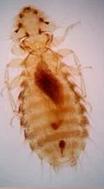 | Figure 1. Menacanthus stramineus |
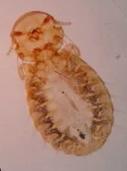 | Figure 2. Goniocotes gallinae |
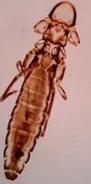 | Figure 3. Lipeurus caponis |
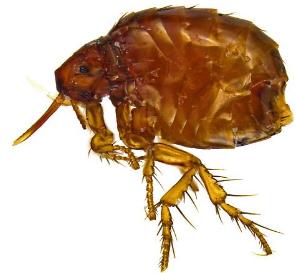 | Figure 4. Echidnophaga gallinacea |
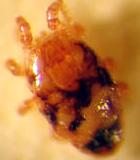 | Figure 5. Ornithonyssus sylviarum |
Birds infested with external parasites often become agitated due to skin irritation. They will spend more time preening and scratching. Their feathers may become damaged, and they may appear unhealthy. Birds showing these signs should be examined.
When examining birds for external parasites, producers should focus on the breast, back, head, vent region, and wings. Lice may be found on different parts of the body. They are yellowish in color and lie flat against the skin. Their eggs are typically found attached to the shafts of feathers. The vent area is the primary location to check for mite infestations and may appear “dirty.” Sticktight fleas are usually found embedded in the comb.
Birds should be monitored regularly. When producers are unable to examine all birds, they should focus on the young, the old, and any bird that appears unhealthy. The coop should also be inspected. Producers should examine the bedding, walls, and roosts, with close attention given to crevices and cracks where pests may hide.
Before parasite control can begin, the parasite must be correctly identified. Producers can use books or other publications for this purpose, or they may consult a veterinarian. Contacting the local Oklahoma State University Extension office is also a useful option. An agricultural extension educator may be able to identify the pest or submit samples to the Plant Disease and Insect Diagnostic Laboratory at Oklahoma State University for identification.
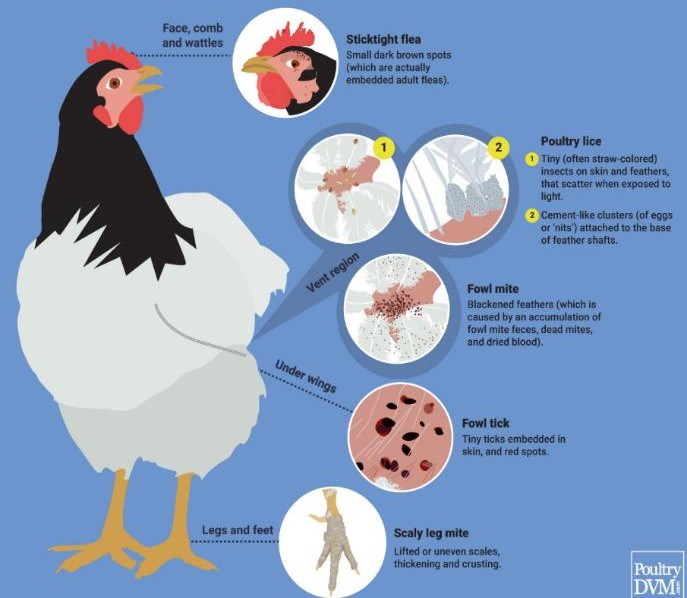 Fig 6. What to look for when examining the birds
Prevention and control of external parasites require an integrated approach. The first line of defense is a strong biosecurity program to prevent parasites from entering the operation. Sanitation is also critical, keeping the coop and surrounding area clean helps prevent infestations.
Maintaining healthy birds is essential in preventing parasite infestations. Producers should focus on proper nutrition and disease prevention as they are key factors in maintaining a healthy flock. A strong immune system can help birds better withstand some external parasites.
Selecting the proper pesticide and using it correctly is essential. Many pests described in this article can be controlled with appropriate pesticides; however, their eggs are not killed, which requires repeated applications to target newly hatched larvae. Producers should read and follow pesticide label directions.
Alternative methods for external parasite control are also available such as providing diatomaceous earth mixed with sand for dust bathing or using sulfur bags to control mites and lice. For more information on these methods, see references below.
Finally, early identification and treatment greatly increase the chances of successful control. If infestations are allowed to become established, control becomes much more difficult.
For more information on external parasites in backyard poultry, producers may visit Veterinary Entomology or contact their local veterinarian or Oklahoma State University County Agriculture Extension Educator.
References
Arends, J., J. (2003). External parasites and poultry pests. Diseases of Poultry. 11th Edition.
Murillo, A. C., & Mullens, B. A. (2016). Diversity and Prevalence of Ectoparasites on Backyard Chicken Flocks in California. Journal of medical entomology, 53(3), 707–71.
Murillo, A. C., & Mullens, B. A. (2016). Timing Diatomaceous Earth-Filled Dustbox Use for Management of Northern Fowl Mites (Acari: Macronyssidae) in Cage-Free Poultry Systems. Journal of economic entomology, 109(6), 2572–2579.
Murillo, A.C., Mullens, B.A. (2016). Sulfur Dust Bag: A Novel Technique for Ectoparasite Control in Poultry Systems: Journal of Economic Entomology, 109(5), 2016, 2229-2233.