

Mid-to Late June Horticulture Tips
Friday, June 19, 2026
Guide to School Gardens
Shelley Mitchell, Senior Extension Specialist for 4-H / Youth Horticulture Programs
In conjunction with Oklahoma Farm to School, I have created a 'quick start' guide to school gardens. It is a bare-bones approach to starting a successful school garden, so as not to be overwhelming to beginners. It is spiral-bound, glossy, full-color with lots of pictures, and bulleted lists rather than long paragraphs. It is free for download, or you can have some guides shipped for free to you.
Download the Guide to School Gardens
Encouraging Continuous Blooms in the Garden
Shelby Mendoza, OSU Student Farm Assistant Manager
Plants live to go through their life cycle so they can produce flowers and then seeds for the next generation to continue on, but as gardeners we like to have blooms as long as we can. Here are some ways to keep your ornamental plants blooming as long as possible.
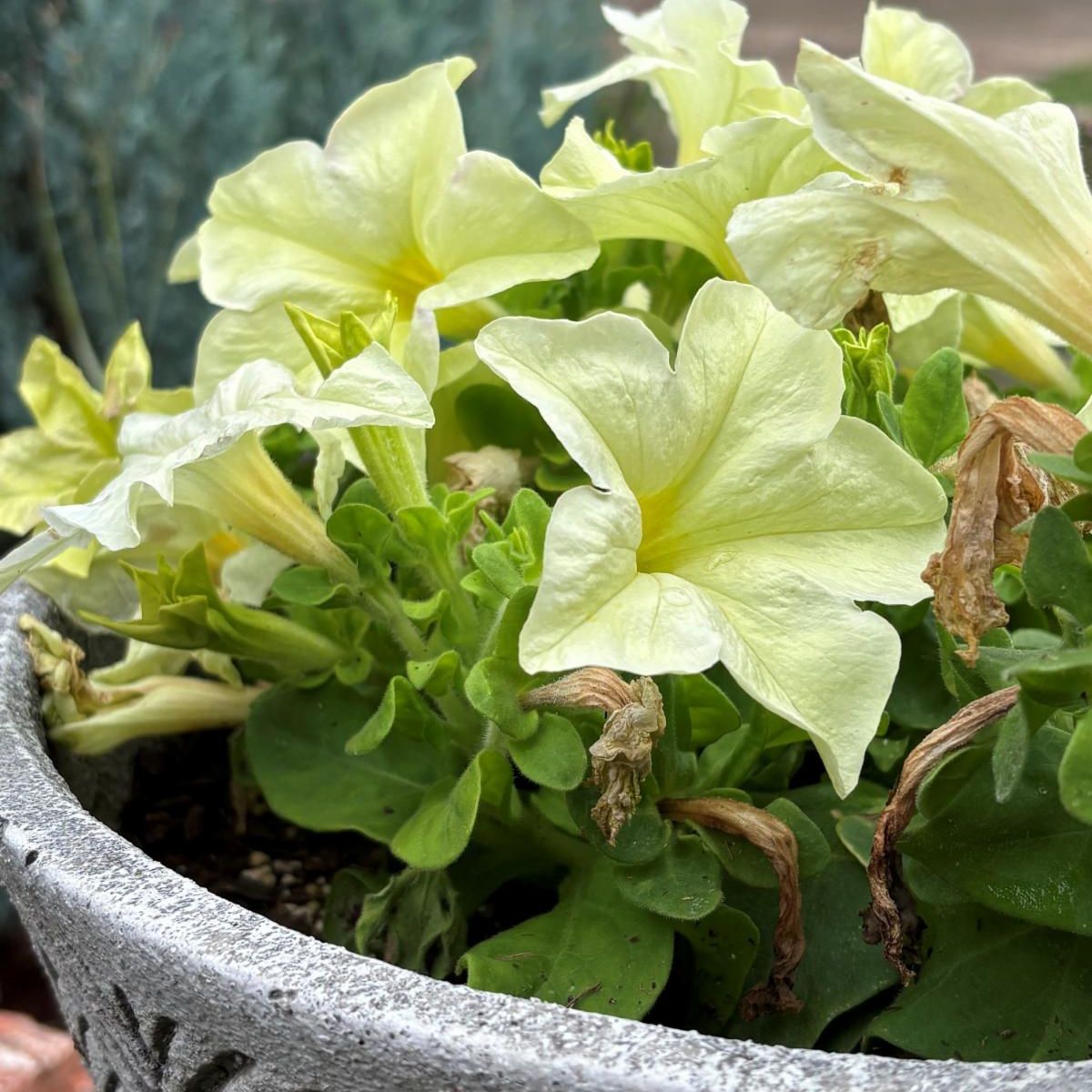
Prevent stress by ensuring your plants are receiving the correct amount of sunlight and water. During our scorching summer heat, this may mean moving potted plants to a different location to protect them from the afternoon sunlight.
Fertilizer! We know plants need proper nutrients to grow, but sometimes we forget that when we water potted plants, especially hanging baskets, until water flows through the drainage holes, we are also washing nutrients out. In regards to flowering, phosphorus is an essential nutrient because it is a component of DNA, RNA, and ATP- the energy unit of plants. These components support flowering and the plant’s ability to pass on genetic material through the seeds produced by spent blooms.
Deadheading plants that are not self-cleaning. To deadhead means to remove old blooms from plants, typically done by pinching spent blooms or cutting them off- not to be confused with pruning, which involves more extensive trimming over the entire plant. This process prevents the plant from putting its energy into seed production and encourages more blooms to form.
Not all plants need to be deadheaded because some “self-clean” by naturally shedding their spent blooms. There are new varieties of plants that needed deadheading in the past, but have been bred to self-clean, so check the plant tags when purchasing your plants to know if they need to be deadheaded. For plants you already have, if your plant drops old flowers rather than allowing them to stay on the plant to turn brown – it is most likely self-cleaning.
In general, here are some plants that benefit from deadheading: bee balm, coneflowers, cosmos, geraniums, marigolds, petunias, roses, salvias, and zinnias.
If you want to collect seeds from plants, stop deadheading towards the end of the season to allow blooms to mature for viable seeds.
Spider Mites
David Hillock, Senior Extension Specialist for Consumer Horticulture and Statewide Master Gardener Coordinator
Spider mites can be real pests as the weather turns hot and dry. They often attack my marigolds each year, but they have rarely done significant damage and only once did I opt to control them, and even then it was only with a hard stream of water, which did the trick.
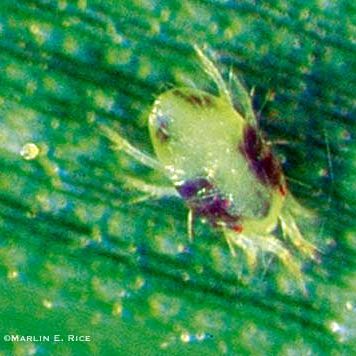
Hosts – Some species of spider mites are restricted to one or a few kinds of host plants while others feed on many different kinds of plants. Tomatoes and marigolds are probably most commonly attacked in Oklahoma, but very few plants are completely immune from all the species of spider mites that will attack plants.
Symptoms – Damage occurs when the mites suck plant juices with their small, needle-like mouthparts. Light infestations leave a pattern of small, pale spots on the infested plant. With heavier infestations the individual spots run together and can cause the death of a leaf or needle. This type of damage is often the only sign of an infestation in species which do not spin webs. One way to check for the presence of mites is to shake the plant over a white piece of paper. If you see tiny specks begin to move on the paper, they are likely mites.
Life Cycle – Some species overwinter as adults and others overwinter as eggs. They hatch or become active as the weather warms in the spring. Hot, dry weather is favorable for most spider mites and during the summer months they can complete a generation in 7 to 14 days. Females lay as many as 300 eggs in their webs or on plants. Therefore, mite infestations can increase rapidly and cause extensive damage to plants in a short time. Infestations usually decline as the weather becomes cooler and wetter in the fall.
Description – Spider mites, often called red spiders, are very small, barely visible to the naked eye. The newly hatched mite has 6 legs but all other active stages have 8 legs. They are related to spiders and ticks and are not insects. We have several different species in Oklahoma. Some are reddish in color but others are brownish or pale greenish. Some have two or more darker spots on the back. Several common species spin fine, irregular webs over the infested parts of plants but other species spin little or no webbing.
Control – Spider mites are relatively easy to control with a strong stream of water (syringing) that knocks them off the plant. This method also conserves their natural enemies. There are numerous predators of mites (lacewings, lady beetles and predatory mites). Practices that encourage predators to the garden helps reduce the need for chemicals. Most spider mites can be controlled with insecticidal oils and soaps if necessary; these are often referred to as the “soft pesticides”. The oils, both horticultural oil and dormant oil, can be used. Other chemical controls include miticides. Spider mites are usually not killed by regular insecticides, so be sure to check the pesticide label to see if "miticide" is present. Pesticides claiming "for mite suppression" are usually weak miticides and will not perform well.
Fruiting Vegetables Not Producing?
Shelby Mendoza, OSU Student Farm Assistant Manager
Some home gardeners enjoy a bountiful vegetable harvest, while others see plenty of flowers but little to no fruit. If your fruiting vegetables aren’t producing as expected, several common factors could be at play:
Excess Nitrogen Early On: Applying too much nitrogen fertilizer at the beginning of the season encourages leafy growth rather than fruit development. This delays flowering and reduces the plant’s energy for setting fruit.
Water Stress in Cucurbits: Crops like summer squash, cucumbers, and melons are sensitive to inconsistent watering. Both overwatering and underwatering can cause flower drop or an imbalance in the ratio of male to female flowers. Since these plants are monoecious (bearing separate male and female flowers on the same plant), a low number of female flowers reduces the rate of fruit formation.
Water Stress in Other Summer Crops: Summer crops such as tomatoes and peppers are also affected by inconsistent watering. In these crops we tend to see flower drop and if the plant does produce, we typically see smaller fruits produced.
High Temperatures Affecting Fruit Set: Many fruiting vegetables, including tomatoes and squash, experience reduced fruit set when daytime temperatures exceed 85–90°F. Pollen can become sterile at high temperatures, preventing fertilization. Consistent nighttime temperatures above 70°F can also disrupt fruit development.
Pest and Disease Issues: Several pests can interfere with fruit production by damaging flowers, fruit, or the plant itself:
- In cucurbits, cucumber beetles, squash bugs, and squash vine borers cause direct damage and weaken plants.
- In tomatoes, pests such as tomato hornworms, aphids, whiteflies, spider mites, fruitworms, stink bugs, and cutworms stress the plants, cause flower and fruit drop, or damage fruit directly, leading to reduced yields.
To improve fruit production, gardeners should aim for balanced fertilization, consistent watering, and monitor closely for pests and diseases. Protecting plants from extreme heat with something like shade cloth can also help plants power through our hottest temperatures but expect fruit setting to still be low.
Blossom End Rot: More Than A Soil Calcium Deficiency
Courtney DeKalb-Myers, Assistant Extension Specialist for Consumer Horticulture
As tomato harvests begin, it can be disappointing to find that the bottom of the fruit has sunken in and rotted. The cause is likely blossom end rot, a physiological disorder that develops when growing fruit do not receive enough calcium.
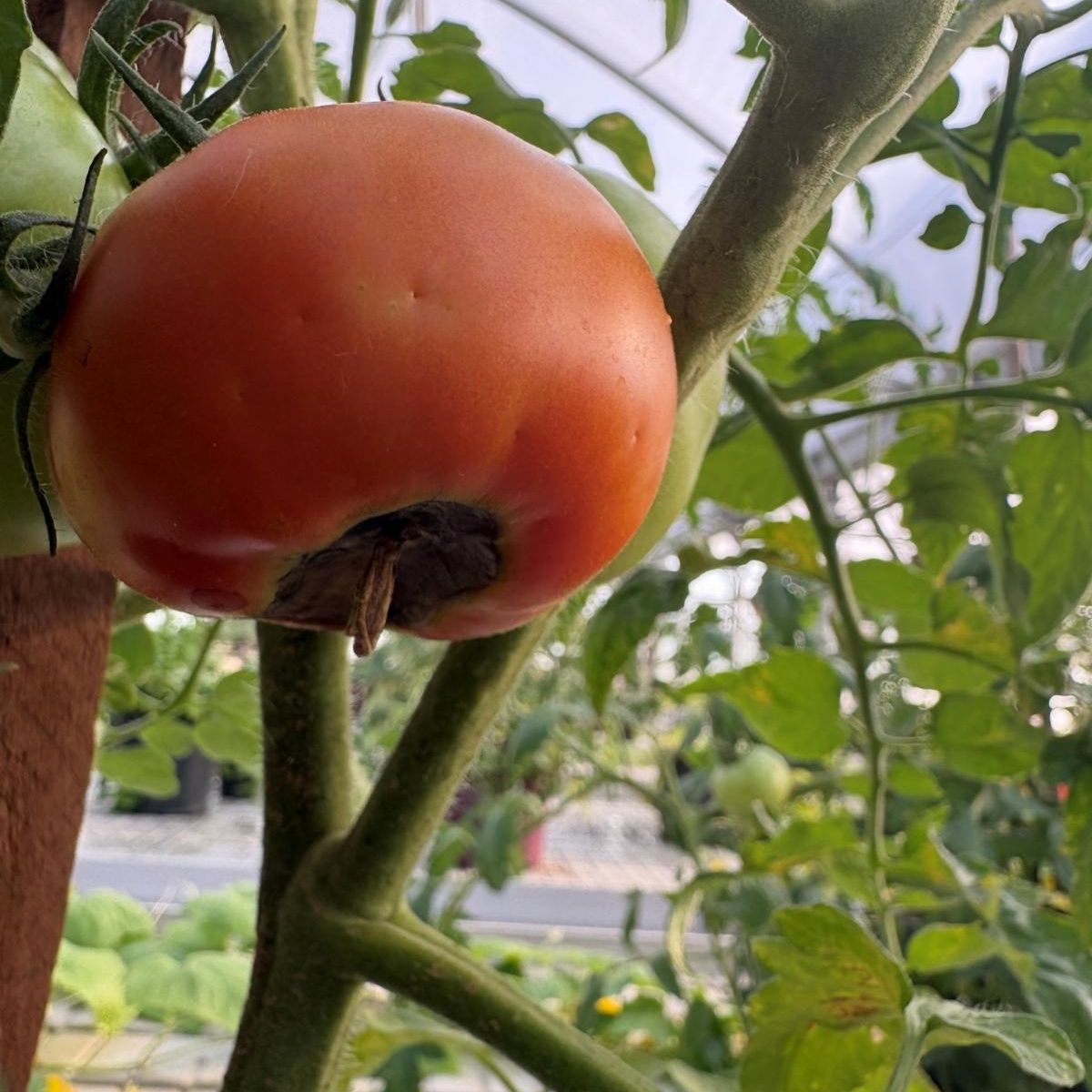
Calcium helps with membrane stability in plant cells. When calcium levels are too low in developing fruit, cell membranes begin to break down and affected tissues die. Symptoms typically begin at the blossom end of the fruit as a water-soaked or bruised-looking area that eventually becomes dark and sunken.
While low soil calcium can contribute to blossom end rot, it is not usually the cause in Oklahoma gardens where calcium levels are often sufficient. Blossom end rot is more often caused by disruptions to calcium uptake and movement. Calcium moves through the plant with water, and its movement depends on transpiration, the process by which water is absorbed by plant roots, moves through the plant, and is released through tiny pores in the leaves called stomata.
When transpiration is reduced in cool or humid conditions, calcium may not move to developing fruit quickly enough. Leaves lose more water than fruit, so under hot, dry, or windy conditions, calcium may be directed to leaves rather than developing fruit.
Soil conditions can also affect blossom end rot. Damage to the root system from compaction or waterlogging can prevent the uptake of calcium. Very high or very low soil pH can also reduce calcium uptake. Excessive nitrogen, potassium, or magnesium can interfere with calcium uptake and contribute to blossom end rot.
To prevent blossom end rot, ensure that soil moisture remains consistent around the plants. Periods of drought followed by excessive watering can disrupt calcium movement within the plant and encourage blossom end rot. It’s also important to avoid overfertilizing. Conduct a soil test to confirm the amount of nutrients needed for healthy plants. Fortunately, blossom end rot is more common on the first flush of fruit. Plants often outgrow the problem as root systems develop and growing conditions become more consistent.
Fall Vegetable Gardening Starts Now!
Shelby Mendoza, OSU Student Farm Assistant Manager
While it feels like summer just started, now is the time to start thinking about your fall vegetable garden! Some crops, like beans, corn, and cilantro, can be direct-seeded into your garden this July. Others—such as broccoli, cabbage, and kale—should be started indoors now, so they’ll be ready to transplant in July to August.
For more detailed advice, check out the OSU Extension Fall Gardening Fact Sheet. You can also watch this helpful Oklahoma Gardening segment with Fall Gardening Tips to get inspired!
Download Garden Tips and Articles as a Word Document from the Hort Hub!