

Mid-to-Late July Horticulture Tips
Friday, July 17, 2026
Summer Heat and Bitter Cucumbers
Shelby Mendoza, Assistant Manager for the OSU Student Farm
As temperatures rise, some gardeners may notice that their cucumbers taste bitter. This bitterness is caused by the compounds called cucurbitacin. Cucurbitacins are produced by cucumber plants as a natural defense mechanism. They are normally found in the stems, roots, and leaves, but they can move into the fruits when plants are under stress. When Oklahoma temperatures become very hot, they can trigger stress in many cucumber plants.
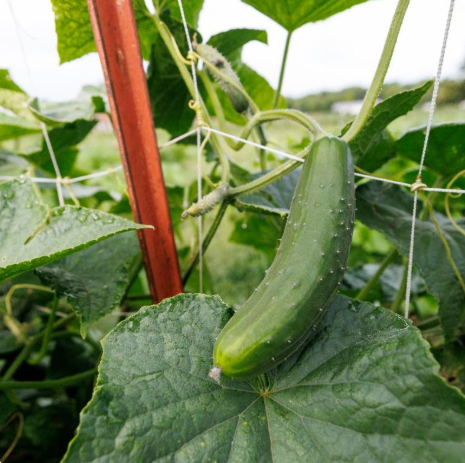
Image Credit: Shelby Mendoza
To reduce bitterness, you can cut off the end of the cucumber that was attached to the stem and peel the rest of the cucumber because cucurbitacins are most concentrated in the stem end of the fruit, just under the peel. For future plantings, consider growing burpless cucumber varieties. Burpless cucumbers have been bred to produce lower levels of cucurbitacins, making them less likely to develop a bitter flavor. However, even burpless varieties may become slightly bitter if plants experience severe environmental stress, such as prolonged heat or drought.
Another way to reduce the chance of bitter cucumbers during our hot temperatures is to water deeply, providing your plants with 1 to 1 ½ inches of water per week, depending on rainfall and soil conditions. Mulching and keeping your cucumbers weed free also help to retain soil moisture and reduce competition that can stress plants.
Brown Patch Disease of Cool-Season Grasses
David Hillock, Senior Extension Specialist for Consumer Horticulture and Statewide Master Gardener Coordinator
Brown patch is a disease that commonly shows up on cool-season turfgrasses, especially tall fescue, but can occasionally appear on hybrid bermudagrass and zoysiagrass. Brown patch disease appears as brown patches up to three feet in diameter. Leaves first take on a dark color, then wilt and turn brown.
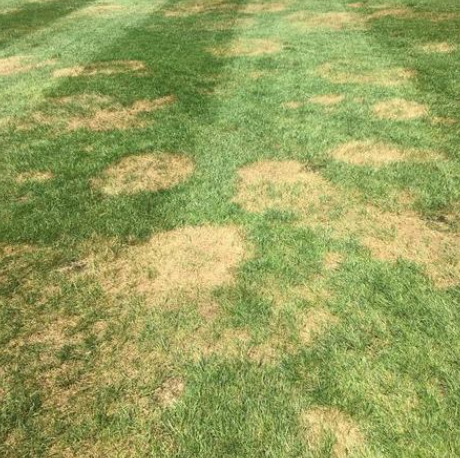
Image Credit: NC State Extension
Brown patch usually occurs in hot, humid weather when night temperatures are above 60°F and foliage remains wet for prolonged periods. Poor soil drainage, lack of air movement, cloudy weather, heavy dew, overwatering and watering in late afternoon favor prolonged leaf wetness and increased disease severity. The application of high rates of nitrogen and or deficiencies of phosphorus and potassium, especially when weather conditions are favorable for brown patch, can increase disease severity. Excessive thatch, mowing when wet and leaf fraying by dull mower blades can also enhance the severity of brown patch.
Control starts with good management practices. Though there are varieties of turf-type tall fescue that are considered resistant to brown patch, even resistant varieties succumb when growing conditions are less than ideal for growth of strong plants (as described above) and environmental conditions are highly favorable for disease development.
When environmental conditions favor disease, avoid application of excessive rates of nitrogen. Fertilizer should be applied judiciously, and adequate amounts of phosphorus and potassium are essential to ensure the highest possible levels of plant resistance. In general, cool-season turfgrasses should not receive more than one pound of actual nitrogen per 1,000 square feet at any one time. Use very low rates or avoid applying nitrogen in late spring or summer to cool-season turfgrasses. In a typical home lawn situation, the last application of fertilizer in the spring should be applied no later than early May. Ensure adequate amounts of phosphorus and potassium by applying these nutrients based on soil test results.
Reduce prolonged leaf wetness by watering infrequently to a depth of 6 to 8 inches and at a time when the foliage is likely to dry quickly. Avoid watering in late afternoon and evening and allow for better air movement by removing unwanted vegetation and selectively pruning trees and shrubs. Removal of morning dew reduces prolonged leaf wetness and exudates that favor disease development. This can be accomplished by dragging a hose across the turfgrass or by running the irrigation system for a short time. Good surface and soil drainage must be present to reduce disease incidence.
Make sure mower blades are sharp to reduce the amount of wounded turfgrass in which the fungus can enter the plant. Collect and promptly dispose of clippings on infected areas or when conditions favor disease development. Avoid mowing turfgrass when wet, and do not mow too low so that the turfgrass will be better able to resist the disease.
Applications of effective fungicides, when the first disease symptoms appear, will give good control of brown patch on highly maintained turfgrass. A preventative fungicide program should be considered in areas where the above conditions are difficult to control or change and when conditions are favorable for disease development.
For more information on managing cool-season grasses see fact sheet HLA-6420 Lawn Management in Oklahoma.
The Summer Shed: Understanding Caldoptosis in Trees
Courtney DeKalb-Myers, Assistant Extension Specialist for Consumer Horticulture
As conditions transition from the rainy spring into the hot, dry summer, homeowners may notice large trees beginning to drop leaves or small twigs. In most cases, this is a naturally occurring process called cladoptosis. The tree produced more growth than it can support during the spring and is now shedding some of that excess foliage. This helps conserve resources and reduce water loss during the hot, dry periods of summer. This is a beneficial process that helps reduce stress during less-than-ideal conditions. Cladoptosis is common in baldcypress, sycamores, oaks, and some elm species.
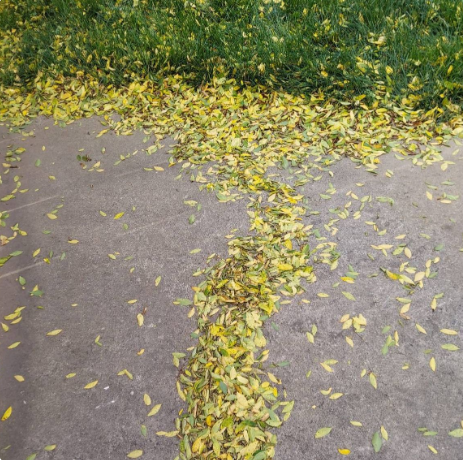
Image Credit: Plant Disease and Insect Diagnostic Laboratory, Oklahoma State University
Signs of normal cladoptosis include dropped leaves and small twigs, often no bigger than a pencil. The fallen twigs often still have green, healthy-looking leaves attached. Twigs will also have a smooth point of detachment from the tree, rather than appearing broken. This is where an abscission layer formed, allowing the twig to separate. Otherwise, the canopy will generally look healthy.
Although cladoptosis is a normal response to changing environmental conditions, it can be confused with several other issues. Drought stress in trees will also result in dropped leaves, but they will typically appear scorched or wilted. There will also be larger portions of the canopy that appear thin. Heavy winds and storms can also result in fallen twigs and branches, but they lack the clean detachment scar that occurs with cladoptosis. Breaks caused by weather events are often ragged or splintered. Some canker diseases can also cause branch dieback and leaf drop. However, these problems are often accompanied by discolored bark or cracking in major branches. Further investigation may be warranted if larger limbs are falling, the canopy becomes noticeably thin, or the problem persists over multiple years.
Proper care helps trees remain healthy and better tolerate environmental stress. During drought episodes, ensure that trees are watered deeply and infrequently. Water should moisten the soil to a depth of at least 12 inches to allow for maximum water uptake. A small hole can be dug after watering to verify that moisture has reached an adequate depth. Mulch is also important for maintaining soil moisture. Maintain a 2- to 3-inch layer of organic mulch around the tree but keep mulch several inches away from the trunk to reduce the risk of decay. Avoid any unnecessary pruning and heavy fertilizer applications.
Remember that not every fallen leaf or branch indicates a sick tree. In many cases, cladoptosis is the normal process of shedding excess growth and adapting to changing environmental conditions. Knowing the difference between normal self-pruning and signs of decline can help avoid unnecessary concern while recognizing when a tree truly needs attention.