

Trunk Protective Materials
Thursday, October 1, 2026
David Hillock, Senior Extension Specialist in Consumer Horticulture and Statewide Master Gardener Coordinator
Young, thin-barked trees such as ash, birch, linden, maples, and others often sunscald unless protected. The twigs that shade the trunk should be left but cut back a few inches so they become denser. A twiggy trunk is preferable to tree wraps, but not all trees have enough twigs, nor is it always practical or aesthetically pleasing to leave lower limbs.
Protective wraps are available and may provide protection by modifying temperatures for thin-barked trees. Plastic wraps may provide better protection than paper wraps against lawn mower, weed-eater, and rodent damage. If misused, however, damage may occur in the form of trunk girdling or constriction, insects, diseases, and excessive bark moisture.
Protective wraps may not be necessary at planting time. Use based on the type of protection needed. Normal application of tree trunk wraps is October to March for the first two growing seasons. Wraps should be removed each spring prior to spring growth. During spring growth, the trunk expands and increases in size. Wraps too tightly wrapped or left on during this time may result in constriction to the trunk. Tree wraps should be applied loosely from base up to the first branch by overlapping for a shingle effect. Plastic wraps should fit loosely and include holes or slits for good air movement. Periodically inspect the wraps for trunk damage and insects.
Advantages of tree wraps for young plants:
- Deter animals from browsing on bark.
- Reflects sun that either scalds the trunks or makes them susceptible to southwest injury during the winter months (bark is warmed followed by a sudden plunge in temperature which kills that portion of the bark).
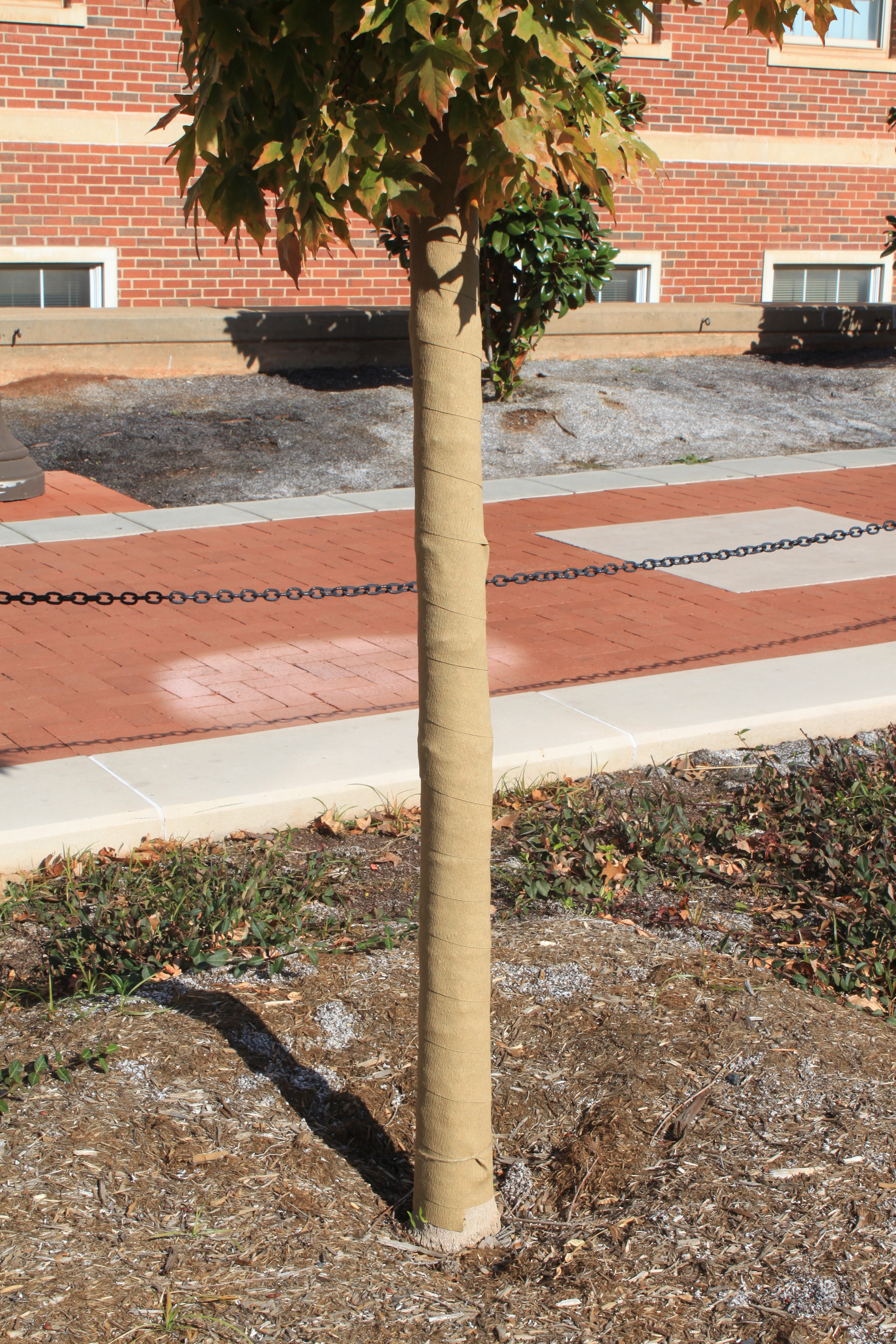 Figure 1. Wrapping trees with the appropriate protective material can help you trees through the winter. (Credit: David Hillock)