

Handling Nutsedge in the Garden
Tuesday, September 30, 2025
Shelby Mendoza, Assistant Manager at the OSU Student Farm
As we get more moisture around the state than we did for the last couple of months, you may begin noticing nutsedge making an appearance in your garden once again. Yellow nutsedge has green-yellow leaves, and purple nutsedge has dark green leaves that stand out in lawns or gardens. The stems are triangular. When nutsedge first appears, it can indicate soil compaction or poor drainage because nutsedge thrives in waterlogged soil. Once established, the plants will tolerate normal water conditions.
While nutsedge is typically easy to pull up, this is not the method you want to use for a long-lasting effect. Nutsedge has small rhizomes, or underground stems, and these rhizomes produce small tubers that look like peanuts. Each tuber, sometimes called "nutlet", hence the name nutsedge, can then form its own plant. So, when a nutsedge plant is pulled, only one plant is pulled, but rhizomes and tubers are often left behind in the soil to sprout later. To make these even more complicated to eradicate, yellow and purple nutsedge are perennial weeds that will die back in winter only to sprout again when temperatures warm in the spring.
So how can you get rid of it in your garden?
- Monitor water: Where does water sit or pool in your garden when it rains? When you water the garden, make sure you are watering deeply and allowing the soil to drain between waterings.
- Dig them out: But make sure you dig around the portion of the plant you can see, about 8 inches away from the plant, to remove as much of the underground growth as possible.
- Pull small plants before they form tubers
- Use herbicides: Herbicide use will require multiple applications, and which one to use depends on what is growing around the nutsedge. Herbicides should be applied when nutsedge is actively growing. Some herbicide active ingredient options include:
- Halosulfuron (used in SedgeHammer Plus)
- Sulfentrazone (used in Nutsedge Killer for Lawns)
- Imazaquin (used in Image Nutsedge)
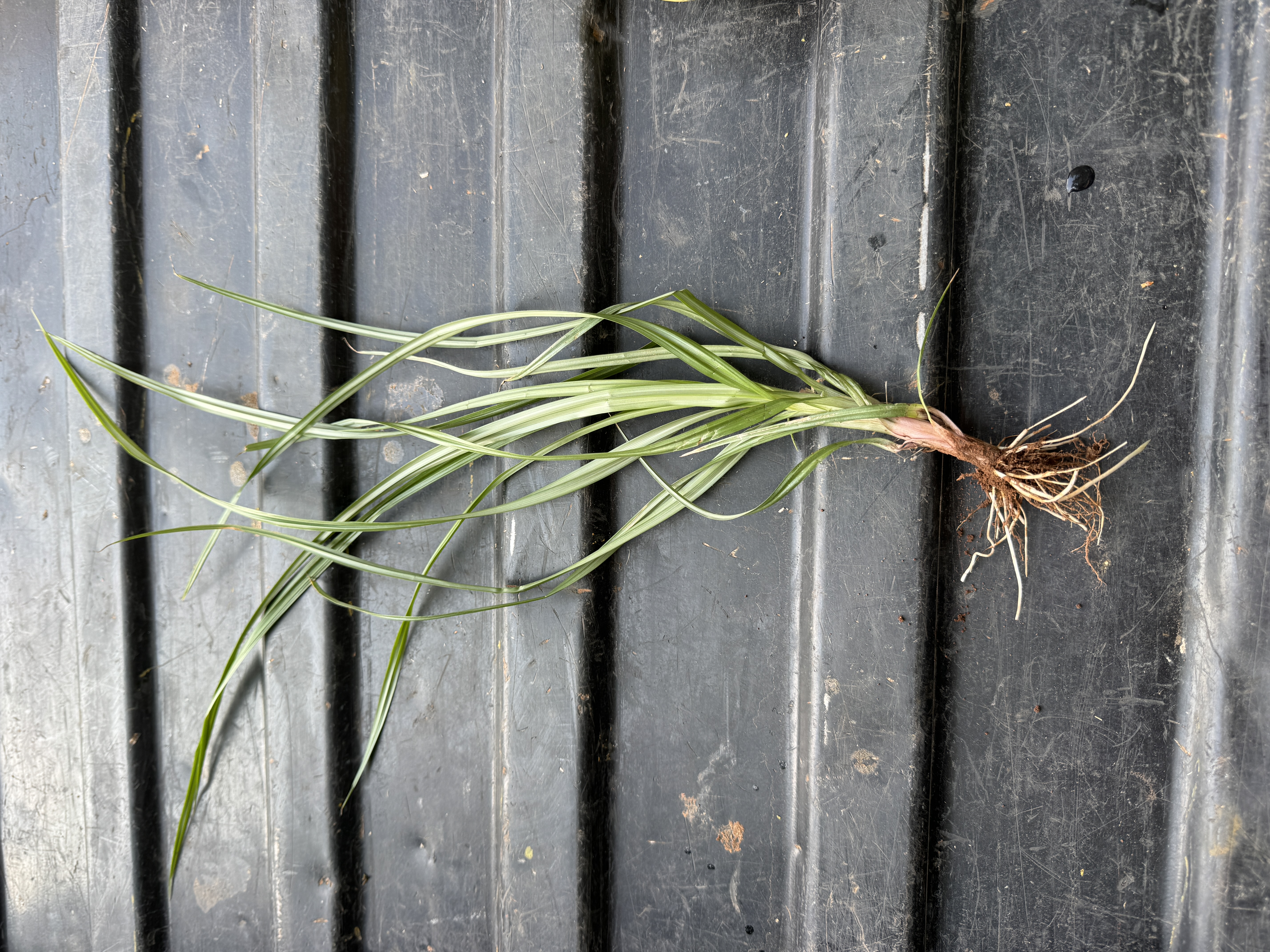 Figure 1. Nutsedge plants are easy to pull from the garden, but not the most efficient way of control. (Credit: Shelby Mendoza)
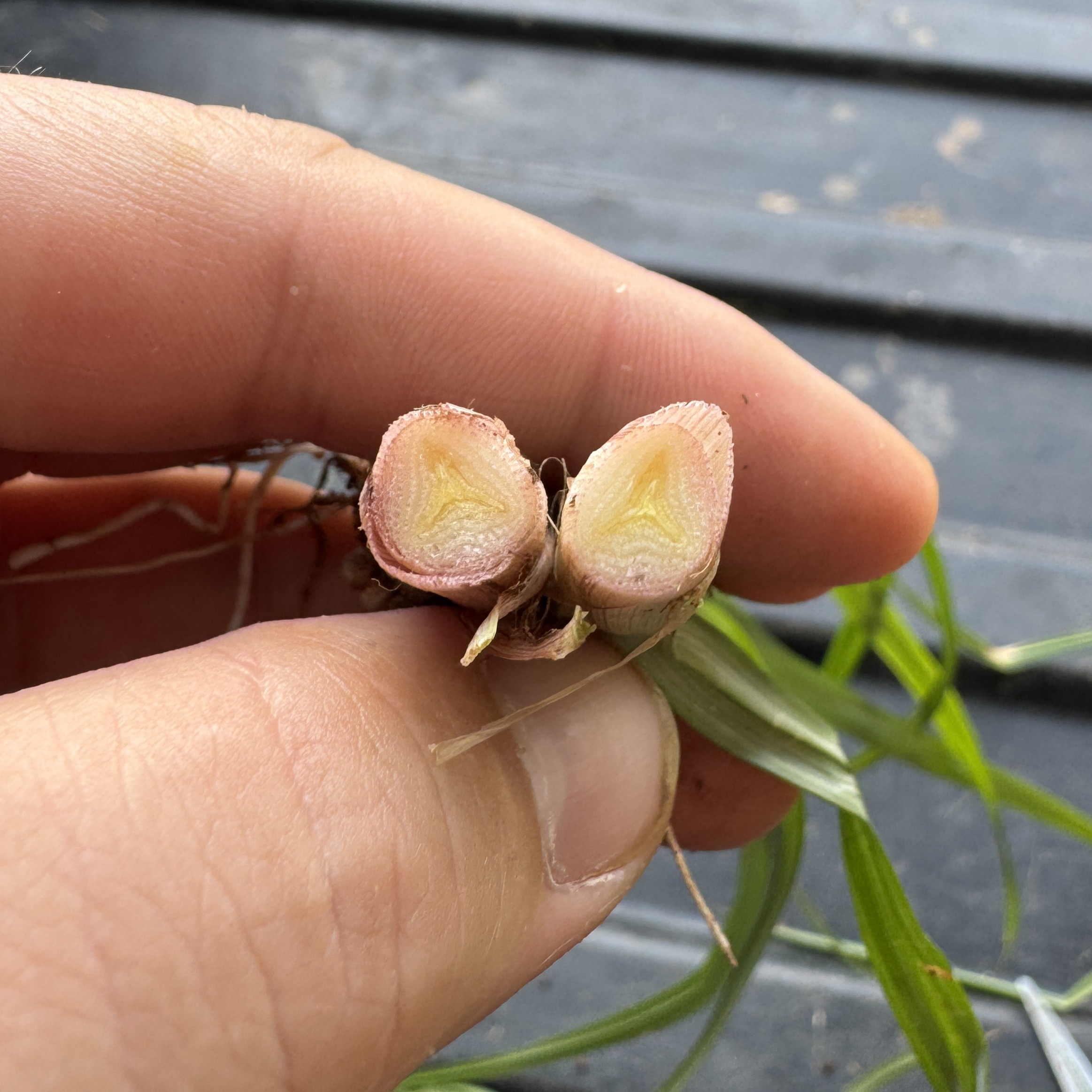 Figure 2. Nutsedge have triangular stems. (Credit: Shelby Mendoza)