

Plant Health Update, December 2025
The PDIDL received very few samples from Oklahoma specialty crop growers in December 2025. Most of the samples were diagnosed with symptoms of environmental stress. In most cases, the foliage of affected plants was discolored due to drought stress (Figures 1 and 2). The damage may be more severe on plants that are in windy areas or near structures that radiate heat (sidewalks, roads, buildings, etc.).
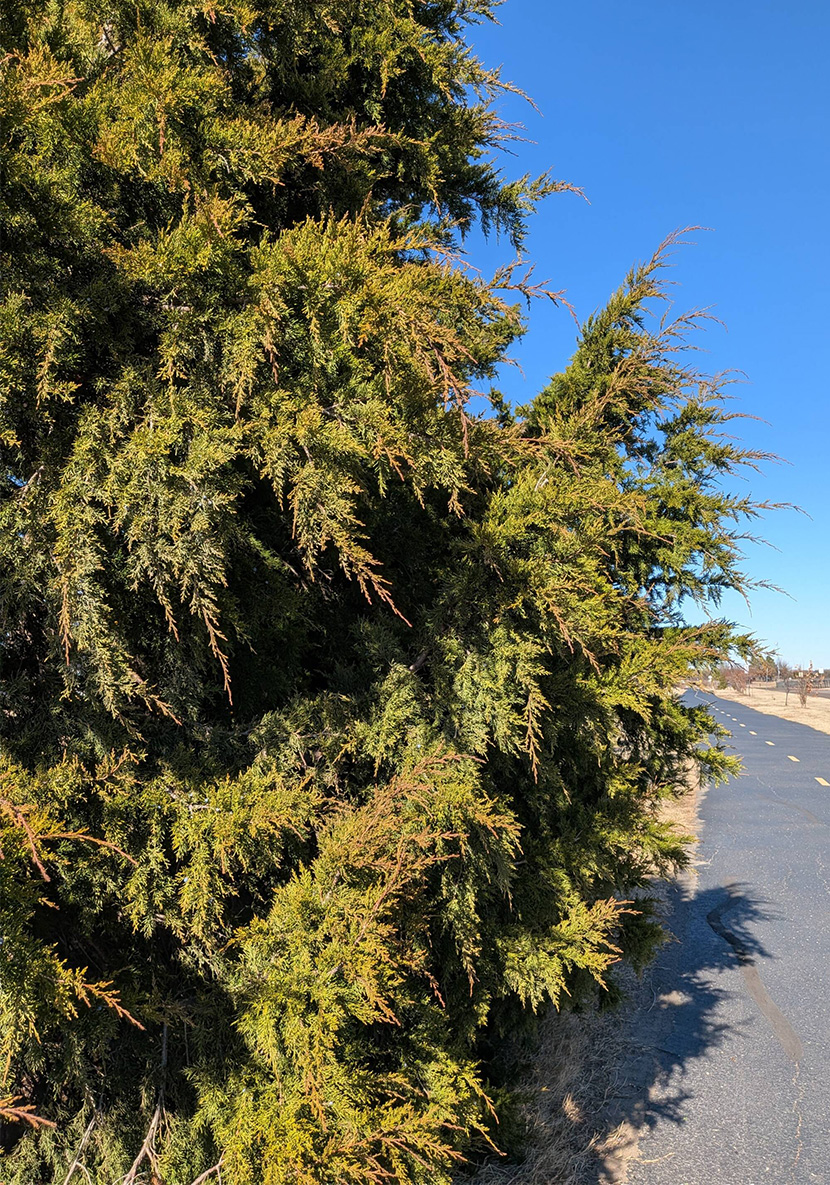
Figure 1. The needle tips on this Eastern red cedar are discolored (browning) due to environmental stress factors.
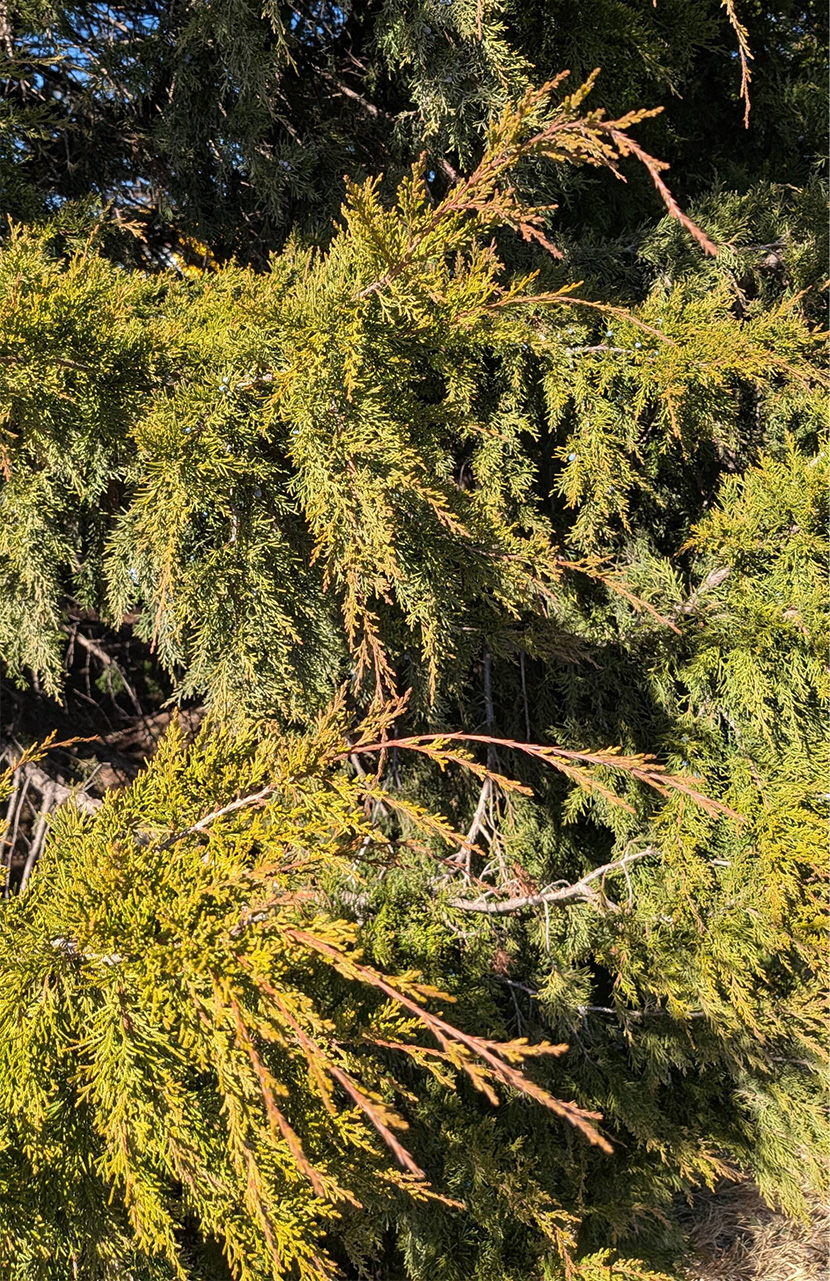
Figure 2. Closer view of needle tips of an Eastern red cedar that are browning due to environmental stress factors.
There are preventative strategies to reduce the amount of needle discoloration that occurs in the winter. One strategy is to provide supplemental irrigation to plants (especially evergreens) during periods of dry winter weather. It is also helpful to install temporary barriers around plants when windy conditions are expected. An image of this is shown in factsheet HLA-6404 Winter Protection for Landscape Plants.
The winter months are a great time of year to evaluate over health and appearance of trees and shrubs in the landscape. The holly shrub that is shown in Figure 3 has several dead limbs. The exact cause of the decline is unknown, but removing the dead limbs will improve the overall appearance of the shrub. While pruning, examine the wood for abnormalities (swellings, cracks, holes, internal discoloration) that may indicate a pest or disease problem.
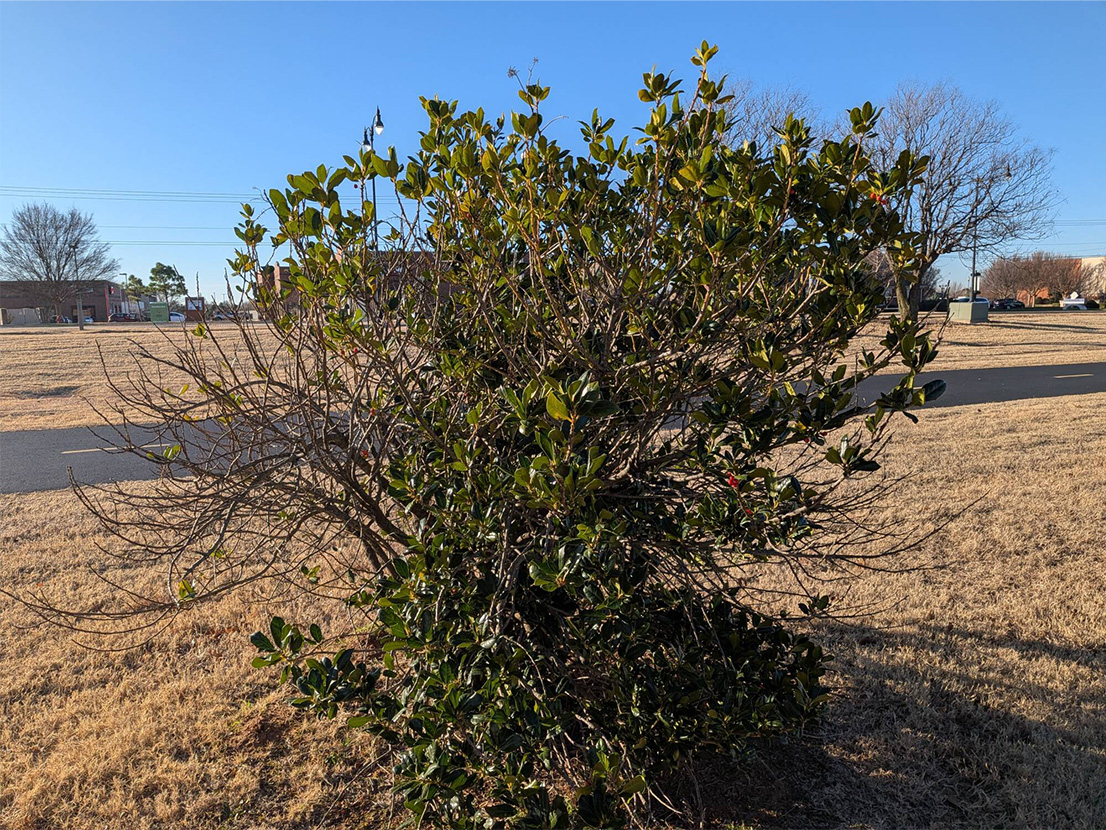
Figure 3. This holly shrub has many dead limbs. The exact problem is unknown, but removing the dead limbs will rapidly improve the visual quality of the plant in the landscape.
A summary of all submissions in December to the PDIDL by Oklahoma specialty crop growers is provided in Table 1. Throughout 2025, we have provided monthly tables with diagnoses for specialty crop samples in Oklahoma. Table 2 shows a list of samples that were not included in our earlier monthly summaries. These were digital submissions and clients received immediate responses by email. However, these samples were not added our database until the end of 2025.
If you have suggestions for future topics to include in our monthly updates, please contact jen.olson@okstate.edu or call the PDIDL at (405) 744-9961.
| Number | Host | County | DD | M | S | C | N | MD | DS | RS | O | Diagnosis/Identification |
|---|---|---|---|---|---|---|---|---|---|---|---|---|
| 1 | Cedar, Eastern Red | Cleveland | X | X | X | X | Environmental stress | |||||
| 2 | Cypress, Alaskan | Oklahoma | X | X | X | X | Environmental stress | |||||
| 3 | Hydrangea | Oklahoma | X | X | Cold temperature damage | |||||||
| 4 | Media/soil mix | Oklahoma | X | X | X | X | X | Soil baiting, Phytophythium vexans | ||||
| 5 | Oak, Shumard | Cotton | X | Plant identification request | ||||||||
| 6 | Oak, Water | McClain | X | Hypoxylon canker | ||||||||
| 7 | Pansy | Oklahoma | X | X | Rhizoctonia root rot | |||||||
| 8 | Pecan | Mayes | X | Wetwood suspected | ||||||||
| 9 | Spruce, Blue | Cleveland | X | Environmental stress | ||||||||
| 10 | Sycamore | Oklahoma | X | X | X | X | Sycamore anthracnose suspected | |||||
| 11 | Sycamore | Oklahoma | X | X | X | X | Sycamore anthracnose | |||||
| 12 | Sycamore | Oklahoma | X | X | X | X | Sycamore anthracnose |
KEY for Diagnostic Testing Methods
- DD - Digital Diagnosis
- M - Microscopy
- S - Serological tests
- C - Culture analysis
- N - Nematode analysis
- MD - Molecular diagnostic methods
- DS - DNA sequencing
- RS - Referral to specialist
- O - Other diagnostic tests
| Number | Submit Date | Host | County | Diagnosis/Identification |
|---|---|---|---|---|
| 1 | 1/30/2025 | Lettuce | Oklahoma | Nutritional problem suspected |
| 2 | 4/13/2025 | Tomato | N/A | Spider mite damage |
| 3 | 4/15/2025 | Pine | Canadian | Woodpecker or sapsucker damage |
| 4 | 4/22/2025 | Hosta | N/A | Blister beetles |
| 5 | 4/24/2025 | Strawberry | Logan | Suspected Anthracnose and root problems |
| 6 | 5/13/2025 | Vegetables | Ottawa | Suspected Coprinus mushrooms |
| 7 | 5/16/2025 | Redbud, Eastern | Wagoner | Branch dieback, undetermined cause |
| 8 | 5/16/2025 | Sycamore | Wagoner | Sycamore anthracnose suspected |
| 9 | 5/22/2025 | Cypress, Bald | Oklahoma | Herbicide injury suspected |
| 10 | 5/23/2025 | Boxwood | Garfield | Winter injury suspected |
| 11 | 6/2/2025 | Oak | Garfield | Kermes scale |
| 12 | 6/4/2025 | Tomato | Harper | Spider mite damage |
| 13 | 6/10/2025 | Elm | Mayes | Herbicide injury suspected |
| 14 | 6/10/2025 | Hackberry | Mayes | Herbicide injury suspected |
| 15 | 6/10/2025 | Pear | Mayes | Fireblight |
| 16 | 6/16/2025 | Echinacea | Oklahoma | Leafcutter bee (male) |
| 17 | 6/17/2025 | Oak | Payne | Basal trunk rot suspected |
| 18 | 6/18/2025 | Magnolia | Carter | Mechanical damage |
| 19 | 6/23/2025 | Tree | Oklahoma | Clearwing moth borer larvae suspected |
| 20 | 6/25/2025 | Ash | Canadian | Environmental stress |
| 21 | 6/26/2025 | Oak | Mayes | Bot canker (Diplodia corticola) suspected |
| 22 | 6/26/2025 | Pear | Oklahoma | Fireblight |
| 23 | 6/27/2025 | Spruce, blue | Carter | Environmental stress |
| 24 | 6/30/2025 | Oak | Payne | Hypoxylon canker |
| 25 | 7/2/2025 | Oak | Pontotoc | Environmental stress |
| 26 | 7/8/2025 | Landscape | Caddo | Suspected Drab prominent caterpillars |
| 27 | 7/14/2025 | Plant ID request | Kiowa | Suspected ash (Fraxinus sp.) |
| 28 | 7/16/2025 | Pine | Oklahoma | Diplodia tip blight or Nantucket pine tip moth damage |
| 29 | 7/29/2025 | Maple | Oklahoma | Environmental stress |
| 30 | 8/25/2025 | Tree | Oklahoma | Ganoderma suspected |
| 31 | 9/10/2025 | Oak, Shumard | Oklahoma | Environmental stress |
| 32 | 9/15/2025 | Crape myrtle | Noble | Crape myrtle bark scale |
| 33 | 10/13/2025 | Redbud, Eastern | Tulsa | Environmental stress |
| 34 | 10/27/2025 | Oak | Pontotoc | Environmental stress |
| 35 | 11/20/2025 | Bermudagrass | Creek | Cultural/environmental problem |