

Ag Insights February 2026
Wednesday, April 8, 2026
Spring Management in Wheat
Josh Bushong, Area Extension Agronomist
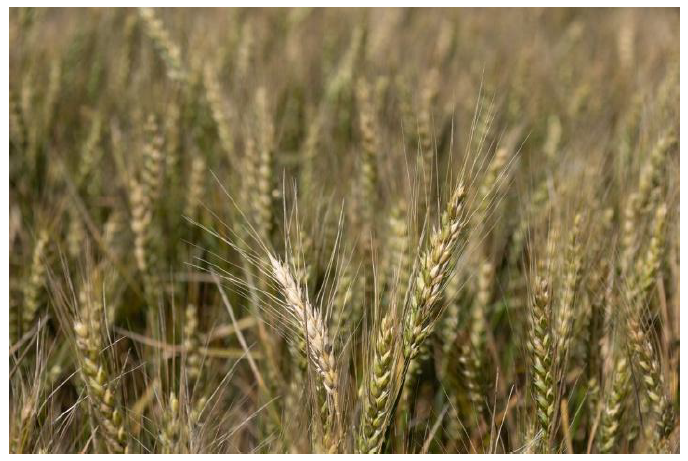 We have had some cold snaps this winter, but overall, it has been very warm, especially looking back at November. December was one of the driest for the past 30 years. While wheat pasture started out decent it has diminished much quicker than I thought it would. Stockers have already been removed from some fields.
We are still receiving reports of armyworms in wheat fields out in western Oklahoma, so apparently our freezes weren’t hard enough to fully eliminate the issue. I’ve also heard from some farmers concerned that they might have some mites as well. In addition to insects, it’s time to also start scouting for foliar diseases. The OSU diagnostic lab has confirmed tan spot, powdery mildew, and rust.
If wheat stands are thin, economic thresholds for pests should be reduced to provide more protection. Until spring greenup, it’s always difficult to determine how much to topdress but late winter nitrogen topdressed can be beneficial to tiller production, spring forage production, and grain yield.
Timely herbicide applications are key to early spring weed management. The sooner the better is what past OSU field research has shown. Most wheat herbicides need to be applied when temperatures start to get at least into the fifties. Ideally for good weed efficacy and crop safety, there should be a few days prior and following the herbicide application with good growing conditions.
When making herbicide applications this spring make sure to check labels to know if any adjuvants sure be added. Surfactant selection can also be dictated by wheat growth stage. Nonionic surfactants (NIS) typically have less issues with crop injury, but methylated seed oils (MSO) and crop oil concentrates (COC) will provide better weed control. Certain herbicides such as Beyond (for use only in Clearfield varieties) will also need a nitrogen source in addition to a surfactant.
Topdressing nitrogen tank-mixed with an herbicide or insecticide can be an economical option. Since the sprayer will be using a broadcast nozzle, such as a flat fan, Urea Ammonium Nitrate (UAN) rates should be limited to 10 to 20 gallons per acre depending on conditions. Applications should be avoided when air temperatures rise above 70° and relative humidity is low. Applications should be made prior to jointing stage, which will limit yield loss by allowing more recovery time if crop injury occurs.
Disease management has shown to be economical most years. If applied timely, most commercially available fungicides have had good yield protection in OSU field trials. If only one application is budgeted, it is best to apply later to protect the flag leaf once it emerges. Long-term data typically average about 10 to 20 percent more grain yield compared to no fungicide.
From 2014 to 2021, the OSU variety trial near Lahoma has evaluated more than 50 wheat varieties with and without a fungicide applied around the boot to flagleaf growth stage. Some varieties had good rust resistance and had little to no benefit to a fungicide application, while others had yield reductions of 20 to 40%. Including all varieties, there has been a 20% average increase in grain yield over that time frame. 6 of the 8 years the fungicide application protected grain yield.
The disease has to be present to protect yield with a fungicide application. Knowing whether or not your wheat variety has good tolerance or resistance to leaf diseases is another factor to be considered. At current wheat prices, if the wheat has a yield potential of at least 30 bushels per acre, then more than likely it will be economical to apply a fungicide if foliar diseases develop on the wheat.
Timely field scouting is the only way to determine if a pest (insect, weed, or disease) is present and if an application of pesticide is warranted. It is also good to remember that pesticides don’t add yield potential, they can only protect yield. The only way for one of these pesticides to have a positive return on investment would be knowing what pests are present and knowing how much yield potential can be saved if applied correctly.
Preparing Cows for Cold
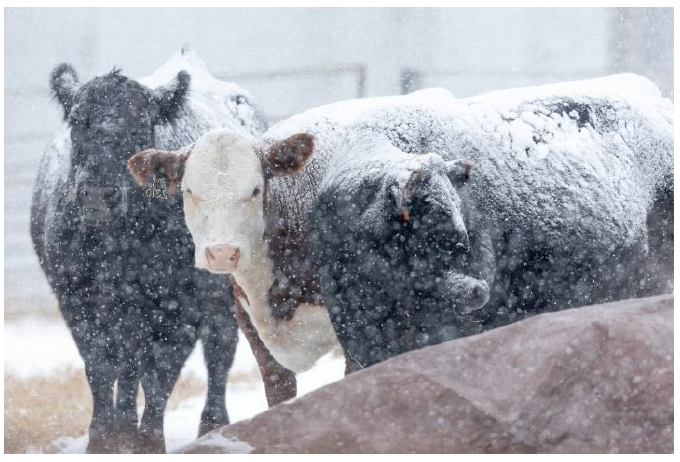
This winter season has brought us a great deal of beautiful weather. In early December, I visited a Major County producer and he commented on how much hair his calves had. “I think we are in for some cold weather”, he said. By the time you are reading this, much of Oklahoma will indeed be experiencing very cold temperatures. I have written about cold weather nutrition for cows in the past, but I thought this would be a good reminder of the water and extra feed needed to get cows through cold snaps.
The best place to start is to review the physical factors that impact cows’ ability to withstand cold. The type of haircoat on calves like the one I visited is a good indicator of the ability to deal with the cold. The amount of moisture and how wet the haircoat is also impacts cold tolerance. Obviously, rainfall, melting snow and ice increases cold stress. In addition, cattle in lower body conditions (less than BCS 5) are more impacted by cold temperatures. All cattle will need extra feed to maintain body condition, but nutritional needs may vary from one group to the next.
That leads me to the next topic: nutrition. The Mesonet Cattle Comfort Advisor is an excellent tool for assessing temperature stress using their maps but also giving an idea of cattle comfort which combines actual temperature with wind chill. This tool advises increasing energy 1% for each degree the cattle comfort index is below 32. This energy need would double to 2% if the animal is wet to the skin. Let’s look at a realistic example. In the upcoming week, there are several days where temperatures are projected to average 15 degrees. Since moisture is expected, a cow’s lower critical temperature is 59 degrees (lower critical temp would be 32 degrees for a dry coat). According to the increased energy requirement of 2% (moisture expected), cattle would need an additional 88% energy to maintain body condition (59°-15° = 44° x 2%= 88%). For gestating cows consuming a free choice diet (30 lbs.) of hay (7% CP and 57% TDN), that would mean providing an additional 8-10 lbs. of TDN (energy) a day. In actual pounds of feed, this would mean providing an additional 6 pounds of hay plus an additional 3.5 pounds of 20% cubes above normal supplementation. Cows with baby calves will need significantly more than this but this gives you a baseline to work from. Start increasing feed several days before to help them adapt and continue to the increase several days after to help recovery.
Now let’s not forget water. According to the OSU factsheet “Estimating Water Requirements for Mature Beef Cows”, 1300-pound cows experiencing 40°F require approximately 9-15 gallons of water daily. The lower end of that scale would be used for open or pregnant, non-lactating cows while the upper limits would be for lactating cows. This would include a baseline for even colder weather. Cattle needing to consume more hay and supplements really need a good source of water to drink. It helps with digestion and passage rate along with keeping cattle hydrated. Data also collected by OSU confirms an important fact that calves should also be able to access the water source and will consume 1-2 gallons per day. To ensure calves get enough to drink, ensure tanks are filled high enough so they can reach. Natural water sources should be chopped so that calves can access the water source safely.
My final topic is bedding and shelter. Providing some straw or low-quality hay can improve cattle cold tolerance. Cattle don’t necessarily need a barn to shelter in. In fact, that isn’t the best for them because after a time humidity levels can increase which raises cold stress. A wind break can be helpful that doesn’t have an accumulation of snow. Bottom line, do what you can to feed and water cattle where they are during cold and continue to feed higher levels after the cold snap has passed. Good luck in the remaining cold spells and be safe!
Tough Beginning: 2026 Business Planning Tips
Alberto Amador, West Area Ag Economics Specialist
2026 begins tough. As always, the beginning of each year brings new opportunities to set goals and renew commitments, both personally and professionally. I’ve already written my bucket list for 2026 and hope you’ve done it as well. This is also an ideal time to focus on business planning. Although management planning is important every year, this year it is critical.
On December 15, the USDA released valuable insight, through the Farm Prices Paid Index and Farm Prices Received Index (2011=100). The report showed that in October the prices paid index rose to 154, while prices received index fell to 12. In simple terms, compared with 2011 production costs are about 50% higher, whereas the prices farmers received are only around 21% higher, resulting in a gap of 34.1 index points. Although it does not measure profits directly, the gap provides a clear idea of farm operating margins. In this column, I’ll share key const management consideration that may be helpful for business planning.
In the cattle market, we continue to expect high prices, as I mentioned in previous columns. Tight cattle supply and robust beef demand are the main price drivers. With reductions in cow culling and increased heifer retention, we expect to see signs of herd expansion throughout 2026 and 2027. However, re-building takes time and will be gradual. In 2025 heifer retention was 16% lower than 2014, the year of the most recent herd expansion. At the end of January, upcoming USDA reports will provide updated information on how many heifers were retained.
- Meanwhile, cow-calf operations will focus on selling calves. Ranchers’ income will benefit from high prices, whereas increased cow and heifer retention means lower sales volume. Therefore, cow-calf producers should focus on three key cost areas to improve efficiency: Overhead costs, such as labor or machinery. If current capacity is not sufficient for a larger herd, additional investment may be required, increasing overhead costs.
- Forage/feeding costs, which are the major operating costs. An effective grazing management program can significantly reduce feeding, machinery and labor costs.
- Cow depreciation, one of the most complex cost components. With heifer purchase or development costs currently at peak levels, cow depreciation is expected to increase and affect future budgets.
Regarding crops, the scenario is different. On January 12 the World Agricultural Supply and Demand Estimates report was published, and its projections shifted the outlook toward a less favorable commodity environment. For corn and soybeans, we expect larger production, supply, and stocks. For wheat, estimates show a slight increase in supply, a decline in feed and residual use and higher stocks. Additionally, soybean exports forecast has decreased. All of these factors place downward pressure on prices, while some input costs continue to rise. According to Terrain Ag projections, fertilizer costs are expected to increase in 2026 due to multiple factors, including high demand, tight Urea and UAN supply, and geopolitical conflicts. Additionally, tariffs may push some input prices higher. Even though several key fertilizers and machinery are protected under the United States-Mexico-Canada Agreement, certain equipment and specialized pesticides from other countries face higher tariff rates. An article from North Dakota State University notes that pesticide prices could increase around 25% whereas machinery and equipment (repairs) costs may rise between 13-16%.
Marc Rosenbohm, author of the Terrain Ag article, estimates production cost increases of approximately 4% for corn and 6% for soybeans. However, these are only expectations, and no one can be sure about the future. What is clear is the persistent gap between the farm prices paid and prices received indexes. Although these indicators don’t assess farm profits directly, they clearly show financial pressure on farm operations.
Determining goals and developing a well-informed business plan that adjusts management decisions with those goals will be ideal in 2026. Producers should stay informed about markets and pay close attention to inputs that may become more expensive. Markets are multifactorial and largely outside of our control. Therefore, I highly encourage focusing on the factors within managerial control and using available resources as efficiently as possible. Do not hesitate to contact the experts with questions. The OSU Extension team and I are always willing to help.
Annual Grass Nuisances in Bermuda Pastures and Hay Fields
Bermuda can be very competitive if managed properly. Correcting soil pH and nutrient deficiencies according to a soil test is a top priority. For Bermuda, nitrogen management is always going to be of main focus, but phosphorous and potassium can also be very beneficial. Other cultural weed suppression practices include proper stocking rate and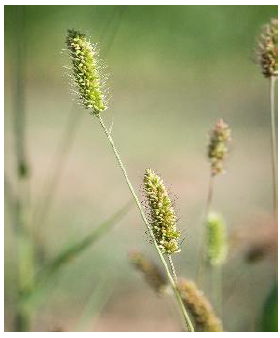 prescribed burning. Leaving 2 to 3 inches is essential for good regrowth for both haying and grazing Bermuda.
Annual foxtails can occasionally become issues. Both green and yellow foxtail are listed on the Pastura herbicide label, but when applied alone it may only provide suppression. The Pastura label does recommend tank mixing a glyphosate product to improve foxtail control. Depending on the concentration of the glyphosate product being used the use rate would be 3.5-6 oz/acre (5.5 lb/gallon) or 5-8 oz/acre (4 lb/gallon). While Bermuda is known to fully recover from low rates of glyphosate, temporary yellowing and/or stunting may occur.
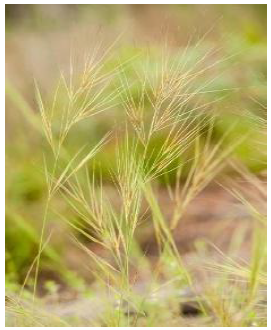 Prairie threeawn (aka wiregrass, ticklegrass, old-wild threeawn) is an annual warm season grass weed. It usually encroaches into Bermuda in less productive soils and over-grazed pastures. Correcting soil phosphorous levels is as important if not more important than nitrogen. Fall prescribed burning has shown to be very effective as shown by some field trials conducted by Kansas State University. Burning in November was effective because the seeds were still attached to the stems and were more easily consumed by the fire.
Field trials conducted by OSU showed good efficacy on threeawn when a tank-mix of Pastora and low rate of glyphosate was applied. Pastora didn’t add much to the control, but its label allows for the glyphosate to be legally applied when tank mixed. Glyphosate is no longer labeled to be applied by itself. Some Bermuda injury will be expected but the stand should eventually recover with good growing conditions. These field trials also showed that if soil fertility wasn’t corrected, threeawn repopulated very quickly. More recent OSU field work has shown that adding some Urea Ammonium Nitrate (UAN) can increase control as well as improve the bermuda recovery. Ongoing research is being conducted to fine tune the nitrogen rates.
Sandburs are another annual warm season grass and is often found in sandy acidic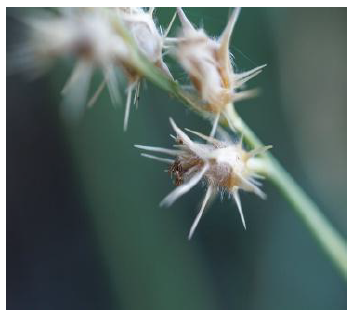 (low pH) soils. Correcting soil pH and applying adequate nitrogen will be the most beneficial to improve the stand of the bermuda. Pasture burning can reduce sandbur seed production if executed at the right time and intensity. Fall burns will likely be better, unless there is sufficient fuel for a hot spring burn. If the fire from the burn is not hot enough, it may actually stimulate germination which can be beneficial if followed by an herbicide program.
Use of a preemergence herbicide (applied before sandburs germinate) like pendimethalin (Prowl H2O) will help reduce half to two-thirds of the largest and early flush of sandburs. Pendimethalin can be applied when the Bermuda is dormant and in season between hay cuttings.
The relatively new product Rezilon is another preemergence herbicide that provides control of sandburs, as well as other annual grasses and some broadleaves. It needs to be applied prior to seed germination of the sandburs to work. Late winter applications are recommended from late December through mid-February followed be another application mid-season. If the late winter application is applied too late the first flush and main flush of sandburs will be missed, but Rezilon could still be an option after the first cutting before another flush of sandburs germinates.
Postemergence herbicide (applied after bermudagrass and sandburs are actively growing) options include glyphosate (Roundup Weathermax), imazepic (Plateau), or nicosulfuron with metsulfuron (Pastura). Read and follow label directions for rates, application timings, and surfactants to limit crop injury and to achieve satisfactory sandbur control.
Lack of control is usually due to herbicide application timing. Sandbur growth stage is critical for some products. For instance, after sandburs reach 1.5 inches tall control will be reduced with products like Pastora. If applied correctly, over 90 percent of the sandburs can be controlled with the post-emergence herbicides. Keep in mind, sandburs will continue to emerge as the season progresses which may make it appear like the early herbicide application failed.
A multi-year strategy of combining cultural suppression practices and herbicides is necessary. For more information refer to OSU factsheet PSS-2596 Sandbur Control in Bermudagrass Pastures or visit your local OSU Extension office.
Reproductive Losses in Small Ruminants
Barry Whitworth, DVM
Senior Extension Specialist/BQA State Coordinator, Department of Animal & Food Services, Ferguson College of Agriculture, Oklahoma State University
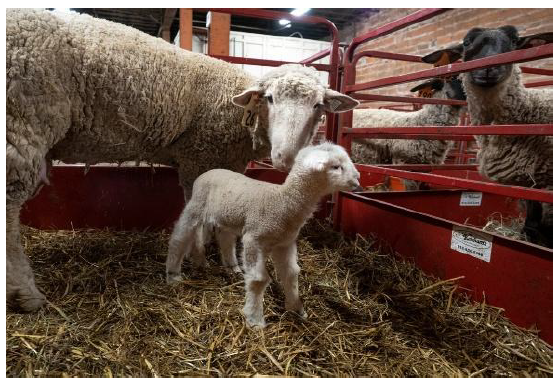 Reproductive failure is defined as poor conception rates, early embryonic loss, abortions, stillbirths, and weak newborns. Failure to breed and maintain pregnancy in small ruminants results in reduced flock productivity and economic hardship for sheep and goat enterprises. Ascertaining a diagnosis of reproductive failure can be both elusive and costly. Producers need to have a good understanding of the causes of reproductive failure in small ruminants as well as management practices that minimize losses.
Abortion rates of 2% to 3% are considered normal in healthy sheep and goat enterprises.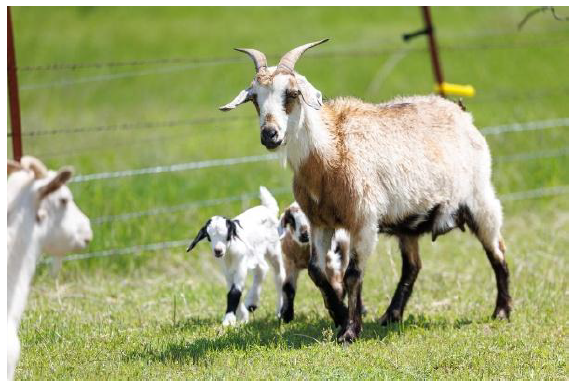 If a sheep flock or goat herd has abortion rates above 5%, this suggests a need to further evaluate the issue. Abortion rates between 2% and 5% may indicate an underlying or endemic problem within the flock or herd. Other concerns that may warrant investigation include vaginal discharges, stillbirths, weak-born offspring, and retained fetal membranes.
In a retrospective study, Dr. Michael and associates found that the most common cause of abortions in small ruminants was the result of bacterial infections. In sheep, the most common agents were Campylobacter jejuni and Chlamyophila abortus. In goats, the agents were C. jejuni and Coxiella burnetti. Other bacterial agents associated with sheep and goat abortions are Salmonella spp., C. fetus subspecies fetus, Leptospira, and Listeria monocytogenes. The single most common agent found in abortions in small ruminants is the protozoan Toxoplasma gondii. Virus and fungal causes are rare in sheep and goats.
Noninfectious causes of abortion such as maternal issues, nutritional, fetal anomaly, failure to thrive, and caprine uterine amyloidosis accounted for less than 10% of the diagnosis in the Michael study.
Diagnosing the cause of a small ruminant abortion is challenging, and proper specimen selection is critical. The Oklahoma Animal Diagnostic and Disease Laboratory (OADDL) recommends that producers provide the aborted fetus and placenta. Studies indicate that proper sample submission significantly increases the odds of a definitive diagnosis.
Prevention of abortions in small ruminants can be challenging. Vaccines may help in reducing abortion risks. Vaccines are available for campylobacteriosis and C. abortus. Unfortunately, some of the more common causes of abortion such as T. gondii and C. burnetti do not have a vaccine available. The use of ionophores may help reduce reproductive losses for T. gondii. Feeding of antibiotics has been used for treatment and prevention of reproductive losses; however, the results have been mixed on the effectiveness of this practice. Producers should consult with their veterinarians for more information on the use of ionophores and antibiotics.
Biosecurity plays an important role in preventing reproductive issues. Maintaining a closed flock/herd, manure management, timely disposal of placentas and aborted fetuses, and cat control may help reduce reproductive issues. Also, all purchased additions should be tested for reproductive diseases and quarantined before entering the flock/herd.
Most organism associated with reproductive failure in sheep and goats are zoonotic. Producers should be aware that they may be exposed to these organisms during routine farm or ranch activities. Protective clothing and dust masks should be worn when handling aborted fetuses, placentas, or when working in dusty environments.
Producers should practice good hygiene such as frequent hand washing. Individual such as young children, elderly, immune compromised, and pregnant women should be especially careful around small ruminants during the lambing and kidding season.
Reproductive failure in sheep and goats is frustrating for sheep and goat producers. The key to preventing reproductive problems is early diagnosis, strong preventive programs, and close collaboration with veterinarians and diagnostic laboratories. These efforts help ensure the long-term success of small ruminant operations. For additional information, sheep and goat producers should consult with their veterinarian and/or their local Oklahoma State University Cooperative Extension County Agriculture Educator.
References
Bayne, J. E., & Waters, K. M. (2025). Biosecurity for Reproductive Disease Prevention in Sheep and Goats. The Veterinary clinics of North America. Food animal practice, 41(1), 71–82.
Menzies P. I. (2011). Control of important causes of infectious abortion in sheep and goats. The Veterinary clinics of North America. Food animal practice, 27(1), 81–93.
Michael, A., Bayne, J., Siepker, C., & Almeida, M. (2025). Small ruminant reproductive loss investigation: a retrospective analysis and recommendations for optimizing diagnostic outcomes. Journal of the American Veterinary Medical Association, 263(S1), S54–S64.