

That’s Not Peach Jam: Diagnosing Gummosis
Monday, August 3, 2026
Courtney DeKalb-Myers, Assistant Extension Specialist in Consumer Horticulture
Early flowering and a late March freeze destroyed most of Oklahoma’s 2026 peach crop. While there won’t be a harvest this year, growers and backyard gardeners should continue caring for their peach trees by providing proper irrigation and fertilization. Maintaining tree health also means regularly scouting for insects, diseases, and signs of mechanical damage.
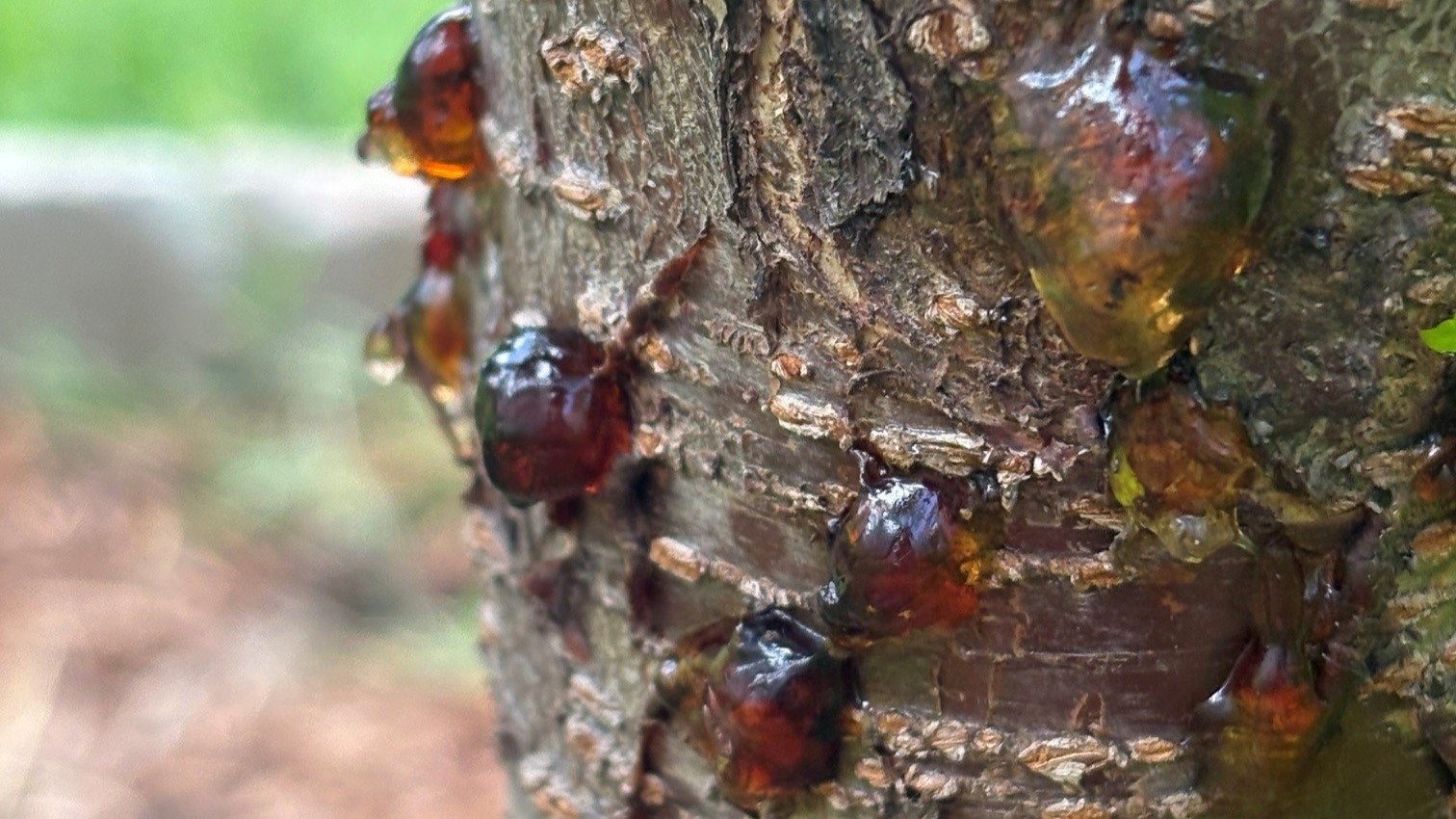
Image Credit: Courtney DeKalb-Myers
One common symptom to watch for is gummosis, especially around the base of the trunk or any scaffold branches. Gummosis is an orange, jelly-like substance that oozes from tree wounds. There are many potential causes of gummosis, including peach tree borer, Cytospora canker, and mechanical injury. Determining the cause is important because effective management depends on the underlying source of the injury.
Peach tree borers can attack many stone fruits but are especially common in peaches and nectarines. Adults emerge in the early summer and lay eggs at the base of the trunk. Larvae bore through the main trunk, disrupting the transport of water and nutrients. Heavy infestations or repeated attacks over several years can eventually kill the peach tree. Borer damage is often accompanied by sawdust-like frass around the base of the trunk. Where only a few trees are present, larvae can be mechanically removed from the base of the tree using a knife or flexible wire. Take care not to remove excessive healthy tissue, as doing so can create additional wounds. Insecticides are another option for peach tree borer control. Apply thoroughly to the main trunk and scaffold branches every two to three weeks during July and August. Ensure that the product is labeled specifically for peach trees and follow all label directions. Products containing permethrin, gamma-cyhalothrin, and pyrethrin may provide control.
Cytospora canker is a fungal disease that can infect many stone fruits and, like peach tree borer, causes gummosis. Unlike peach tree borer damage, Cytospora canker is not accompanied by sawdust or frass. Instead, infected areas develop sunken lesions and decaying bark. To prevent Cytospora canker, ensure that the tree has proper drainage, sufficient moisture, and adequate fertilization. Avoid injuring the trunk whenever possible, as fungal spores readily enter through wounds. Prune out infected branches in late winter. Once Cytospora infects the main trunk, the entire tree may eventually decline and die.
Mechanical damage can also cause gummosis in peach trees. This could include wounds from lawnmowers or other lawn equipment. Maintain a weed-free area around the base of each tree to reduce the chance of injury from mowing or trimming equipment. Hailstorms and other weather events can also wound branches and trigger gummosis. Freeze events and sunscald can also cause damage to the trunk, result in gummosis. If mechanical injury is the cause, continue providing proper irrigation and fertilization to reduce stress and help the tree recover.
Gummosis can also develop on peach fruit, where it usually appears as clear, jelly-like droplets. This type of gummosis is often caused by feeding from piercing-sucking insects such as stink bugs. The gum can simply be wiped away, and the fruit is still safe to eat.
Although this season's crop was lost, the work invested in peach trees this year will help set the stage for future harvests. Healthy, well-maintained trees are better prepared to vigorous growth, flower bud development, and recovery from stress. With continued care throughout the remainder of the season, growers can help position their trees for a productive 2027 crop.